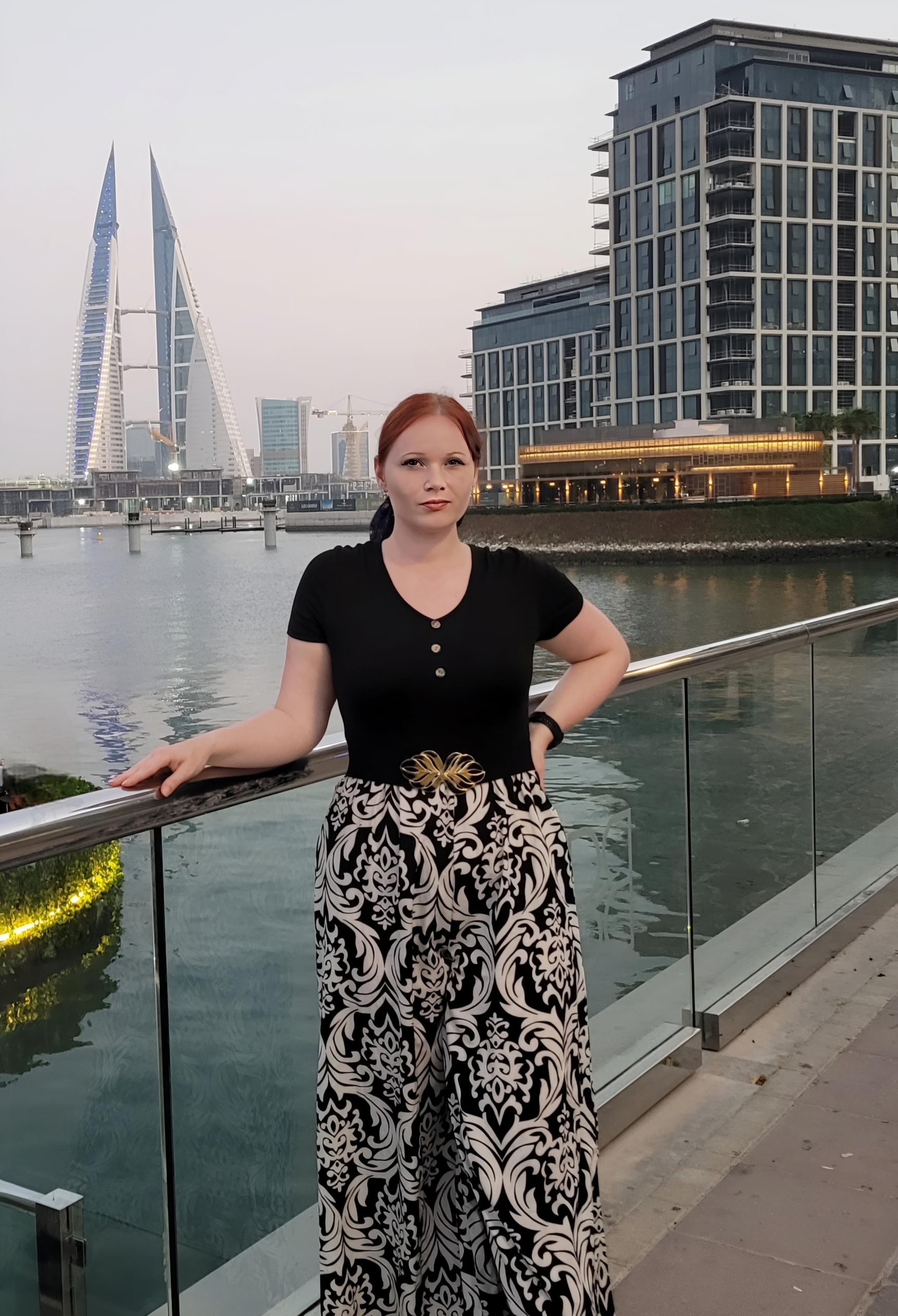
There was a version of me who would have deleted this entire brand name idea after the first “Is that a typo?” comment. Because I’ve spent a lot of my life trying to spell myself correctly for other people. To be palatable. To be easy. To be the kind of woman who doesn’t ask the world to slow down, soften the lights, lower the noise or make room for a brain that runs on patterns and pressure.
But then burnout happened. And burnout has this brutal honesty to it. It strips you down to what’s real. What works. What doesn’t. What you can’t pretend your way through anymore.
So when I chose the name The Asthetic of Jess, I wasn’t trying to be quirky.
I was finally being accurate. And yes, I know. It’s spelled “wrong.” That’s the point.
Asthetic: Not a typo, but a statement.
Here’s what the name means. Loud and clear.
Asthetic stands for three things that shaped everything about the way I live, travel and create:
Autism: the way my brain sees the world differently, finds patterns others miss and needs systems that actually work.
Anti-static living: refusing to stay stuck, stay still or settle for a life that doesn’t fit.
Aesthetic: because beauty isn’t shallow. It’s how I want to surround and dress myself and feel at home.
One word. And it’s my whole world.
And if you’re reading this thinking, “Okay, but… what does that actually look like in real life?” Good. That’s what this post is.
The part nobody tells you: I didn’t build this brand from confidence
I built it from necessity. I did everything “right.”
I worked hard. I studied law. I carried a lot for a long time. I tried to be capable and unproblematic and high-performing and fine. At one point, I wasn’t fine at all.
I remember a time where I was struggling just to get out of bed. During my studies I was financially strained, perpetually sick and carrying the weight of my family’s needs. I lost my student job due to illness. I felt like I had to apologize for failing, and that as an adult, I simply had to function.
That period of my life didn’t just make me tired. It made me question who I was if I wasn’t productive.
It made me feel ashamed for needing help.
It made me feel like everyone else got an instruction manual I missed.
And I’m sharing this because the name The Asthetic of Jess is not branding fluff. It’s the clearest, most distilled explanation of what I learned when my old way of living stopped working.
It’s the answer to:
Why I care so much about routines
Why travel is not “just a hobby” to me
Why I talk about longevity like it’s personal (because it is)
Why beauty and atmosphere matter to me (and why that’s not shallow)
So let’s break down the three parts.
If it’s stressful, it’s the wrong system.
Not you being broken. Not you being “bad at life.” Just a system that was never designed for the way you actually move through the world.
1) Autism: the lens I see everything through
Autism isn’t a personality trait I sprinkle into captions. It’s the operating system. It’s the reason I notice details other people walk past. It’s the reason I can plan a trip down to the last detail and feel calmer because of it, not trapped by it.
It’s the reason overstimulation can flatten me, and why “just go with the flow” has never been relaxing advice.
For a long time, I thought the goal was to become more like everyone else. Less sensitive. Less intense. Less specific.
But the truth is: the moment I stopped treating my brain like a problem to fix, I started building a life that actually fit. And that’s where the systems came from. Not productivity hacks. Not morning routine aesthetics. Real systems. The kind that hold up when you’re exhausted, overwhelmed or already on your last nerve.
Because when your brain is different, “good enough” systems don’t work.
They need to be:
clear
repeatable
low-friction
kind on bad days
That’s why my travel planning is structured. That’s why my routines are built for real life. That’s why I write the way I write. I’m not here to perform spontaneity. I’m here to give you something that works.
What I mean when I say “systems = safety”
When I say systems give me safety, I don’t mean I love being controlled. In fact I hate it.
I mean that without a system, life becomes a constant stream of tiny decisions. And decision fatigue doesn’t feel like “being busy.” It feels like:
waking up tired no matter how much you slept
feeling behind before the day even starts
snapping at people you love because your brain is already full
canceling plans because the logistics are too much
A good system doesn’t make life rigid.
It makes life possible.
2) Anti-static living: refusing to stay stuck
“Anti-static living” is my favorite part because it’s the one that sounds like a concept until you realize it’s an emotional survival skill.
Static is what happens when your life becomes a waiting room. You’re doing all the right things, but you’re not living.
You’re delaying the parts of life you actually want until:
you have more money
you have a better job
you’re less tired
you’re more confident
you’ve lost the weight
you’ve “earned it”
you’re retired
Static is telling yourself, “One day.” Anti-static living is deciding you’re done waiting.
For me, that looked like booking flights even when I didn’t feel ready. It looked like taking my limited PTO seriously and building trips that fit into a full-time job instead of fantasizing about quitting.
It looked like learning to say no without guilt. It looked like making room for absolute free days. It looked like traveling to prove to myself that I’m not trapped in one version of life.
Because here’s the quiet truth I don’t see enough people say:
Travel is evidence that your system works.
Not your dream life. Your actual life. The life you have right now.
Burnout didn’t just exhaust me. It stole my ability to imagine.
Anti-static living is me getting that imagination back, piece by piece, trip by trip, habit by habit.
3) Aesthetic: beauty as a nervous system language
Let’s talk about the word that makes some people roll their eyes: aesthetic.
Because it’s easy to dismiss beauty as shallow. It’s easy to assume it’s about trends, outfits, perfect kitchens and buying more stuff. Because that is what we see on social media. But that’s not what I mean.
When I say aesthetic, I mean:
the way a room feels when the light is soft
the relief of a clean surface when your brain is loud
the quiet confidence of wearing something that feels like you
the comfort of a hotel that understands atmosphere
the joy of a city that looks like a poem
Beauty isn’t decoration for me. It’s regulation. It’s communication. It’s how I feel at home. And yes, it’s also part of how I travel.
I’m a mid-budget luxury traveler because I’m not trying to buy status. I’m trying to buy ease. I’m trying to buy the kind of comfort that helps me recover, not just the cheapest bed that leaves me depleted.
That’s not indulgent. That’s intentional.
So why spell it wrong?
Because I spent too many years letting other people’s rules define what “right” looked like.
Correct spelling. Correct career path. Correct way to be an adult. Correct way to travel. Correct way to be a woman with ambition. Correct way to be “high functioning.”
And every time I forced myself into that version of correct, my life got tighter. Smaller. More performative. More exhausting.
So the name is a little rebellion. A little flag in the ground. A reminder that I don’t have to explain myself into being acceptable. I can just build something that fits.
What you can take from this, even if you’re not me
You don’t need to be autistic to understand the feeling of living in a system that was never built for you. You don’t need to want to travel full-time to want more movement in your life. And you don’t need to care about “aesthetic” to know what it feels like when your environment either supports you or drains you.
So here are three questions I’d love you to sit with:
What part of your life feels static right now? Where are you waiting for permission?
What system would make your life easier this week? Not perfect. Easier.
What kind of beauty makes you feel like yourself again? Not what looks good online. What feels good in your body.
That’s the heart of this brand. Not a vibe. A way of living.
Q&A: The Asthetic of Jess
Is “Asthetic” actually a typo?
No. It’s an intentional misspelling and an intentional life choice. The name is meant to signal that this is not a generic lifestyle blog. It’s personal, specific and built around the way my brain and values actually work.
Why include autism in the brand name meaning?
Because it’s dishonest not to. Autism shapes the way I plan, travel, build routines and process the world. It’s not a “fun fact.” It’s the method. And I am tired of hiding the fact after not being diagnosed as a child, it feels freeing to have that now.
What does “anti-static living” mean in practice?
It means making choices that create motion: booking the trip, building the routine, setting the boundary, taking the class, changing the plan. It’s refusing to delay your life until you feel perfectly ready.
Is this blog only about travel?
No. Travel is one pillar, but the deeper topic is the system behind a life that works: routines, longevity habits, learning, glow-up and intentional living that survives a full-time job. Travel is a result in a way, when you’re able to travel relaxed and freely and not to run from your normal life, then it means that your systems work.
Who is The Asthetic of Jess for?
Ambitious women in full-time careers who want more than work, feel overstimulated and stuck and want systems that make room for travel, health and an identity beyond their job title.
If this hit you in the chest, come closer
If you’re the woman who feels chained to a corporate calendar. If you’re tired of waiting for “someday.” If you want to travel more without quitting your job. If you want routines that don’t collapse the second you have a bad day. If you want to feel like yourself again.
Then you’re exactly who I built this for.
Join my newsletter. It’s where I share the real systems: travel itineraries for 9-to-5 lives, burnout-proof routines, longevity habits that don’t feel like a second job and the mindset shifts that make all of it stick.
I still remember one Monday morning when my alarm went off and I felt angry before my feet even touched the floor. Not because I hated my job. And not because I was ungrateful. I was angry because I could already feel the week swallowing me whole. Uni, commute, helping my family, my student job. The low hum of being needed everywhere, all the time. And underneath all of it, this quiet ache I could not ignore anymore:
Is this really it? Work all year, blink and maybe feel alive for two weeks in summer?
At that point, travel had become more than a holiday to me. It was proof. Proof that my life still belonged to me. Proof that I had not become a woman who only existed between study books and weekend errands. The problem was that I kept looking at travel through the wrong lens. I thought the people who travel often must be richer than me, freer than me, more spontaneous than me, less tired than me. I thought they had a kind of life I did not. I had a full-time job, more than one to be honest and limited money and time. Real responsibilities. and a brain that has never done well with chaos. I need structure. I need clarity. I need things to make sense before they feel enjoyable. For a long time, I treated that like a flaw.
Now I know better.
I do not travel 15+ countries with a full-time job because I am naturally carefree. I do it because I stopped copying systems that were clearly built for someone else and started building ones that actually fit me. That changed everything.
I did not need a completely different life. I needed better systems for the life I already had.
I am not good at chaos and that turned out to be useful
A lot of travel content is built around a kind of woman I have never been. She books a flight on a whim. She lands with no plan. She says yes to everything. She turns delays into adventures and somehow looks radiant doing it. Good for her. Truly.
That is just not me.
I do not find chaos romantic. I find it draining. I do not want to spend my trip stressed, under-slept, overstimulated and pretending that is what freedom looks like. I spent too long trying to perform spontaneity because it looked cooler than being the woman with notes, backup plans and screenshots saved in three places.
But the truth is, the more honest I got about how my brain works, the easier travel became. As someone whose brain works a little differently, I have learned that structure is not the opposite of freedom. For me, structure is what makes freedom possible. It is what keeps a trip from turning into exhaustion with a cute photo dump attached.
And once I stopped judging myself for needing systems, I got very good at building them.
The real issue was never my job
For a long time, I blamed my full-time job as a caregiver and later my adult job for why I was not traveling the way I wanted to. And yes, a job creates constraints. So does money. So does energy. So does being an adult with real obligations. But if I am honest, my job was not the only thing in the way.
The bigger issue was that I had no repeatable system. Every trip started from zero. Every decision felt heavier than it needed to. I would think about going away for weeks, then leave everything too late, panic over prices, open far too many tabs, get overwhelmed and close my laptop feeling worse than before.
That cycle is exhausting, especially when your day-to-day life already asks a lot of you.
I know so many women live in that exact tension. On paper, life looks fine. You are competent. Responsible. You show up. You keep things moving. But inside, even the things that are supposed to be exciting start to feel like another project to manage.
That is where a lot of travel advice falls apart.
Most travel content is made by people who do not have your calendar. This is for the women who do.
My travel life actually starts with life design
One of the biggest shifts I made was understanding that I do not build trips in the booking phase. I build them much earlier than that.
I build them in the way I design my year.
I treat PTO like part of my compensation
This changed more than I expected. So many women treat paid time off like a privilege they need to morally earn first. As if rest, joy and seeing the world should only happen after we have overdelivered enough to justify them.
I do not believe that anymore.
My PTO is part of my compensation. It is part of my quality of life. It is part of how I stay well enough to keep showing up to the rest of my life. So I plan it early. I look at long weekends, public holidays and busy seasons at work. I think about where I want recovery, where I want adventure and where I need margin. I do not wait until I am so burnt out that every destination starts to feel like a cry for help. That one change alone made travel feel less accidental and much more possible.
I keep a running list instead of starting from scratch
I am not reinventing my next trip every single time. I keep a list of places I genuinely want to go and I organize them by what kind of trip they suit.
Weekend city breaks or daytrips, four-day escapes, one-week trips. Then I look at shoulder season ideas, places that need more planning, longer stays and places that are easy wins.
This sounds simple because it is. But it saves me from the spiral of trying to make every destination in the world compete for my attention at once. It helps me plan by travel season, time available and budget, so I can work through my list accordingly. I like using Notion for that, but you could use any method of choice.
Decision fatigue is real. The more decisions I can make once instead of ten times, the easier it becomes to actually go.
I plan by energy, not ego
This has probably improved my trips more than anything else. Not every season of my life is the right season for a packed itinerary, three hotel changes and an ambitious list of must-sees. Sometimes I need quiet. Sometimes I want beauty and slowness. Sometimes I want a city that feels rich and interesting without asking too much of me. I used to choose trips based on what sounded impressive. Now I choose trips based on what I can actually enjoy. That difference matters.
Info box: My anti-burnout travel filter Before I book, I ask myself:
How much energy will this trip require from me each day? (Beach days vs exploring)
Will I come back feeling expanded or depleted?
Does it fit my real budget, not my fantasy one?
Am I booking this because I want the place or because I need relief?
Will this work with the life waiting for me when I get back?
I reduce friction before it becomes stress
People sometimes hear the word systems and assume I mean spreadsheets, rigidity and stripping all the joy out of life.
I mean the opposite. My systems exist to protect the joy.
The less friction I create for myself, the more present I get to be when I travel. That means I can actually enjoy the café, the museum, the train ride, the walk home at golden hour, instead of spending half the trip trying to locate a confirmation email while my battery dies.
I keep everything in one place
Flights, hotel details, train times, restaurant ideas, outfit notes, reservation screenshots, neighborhood saves, backup plans. I want one place I can trust.
Not because I am trying to be intense.
Because I know myself. Nothing makes me feel more frazzled than having important information scattered across seventeen tabs, five apps and an inbox full of search terms I cannot remember. A simple system saves an incredible amount of energy.
My systems is composed of one Notion Travel planner, where I can link and embed everything I need and an AI assistant that helps me plan and reminds me of everything I missed and the best thing: sends everything in one email straight into my inbox.
I plan anchors, not every second
This is important. I do not script my trips minute by minute. That would stress me out too. But I do create anchors. I know where I am staying. I know how I am getting there. I know the one or two things that matter most each day. I know where I can eat nearby if I am tired. I know what my backup plan is if the weather turns or I hit a wall. That is not overplanning. That is self-respect.
It means I do not have to waste precious energy solving basic problems in the moment.
I repeat what works
This one is deeply unglamorous and ridiculously effective.
I reuse packing lists. I repeat airport routines. I book the kinds of places I already know help me feel calm instead of just looking good online. I know what pace works for me. I know how much I can realistically do before a trip tips from energizing into draining.
I used to think repetition meant I was boring. Now I think repetition is one of the fastest ways to create ease.
The goal is not to become the kind of woman who can handle anything. The goal is to know yourself well enough to stop needing to.
I stopped performing spontaneity
This might be one of the most freeing things I have ever admitted to myself. I do not want a life that only looks effortless from the outside. I want a life that actually feels good on the inside. That means I no longer pretend that last-minute chaos is my ideal. I no longer confuse stress with adventure. I no longer act like the best kind of travel is the one that leaves me wrecked but with enough photos to prove I was fun. That version of womanhood does not interest me anymore.
What interests me is building a life that fits.
A life where I can be ambitious and rested. Structured and adventurous. Responsible and deeply alive. That does not mean that I do not book last-minute ever. But if I do, it’s with preplanned ideas, a system in place and a free calendar my energy is urging me to fill.
For me, travel is one of the clearest places where that becomes visible. When my systems work, my world gets bigger.
I budget for peace, not just price
Cheap is not always cheap. A flight at a brutal hour, a bad location, a hotel that saves money but costs sleep, an itinerary so packed I need a second holiday to recover from it, I have done all of that.
And every time, I paid for it with my nervous system.
Now I think in terms of value. Sometimes what looks like a small upgrade is actually the smarter decision. A better location. A direct route. A room I know I will sleep well in. A travel day that does not destroy me.
That is not being dramatic. That is understanding that when you have a full-time job, the price of a trip is never just financial. It is also physical and emotional. Here’s the bad news: we’re not 20-year old backpackers anymore who can thrive on red-eye flights and hostel dorms.
I plan the return home too
This used to be the part I ignored. I would come back late, leave my suitcase half open, get too little sleep and throw myself straight back into work already dysregulated. It ruined the end of the trip and the start of the week.
Now I protect the landing.
I try not to return at the last possible second. I reset my space. I know what Monday needs from me. I make sure there is food, quiet and enough time to come back to myself before corporate mode kicks in again.
That is part of the trip too.
And honestly, it is one of the reasons travel still feels good in my life instead of becoming another source of stress.
This is about more than travel
Yes, I love seeing more of the world. I love the perspective of it. The confidence. The reminder that life is bigger than your inbox, your office, your postcode, your usual loop of worries.
But this is also about something deeper.
It is about refusing to believe that your real life only starts later. After the promotion. After the move. After you finally become less tired, less sensitive, less overwhelmed, less yourself.
I am not waiting for some future version of me to start living. Building better systems taught me that.
Travel was one of the first places I proved to myself that I did not need to become someone else to have a beautiful life. I needed to stop forcing myself into systems that were never designed for me in the first place. And I think a lot of women need to hear that.
You are not lazy. You are not bad at planning. You are not failing because the usual advice does not work for you.
Sometimes the advice is built for a different brain, a different life, a different level of support, a different relationship to time, stress, and money.
That does not mean you are the problem. It means you need a better system.
You do not need to escape your life to see more of the world. You need to stop building your life in a way that leaves no room for you.
What this has made possible for me
Because I stopped treating travel like a fantasy and started treating it like a design problem, I have been able to travel 15+ countries while working full time. Not in a frantic, performative way. In a way that is sustainable, thoughtful and actually enjoyable.
A way that lets me come home with good memories instead of just exhaustion. A way that works with real schedules, real budgets and a real nervous system. A way that still leaves room for ambition, rest and a life I do not need to recover from.
That is the part I care about most. Not just going more, but going well.
Q&A
How do I travel so much without quitting my job?
I plan earlier than most people think is necessary, use my PTO strategically, build around long weekends and public holidays, and rely on repeatable systems instead of starting from zero every time.
Do I need a huge salary to travel more?
No. I think clarity matters more than excess. I travel mid-budget, choose carefully where comfort matters most and avoid expensive mistakes by planning well. I also have established travel hacks to book cheaper than the listing price and book clever.
What if trip planning already overwhelms me?
That usually means the planning process needs to become simpler, not that travel is not for you. Start with one short trip, one saved list, one planning document, one decision session. Keep it small enough to feel doable. Try having AI plan a trip for you and adjust the result to your tastes. It’s a great way to become clearer on what you really want as well. I recommend travel AI like Mindtrip for that.
Is this only relevant if I am neurodivergent?
Not at all. But if you get overwhelmed easily, hate chaos or need more structure to feel relaxed, these systems will probably help you even more.
What is the biggest mindset shift behind all of this?
Stop asking how someone with a completely different life does it. Start asking what would make it work for the life you actually have.
Build a life that fits, then travel from there
I am not interested in selling the fantasy of effortless travel. I am interested in helping you build a life that feels bigger without breaking you.
That is what better systems gave me. They did not make me less sensitive, less ambitious or less in need of rest. They made it possible to honor all of that and still see more of the world.
If that is what you want too, join my newsletter. That is where I share the routines, travel systems, and intentional living tools that help me make a full-time life feel like my own.
I remember waking up on my 30th birthday with a strange mix of gratitude and restlessness. By all accounts, I had a “successful” life, a solid corporate job, a comfortable routine. And yet, a quiet voice in me wondered: Is this it? Hitting thirty felt like a crossroads where one path was staying the course and the other was an unknown adventure. I feared that pursuing change meant blowing up my whole life: quitting my job, moving to a new city, starting entirely from zero. But an emotional insight dawned on me: change doesn’t have to be a destructive fire; it can be a controlled burn, clearing space for new growth without turning everything to ash. In other words, you don’t need to run away to a monastery or resign on a whim to reinvent yourself. There’s a middle way, an evolution that builds on who you are. Turning thirty can actually be the beginning of becoming more of yourself, not throwing the past away.
A friend of mine , a high-performing marketing manager, shared how at 34 she felt utterly burnt out and bored at the same time. She dreaded Monday mornings, yet the thought of abandoning her hard-earned career was terrifying. Instead of making a rash decision, she started with a small change: taking a night class in UX design, something that had always intrigued her. That single step was a revelation. Within a year, she transitioned into a new hybrid role at her company, reinvigorated and reinvented without ever having to nuke her résumé. Her story taught me that turning the big 3-0 isn’t an alarm bell to upend everything, but an invitation to recalibrate. Change can be gentle. Reinvention can mean adding new layers to your life, not erasing the canvas.
The Mindset Shift: Evolve, Don’t Scrap Your Life
Before diving into strategies, let’s talk mindset. The biggest hurdle to reinventing yourself is often the belief that you must discard your past to create a new future. In reality, your past is your power source. Reinvention is about evolution, not deletion. As career expert Caren Merrick wisely writes, “Reinventing doesn’t mean devaluing or eliminating all that came before you.” All your decisions, struggles, and triumphs have made you the valuable person you are – they actually qualify you for the next step in your journey. In other words, a career or life reset is not a zero-sum game where a new path cancels out your old one. Think of it more like a relay race: you carry the baton of experience forward. Each phase of your life has been training for your next adventure. “Career change is not a gaping chasm ready to swallow you; it’s simply new space in an already thriving garden,” as one coach puts it. This shift in perspective is crucial: you’re not starting from scratch, you’re starting from experience. But in one thing everyone that tells you to discard your past self is right: you will leave that past self behind and evolve.
Equally important is embracing the idea that reinvention is a process, not an overnight flip of a switch. You don’t have to have everything figured out on day one. In fact, “reinventing doesn’t happen in a day. It happens one day at a time”. Give yourself permission to take small steps and experiment. We often pressure ourselves to make grand, dramatic moves for change (cue the urge to quit and move to Bali), but sustainable reinvention usually comes through incremental shifts. High-achieving women sometimes struggle here. We’re used to excelling quickly. But becoming a beginner again in some area of your life can be a profound act of growth. It requires humility and curiosity, traits that are part of emotional intelligence. Remind yourself that it’s okay to not have all the answers. Approach your reinvention with a learner’s mindset. The same openness that got you where you are can carry you into what’s next.
Another key mindset tweak is recognizing that it’s never “too late” to change. Society may subtly suggest that by 30 or 35 you’re supposed to stick to what you’ve been doing. That’s outdated thinking. We live in a time where switching careers or evolving your life at 30, 40, even 50 is not only common but often celebrated. According to Harvard Business Review, career pivots have become more common than ever, and there’s no perfect age or timeline for making a change. Many people actually find their stride in their thirties precisely because they bring a decade of experience and self-knowledge to the table. In your twenties your brain, more precisely the prefrontal cortex that is responsible for planning, impulse control and decisionmaking is finally developed. That’s what makes you’re thirties the first decade you can confidentially decide your life for yourself. Holding onto an old identity out of fear can stunt your growth. Your self-worth is not tied to one job title or one company. You are allowed to redefine what success looks like for you at 30+, and you can do it without self-destructing what you’ve built so far.
Finally, cultivate an emotionally intelligent approach to this journey. That means acknowledging your feelings (the fear, the excitement, the doubt) and approaching them with compassion rather than judgment. It’s normal to feel fear when stepping into the unknown. That fear has kept you safe in the past. But now it’s about discerning which fears are protecting you from real danger versus which are just protecting you from growth. High performers often wrestle with perfectionism and the fear of failure. Reinvention requires a bit of letting go of perfection. It’s okay to be a beginner at something new, to ask for help, or to take a step down in prestige while you pivot. Your long-term empowerment is worth it. Remember, we are happier when we’re making progress, learning, and growing. Give yourself permission to pursue progress over perfection. With this mindset: valuing your past, being patient with the process, believing it’s possible at any age, and practicing self-compassion. You’ve already won half the battle.
Subtle but Powerful Strategies to Reinvent Yourself
You might be thinking, “Alright, I’m working on my mindset. But what concrete steps can I take to reinvent myself without detonating my current life?” Here are several practical strategies for a life reinvention or career reset that won’t require you to hand in your resignation tomorrow. Each of these approaches lets you explore and grow while keeping the stability you’ve earned. Think of them as small pivots, mini experiments, to refresh your direction:
1. Pivot Your Skills (Not Just Your Job): Look for ways to evolve within or adjacent to your current career by leveraging the skills you already have. Sometimes the fresh start you crave is available in a different department, project, or role at your existing company or industry. Can you volunteer for cross-functional projects at work? Take on a slightly different role that uses your expertise in a new way? The goal is to double-down on your strengths in a new context. Career strategist Jenny Blake, in her book Pivot, emphasizes that a successful pivot starts from a “strong foundation” of what you already do well. You use your existing strengths and interests as a launchpad into a new direction. For example, if you’re a finance manager who craves creativity, you might pivot by joining a strategic planning task force (using your financial savvy in a more creative, big-picture way) or consulting for a non-profit on budgeting (applying your skills to a mission you care about). By doing this, you’re reinventing your career without abandoning your hard-won expertise. Each skill you’ve honed is a transferable asset. One woman’s mid-30s pivot from a hedge fund to journalism was successful partly because she leveraged the analytical and research skills from finance to excel in reporting. The takeaway: don’t throw out your toolkit. Use it to build something new. Identify your core skills (leadership, analysis, storytelling, whatever they may be) and seek new outlets for them. This might mean upskilling (taking a course to apply your skills in a different field) or simply reframing how and where you use them. You’ll find it much less intimidating to step into a new arena when you realize you’re not a newbie after all. You’re bringing a wealth of knowledge with you.
2. Start a Passion Project or “Side Hustle”: If your day job isn’t lighting you up, channel that energy into a side project. This could be anything: launching a small Etsy shop, starting a blog (like me), volunteering on weekends, freelancing in a skill you want to grow, or testing out a business idea in miniature. A side hustle is a powerful, low-risk way to explore a new identity or career path without quitting your primary income source. In fact, more than half of millennials (52%) report having at least one side hustle today. Not just for money, but to explore passions and diversify their skills. One inspiring example is Nicole Gibbons, who remained in her full-time PR job for years while growing a lifestyle blog and design business on the side. Her story shows that you can reinvent gradually: evenings and weekends can become the incubation period for your next chapter. Treat your passion project as a sandbox where you get to play, learn, and even fail safely. Whether it’s writing the first chapters of a novel, taking on one consulting client or selling your handmade crafts on Instagram, a side hustle can give you new purpose and excitement. It also creates an optional off-ramp: if one day your project gains momentum (or your soul just says “it’s time”), you can choose to turn it into your main gig. But even if it stays a side gig, it can provide the creative fulfillment or sense of ownership your main job lacks. Bonus: skills and confidence from your side hustle often spill over and boost your performance in your day job too. The key is to start small and stay consistent. Schedule a few hours each week for your project and treat that commitment like you would an important meeting, because it is. It’s a meeting with Future You. And even if you decide not to side hustle. There are many ways to channel your energy differently. You can pursue knowledge ( I know I am doing that. Here’s my blueprint.) or start a new hobby that fulfills you. The options are truly endless.
3. Take a Travel Sabbatical or Solo Retreat: Sometimes you need to step away from the noise of daily life to hear your own voice again. This doesn’t mean you must quit and backpack for a year (though if you can, more power to you!). It could be as accessible as taking a 2-week sabbatical or using a chunk of saved vacation time for a purposeful break. High-performing women often neglect vacations or fill them with obligations. Instead, consider planning a trip that’s just for you. Perhaps a solo travel adventure or a dedicated retreat focused on reflection and growth. Travel has a way of jolting us out of autopilot. Exploring a new environment, whether it’s a foreign country or a quiet cabin a few hours away, can bring fresh perspective and inspiration. Many companies offer unpaid sabbatical programs or career breaks after a certain tenure; it’s worth looking into yours. Even a brief hiatus can have profound effects. One corporate professional-turned-creator, Joy Ofodu, credits a short break for helping her pivot. In that time, she reclaimed her sense of wonder and hatched a concrete strategy for her new direction. If a month is too long, try a long weekend retreat. You might attend a guided retreat (for meditation, yoga, writing, etc.) or simply design your own DIY retreat. Perhaps renting an Airbnb by the coast to journal and brainstorm. Solo time is the key: being away from roles where you’re an employee, a boss, a partner or a mom, even briefly, lets you reconnect with you. Bring a journal (we’ll talk more about journaling later) and ask yourself big questions: What do I really want? What parts of myself have I left unexplored? Often, the answers become clearer when you’re outside your routine environment. Upon returning, you’ll likely find you haven’t blown up your life at all, but you have renewed clarity and energy to gently steer it in a new direction. Travel and retreats are like pressing the “reset” button on your mindset, helping you envision possibilities you couldn’t see when you were knee-deep in emails and meetings.
4. Stack New Habits for Personal Growth: Reinvention doesn’t only happen through big external changes; it can start right in your daily routine. Enter the concept of habit stacking. This is a strategy where you attach a small new habit to an existing one, so that change fits seamlessly into your life. It’s perfect for high-achievers who say, “I’m already so busy. How can I add anything else?” With habit stacking, you’re not carving out huge chunks of time; you’re piggybacking on things you already do. For example, if you want to start learning a new skill (say, coding or a new language), you could commit to doing a 15-minute lesson right after you brew your morning coffee or during your lunch break. “When I do [current habit], I will do [new habit].” This formula works wonders. Some examples: “When I get in my car for the commute, I will play a podcast about industry trends,” or “After I brush my teeth at night, I’ll spend 5 minutes planning tomorrow or journaling.” By tying the new habit to an established routine, you’re more likely to stick with it because it doesn’t feel like a huge additional burden. Over time, these micro-habits lead to macro changes. Want to pivot careers? Start habit-stacking learning into your day: read a few pages of a relevant book every night or complete one online course lesson after each workout. Want to improve your wellness and mindset? Add a short meditation when you first sit at your desk in the morning or end the day with a gratitude list. Habit stacking leverages our brain’s existing neural pathways and cues to make new behaviors almost automatic. This is how you build new muscles for your reinvention gradually. Each small habit is a vote for the person you want to become. Over months, you might be surprised at how much you’ve transformed, maybe you’ve written 50 blog posts, read 10 books, learned to code or built a meditation practice 10 minutes at a time. These incremental changes bolster your confidence and skills for bigger shifts. And crucially, they fit into your life without blowing up your schedule. Even with a packed calendar, you can always find tiny pockets of time to invest in Future You. Habit stacking is the epitome of evolving in place. Proof that you don’t need a dramatic overhaul to start seeing yourself in a new light. To learn more I recommend reading Atomic Habits*- the book about building habits.
5. Embrace a Minimalist Mindset Reset: When you’re feeling stuck or craving reinvention, one powerful (yet subtle) tactic is to simplify. Over the years, we accumulate not just possessions, but commitments, habits and mental clutter that weigh us down. Adopting a more minimalist mindset, essentially, consciously decluttering your life, can create the mental and emotional space you need for a fresh start. This can start in your physical environment: clean out that chaotic closet, simplify your living space, make your home office a place that inspires you. Clearing physical clutter often has a profound effect on mental clarity. Remember, “Clutter overwhelms because it constantly asks for attention…every piece of ‘stuff’ tells you there’s more to do. It pulls your focus, scattering your calm.” If you’ve been too busy to organize, tackling it is surprisingly therapeutic, a cleared desk or an orderly room can quiet anxious thoughts and give your mind room to think. But minimalist mindset goes beyond tossing old clothes. It’s also about streamlining your commitments and mental load. What can you let go of in your schedule that isn’t serving you? Maybe it’s a couple of social obligations that leave you drained, or saying “no” at work to extra projects that don’t align with your goals. Consider doing a “life audit” of all your current commitments and ask: which of these truly add value or joy and which am I doing out of habit or obligation? By trimming the excess, you free up time and energy that can now go into new pursuits or simply into resting (which high-achievers often need!). You might also try a digital declutter, unsubscribe from those emails that no longer interest you, reduce mindless social media use, and curate your information diet to what genuinely inspires you. Minimalism is fundamentally about being intentional: keeping only what matters and releasing the rest. This reset can be incredibly empowering. It reinforces that you are in control of designing your life. As you simplify, you’ll likely experience a mindset shift: you start focusing on what truly matters to you (your core values, passions, important relationships) instead of being buried under things and tasks that are just “there.” One outcome of this process is that you rediscover parts of yourself that were overshadowed. Maybe decluttering your old hobby supplies reminds you how much you used to love painting, prompting you to pick it up again. Or clearing your schedule a bit allows you to finally enroll in that course you’ve been meaning to. Think of minimalist living as hitting the reset button: it creates a calm, clear space in which you can imagine and build your next chapter. As the saying goes, “a clear space, a clear mind.” Sometimes, you don’t need to add more to your life to reinvent, you need to subtract the unimportant to make room for the essential new directions waiting for you.
Tools & Resources for a Fresh Start in Your 30s
Reinventing yourself is a courageous journey, but you don’t have to go it alone. There are some fantastic tools, books and communities that can inspire and support you along the way. Here are 5 recommended resources (think of them as friendly guides) to help with your life reinvention and career reset. These are also picks that many women have found useful in their thirties (journals, planners, books, and courses galore):
Book : Designing Your Life by Bill Burnett & Dave Evans*: An inspiring and practical book that applies design thinking to crafting your life and career. It’s perfect for when you’re unsure what exactly you want to do next. The authors (Stanford design professors) guide you through exercises to “prototype” different life paths, so you realize there are multiple exciting futures you could live. From creating Odyssey Plans (different 5-year life scenarios) to conducting small experiments (like trying a class or interviewing someone in a field), this book will help you get unstuck. The big lesson is that there’s no one “right” answer for your life. You can design and iterate until it fits. If you’re feeling lost or in need of a structured approach to reinvention, Designing Your Life is like having a career coach between two covers.
Book: Atomic Habits* by James Clear: Since we talked about habit stacking and small changes, this best-selling book is a must-read playbook on how tiny habits can lead to remarkable results. Clear breaks down the science of habit formation and offers a ton of practical tips for building good habits and breaking bad ones. Importantly, he shows how to make changes so small and easy that you can’t say no, which is exactly what a busy woman with a packed schedule needs. Atomic Habits will teach you how to redesign your environment for success (e.g. lay out your workout clothes to cue exercise), how to find an extra 1% improvement every day, and how these minuscule gains compound into a new you. If part of your reinvention involves being more productive, healthier, or learning new things, this book gives you the toolkit to actually follow through. It’s extremely actionable, you’ll likely start implementing tips before you even finish reading it. Plus, it’s motivating to see case studies of how others transformed their careers and lives through consistent tiny steps. This aligns perfectly with our theme: big change through small moves.
Journaling: The Five Minute Journal* (or Any Guided Journal): Never underestimate the power of journaling for self-discovery and mindset shifts. If you feel too busy (or intimidated) to journal, the Five Minute Journal is a beautifully simple entry point. As the name suggests, it literally takes just a few minutes each morning and night. It provides prompts for gratitude, prioritizing your day, and reflecting on what went well. This kind of guided journal is an excellent tool to cultivate positivity, self-awareness, and clarity. How does this help reinvention? By writing regularly, you start to notice patterns in what makes you happy or unhappy. Journaling can surface those nagging desires or ideas that get drowned out in everyday busyness. For example, you might notice you consistently feel energized on days you work on a certain type of task, that’s a clue to lean more into that area. Or perhaps writing out your frustrations reveals it’s not your job you hate, but a specific type of project or the lack of flexibility. Such insights are gold when planning a pivot. Other journals or exercises to consider: the classic “Morning Pages” (three pages of free-writing each morning, from The Artist’s Way by Julia Cameron) which many swear by for creative rejuvenation, or specific prompt journals (search for “career clarity journaling prompts”. You’ll find questions like “What did I love doing as a child?” or “What does my ideal day look like?”). The act of writing your thoughts is emotionally intelligent practice, it engages your reflective brain and helps regulate the swirl of emotions. Think of a journal as a safe space to dream, vent, plan and eventually recognize what you really want. Tip: To get started, you might write a prompt at the top of a page like “In five years, I want to be…” and let yourself answer without overthinking. You’ll be surprised what pours out when you give yourself permission. Want to know what I do? I write a Future me log. Basically I write in present tense about me in 2031. Writing as if I already accomplished my goals, helps my brain open itself to the suggestion – kind of like a manifestation – and it helps me determine if that is truly my goal. If I am bored of something by day 5, it’s not truly a goal of mine and I can stop trying to follow up on it.
Planner or Productivity System: The Passion Planner*(Weekly Planner & Goal-Setter): The Passion Planner is a popular planner designed to help you define and break down your goals while managing your daily schedule. It’s great for translating big aspirations (like “reinvent myself”) into actionable steps on your calendar. Each Passion Planner includes sections for creating a “Passion Roadmap”, you map out your wish list for 3 months, 1 year, 3 years and lifetime. Then it guides you to pick one and break it into smaller goals and tasks, which you can schedule monthly and weekly. For a high-performing woman juggling a lot, this planner can be a game-changer because it integrates your personal goals with your daily to-dos. It encourages reflection too: each month you’re prompted to review what you learned and how you’ll improve. If you prefer digital tools, consider Trello or Notion to do similar goal-setting and task tracking. The specific tool matters less than the practice: effectively, plan your reinvention like a project. Create milestones (e.g., “Complete XYZ certification by June” or “Attend 3 networking events this quarter”) and use a planner system to keep yourself accountable. The satisfaction of checking off these steps will build momentum. Plus, writing down goals makes you far more likely to achieve them. The Passion Planner’s community also shares inspiring stories on their site of people using the planner to pivot careers, start businesses, or overcome adversity, a nice reminder that you’re not alone and that structure + passion is a powerful combo. I personally use Notion, but I was a fan of manual planners for a long time. Choose what fits you best.
Courses & Communities: Coursera (Online Courses) and Lean In Circles (Peer Community): Reinvention often requires learning new things and meeting new people who get what you’re trying to do. For learning, platforms like Coursera, edX, and LinkedIn Learning put a world of courses at your fingertips. You can take a course in data analytics, digital marketing, graphic design, leadership or even happiness psychology. Many for free or a low cost, all on your own schedule. Gaining a new certification or skill not only boosts your confidence, it makes your pivot tangible (and resume-friendly) without quitting your job. For example, if you’re curious about coding, you could complete a Python or UX Design specialization on Coursera in a few months of evenings and suddenly you have a foothold to transition roles. It’s a practical way to test your interest in a field before making a bigger leap. On the community side, don’t underestimate the power of a support network. Look for groups of like-minded women or professionals. Lean In Circles, inspired by Sheryl Sandberg’s initiative, are small groups that meet regularly to support each other’s goals, many cities or companies have them or you can join a virtual one. There are also professional networks like Ellevate Network (a global network for women in business), Ladies Get Paid (for career support), or field-specific groups (Women in Tech, Women in Finance, etc.). If you’re pivoting into a new industry, join its professional association or find a Meetup group in that space. Surrounding yourself with people who are also driven to grow can make a huge difference. They’ll celebrate your small wins, share advice (like a great course or job lead), and keep you accountable. Some communities even have mentoring programs. Remember, reinvention is an ongoing journey, having educational resources and a tribe of supporters can sustain you when challenges arise. Plus, every new person you meet expands your perspective and opportunities. As the saying goes, your network is your net worth and it’s especially true when you’re venturing into something new. So enroll in that class, join that forum, say yes to that workshop , you never know which one could become the catalyst for your next chapter.
(These tools and resources are starting points. Pick one or two that resonate and give them a try. A book might spark an idea that changes your outlook, or a course might connect you to your next mentor. Equip yourself for success, you deserve all the support as you create your fresh start. Want to learn more? I have a whole blog post about getting things done without burning out. Here.)
Q&A: Reinventing Yourself – Common Questions Answered
You likely have some burning questions about what reinventing yourself in your thirties really entails. Here, we’ll tackle a few of the most common questions high-performing women ask when considering a career reset or fresh start for women in this stage of life. These answers are honest and actionable, with a dash of tough love and reassurance. Let’s dive in:
Q: Do I have to quit my job to start over? A: No, you don’t have to quit your job to kickstart a reinvention. In fact, many women find it wiser (and less stressful) to pivot gradually rather than make a sudden leap. Quitting can indeed free up time, but it also adds pressure (hello, bills!). Instead, think of ways to experiment on the side of your current role. Can you start a side hustle or take on freelance projects in the field you’re interested in? Can you negotiate a four-day workweek or a sabbatical to test something new? The goal is to validate your new direction before you sacrifice your steady income. We’ve seen examples in the real world. The principle stands: build a bridge to your new path. Also consider internal opportunities at your current company, perhaps a different department or a special project that aligns with your desired change. It’s possible your next chapter is one conversation with HR away. I know we can help you pivot or decide on company internal courses. Finally, check if your company offers any career development benefits, like tuition reimbursement for courses or the option to rotate roles. Use those! In short, treat quitting as a last resort or a well-timed move once you have momentum elsewhere. Reinvention doesn’t require dramatic martyrdom. You can start creating your fresh start now, under the safety net of your present job, until you’re truly ready to make a smooth transition.
Q: How do I find time for myself when I’m already overloaded with work and life? A: Finding “me time” in a packed schedule is challenging, but it’s also non-negotiable if you want to reinvent yourself (or simply stay sane). Start by reframing it as priority time, not a luxury. Even if you can only carve out 15-30 minutes a day, make that your sacred self-investment window. Here are a few tactics: Schedule it. Literally block time on your calendar for yourself like it’s an important meeting. Maybe it’s waking up 20 minutes earlier for a quiet coffee and journaling or a half-hour walk at lunch or 10 minutes of meditation in your car before driving home. These small pockets can recharge you more than you expect. Also, practice the art of boundary-setting. High-performers often feel they must be everything for everyone, but remember that saying yes to everyone else all the time means saying no to yourself. Look at your week and see if there’s anything you can delegate or let go. Maybe it’s hiring a babysitter for two hours on the weekend so you can go to a yoga class or politely declining a meeting that isn’t essential. When you do have free time, try to occasionally spend it alone or doing something purely for you, rather than always social or family obligations. Even micro-breaks during the day help: spend 5 minutes breathing deeply at your desk with eyes closed or take a short walk around the block to clear your head instead of scrolling your phone. It’s about quality, not quantity, a focused 15-minute personal break can be more restorative than an unfocused hour. Lastly, communicate with your partner or support system about needing some time for yourself. Often they’ll understand and help if you voice it. Remember, taking time for yourself isn’t selfish; it’s like refilling your cup so you can pour into everything else from a place of strength. As a mentor once told me, “You can’t pour from an empty cup.” Treat your personal time as the indispensable fuel for all your other roles. Start small, be consistent, and over time you’ll find you actually become more efficient and present in work and life because you’re not constantly running on empty.
Q: Is it too late to pivot my career at 35 (or 37, or 40)? A:Absolutely not. It is never too late to reinvent your career or life, and your mid-thirties are actually a fantastic time to do it. By 35, you likely have a much stronger sense of self than you did at 22, as well as a robust set of skills and experiences to leverage. Those are huge advantages. There’s a growing body of evidence and examples showing that success is not tied to youth. According to Harvard Business Review, career pivots are more common than ever now, and there’s no magical age when the window closes. Many women make significant career changes well into their 30s and 40s. For instance, Vera Wang famously entered the fashion industry at 40. Julia Child didn’t start cooking professionally until her late 30s. In the corporate world, I’ve met women who went from accountants to UX designers at 36 or marketers to nurses at 39. Was it easy? Not necessarily. But they did it, and so can you. One thing to prepare for: you might have to deal with some naysayers or internal doubts that whisper “you’re too old to start over.” Ignore them. As one reinventor in her 30s said, “We’re not a generation that goes to one job and stays there for 20 years… It’s okay to be a bit of a wanderer if you’re getting closer to who you truly are.” Your career is a long journey, and growth is not linear. A pivot at 35 isn’t a reset to zero; it’s more like a level-up using everything you’ve done before. Sure, you may need to refresh some skills or even accept being a novice in a new domain (humbling, yes, but doable). But your maturity and professional savvy will help you learn faster and avoid the mistakes you might have made in your 20s. Also, organizations today value diversity of experience, coming from a different background can actually make you more interesting to employers or clients, not less. If you’re worried about starting at the bottom, remember you’re bringing a wealth of transferable skills. You may have to take a step back in title or pay initially, but chances are you’ll catch up quickly once you get your footing. And your happiness and fulfillment are worth it. Life is too short to grind away in a career that you’ve outgrown just because of a birthdate. So whether you’re 35 or 55, if you feel the call to pivot, that’s your green light. The best time to plant a tree was 20 years ago; the second best time is now. The same goes for your career change.
Q: How do I know if this feeling I have is burnout or just boredom? A: This is a fantastic question, because burnout and boredom can feel oddly similar on the surface (disengagement, lack of motivation), but they stem from opposite problems and thus require different solutions. Here’s how to tell: Burnout is generally the result of overload: too much work, stress, pressure, and not enough recovery. It often comes with exhaustion (mental, physical, emotional), cynicism or irritability, and a sense of inefficacy. You might care about your work but feel absolutely drained by it. Burnout can make you dread going to work because you’re over-stimulated and overextended. Boredom, on the other hand, comes from underload: not feeling challenged or engaged. If you’re bored (some call this “rust-out” or boreout), you might feel restless, lethargic or stuck in a rut because your work lacks meaning or excitement. Time may drag, and you’re left feeling unfulfilled and underutilized. A key difference noted by psychologists: “Boredom is a lack of stimulation, purpose, or engagement… Burnout, in contrast, is the result of chronic stress and overwork.” Another way to frame it: Burnout means something’s broken and needs repair; boredom means something’s missing and needs to be added. So ask yourself: Am I tired and overwhelmed (more likely burnout) or restless and feeling unchallenged (more likely boredom)? Of course, it’s possible to have a bit of both at once (the joy of modern work life!). If you determine you’re experiencing burnout, the remedy is to step back and heal. That might mean taking time off, reducing your workload, speaking to your manager about redistributing tasks or ramping up self-care and boundaries. Focus on recovery: sleep, exercise, perhaps talking to a therapist or coach. Burnout often comes from giving too much of yourself for too long, so it’s time to refill your cup and perhaps reassess whether parts of your job (or the job itself) are unsustainably demanding. On the other hand, if it’s boredom, the cure is to introduce new challenges. Seek growth: ask for more responsibility or a different kind of project, learn a new skill or carve out a niche in your role where you can innovate. If your job can’t provide that, then it’s a sign you might need to look elsewhere or create side projects that excite you. Sometimes boredom is a big clue that you’ve outgrown your position. I know that this is happening to me, so I am currently transitioning to a new role. Also, communicate with your boss, a good manager would rather help redesign your role than lose you. In both cases, burnout or boredom, reinvention can be a solution, but the approach differs. A burned-out person might reinvent by finding a healthier work environment or a role that offers better balance, whereas a bored person might reinvent by finding a more stimulating field or injecting variety into their routine. Listen to your mind and body’s signals. If you’re chronically exhausted and every day is a slog, address burnout urgently. If you’re mentally checked out because things are too easy or monotonous, stir the pot and stretch yourself. And if you’re still not sure, try talking it out with someone (a colleague, mentor, or counselor). Sometimes articulating how you feel makes the answer crystal clear.
Q: What if I don’t know what I want? A: Ah, the million-dollar question. “I know I need a change, but I have no clue what I actually want to do next.” First, let me reassure you that not knowing is okay and more common than you think. High achievers often have spent so long climbing one ladder or meeting others’ expectations that when it’s time to ask “What do I want?” the answer isn’t obvious. Think of this not as a dead end, but as a starting point for exploration. Here’s how to navigate the uncertainty:
Stop telling yourself you have no idea. This might sound counterintuitive, but the more you repeat “I don’t know what I want,” the more you trap yourself in inaction. Career coach Caroline Adams reminds us that this thought “keeps you trapped in the very career you know you don’t want”. And importantly, she adds, “it’s not even true.” Deep down, you likely have hunches and clues about what you enjoy or value. They may not translate neatly into a job title yet, that’s fine. Start by gathering the puzzle pieces: What activities make you lose track of time? When do you feel most energized at work or in life? What are topics you naturally read or talk about even when no one asks you to? These are clues to what you want.
Make an “ingredients list” for your happy life/career. Maybe you can’t say “I want to be a UX researcher at X company” yet, but you can probably list elements that matter to you. For example: I want to work on a team I respect; I want a flexible schedule; I need to be creative in my work; I enjoy mentoring others; I’d love to be connected to a cause; I want financial stability around $X income; I want growth opportunities, etc. Write down as many “wants” big or small as you can. Don’t worry about how they all fit together yet. This exercise is basically defining what “fulfilling” looks like to you. Often, the issue is you do know what you want in pieces, you just haven’t figured out the label or form it takes. That’s okay, patterns will emerge. For instance, if you wrote “creative, help people, love wellness, flexible schedule, avoids corporate bureaucracy,” you might realize a career in health coaching or at a wellness startup could hit those notes. Or if you wrote “leadership, big picture strategy, social impact, travel, team collaboration,” maybe you’re aiming towards management in a mission-driven organization, or starting your own venture. The point is, identify the core ingredients first; the recipe (job title or life path) comes later.
Dare to dream (without immediately dismissing). Often we do get flickers of a dream, but we snuff them out with practicality or doubt. That inner voice says, “Oh I’d love to open a bakery… but that’s unrealistic,” or “I wish I could be a writer… but I’m too old/ I have kids/ I make too much now.” For now, hush the “how” and “but” voices and let yourself envision possibilities freely. One technique is to imagine you’re financially secure and no one will judge you, what would you try? Or, if you had a second life to live, what different career or lifestyle would you pursue? Sometimes removing the perceived barriers, even hypothetically, reveals desires you’ve buried. You might uncover that you really want a more artistic career, or that you want to live in a different country or simply that you want a job with less stress so you can enjoy family time. None of these realizations are silly. They are yours.
Experiment and explore. Once you have some hints (even if they are vague like “something with kids” or “work outdoors” or “more analytical work”), it’s time to test the waters. You don’t find clarity by only thinking; you find it by doing. So try low-commitment experiments: take a weekend workshop in something that intrigues you, shadow a friend in their job for a day, volunteer or start a small project related to an interest. If you’re drawn to interior design, offer to help a friend redo a room. If coding piques your interest, do a 30-day online coding challenge. Pay attention to what lights you up versus what leaves you cold. Each experiment is a data point. It’s fine if some experiments confirm “Nope, not for me”. That’s valuable knowledge too, because it narrows your direction. On the flip side, if something makes you feel alive (you finish the day energised or you can’t stop thinking about it), lean in further. Talk to people in that field, informational interviews can be golden. Join online forums or LinkedIn groups related to your budding interest. Essentially, follow your curiosity like breadcrumbs. Curiosity is often a compass pointing toward what you subconsciously want.
Get a guide if needed. Sometimes an outside perspective accelerates the process. This could be a career coach (yes, they can be pricey, but even a few sessions could bring huge clarity), a mentor figure or even a good friend who knows you deeply. They might see patterns in you that you overlook. There are also free or low-cost resources: books (like the ones listed above), worksheets, even podcasts about career change that include exercises. If you have access to a professional counselor or coach through an employee assistance program, take advantage. Another idea: consider working with a therapist if you suspect deeper fears or beliefs are keeping you from knowing or pursuing what you want. Therapy isn’t just for healing traumas; it can be great for self-exploration and removing mental roadblocks.
Above all, trust that somewhere inside, you do know. It might not be a crystal-clear vision yet, but through reflection and exploration, you will refine it. And also, your vision can evolve. You don’t have to pick one perfect future and stick to it forever. You just need a direction to start moving in and you can course-correct as you learn more. Give yourself grace during this discovery phase. It’s like dating your future self: you might have to meet a few versions of “what could be” before you fall in love with one. And that’s perfectly okay. Keep taking action, however small, and bit by bit, the outline of what you want will come into focus. Clarity is a process, not a lightning bolt.
Conclusion: You Don’t Need a New Life. Just a New Direction
Reinventing yourself in your thirties as a high-achieving woman is a journey of self-renewal, not self-destruction. It’s standing at the canvas of your life and deciding to add new colors and shapes, using the rich hues you’ve already got as the foundation. By now, I hope you see that you can make a change without having to burn down everything you’ve built. You can honor your past accomplishments and experiences while still boldly stepping into new terrain. The key is the blend of mindset and action: believe that you are allowed to change (because you are allowed and capable and deserving) and then take practical steps one by one to make it happen. In your career, in your life, in your mindset.
Imagine looking back at this moment years from now. You won’t regret that you tried something, only if you never tried at all. Give that inner voice the respect it deserves. If something inside is whispering for more, listen. Start with a small pivot, a single class, a conversation, a cleared shelf, a morning ritual, whatever resonates and let that be the pebble that starts the ripple effect of change through your life. Embrace the adventure element of this; approach your reinvention with a sense of curiosity and even play. Not everything will work out as planned, and that’s fine. You’ll adjust and keep moving. Every step is teaching you, shaping you.
Remember those inspiring women we mentioned, and countless others who’ve rewritten their story at 30, 35, 45… They did not have superpowers or an extra hours in the day. They simply decided that their long-term happiness was worth the short-term discomfort of change. And they likely leaned on friends, mentors and tools along the way, so can you. As you stand on the brink of your own reinvention, take to heart the best advice of all: You don’t need a new life, you just need a new direction. Every big journey begins with that single step in a new direction. So ask yourself, what small step can I take today? Then take it and the next. Your thirties (and beyond) are yours to reinvent, one intentional day at a time. Go ahead and embrace your fresh start. Your best chapter might be the one you write next.
Welcome to the very first post on The Asthetic of Jess!
It is so exciting to be here and to be able to take you with me on my travels and celebrate all things travel! Here we enjoy everything, from epic adventures to cozy getaways and local gems.
I‘m Jess, your new virtual travel buddy, here to share stories, destinations, tips, insider secrets and full on itineraries that will make your journeys smoother, cheaper and overall more exciting. Whether you want to explore Europe, take cheeky getaways, discover new destinations or just want the best travel gadgets – I‘ve got you covered.
Expect a mix of carefully crafted itineraries, hacks for travelling on a budget without sacrificing comfort and tales from the road (Yes, I may have gotten completely lost in my home town while maintaining amazing map reading skills on the road – true story).
So buckle up, pack your favourite carry-on luggage and let‘s make your travel dreams a beautiful reality. The world is waiting- and now, so are your new adventures right here on this blog.