

Intro: The Day I Thought I Was Superwoman (Spoiler: I Wasn’t)
It was mid-March, the sun was finally peeking out after months of gray, and I felt like I could conquer the world. I signed up for my first 10 km run, committed to three new projects, promised my mom I’d help her with rehab and because why not decided to start learning French. All in the same week.
By April, I was a zombie. My “super energy” had vanished, my to-do list was laughing at me and I spent more time staring at my coffee cup than actually drinking from it. Sound familiar?
Here’s the thing: spring energy is real, but it’s not unlimited. That burst of motivation and sunshine-fueled optimism can trick us into overcommitting, only to crash hard by summer. But what if, instead of burning out, you could ride that spring wave all the way into summer, feeling strong, focused, and (dare I say) lovely?
Let’s talk about how to harness spring’s superpowers without turning into a pumpkin by June.
This post contains affiliate links of products or services I personally enjoy. By clicking on them I may earn a small commission to no extra cost to you. Links are marked as „*“.
Why Spring Energy Feels Like a Superpower (And Why It’s a Trap)
The Science Behind Spring Fever
Spring isn’t just about blooming flowers and chirping birds, it’s a biological reset. Longer days mean more sunlight, which boosts serotonin (your happy hormone) and reduces melatonin (the sleepy one). Suddenly, you’re waking up earlier, feeling more social, and ready to tackle that pile of “someday” projects. If you want a little more woowoo with that, it is also the time where everything starts growing anew and earth reawakens after hibernating.
But here’s the catch: your body isn’t actually producing more energy. It’s just redistributing it. Think of it like a credit card. You’ve got a limit, and if you max it out in spring, summer you is going to be very unhappy.
The Overcommitment Trap
Ever noticed how gyms are packed in January and empty by March? Same thing happens in spring. We sign up for everything: new hobbies, side hustles, social events, because we feel like we can handle it. But then reality hits:
Your brain is still recovering from winter. Even if you’re not consciously tired, your body is adjusting to the seasonal shift. Spring tiredness is also very real.
You’re not a robot. No matter how many productivity hacks you try, you still need rest.
Summer burnout is a thing. And it’s way less fun than a beach vacation.
Studies show that people are 20% more likely to take on new projects in spring, but 40% more likely to abandon them by summer. Ouch.
How to Pace Yourself Like a Pro (Without Feeling Like You’re Slacking)
1. The 75 % Rule: Do Less, Achieve More
Here’s a radical idea: Only commit to 70 to 75 % of what you think you can handle. If you feel like you can take on five new things, pick three. If you want to workout six days a week, start with four.
Why? Because life happens. Meetings run late, kids get sick, and sometimes you just need a nap. The 75 % rule gives you buffer room so you don’t end up drowning in guilt (or caffeine).
Did you try this? Next time someone asks you to take on a new task, pause and ask: “Is this in my 75 %?”
Think of it like this: what can you do on your most tired, cramping, busiest day at bare minimum? That’s your baseline and then think of your most motivated, ovulating, happiest days and what you can do then. That’s your max. Keep a good way under that.
2. Energy Audits: Where’s Your Fuel Going?
Grab a notebook (or your Notes app) and track your energy for three days. Not time, energy. Rate each activity from 1 (draining) to 10 (energizing).
Example:
Morning workout: 7/10 (had to motivate myself to start)
Team meeting: 2/10 (good have been an email)
Scrolling Instagram: 3/10 (dopamine overload and didn’t get anything done)
Pro tip: If something consistently scores below 5, ask yourself: Can I delegate, automate or eliminate this? I know work meeting can be difficult to adjust, but what could you do to counteract that drain?
3. The Two-Minute Reset
When you feel your energy dipping, try this:
Breathe deeply for 30 seconds. Yes, even while inhaling tasty coffee scents – don’t judge me
Stretch like a cat (seriously, try it). It’s a stim for me, but sooo good. And my doctor recommended getting up once an hour for a little stretch or to walk up and down the hallway.
Drink water (dehydration = instant energy drain). Before you’re thirsty.
This isn’t about being lazy. It’s about sustaining your momentum so you don’t hit a wall by 3 PM.
4. Schedule “Nothing” Time
Block out 30–60 minutes a day for absolutely nothing. No emails, no errands, no “quick calls.” Just you, maybe a book, maybe a walk, maybe just staring at the ceiling. And that is the most important point. Rest where you doomscroll isn’t truly rest.
This is your energy recharge station. Without it, you’re running on fumes.
The Spring-to-Summer Survival Kit
🌿 Nutrition: Eat Like It’s Spring (Because It Is)
Load up on greens: Spinach, asparagus, and peas are packed with B vitamins for energy.
Hydrate like it’s your job: Add lemon or cucumber to your water for a refreshing twist.
Snack smart: Nuts, seeds, and fruit give you steady energy—unlike that 3 PM candy bar.
Cool find: I’ve been obsessed with this copper water bottle* that are used in Ayurveda and help me drink more water. Game-changer for busy days!
🏃♀️ Movement: Move Like You Love Yourself
Morning sunlight: 10 minutes outside = better mood and sleep. If you still leave in the dark like me, try a little walk as soon as sun’s up.
Micro-workouts: 5 minutes of stretching or a quick walk counts! Best is something cardio + muscle stimulation. I prefer Tabata.
Weekend adventures: Hike, bike or dance, whatever makes you feel alive.
[
]
🧠 Mindset: Protect Your Peace
Say no without guilt. “I’d love to, but I’m at capacity” is a complete sentence.
Celebrate small wins. Finished a task? Did a load of laundry? High-five yourself.
Unplug regularly. Your brain needs downtime to process and recharge.
The average person checks their phone 96 times a day. That’s 96 mini-distractions stealing your energy.
Q & A: Your Burning Questions Answered
Q: “I feel guilty when I’m not ‘productive.’ How do I stop?”
A: Guilt is a sign you’re out of alignment. Ask: “Is this task truly important or am I just avoiding rest?” Productivity isn’t about doing more, it’s about doing what matters. That really helps me when I am feeling guilty.
Q: “How do I say no without feeling like a jerk?”
A: Try this script: “That sounds amazing, but I’m focusing on [X] right now. Can I circle back later?” Most people respect honesty. Yes, even your manager.
Q: “What’s the fastest way to recharge when I’m exhausted?”
A: Power nap (20 mins), cold shower (2 mins) or a 10-minute walk outside. Pick one and thank me later. Plan a weekend with nothing to do but rest and do try to get a lot of sleep then. I recently heard in a podcast with a sleep expert, that sleeping a lot more before something stressful and sleepless nights, helps not to go that heavy into sleep debt. Make that count.
Q: “I want to travel this summer but I’m already overwhelmed. Help!”
A: Start small: book one weekend trip. Use apps like Trip.com* to find deals, and pack light. Less stress = more fun.
Conclusion: Spring Energy Is a Gift—Don’t Waste It
Spring isn’t about doing all the things. It’s about setting yourself up for a summer that feels amazing, not exhausting. Pace yourself. Protect your energy. And for the love of all things lovely, stop equating busyness with worth.
Here’s your mission: Pick one tip from this post and try it this week. Just one. Then come back and tell me how it went. You can contact me on my socials.
Because here’s the truth: You don’t need to do it all to have it all. You just need to do it smart.
Now go enjoy that sunshine without the burnout. 🌸
P.S. Want more tips on sustainable energy and avoiding burnout? I’m soon launching my very first podcast with weekly episodes on all things being a smart and successful version of yourself. Sign up to my newsletter, so you don’t miss it
The “I Have Nothing to Wear” Lie (and Why It’s Not About Your Closet)
Last spring, I stood in front of my overflowing closet, already late for work and whispered to myself: “Why do I own 12 blouses but still feel like I’m playing dress-up?” The answer hit me like a poorly ironed shirt: I was dressing for the woman I thought I should be, not the one I was becoming. Sound familiar?
Here’s the truth: Your wardrobe isn’t just fabric and threads. It’s a daily declaration of yourself. And if your clothes don’t align with who you are (or who you’re growing into), no amount of “capsule wardrobe” hacks or TikTok trends will fix that hollow “I still don’t feel like me” feeling. This spring, let’s skip the trend reports and ask the real question: What does the woman you’re becoming actually wear? (Spoiler: It’s not just “beige and bored.”)
This post contains affiliate links, meaning my clicking on them I may earn a small commission to no extra cost to you. Links are marked „*“.
The 3-Pillar Framework for Identity-Aligned Dressing
1️⃣ Pillar 1: Clarity Over Chaos: Define Your “Style Archetype”
There’s one thing every woman should ask herself once: what’s my personal style? To know what works best for you, you first have to look at two things: your body and your essence. What do I mean by that? You probably heard of body types. These are described in various definitions like apple, pear, hour glass, straight, H, A, X and more. Then there’s the Kibbe body types like Gamine, Romantic or Natural. All of these are used to describe the proportions of your body and whether you are more rounded or not. You can use that to determine the shape, cuts and basic style that may fit you.
And I say may, because then you have to look at your essence and here’s where we leave the basic „I am an hour glass shape“ mentality. Have you ever thought: This should absolutely enhance my body type, but somehow I look off?It’s because your clothes don’t fit your essence. Here we also have different discriptions. There’s Kitcheners definitions that uses facial structures in addition to the bone structure and flesh of Kibbe to find whether you are soft or sharp featured. Your essence tells you what fabrics to choose, what and how much jewellery works with you and whether you should add frills or keep to sleek lines.
These are also kind of like style archetypes. But I found something I like even more than discovering that I am a Kibbe Romantic with a Classic Essence: Ellie Jean Royden uses a body matrix based on wide or narrow, short or long and round or straight with medium as an option to define your body shape and gives 8 style roots based on nature of which you combine three based on what you feel and look best in, which makes it perfect to style for your personality:
Learning that I was a Medium Medium Round with Mountain + Mushroom Style Roots changed my fashion life! My third root is still something of a variable, like if I’m going to a rock concert or festival I’m definitely adding moon. My work fit is more mountain, mushroom and then earth or flower and in dating I’m definitely adding fire. But knowing my main root is mountain changed all of my outfits. I feel better and feel like my clothes really fit me more.
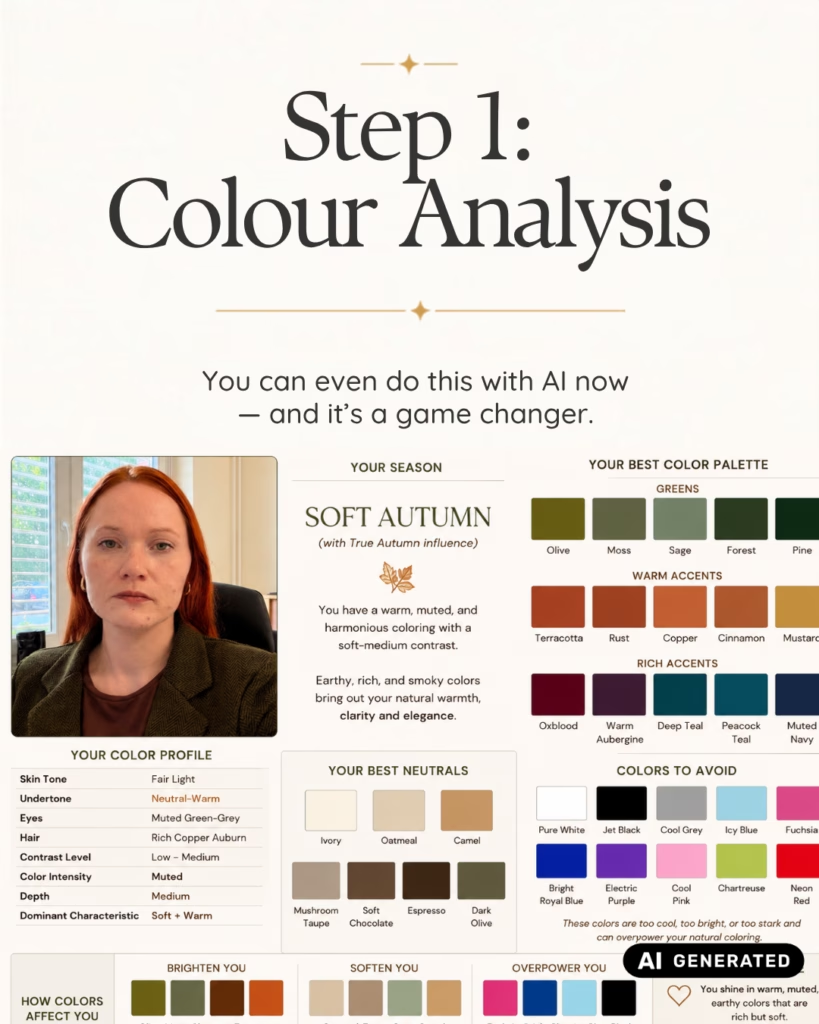
Now that you know how to dress for your personality, body type and essence it’s time to check out something else: colours. Colour analysis are everywhere and while I don’t believe these seasons are the non plus ultra and you cannot wear anything other than your palette, there’s something you should watch:
Whether you’re warm or cold toned.
In seasonal colour analysis this decides if you’re a winter, summer or a spring, autumn palette. And these can enhance your feature or wash you out.
This is in my colour palette and essence. See how cohesive it looks with my skin tone?
I tried a lot of free colour analysis on the market and it’s basically the question: warm or cold, high contrast in the features or low contrast. For me, I knew for a long time that I was warm toned. And usually identified as a spring. Which was a little tricky because my coloured hair does give me the higher contrasting features, but my natural hair doesn’t. After looking at the colours on the palette and trying on the clothes in that palette I came to realise: I am a true autumn. But, I can lean on colours in the true spring palette. I do look good in spring neutrals and oranges as well as greens, but spring blues and me, not a fit. Whereas I can wear the full autumn palette.
Not in my colour palette. Notice how you see the jumpsuit first, before ever looking at my face and how much more feint I look? For more context: this photo was taken in September on my second summer vacation, while the upper photo is in June and my first vacation without a heavy jacket for the year.
I have a whole Pinterest board with all my analysis, palettes, roots and essences as well as outfit inspirations. Check it out.
You wouldn’t let your boss dictate your career goals. So why let fast fashion dictate your style?
Actionable Steps: How to find your personal style once you determined body type, essence and colours.
Take the “5-Word Challenge”: Grab a notebook and write down 5 adjectives that describe the woman you’re becoming. (Example: Mine were “confident, effortless, bold, warm, and unapologetic.”) Now, audit your closet: Does each piece reflect at least one of those words? If not, it’s clutter, even if it’s “in style.”
Are the pieces in your body type, style, essence or colour or can you combine them to fit them? Heavy tops and soft bottom can soften up the overall look or you can sandwich a colour not in your palette with pieces in your colours and create a cohesive look. The goal is not to throw away your whole wardrobe.
Steal This Trick: Use Pinterest privately (no algorithms judging you!) to create a “Style Identity” board. Pin outfits that make you think, “Damn, I’d wear that to [insert dream scenario].” After 20 pins, you’ll see your archetype start to emerge. (Mine? “CEO who lunches in Edinburgh but can still look effortless and can still wander the highlands“)
Find your fashion inspirations: You need at least three fashion inspirations: your body type, your colour type and your essences. To me that’s Kate Winslet, Kate Middleton, Julianne Moore.
Want to learn even more?“The Curated Closet*” by Anuschka Rees helps you define your style and curate a closet that fits your needs.
Did You Try This?
“If your closet was a dating profile, would it swipe right on the current you? Or is it still stuck matching with ‘2019 Corporate You’?”
2️⃣ Pillar 2: The “Hell Yes” Edit: Quality Over Quantity (Even on a Budget)
This is the part where we find a minimalistic but versatile wardrobe for professional you, so have a sustainable closet for your careers and at the same time build a timeless wardrobe that even saves you money in the long run. You’re not “saving money” by buying a $20 blazer you’ll replace in 3 months. You’re donating to the “I’ll Deal with This Later” fund.
The Rules:
The 80/20 Rule: 80% of your wardrobe should be “hell yes” pieces that make you feel like a version of yourself. The other 20%? Experimental wildcards (because growth requires play). That 20% can even include the current fashion trend part, because we still want to look instyle.
Investment Hierarchy: Spend on:
Shoes (they carry you,literally). You wear them for years and good shoes support your feet the whole day and don’t hurt after your commute to the office.
Bags. Truly the most timeless pieces. And it’s not about designer bags. No, we need something sturdy with a long usage span.
Outerwear (it’s the first thing people see). A good jacket should last you years if not a lifetime.
Budget Hack: Vinted is your friend. Especially in your finding phase. Then look for smaller, sustainable brands, that offer truly timeless pieces without the luxury brand price tag.
Pro Tip:
“A $200 bag you’ll use daily is cheaper than five $50 bags you’ll donate. Math.”
3️⃣ Pillar 3: The “Mirror Test”: Does It Align with Your Future Self?
The key is dressing for your goals and for growth. If you’re still looking like the college intern, who will seriously see you as the successful career woman. Yes, you can start with the standard pieces, but we want to curate our wardrobe now that we’re not the entry job level anymore.
[
]
The question you should ask yourself is: If you wouldn’t wear it to your dream job interview, why are you wearing it to your current job?
The Mirror Test Workflow:
Hold up the item. Ask: “Does this represent where I’m going or where I’ve been?”
Check the fit. Not just physically, emotionally. Does it make you stand taller? Or slouch into “meh”?
Style it with your “power piece.” (Mine’s a vintage brillant ring my grandma gave me. Yours might be a watch, a necklace or killer earrings. It should be something that makes you go: „Damn, girl.“) If the outfit doesn’t elevate your power piece, it’s not worthy. If you don’t have a power piece yet try this: what makes you feel more confident. Like, are you like me and rings make you put your hands on the table in a confident pose and take control of the meeting?
Want to know the theory behind? „The Psychology of Fashion*” by Carolyn Mair describes the connection behing psychology and fashion, truly fascinating.
❓ Q&A: Your Burning Style Questions, Answered
“I love color but my office is all black/gray. How do I rebel (professionally)?” → Answer: Start with ‘micro-doses’: a silk scarf in muted colours or graphics, emerald green or brown loafers, a coloured shirt or blouse under the black suit or a lipstick that makes you feel like a villain in a rom-com. See how its received. Maybe no one before you dared to break the establishment, but it’s not a forbidden thing. <If there’s a written dresscode I would keep to that. I once worked at a place that clearly stated: black, brown, navy, grey or beige suits or costumes and no white costumes allowed. But then you can still play with the combinations and a coloured shirt or blouse. I wouldn’t recommend going into colour blocking or bright red immediately, but you can be subtle and colourful.
“I work from home. Why bother dressing up?” → Answer: Because ‘athleisure’ is a lie. Your brain performs better when your body feels prepared. If I’m just doing admin all day that does work out, but for meetings or even that „meh“ costumer email? Try ‘zoom-ready’ tops + comfy bottoms, it’s the WFH uniform of champions. And will enhance your confidence. Also add makeup and do your hair on those days. Even an overnight blowout that you take down directly before the call with give you a boost.
“How do I stop impulse buying?” → Answer: Implement the ‘72-Hour Rule’: If you still want it after 3 days, then buy it. (90% of my ‘must-haves’ become ‘mehs’ by hour 48.) This also works great with a budget. I have a yearly fashion budget that I divide in to the months. Every year I have a focus. Last year I needed to add to my summer wardrobe, this year it’s spring and autumn. Now I look at my wish list, delete the „mehs“ and then I prioritise according to my budget and needs. That’s how I decide this month I will buy this jacket and then I can only fit that blouse into my budget and next month it’s these shoes and that skirt if I still want them.
🎯Your Spring Style Manifesto
This isn’t about “spring cleaning” your closet. It’s about curating a wardrobe that grows with you. One that whispers (or shouts), “Yes, this is who I am. And this is where I’m going.”
Your Action Plan:
Today: Do the 5-Word Challenge. Text a friend your list, accountability works.
This Week: Pick one “hell yes” item to invest in. (Start small: a belt, a pair of earrings, a lipstick.)
This Month: Schedule a “closet date” with yourself. Play music, pour wine and only keep what passes the Mirror Test. The rest you can sell on Vinted or another platform of your choice and fill up your fashion budget.
Final Thought:
“Style isn’t about what you wear. It’s about how you live. And darling, you’re not dressing for the gram. You’re dressing for the legacy.”
💬 P.S.Remember Sarah from accounting? She started dressing for her “future self” (a.k.a. swapped her frumpy cardigans for structured blazers) and got promoted and asked out by the cute barista. Coincidence? I think not. Your turn.
Intro: The Day My Brain Exploded (Literally, Almost)
Picture this: It’s a Tuesday. I’m sitting at my desk, staring at my third cup of coffee, my to-do list looks like a CVS receipt, and my brain feels like a browser with 97 tabs open, all playing ads. I had just promised my boss I’d create that perfect presentation, my mom was at the hospital and my grandma had called the police the previous night because her granddaughter had been at a party at 2 am at 24 years old. Then, it happened. I opened my notes app to add “buy more coffee” and saw it: 147 unfinished tasks, 37 chapters to go in my study books and a still my head was killing me. My brain short-circuited. I actually said out loud, “WTF is wrong with me?” That’s when I realized: I needed a mental declutter. Not just a little tidy-up, but a full-on, Marie Kondo-style purge of the mental junk drawing my energy, focus and joy. If you’ve ever felt like your brain is a hoarder’s basement, full of “shoulds,” “what-ifs,” and “I’ll-get-to-thats”: this is your sign. It’s time for a mental spring cleaning.
This post contains affiliate links, by clicking on the link I may earn a small commission to no extra cost to you. Affiliate links are marked as „*“. This post is purely for entertainment purposes.
Why Mental Decluttering is the Ultimate Productivity Hack (And Why You’re Probably Avoiding It)
Here’s a fun fact: The average person has about 6,000 thoughts per day. And if you’re anything like me, at least 5,999 of those are some version of “Why didn’t I say that in the meeting?”, “I should meal prep,” or “Is it too late to become a Youtube star?” Our brains weren’t designed to handle the constant barrage of information, commitments and digital noise we throw at them. Mental clutter is like a computer running too many programs; it slows you down, drains your battery and eventually crashes. But here’s the kicker: Most of us spend more time organizing our sock drawers than our minds. We’ll deep-clean our kitchens, but we won’t delete the 3,000 unread emails in our inbox. We’ll KonMari our closets, but we won’t question why we’re still holding onto a grudge from 2017.
Mental decluttering isn’t just about feeling better, it’s about performing better. Studies show that reducing mental clutter can:
Boost productivity by up to 40% (yes, really)
Lower stress and anxiety
Improve sleep and decision-making
Make you feel like you’ve got your life together (even if you don’t)
So, if you’re ready to stop feeling like a hamster on a wheel and start feeling like the CEO of your own life, let’s dive into the mental decluttering rituals that actually work.
Step 1: The Brain Dump
What it is: A no-holds-barred, stream-of-consciousness dump of every single thought, task, worry and idea swirling in your head.
Why it works: Your brain is like RAM, it can only hold so much at once. When you offload everything onto paper (or a doc), you free up mental space for what actually matters.
How to do it:
Grab a notebook, a blank doc or a voice memo app.
Set a timer for 10 minutes.
Write down everything, from “call mom” to “why do I still have that weird dream about high school?” No filters, no judgment.
When the timer goes off, take a deep breath. Congrats, you just emptied your mental trash can.
Pro tip: Do this first thing in the morning or right before bed. It’s like giving your brain a spa day.
You can also just talk to yourself, that’s what I do often because I want to spare myself the work of actually journaling. At times I dictate it into my AI assistant to sort through and create actual usable summaries of my thoughts.
Did you try this? Seriously, pause and do a 5-minute brain dump right now. I’ll wait.
Step 2: The Commitment Audit (AKA The “Why Am I Even Doing This?” Test)
What it is: A ruthless review of every commitment, goal, and obligation in your life to see if it’s still serving you.
Why it works: We say “yes” to things out of guilt, FOMO or habit, then wonder why we’re exhausted. This is about reclaiming your time and energy for what truly matters.
How to do it:
Make a list of everything you’re currently committed to, work projects, side hustles, social obligations, even that book club you never attend.
For each item, ask:
Does this align with my current goals or values?
Does this bring me joy, fulfillment or growth?
If I dropped this tomorrow, would I feel relief or regret?
Quit, delegate or renegotiate anything that doesn’t pass the test.
WTF Fact: The average person spends 41% of their time on tasks that don’t align with their goals. That’s like working two days a week for free. And then we’re wondering why we’re not advancing in life and our goals. Stop volunteering for your own burnout.
Step 3: The Digital Detox (AKA The “Why Is My Phone a Black Hole?” Challenge)
What it is: A strategic cleanse of your digital life, emails, apps, notifications and social media.
Why it works: Our devices are designed to hijack our attention. The average person checks their phone 96 times a day. That’s not productivity, that’s dependency.
How to do it:
Unsubscribe from emails you never read.
Delete apps you haven’t used in 30 days. (Yes, that includes the one you downloaded to “learn Spanish” in 2020.)
Turn off non-essential notifications. Your brain doesn’t need a ping every time someone likes your post.
Schedule “no-screen” blocks, especially first thing in the morning and before bed.
Pro tip: Try a “digital sunset”, no screens 1 hour before bed. Your sleep (and sanity) will thank you. But honestly, that is so much harder to do than in the mornings, especially if you’re like me: blogger and content creator and only have two hours in the evenings to work on that.
Step 4: The Memory Palace
What it is: A system for organizing and storing information so you’re not constantly searching for it.
Why it works: Mental clutter often comes from not having a reliable system for the stuff you need to remember. When you know where everything “lives,” your brain can relax.
How to do it:
Use the “Two-Minute Rule”: If a task takes less than two minutes, do it immediately. (Putting your keys in the same spot every time? Two minutes. Replying to that text? Two minutes.)
Create a “Home” for Everything: Designate specific places for your wallet, charger, workout clothes, etc. No more frantic searches before work.
Use a “Second Brain”: Tools like Notion or Evernote can store ideas, lists, and resources so you don’t have to remember them.
If you’re a visual person, try the “Bullet Journal Method” by Ryder Carroll*. It’s like a planner, diary, and to-do list all in one. I’m a list person and love having everything separate but in one place, so notion is my way to go.
Step 5: The Future Self Letter
What it is: Writing a letter from your future self to your present self, giving advice and perspective.
Why it works: It helps you see what’s truly important and let go of the stuff that isn’t.
How to do it:
Imagine it’s one year from now. You’re happier, healthier and more successful.
Write a letter to your current self. Include:
What you’re proud of accomplishing
What you wish you’d stopped worrying about
Advice for the next 12 months
Seal it and open it in a year or read it whenever you feel stuck.
Don’t feel comfortable with writing a letter format? Write a description of your future self in the first person. Having a list of strong „I will“’s is gonna be a gamechanger, trust me.
Q & A: Your Burning Questions About Mental Decluttering
Q: “I don’t have time for this! How do I start small?” A: Start with a 5-minute brain dump or a 10-minute commitment audit. Even small steps create momentum.
Q: “What if I feel guilty about quitting things?” A: Guilt is just fear in disguise. Ask yourself: “Is this serving me or am I serving it?” Your time is precious, spend it on what matters. Prepare for talks about projects work or social and I recommend a yes-no-yes format. Start with something positive about the project, kindly form the no and then offer the person something positive, like „another time“ or „let’s get back to that“. Everyone will leave that room feeling good about themselves.
Q: “How do I stop overthinking at night?” A: Try a “worry dump” before bed. Write down everything on your mind, then tell yourself, “I’ll deal with this tomorrow.” Works like magic.
Q: “What’s the one thing I can do today for instant relief?” A: Delete one toxic app, unsubscribe from 10 emails, and say no to one thing you don’t want to do. Boom, mental space created.
Conclusion: Your Brain Deserves a Spa Day
Here’s the truth: Mental clutter isn’t just annoying, it’s expensive. It costs you time, energy and opportunities. But the good news? You’re not stuck with a messy mind. You can declutter, reset, and reclaim your focus, one small step at a time. So, grab your notebook, your delete button, and your courage. Your future self is waiting for you to show up, clear, focused and ready to live your best life. Now, go declutter something. Your brain will thank you.
Want to learn more about becoming productive without burning out? Here’s my post on soft productivity so you get more done without risking a burnout.
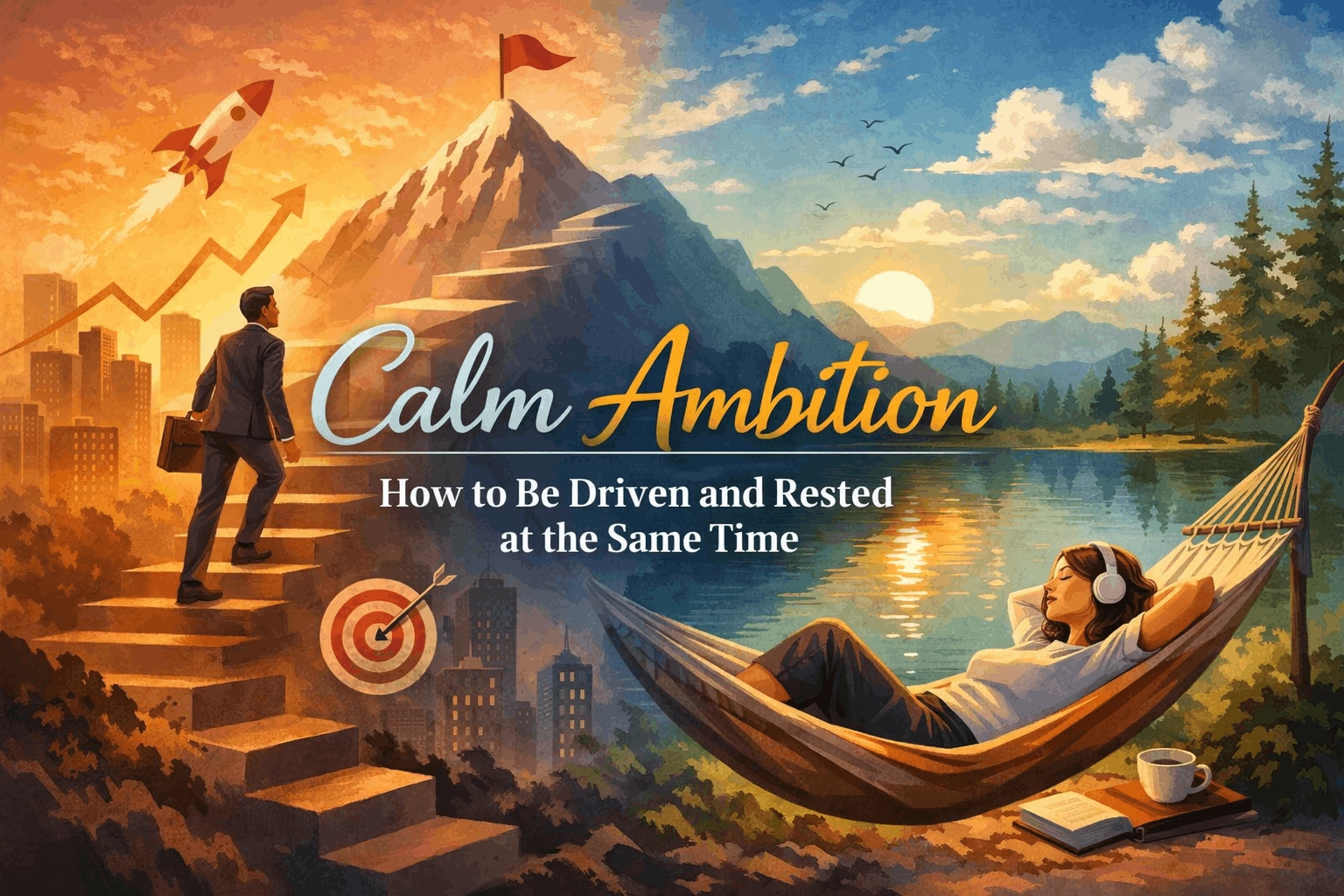
6:00 AM. The world outside my window is still and grey-blue, the hush before a busy day. I’m cradling a mug of coffee in both hands, feeling its warmth steady me. In this quiet moment, I finally allow myself to pause. No emails, no meetings, just the soft breath of morning. A strange mix of peace and ache swirls in my chest. Peace, because I’m safe in this sliver of time that’s just mine. Ache, because I know once the day roars to life, I’ll be running, heart and mind sprinting to keep up with endless demands.
This post contains Affiliate Links, by clicking on them I may earn a small commission to no extra cost to you. Thank you for supporting this blog. Affiliate Links are marked as „*“.
A few years ago, this was the exact time I’d already be on my laptop, chipping away at a to-do list that never ended. Dawn after dawn, I treated morning calm as a prelude to hustle. I thought if I could just grind a little harder, sleep a little less, I’d finally catch up with my ambitions. Spoiler: I never did. Instead, I caught something else: burnout, in all its brutal subtlety.
That morning, something shifted. I opened my notion app and, instead of a task list, I wrote down a simple question: „What if achieving more doesn’t mean doing more?“ The words glowed on the screen like a gentle dare. My mind had been so trained to equate ambition with exhaustion that considering another path felt revolutionary. But a calm ambition was exactly what I needed. Drive fueled by purpose and balance, not by constant adrenaline and anxiety.
Little did I know, this moment of clarity was the start of a new chapter. One where big goals and calm productivity could coexist, where I could be driven and rested at the same time. If you’re reading this, maybe you crave that balance too. Let me share what I’ve learned about pursuing success without losing yourself, about pushing forward with a spirit that’s steady, not frenzied.
The Paradox of Ambition and Rest
Ambition and rest seem like opposites. Hustle culture taught many of us that you can’t have big success without big sacrifice, late nights, early mornings, the grind 24/7. I wore my exhaustion like a badge of honor in my private life and at law school, as if havin 14-hour days proved something about my character. But in reality, I was trading away pieces of myself for an illusion of productivity. I was always busy, yet often not truly effective.
It turns out, burnout often hides behind ambition. We might look super-committed on the outside, but underneath that “productive” facade is chronic fatigue and fading passion. As some leadership coaches bluntly put it: >> Burnout loves to hide behind ambition. Wearing the mask of productivity, but underneath is exhaustion disguised as drive. << That line hit me hard when I first read it. How many of us are walking around in a fog of overwork, thinking it’s normal because everyone else in the office is doing the same?
In corporate life, exhaustion can even be encouraged. We celebrate coworkers who power through and stay online late. But beneath that culture of overwork lies a quieter truth: burnout is your body and even your intuition telling you that something has to change. Feeling chronically drained and cynical isn’t a sign you’re weak or “not tough enough”; it’s a sign that the way you’re working isn’t sustainable. I learned this the hard way. Burnout doesn’t usually announce itself with a big breakdown right away. It sneaks in quietly. First you’re just a little more tired than usual. Then you start to notice your focus fraying. Eventually, even small tasks feel like dragging a boulder uphill. I remember sitting on my bed one night rocking and nearly in tears because I didn’t know how to continue. I had nothing left in the tank. I had been running on fumes for so long, convincing myself that was what ambitious people do. And it took getting physically ill for me to recognise it. And I do not mean feeling exhausted or unmotivated. I had trouble with my balance, perpetually felt like I was on a roller coaster, I had tinnitus, I had stomach pains, I was dizzy all the time, my autoimmune medications had to be upped 250%.
Here’s the reality: Rest isn’t a reward or a weakness; it’s a non-negotiable part of real success. Rest is part of ambition… Without it, there’s no real success, just exhaustion. That stopped me in my tracks. Exhaustion dressed up as productivity, what a perfect description of my life at the time. I was busy but not truly moving forward. I was present at uni but not fully present in my life. The paradox is that by doing less or rather by doing more thoughtfully with rest, you often achieve more. When you’re rested, your work is sharper and your motivation more sustainable. It’s like training for a marathon instead of a sprint, you have to pace yourself. Sure, you can sprint all-out for a short burst (we all have crunch times), but you can’t sprint through an entire marathon without collapsing. And what’s the point of reaching the finish line of your goals if you’re too exhausted or unhealthy to enjoy the victory?
Modern workplace culture is starting to catch on. Burnout has become impossible to ignore. Studies show it’s at an all-time high. In fact, nearly 3 in 4 employees report moderate to high stress at work and a majority have experienced symptoms of burnout. This is not a personal failing; it’s a systemic issue and a wake-up call. The world isn’t going to hand us balance on a silver platter, so we have to create that balance for ourselves. As long as we all hustle ourselves through corporate, why should corporations change?
So, if you feel stuck between your big dreams and your desire to actually have a life, know this: you’re not alone, and it is possible to find equilibrium. In the next sections, we’ll look at how to embrace calm productivity, set boundaries that stick, and manage your energy so you can pursue your ambitions without burning out.
Embracing Calm Productivity
What is calm productivity? To me, it’s the art of working with a clear, focused mind and an unhurried heart. It’s doing great work without the drama and chaos we’ve been conditioned to think is normal. Think of it as replacing the frantic hustle with a more intentional flow.
I used to believe that stress was an inevitable side effect of getting ahead. If I wasn’t a little anxious or rushing, maybe I wasn’t working hard enough. But that mindset is not only unhealthy, it’s actually counterproductive. The best decisions and the most creative ideas tend to emerge when you’re calm, not when you’re in panic mode. Have you ever noticed that when you’re frantically juggling tasks, you miss things or make mistakes? In contrast, when you approach your day with a calmer mindset, you can give each task your full attention and do it well or that you get your best ideas in the car or under the shower, maybe even when you’re trying to fall asleep? I found I had trouble shutting up my brain to fall asleep, because that was literally the only room for thought I had left. Can you imagine what happened after I basically scheduled thinking time in?
Calm productivity starts with focusing on what truly matters each day, rather than drowning in minutiae. It might mean reducing your to-do list to a realistic top three priorities instead of ten. It also means deliberately adding pauses into your day. I know that sounds counter-intuitive, pausing when you have so much to do? But research is on the side of the pausers. Short breathers during work, even just 5-10 minutes to stretch or walk, can boost your focus and cut fatigue significantly. One study found well-planned micro-breaks improved productivity by 13% on average while cutting mental fatigue by nearly 50%. So those little breaks you skip because you feel guilty taking them? They might actually be the key to getting more done with less effort. To me things like getting up for a coffee at work and chatting a few minutes with a coworker have become an integral part of my work day since I learned that.
Another aspect of calm productivity is managing your energy, not just your time. We all have ebbs and flows in our energy through the day. Some of us are sharpest in the morning, others hit a groove in the afternoon. Pay attention to those patterns. If possible, schedule your most important or demanding work during your peak energy times and give yourself permission to recharge during the lulls. As Harvard Business Review famously pointed out, manage your energy, not just your time. That means recognizing you’re not a machine that can output at max capacity 12 hours a day. And when you do rest, whether it’s a lunch break, a short walk, or a quiet evening off, try to be fully present in that rest. Protect it like you would an important meeting, because it is one – just with yourself! That’s why I block two hours in the morning when I WFH to do my most difficult tasks. No one can enter my office to interrupt and I ignore the phone. Calling back is always an option. I also leave the office for lunch and it’s a gamechanger.
Finally, calm productivity thrives on consistency over intensity. Imagine two writers: one writes feverishly for 10 hours straight and then is burnt out for a week; the other writes for 2 focused hours every day and then rests. Who will have written more by the end of the month? Likely the steady, consistent one. As the Monthly Method blog wisely noted:
“No one hands out awards for ‘most struggle.’ You don’t get a star for suffering. You get the star for shipping valuable work.”
Love that quote. In other words, the outcome matters more than the ordeal. If staying calm helps you produce better results, then dropping the drama is actually a smart career move.
Setting Boundaries and Managing Your Energy
If you wince at the word “boundaries,” you’re not alone. Ambitious professionals often feel that saying no or drawing lines will brand them as difficult or uncommitted. I used to be a chronic people-pleaser, answering every question for support, saying Yes to every invitation and taking on extra projects I knew would overload me. I thought I was being a team player or at least protecting my reputation as a high achiever. In truth, I was sabotaging my own wellbeing and, ironically, my long-term productivity.
Setting boundaries is an act of respect, for yourself and for others. When you communicate your limits, you’re saying “I value my work and I want to sustain my ability to do it well.” If you keep pushing past healthy limits, you eventually hit diminishing returns or a wall. Boundaries might look like: not checking work email after a certain hour or taking your full vacation days (radical, I know!). It could mean politely declining a project or invitation when your plate is full, or negotiating a reasonable deadline instead of automatically saying “yes” to an unrealistic one.
One practice that helped me is creating a clear end to the workday. If you work in an office, this might mean actually leaving by a set time. If you’re remote, it could be shutting down your laptop and physically stepping away. If you have the space, set up your workdesk in another room. Having fixed work hours can be a gamechanger; when time is limited, you learn to prioritize what truly needs to get done and let the rest wait for another time. The work will expand to fill all available time if you let it, so don’t give it all the time. By carving out personal hours in the evening for family, hobbies or rest, you refuel your tank for the next day. And you send a quiet signal to others that your time is valuable.
Another boundary-related skill is learning to say “not right now.” If the boss hands you a new assignment on top of five others, it’s okay to say, “I can take this on, but I’ll need to defer X project or extend Y deadline. Which is the priority?” This isn’t refusal, it’s realistic negotiation. Most reasonable managers will understand, you’re not saying you won’t do the work, you’re saying you want to do it well without burning out in the process. And there usually is some room to change certain deadlines.
Remember, very few things are as urgent as they feel in the moment. We live in an always-on culture that tricks us into treating every email like a 911. But usually, nothing disastrous happens if you respond to that email in three hours instead of three minutes or tomorrow instead of today. Emergencies do occur, but they’re rare. Don’t let a culture of false urgency steal your sanity. Also, not keeping boundaries sets up precedent for the future. Your collegues and manager will soon realise that while you take some extra time for yourself, the results will be well worth it and gasp, maybe they’ll even start negotiating different timelines with costumers. I’m an HR manager. I regularily argue with managers about maximal daily working hours and max. monthly working hours as they are written in the emplyment laws of my country. So, it’s either getting more people involved or extend the timeline. And truthfully, extending the timeline is cheaper. So don’t let them tell you it’s life or death – unless you work in a firefighter, police, emergency services kind of job, it usually never is.
Managing your energy also means setting some personal boundaries with yourself. For example, put your phone on do-not-disturb at night to protect your sleep. If you notice you always hit a concentration wall at 3pm, maybe that’s a great time to schedule a 15-minute break to stretch or grab a coffee, instead of trying to brute-force through the slump. Think of these habits as giving your brain and body the baseline care they need to support your ambition. Adequate sleep, movement, and downtime aren’t indulgences; they are fuel. You wouldn’t expect your car to run on an empty tank or your phone to work on 1% battery, why expect your mind to?
Tools and Habits for Balanced Ambition
Balancing drive and rest isn’t just a theory; it comes to life in daily habits and tools. Over time, I assembled a kind of “calm ambition toolkit” for myself. Here are some practical tools and practices that might help you too, including a few favorites that I genuinely recommend (some of these are affiliate links I trust):
Intentional Planning: I switched from endless digital task lists to a focused planner. You can use a daily planner like the Full Focus Planner by Michael Hyatt to help you set boundaries on your goals for the day. I use a filofax planner to combine a classic planner with bullet journal style pages. And instead of 20 tasks, I identify my top 3. This physical planner’s layout has been a game changer for my focus. If paper isn’t your thing, a tool like Notion can be customized to create a digital planner or habit tracker that keeps you organized without overwhelm. I do keep a notion „Second Brain“ as well. I love that it’s synced between my phone, iPad and Computer.
Mindful Journaling: Incorporating a brief journaling routine (mornings or evenings) can be huge for reflecting and releasing stress. Many love the Five Minute Journal* (a guided journal) for a quick, positive start to the day. It literally takes five minutes to jot down gratitude and intentions, shifting your mindset into one of clarity and calm. If you prefer digital, there are journaling apps or even a simple Notion diary template that can serve the same purpose. I like to do a weekly review and setup every sunday in my planner for myself.
Healthy Sleep Support: Prioritizing sleep is non-negotiable for energy and mood. I set up a wind-down routine at least an hour before bed: dimming the lights, putting my phone away (work in progress still), reading a few pages, sipping some herbal tea or hot cocoa. Tools can help too. A friend swears by her Philips Sunrise Alarm Clock that wakes her gently with light instead of a blaring alarm. Wheras I need a marching band as an alarm clock to wake up. Sometimes I take natural magnesium supplements or Ashwanganda to help my body relax. Good sleep is a pillar of burnout prevention and energy management.
Boundary Reinforcements: Sometimes we need reminders to stick to our boundaries. Consider using features like app timers (to limit after-hours email or social media), or a digital planner that ends your day at a set time. You can pretty much just set an alarm prompting you to shut down work apps, tidy your desk and plan tomorrow (basically just sorting tommorrow’s task by priority). It sounds trivial, but these cues create a ritual that separates work from personal time.
Mindfulness and De-stress Tools: To stay driven and calm, it helps to regularly empty the stress bucket. For some, exercise is the outlet. For others, meditation or breathing exercises do wonders. I have my daily walks with my dog and working out as well as reading. Once a month I do something just for myself, a spa day, colouring etc. Another colleague uses Headspace and swears by their short “focus” meditations on hectic days. Even a quick 3-minute guided breathing video on YouTube can reset your mood. Find what works for you, these tools teach your nervous system to relax, so you’re not living in fight-or-flight mode all the time. This is something deeply personal. While one may swear on yoga and meditation, another needs to move their body or maybe just their hands.
These are just a few examples. The goal isn’t to overload you with new chores or a strict routine, it’s to support your balanced ambition with resources that make the journey easier and more enjoyable. Try one or two that resonate and ignore the rest. Even small changes, like charging your phone outside the bedroom (so you’re not checking work email at 5 am) or taking a 10-minute walk at lunch, can have a profound effect over time.
[
](https://www.stylink.it/dnX2XFN16p7)
Q&A: Navigating Ambition Without Burnout
Q: Can I really be ambitious and not burned out at the same time?
Absolutely. Ambition and well-being are not mutually exclusive, in fact, they fuel each other. Think of it this way: if you’re in it for the long haul, you need to last. Burning out might get you short-term wins, but it will also take you out of the game when your mind or body says “enough.” By pacing yourself and treating rest as part of the process, you actually set yourself up to achieve more. Remember the earlier quote: rest isn’t the opposite of ambition, it’s part of it. High achievers in many fields, from athletes to CEOs, often talk about the power of recovery and downtime to keep them at peak performance. So being driven and being rested can go hand in hand. Consider your ambition a fire, you want it to burn steadily, not flare up and burn out.
Q: My job is really demanding. How can I set boundaries without looking lazy or uncommitted?
This is a common fear. The key is communication and consistency. First, recognize that setting boundaries is actually professional. It shows you manage your time and energy wisely. When you need to draw a line (like “I don’t take work calls after 7pm” or “I can’t take on another project this week”), frame it in terms of maintaining quality. For example, you might tell your boss, “I want to give Project X the focus it deserves, which means I can start Project Y next week once X is in a good place.” You’re not saying “no” flat-out; you’re saying “not right now so I can do it right.” Also, lead by example in small ways: if you don’t reply to non-urgent emails at midnight, people will learn that’s not your expected rhythm (and they might even envy your work-life balance). It might feel awkward at first, but most reasonable managers and colleagues will respect someone who sets healthy limits, as long as you continue to deliver quality work during your yes time. And if you do encounter pushback, remember that any workplace that demands you sacrifice your well-being 24/7 is not a healthy one and that’s a larger red flag beyond just you.
Q: What are some quick ways to recharge my energy during a hectic workday?
When you’re slammed, taking a break feels counterintuitive, but it’s often exactly what your brain needs. Some mini-recharge ideas: take a brisk 5-minute walk around the block or office floor, do some gentle stretches at your desk, or simply close your eyes and take 10 deep breaths. You could also keep a fun book or calming playlist handy, spending a few minutes reading a couple pages or listening to a favorite song can reset your mood. One of my favorite tricks is the coffee nap: if you can, drink a small cup of coffee while closing your eyes (maybe breathing in the tasty aroma) and just breathe. The caffeine helps you wake up and it’s a little rest for your eyes (remember, blue light) and your brain and those 5 minutes of rest (even if you don’t fully sleep) can work wonders. Science has shown even short breaks like these can boost productivity and reduce fatigue, so never feel guilty about recharging. Think of breaks as pit stops in a race, they’re brief but essential for the engine (that’s you!) to keep running smoothly.
Q: I feel guilty when I’m not working. How do I get over the guilt of resting?
Oh, I relate to this so much. The guilt usually comes from an ingrained belief that “every minute not hustling is a minute wasted.” To rewrite that script, start by reminding yourself (even out loud) what you’ve learned: rest is productive. When you catch that guilt voice in your head, answer it with logic: “If I take 30 minutes to recharge now, I will focus better this afternoon,” or “I deserve to enjoy my evening after a full workday, that way I’m refreshed tomorrow.” Sometimes it helps to actually schedule your rest like an appointment. When it’s on the calendar, treat it as a commitment. Also, reflect on times you pushed through exhaustion versus times you rested and came back stronger. The outcomes will tell the story. Over time, as you experience the benefits of rest, the guilt will start to lessen. It might not disappear overnight, but keep reinforcing the new belief that rest is a strategy, not a setback. Remember, you are a human being, not just a human doing. Embrace your right to be.
Q: I’ve already burned out before. How can I recover and still go after my big goals?
First, I’m sorry you went through that. Burnout recovery is a journey that requires patience above all. The fact that you’re asking this question means you still have that fire in you, which is wonderful. Start by allowing yourself to heal, prioritize sleep, take some time off if possible, and do activities that replenish you (exercise, time in nature, hobbies, therapy, whatever fills your cup). It might feel like you’re slowing down, but you’re actually laying a new, stronger foundation. As you regain energy, ease back into your goals gently. Maybe break your big goals into smaller milestones so you can make progress without feeling overwhelmed. Apply the lessons you’ve learned: set those boundaries, keep balance in check, and monitor your stress signals. If you start to feel the old burnout symptoms creeping in (fatigue, cynicism, brain fog), that’s your cue to adjust. Burnout recovery isn’t linear, there may be fits and starts, but it can ultimately make you more resilient. Many people come back from burnout with a clearer sense of what they truly want (and what they don’t). I certainly feel like I did. Use that clarity to pursue your big dreams in a wiser, kinder way to yourself. You absolutely can still achieve amazing things; in fact, you’ll likely do it with more heart and sustainable momentum now. And lastly, don’t be afraid to ask for help! You are not failing. The system is. And you can build a new one.
Conclusion: Thriving Softly into Success
The sky outside my window is bright now, the day fully awake. I think back to that quiet morning when I questioned the old hustle narrative. It felt like a rebellion and a relief all at once. Since then, I’ve seen that calm ambition isn’t just a nice idea, it’s a lived experience. It’s moving toward your goals with steady determination and a sense of inner peace. It’s knowing when to push and when to ease off the gas, trusting that the road to success is not a drag race but a journey with rest stops along the way.
If you take one thing from this, let it be permission: permission to pursue your dreams at a pace that doesn’t break you. You are allowed to set big, audacious goals and get a full night’s sleep. You are allowed to be wildly ambitious and fiercely protective of your well-being. In fact, that’s the secret sauce. That’s how you balance ambition with a life that feels good to live.
I’m still a work in progress, and that’s okay. Some days I slip into old overworking habits, but now I notice the warning signs sooner and course-correct with a nap, a walk, or an honest talk with a friend. The difference is: I no longer equate slowing down with falling behind. To me, slowing down sometimes is how I speed up in the long run, how I make sure I’ll be around to enjoy the fruits of my labor.
You can thrive softly, my friend. You can chase your dreams and savor your days. And you don’t have to do it alone. If this message resonated, consider joining our community. Subscribe to the newsletter for more personal stories and practical tips on mindset, calm productivity, and living a fulfilling life without the burnout. Let’s support each other in this journey of achieving more by stressing less. And feel free to check out other blog posts on mindful ambition and slow living for more inspiration.
Here’s to your calm ambition, may you reach those big goals and have energy left to celebrate when you do. Go get ‚em, and don’t forget to rest along the way.
I once wasted 15 of my 30 PTO days on two beach weekends and still came back to the office snoozing 😴. It hit me then: why burn precious days on predictably short trips? After a few failed “I’m on vacation” outrages, I learned you can stretch 30 days into months of adventure with clever planning. In this blog, we’ll spill all the tricks, from mastering Germany’s Brückentage to milking UK bank holidays, plus where to go for every long weekend. Think of it as a secret playbook for corporate travel junkies who refuse to let a normal calendar cramp their style. Let’s turn your desk days into days of travel bliss without angering your boss or ghosting your career. Ready?
This post contains affiliate links, meaning by clicking on them, I may earn a small commission to no extra cost to you. Links are marked as „*“.
Hack the Calendar
Brückentage & Bank Holidays
Germany’s Brückentage: The Germans have a secret weapon: “Brückentage” – the days you can bridge between a public holiday and a weekend. Plan ahead and 24–30 vacation days can become up to 60 days off. For example: Easter 2025: Good Friday to Easter Monday are holidays. Take off April 14–17 and April 22–25 (just 8 PTO days), and you’ll enjoy 16 days of spring break. Labor Day (May 1, Thurs): Book Friday May 2 as vacation for a 4-day weekend (Thu–Sun) with only 1 PTO day. Or take the whole week (Apr 28–May 2) off for a full week with just 4 days of leave. Ascension (May 29, Thurs): Same trick as May Day; take Fri May 30 for a 4-day break, or the entire week (May 26–30) for just 4 PTO days. Whit Monday (June 9): Book off June 10–13 for 9 days off in a row with only 4 PTO days – perfect for an early summer getaway.
Using the long weekend around Unity Day to visit London regularily
Unity Day (Oct 3, Fri): Take Thurs Oct 2 off and score a 4-day autumn break. Each small extension turns a long weekend into a mini-vacay. With Germany’s 2026 calendar, we’re practically living in holiday mode if we play it right.
This website uses cookies to improve your experience. We'll assume you're ok with this, but you can opt-out if you wish.
Read More
Cookies sind kleine Textdateien, die von Websites verwendet werden können, um die Benutzererfahrung effizienter zu gestalten. Das Gesetz besagt, dass wir Cookies auf Ihrem Gerät speichern können, wenn sie für den Betrieb dieser Website unbedingt erforderlich sind. Für alle anderen Arten von Cookies benötigen wir Ihre Erlaubnis. Diese Website verwendet verschiedene Arten von Cookies. Einige Cookies werden von Drittanbieterdiensten platziert, die auf unseren Seiten erscheinen.
Necessary cookies help make a website usable by enabling basic functions like page navigation and access to secure areas of the website. The website cannot function properly without these cookies.
Marketing cookies are used to track visitors across websites. The intention is to display ads that are relevant and engaging for the individual user and thereby more valuable for publishers and third party advertisers.
Preference cookies enable a website to remember information that changes the way the website behaves or looks, like your preferred language or the region that you are in.
Unclassified cookies are cookies that we are in the process of classifying, together with the providers of individual cookies.
Do you really wish to opt-out?
Cookie-Einstellungen
Cookies sind kleine Textdateien, die von Websites verwendet werden können, um die Benutzererfahrung effizienter zu gestalten. Das Gesetz besagt, dass wir Cookies auf Ihrem Gerät speichern können, wenn sie für den Betrieb dieser Website unbedingt erforderlich sind. Für alle anderen Arten von Cookies benötigen wir Ihre Erlaubnis. Diese Website verwendet verschiedene Arten von Cookies. Einige Cookies werden von Drittanbieterdiensten platziert, die auf unseren Seiten erscheinen.
Necessary cookies help make a website usable by enabling basic functions like page navigation and access to secure areas of the website. The website cannot function properly without these cookies.
Marketing cookies are used to track visitors across websites. The intention is to display ads that are relevant and engaging for the individual user and thereby more valuable for publishers and third party advertisers.
Preference cookies enable a website to remember information that changes the way the website behaves or looks, like your preferred language or the region that you are in.