There was a version of me who thought being tired all the time was just adulthood. I thought waking up exhausted meant I needed to try harder. I thought the headaches, the brain fog, the constant tension in my body, and that heavy feeling of moving through every day with nothing left in the tank were just the price of being ambitious. I kept functioning. I kept showing up. From the outside, my life still looked fine.
It was not fine.
Burnout did not arrive in one dramatic moment. It built itself quietly. In the sleep I kept cutting short. In the stress I normalized. In the pressure I treated like proof that I was doing enough. By the time I admitted something was wrong, my body had been trying to tell me for a long time.
That experience changed how I think about longevity. For a long time, longevity sounded abstract to me. Like a shiny wellness word for people with perfect morning routines, expensive supplements and the energy to track everything. But burnout forced me to understand it differently. Longevity is not about becoming obsessed with living forever. It is about building a life and a body that do not collapse under the weight of how you are living now. That was the shift I needed.
I did not rebuild my life by becoming perfect. I rebuilt it by asking a simpler question: what habits would make future me feel safe, steady and well?
These are the five habits I built from scratch during burnout recovery. They changed how I work, how I rest, how I travel, and how I think about success.
Disclaimer: I am not a health professional. Here I am writing about what my own research for personal use taught me. Apply with caution and talk to your health professional before you start.
1. I stopped treating sleep like the thing I could always borrow from
If you had asked the old me what mattered most for health, I probably would have said food or exercise. Sleep felt negotiable. It was the first thing I stole from and the thing I assumed I could make up later.
I was wrong.
In burnout, sleep stopped feeling restorative. I could sleep and still wake up feeling like I had been hit by something. My body felt wired and tired at the same time. That was one of the first moments I realized rest and recovery are not the same thing as simply being in bed.
So I started from zero.
Not with a perfect nighttime routine. Not with a hundred rules. Just with the decision that sleep was no longer optional maintenance. It was infrastructure.
For me, this became very unglamorous very quickly. I got more honest about what happened when I stayed up too late. I was more anxious the next morning, more overstimulated. More likely to reach for sugar, caffeine and sheer willpower instead of actual energy. So I established my first little routines. Going to bed at the same time every day and no work immediately before, even on my blog or social media that are not really work to me.
As an autistic woman with a sensitive nervous system, the quality of my sleep is not a cute wellness detail. It is often the difference between coping and crashing.
What this habit looks like in real life
I protect my bedtime more than I protect most plans.
I try to keep my evenings quieter than my mornings.
I treat bad sleep as useful information, not a personal failure.
I stop pretending I can outwork exhaustion.
Sleep was the first habit that made me feel human again. And if I am honest, it is still the one everything else depends on.
Why sleep matters for longevity Most adults need at least seven hours of sleep each night, and getting too little sleep over time is linked to serious health problems, including heart-related risks. The American Heart Association also notes that poor sleep health is associated with cardiometabolic risk factors like high blood pressure, blood sugar issues, poor mental health and obesity. In plain English: bad sleep does not just ruin tomorrow. Repeated often enough, it can shape the quality of your next few decades. And women need more than seven hours of sleep. Eight should be the minimum amount and since we don’t fall asleep immediately as our head touches the pillow, that should mean nine hours in bed. And on a busy schedule, that’s a lot.
2. I built boundaries before I felt allowed to
One of the hardest things burnout taught me was that being capable does not mean being endlessly available. I used to think boundaries were something you earned once you had done enough. Once you had proven yourself. Once you were less needed. Once everyone else was okay. That logic will drain you for years.
What I needed was not better time management. I needed to stop volunteering my nervous system for things that were never mine to carry.
At first, building boundaries looked incredibly guilty. It looked like saying “No” to friends and family, even to my boyfriend. It looked like not booking every evening. It looked like saying, “I can’t do that this week” instead of finding a way to squeeze one more thing in. It looked like leaving white space in my weekend on purpose and resisting the urge to fill it with errands just because empty time made me uncomfortable.
As an autistic woman in a full-time professional role, my capacity has edges. Burnout forced me to respect them. And honestly, that lesson matters far beyond autism. If you are easily overstimulated, chronically over-responsible or always the one who keeps things together, you probably have edges too. You might just be ignoring them.
A life that only works when you overfunction is not a well-designed life. It is a dependency.
What this habit looks like in real life
I leave white space in my calendar on purpose. At least one completely empty weekend per month.
I make fewer promises when my energy is already stretched.
I stop calling every limit a flaw.
I remember that rest is not what happens after life. It is part of life.
Boundaries gave me something I did not realize I had lost: the feeling that my life belonged to me again.
3. I stopped chasing health trends and started stabilizing my body
After burnout, I became much less interested in doing what looks healthy and much more interested in doing what actually helps.
That changed how I approached food.
I stopped seeing nutrition as a place to perform discipline. I started seeing it as daily support for my energy, mood and resilience. I paid more attention to whether I was eating in a way that kept me stable, not whether it looked impressive on the internet.
For me, that meant fewer extremes and more consistency. More real meals. More protein and fiber. Less pretending coffee counted as breakfast. Less acting surprised when I felt shaky, irritable and exhausted after running on stress and convenience foods all day. I looked into AIP and TCM diets, even ayurvedic methods to see where I could support my body more, beyond trends and I looked at recent nutrition science to back everything up.
One of the biggest shifts I made was during workdays. I stopped waiting until I was starving and then grabbing whatever was fastest. I started going to the kitchen at work and getting myself a salad and a full meal, without having to cook in advance. I started eating a nourishing breakfast, not whatever I felt like at the bakery. Not because I had become exceptionally disciplined, but because I finally understood that my body was not failing me. I was just giving it nothing stable to work with.
There is a big difference between eating to look in control and eating to actually feel well. Longevity, to me, lives in that difference.
What this habit looks like in real life
I build meals around steadier energy, not perfection.
I stop glorifying skipping meals because I am busy.
I choose habits I can repeat in stressful weeks, not just ideal ones.
I care more about how food makes me feel at 3 p.m. than how “good” it sounds on paper.
This habit helped me trust my body again. Not because I followed some perfect plan, but because I finally started paying attention.
4. I learned that movement does not have to punish me to help me
When you are burned out, intense self-improvement can become another form of self-abandonment. I had to learn that movement was not there to fix me, shrink me or make me earn my worth. It was there to support a body that had been under too much stress for too long.
That shift changed everything.
I stopped measuring movement only by how hard it looked. Walking counted. Stretching counted. Yoga counted. Short strength sessions counted. On some days, the most honest thing I could do for myself was go for a walk at lunch instead of forcing a punishing workout after work when I was already fried. That one shift taught me more than any fitness plan ever did. The best movement habit is not the one that makes you feel morally superior. It is the one that gives you more life back.
And really there are only three things to focus on for a long and healthy life while regarding movement:
Cardio matters, because of your VO2max but you need less than you think (FoundMyFitness)
muscles are your health insurance, so resistance training is needed
you need to feel good while doing it and not stress your body out even more
What this habit looks like in real life
I choose movement that supports my energy instead of draining it further.
I aim for consistency, not punishment.
I remember that walking counts. A lot.
I focus on what helps me feel stronger and more at home in my body.
This was one of the first places I stopped trying to force a version of health that did not fit my real life.
If a habit makes your life look healthy but leaves you more exhausted, I am not impressed.
5. I created small recovery rituals instead of waiting for collapse
Before burnout, recovery was something I postponed. I rested when I had no other option. I slowed down when my body basically forced me to. I treated recovery like an emergency response instead of a regular practice.
That does not work if you want a sustainable life.
Now I think in smaller rhythms. Tiny ways to come back to myself before the crash. A quiet walk without a podcast. Ten minutes of lying down in a dark room when my brain feels loud. Journaling when my thoughts start stacking on top of each other. Keeping a slower morning when I can feel that my system is already overloaded before the day has even properly started. A whole day with just me and my book. Two hours in a spa (I use one with private suits where I am truly alone).
None of this looks glamorous online. That is probably why it works.
Longevity is built in these ordinary moments. In the repeated decision to support your body before it starts screaming for help. And for me, this is one of the biggest lessons burnout left behind: my body whispers before it shouts. If I listen earlier, I suffer less later.
What this habit looks like in real life
I do not wait until I am falling apart to recover.
I notice the early signs that I am getting overloaded.
I build regular moments of quiet into weeks that would otherwise eat me alive.
I respect that my body whispers before it shouts.
This habit taught me that recovery is not a luxury. It is maintenance for a life I want to keep living well.
What burnout changed about my definition of longevity
Burnout made me less interested in wellness aesthetics and more interested in what actually holds up under real life.
That is how I think about longevity now.
Not as a performance. Not as a collection of expensive habits. Not as trying to become some optimized machine who never gets tired. But as building a way of living that protects your energy, supports your future and leaves room for being human.
That matters to me because I do not want to spend my best years proving how much I can endure. I want a long life, yes. But more than that, I want a life that feels good to live while I am in it. I want a live where I am still active and out and about at 60, 70 and 80.
And if you are reading this while feeling exhausted, stretched thin and slightly scared by how normal that has started to feel, let this be your reminder: you do not need to wait for a breakdown to start building differently.
Q&A: Burnout, longevity, and where to start
Can burnout really affect long-term health?
The World Health Organization defines burnout as a syndrome resulting from chronic workplace stress that has not been successfully managed and classifies it as an occupational phenomenon. Burnout itself is not just about feeling tired. It often travels with the exact patterns that wear people down over time: bad sleep, chronic stress, low recovery, less movement and worse health habits.
What is the best longevity habit to start with if I feel overwhelmed?
Start with sleep. Not because it magically fixes everything overnight, but because almost everything feels harder when you are exhausted. Better sleep gives you a more stable foundation for every other habit.
Do I need supplements and tracking tools to care about longevity?
No. They can be useful for some people, but they are not the foundation. The basics still matter most: sleep, stress, food, movement and recovery. Then you can look into your blood work and see if you have any deficits you need to supplement or what you can do to support your body better. Oversupplementing can cause health issues as well.
How do I know if I am heading toward burnout?
Pay attention to what feels normal now that would have worried you a year ago. Constant tiredness, irritability, brain fog, headaches, feeling numb, needing all weekend to recover and never fully feeling rested are all signs worth taking seriously.
Is rest productive?
I think that is the wrong question. Rest is not valuable because it makes you more useful. It is valuable because you are a human being, not a machine. The side effect is that life usually works better when you stop running on empty.
The habits I built were simple. The life they gave me was not.
I did not rebuild my life in one dramatic transformation. I rebuilt it in boring decisions that I kept making. Earlier bedtimes. Better boundaries. More stable meals. Gentler movement. Real recovery. And the result was not that I became perfect. The result was that I became steadier.
I became someone who could notice what was happening before I crashed. Someone who could protect her energy without apologizing for it. Someone who could care about long-term health without turning it into a second full-time job.
That is what I want more women to understand about longevity.
It is not just about adding years at the end. It is about refusing to burn through yourself on the way there.
If this is the kind of thinking you want more of, my newsletter is where I share what is actually working. Not perfect plans. Not wellness performance. Just honest systems, real routines, and the small shifts helping me build a life that feels better to live.
Hey, friend. Let me start with a story – my story. A few years ago, you’d find me in my car at 8 PM, parked outside the hospital, exhausted tears streaming down my face. I was 24, trying to finish law school, with my mum in the hospital, my grandma suffering from dementia, chronically broke and utterly burned out. My energy was zilch, my sleep was a joke, and I was running on caffeine and sheer panic. And when I say that I mean exchanging the milk in my mokka latte for an extra shot of espresso. I kept telling myself, “Just tough it out. Other people handle this, so can I.” Spoiler: I couldn’t. One day my body hit the brakes. I got sick, mentally and physically and realized something had to give.
That “something” turned out not to be willpower (I had tried forcing myself to power through – didn’t work). Instead, it was systems, little daily routines around food, movement, rest, and mindset that gradually put me back together. Seriously, systems, not willpower, saved my butt. I traded the 4-hours-of-sleep zombie routine for a consistent bedtime, the 3 PM candy bar for a handful of almonds and a walk, the constant study chatter in my head for a 10-minute meditation. These weren’t grand life overhauls or woo-woo wellness hacks. They were tiny, unsexy habits, but done every day. And over months, they pulled me out of burnout hell.
Now I feel human again – better than that, alive. And I want the same for you. So let’s talk about how you (a busy professional juggling Zoom calls, family, and that ever-present jabber ping) can protect your energy and avoid the burnout trap. I’ll break down some popular approaches (the good, bad, and ugly), share what science says about building habits that actually stick, give you sample routines to steal, and even dish on a few tools/supplements that help keep the focus and pep high. I’m gonna be the big sis I wish I had back then. Let’s do this!
Disclaimer: This post is based on my personal experiences and is not medical advice. Let a professional check your physical and mental health and seek professional help if needed. Of course I always have an open ear, but I am not a certified expert.
This post may contain affiliate links that are marked “*”. By clicking on them, I may earn a small comission.
Willpower vs. Systems: Why “Try Harder” Isn’t the Answer
When I was burning out, my first instinct was “work harder, use willpower!” As if I could muscle through exhaustion and depression by gritting my teeth. (Spoiler: that strategy sucks.) And it’s something I heard over and over again by other successful people… Here ’s the thing: willpower is a limited resource and by the end of a stressful day it’s basically as fried as my brain. There’s even a name for it: decision fatigue. The more choices and self-control we exercise, the more our decision-making ability deteriorates. Ever notice how after a long day of decisions, you have zero clue what to have for dinner and end up eating cereal? Yup, that’s decision fatigue in action(Which sometimes still gets me). Even President Obama famously wore the same few suits every day to avoid wasting mental energy on trivial choices, so I’ve heard. The man had a point, save your willpower for the big stuff, not whether you should do yoga at 6 AM or 6 PM or what to wear (it’s why I am building a capsule wardrobe).
This is where systems and routines ride in like the cavalry. As author James Clear says, “You do not rise to the level of your goals; you fall to the level of your systems.” When you build solid daily systems, you reduce the need for willpower. Healthy actions become automatic, not an inner battle each time. My mornings now? Autopilot. I don’t debate what to have for breakfast, food and clothes are already laid out and prepped the evening before, same time, same routine, go. No decisions, no draining my limited a.m. willpower. (And perfected to get me the most amount of sleep possible, 5 AM at its best).
Neurologically, this makes sense: habits live in the brain’s basal ganglia, which once trained will run your routines on autopilot and free your mind up. And each time you repeat a habit, you strengthen those neural pathways, making the behavior easier and more automatic. In other words, systems = your friend. They do the heavy lifting so you don’t have to rely on heroic willpower at 9 PM when you’re fried.
The Lure of Extreme Challenges (and Why I Broke Up With “75 Hard”)
Maybe you’ve heard of programs like “75 Hard” challenge. They’re all over social media. The idea is to complete a list of daily tasks for a set time (75 days etc.) with zero wiggle room. If you slip up, you start over. It’s like the Ironman of self-improvement: no cheats, no days off, no mercy.
Take 75 Hard for example, it’s probably the most famous of the bunch. Here’s what that entails every single day for 75 days:
Follow a diet: any nutrition plan you choose, but absolutely no cheat meals or alcohol. (Yes, kissing goodbye to even a glass of wine or a cookie for 2.5 months.)
Two 45-minute workouts and one must be outside, rain or shine. No skipping because you’re sore or it’s snowing.
Drink 1 gallon of water.
Read 10 pages of nonfiction: motivation, business, self-improvement, doesn’t matter, as long as you’re learning (audiobooks don’t count)
Take a daily progress photo – to visually track changes (Yes, you’ll feel silly snapping selfies flexing in the mirror, but it’s part of the deal.)
And finally: if you miss any one of these tasks on any day? Boom, back to Day 1. No pressure, right?
Sounds intense? It is. 75 Hard has been called a mental toughness rite of passage, and it will push you. I won’t lie, some folks credit it for instilling serious discipline and confidence in them. Sticking to a hard commitment can feel empowering. Checking off those daily tasks gives a dopamine hit of accomplishment, it’s like gamifying your life. (In fact, our brains love that little reward; each checkmark gives a tiny dopamine boost that reinforces the habit loop. And yes, the structure of a challenge like this can be great if you thrive under clear, all-or-nothing rules. It removes decision-making (remember, fewer choices = less decision fatigue!) you know exactly what you need to do each day, like a checklist from a drill sergeant.
But here’s the rub: Life happens. And these extreme challenges don’t care. Got the flu? Working late? Your kid kept you up all night? Too bad. 75 Hard literally demands perfection for 75 days. That can set you up for failure or even injury. Sports psychologists note that while the program pushes positive habits like exercise and nutrition, its “no excuses” rigidity can backfire long-term. We’re human, not robots. Missing one workout or having a single beer shouldn’t equal total failure, but in these programs it does. That mentality of “if you’re not 100%, you’ve failed” can really mess with your head and motivation. And for me, I want longterm habits and routines, not sprints in hope they stick somehow. So nope, not for me.
Experts have raised red flags about 75 Hard: two 45-min workouts every day can lead to overtraining or injury (especially if you start from zero). The all-or-nothing mindset can fuel anxiety or guilt if you’re not meeting the strict requirements. And forcing things like daily progress photos, while motivating for some, could trigger body image issues in others. Dr. Matthew Sacco of Cleveland Clinic went on record saying there’s little to no scientific evidence behind 75 Hard’s specific approach, and most success stories are anecdotal. Sure, some people love it and swear it “changed their life,” but plenty start and end up feeling like failures if they can’t finish. The more I read about it, the less I wanted to even try it.
I dabbled in challenges and honestly? I usually crashed and burned. One slip-up and I’d beat myself up and quit. That’s the dark side: these programs don’t really teach you how to be flexible or recover when life throws a curveball. And guess what life is full of? Curveballs. And I don’t feel that it is possible to keep these things up. As Dr. Sacco wisely put it, true resilience is about the ability to bounce back when something goes wrong, not the ability to be perfect for X days straight. But if you are into challenges and need the metaphorical drill sergeant at your back – go for it.
What about “6 in 60”? This is a similar concept I’ve seen floating around: you set 6 habits for 60 days straight, your own personal non-negotiables (say, “meditate 5 min, read 10 pages, no junk food, etc.”) and you aim to hit all six daily with no days off. The pros and cons are about the same. Pros: your habits, your rules (so you can include things that suit your life, maybe even gentler habits), and 60 days is a bit shorter. Cons: six new habits at once is still a lot. It can overwhelm you just like 75 Hard if you’re not careful. Miss a day and, depending how you set the rules, you might feel compelled to reset the clock, which again can be demoralizing.
Now don’t get me wrong, I’m not totally bashing these challenges. They do work for some people. If you’re a competitive, all-in personality with a relatively open schedule and you crave structure, you might crush it and feel amazing. But for a burned-out professional trying to heal? Diving into an ultra-rigid program can be like going from 0 to 100 and slamming into a wall. Balance and sustainability matter. In fact, seeing the popularity of 75 Hard, lots of folks have created softer versions (like “75 Soft” or “75 Medium”) to introduce moderation, e.g. one workout a day, or allowing one cheat meal a week. Because ultimately, building healthy routines isn’t a 60- or 75-day sprint; it’s a lifelong thing.
So if you’ve been beating yourself up for not succeeding at these hardcore challenges, give yourself a break. You’re not weak – the approach might just be too extreme for what you need right now. In my case, I needed a gentler, kinder reset, not a boot camp.
Am I saying not to do these? No. I myself do a 6 in 60 at times, but a tad differently. I do not set numeral goals for example. “Workout for 45 minutes, 3x times a week”, becomes “Move your body”, walks, pilates, gym, dance or running all count. “Read 10 pages of nonfiction and no audio” becomes “Learn something every day” by watching a documentary, audiobook, podcasts or yes, read a book.
Now let’s look at the science of habits.
Tiny Habits, Atomic Habits: Science-Backed Ways to Make Routines Stick
So how do we actually create routines that last longer than a trendy TikTok challenge? Good news: behavioral science has some answers, courtesy of researchers and authors like BJ Fogg (Stanford professor, author of Tiny Habits) and James Clear (Atomic Habits legend. Yes, the book I quoted earlier, which you can find here: Atomic Habits*). These guys have studied why some habits stick and others flop, and their insights helped me turn changes into real lifestyle upgrades instead of yet another failed New Year’s resolution.
Start Small – Like, Ridiculously Small
One of the biggest mistakes when we’re motivated to change (say, after a burnout scare or on New Year) is we go too big. “I’ll start working out 1 hour every day, cooking all my meals, and meditating 30 minutes.” Two weeks later, we’re overwhelmed and back to Netflix and takeout. Been there, done that. BJ Fogg’s approach flips that script: go tiny. As in, floss one tooth. Do two push-ups. Meditate for 60 seconds. These may sound laughably trivial, but that’s the point: make the habit so easy you can’t say no. It should require basically no willpower. Tiny habits don’t rely on motivation (remember, motivation is fickle and usually gone after a long day), they’re so quick and simple that you can do them even when tired or busy. And doing something is infinitely better than nothing. Plus, once you’ve started (flossed one tooth), you often think “Eh, I’m here, might as well floss them all.” But you don’t have to. Even if you stop at one tooth, you succeeded! This builds confidence and consistency without the pressure.
Fogg has a formula: Anchor – Behavior – Celebration (ABC) It works like this: Take an existing routine in your day (the anchor, e.g. brewing your morning coffee), then piggyback a tiny new behavior right after it. For example: “After I brew my morning coffee, I will do 2 push-ups.” Brewing coffee is the anchor (something you already do without fail), doing 2 push-ups is the tiny behavior you’re adding. Why after coffee? Because that’s a reliable moment, and you’re pairing the new habit with an established one, this is often called habit stacking. Over time, the coffee-pushup combo becomes a single linked routine in your brain (like hitting “play” on a playlist of behaviors. Neuroscience loves this: by attaching a new habit to an existing neural pathway, you strengthen it faster. I did this with my whole morning routine: Wake up, deep breaths, stretch, grab clothes, brush teeth, wash, toner, get prepped breakfast and lunch and put into bag, exfoliate, put on the coffee machine, get dressed, serum, pack coffee, moisturizer, do hair, do make-up, morning walk with water, commute while listening to podcast/ audiobook.
Finally, celebrate and I mean literally do a happy dance or fist pump or say “YES!” out loud. Sounds cheesy, but this is backed by research: emotion creates habits. When you feel a positive emotion after doing your tiny habit, your brain releases dopamine and basically tags that action as rewarding, making you want to do it again. Fogg emphasizes celebrating immediately, you’re hacking the dopamine reward loop. Even a little smile and self-praise (“good job, me”) can reinforce the habit circuitry. I used to literally give myself a mental high-five every time I had dinner. It felt silly, but darn if it didn’t help me repeat the behavior. And I still high-five my friend after every run together.
Make It Rewarding (Dopamine is Your Friend)
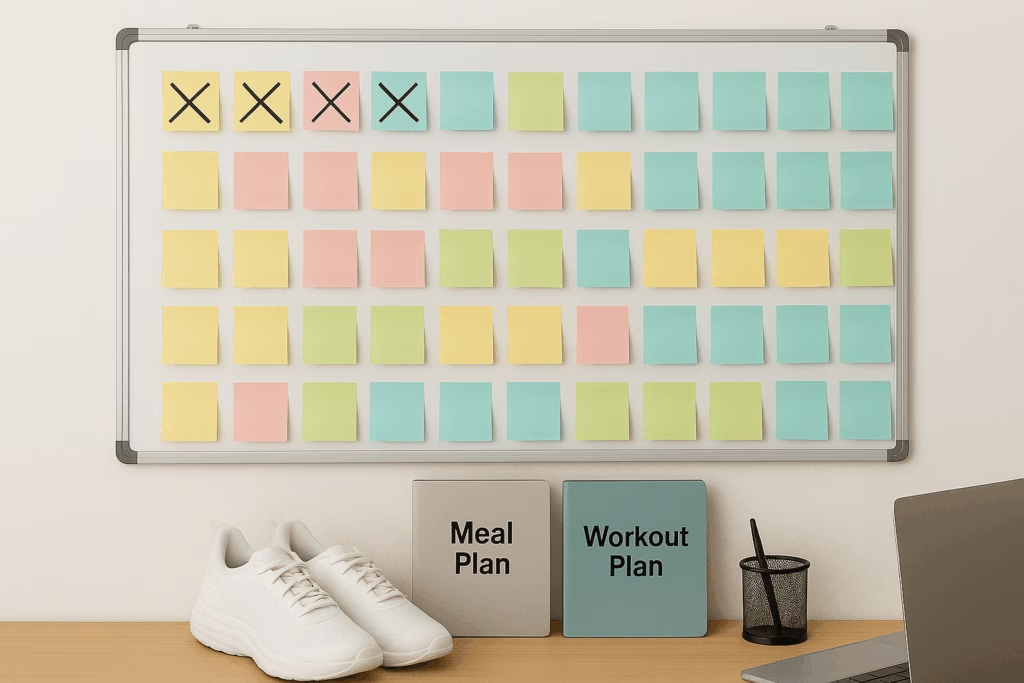
On that dopamine note, we are basically just fancy lab rats, brain-wise. If something feels rewarding, we do it again. As habits form, the brain actually starts releasing dopamine in anticipation of the routine when it gets a cue (Like how you start to feel good when you smell coffee brewing before you even sip it, that’s dopamine saying “oh yeah, it’s coffee time!” My favourite time of day). We can leverage this by building in rewards. This doesn’t mean a cupcake every time you exercise (that could backfire health-wise), but simple things: put on an episode of your favorite show only when you’re on the treadmill (classic temptation bundling trick). Or use a habit-tracker app or journal to check off days you hit your habit , that check mark feels satisfying (again, small dopamine hit)and the reason I love my second brain so much. Some people love the “Don’t Break the Chain” method: X off each day you do the habit on a calendar, soon you have a chain of X’s and it’s motivating to keep it going. Little gamified rewards like stickers, points, or telling a friend “I did it!” can all reinforce you to repeat it. There’s a reason we do that with kids, folks, and why stop as an adult. I personally gave myself permission to buy a new fantasy book only if I kept my nonfictional reading up throughout the month. You bet I wanted that book (I’m a little addicted, so guess who learned all week? This stuff works because it reduces reliance on raw willpower and uses our brain’s carrot (dopamine) instead of stick.
Honestly, at some point during law school, I had little chocolates in between the pages of my books as a reward for making it that far. And hey, I got my degree, right?
Design Your Environment (Make Good Choices Easy, Bad Ones Hard)
Imagine trying to eat healthy when your pantry is full of Oreos and you have to literally step over the Peloton to get to the couch. That ding you hear is temptation calling. Willpower alone won’t save you here. A smarter move: engineer your environment for success. James Clear talks a lot about this: make the cues for good habits obvious and the cues for bad habits invisible. For example, I wanted to stop doom-scrolling my phone at night and read books instead. Solution? I now plug my phone in across the room by 8 pm and keep a book on my nightstand. The phone is out of reach (invisible enough)and the book is right there (obvious). Result: I read and fall asleep on time, instead of losing 2 hours to Reels. If you want to work out in the morning, lay out your workout clothes and shoes by your bed (visual cue). Want to eat healthier? Prep some fruits & veggies in easy grab-and-snack form, and hide the junk food on a high shelf (or don’t buy it). Really, the amount of time I strolled through the house, cursing my healthy self for not buying snacks and ending up with an apple… Want to practice guitar? Keep the guitar on a stand in the living room, not buried in a closet. Remove “friction” for good habits (make them convenient), add friction for bad ones (password-lock your social media apps during work hours, etc.). The less your habit depends on an in-the-moment “good” decision, the better. You’re pre-deciding via environment. This has been huge for me . I’m naturally lazy (er, I mean efficiency-seeking 😇), so I’ll always take the path of least resistance. So I booby-trap that path to lead to better habits. It’s a lot easier to drink water all day when a full water bottle is sitting on your desk (and the soda is not in the house).
Consistency Over Intensity (and the Magic of Scheduling)
You’ve heard it a million times: consistency is key. But how do you stay consistent? One trick: put it on your calendar. What gets scheduled gets done. If you decide “I’ll exercise sometime tomorrow,” guess what – it won’t happen. Instead, make an appointment with yourself: e.g. “Workout, 7:30–8:00 AM” blocked in your calendar. Treat it like a meeting you can’t miss. This is the essence of time-blocking, which we’ll cover more in a sec. The idea is to give your routine a specific time and place in your day, so it’s not an afterthought. And try to do it at a consistent time if you can, routines sync up with our body’s natural rhythms. In fact, aligning habits to your circadian rhythm can supercharge their effectiveness. For example, if you know you’re mentally sharp in late morning, block that time for high-focus tasks or learning new skills. Most people have a slump in mid-afternoon (around 3 PM many feel that brain fog hit), that’s a terrible time for detail-heavy work, but perfect for a walking break or a casual part of your routine. I scheduled my coffee break for that exact time. By understanding your personal energy peaks and dips, you can slot habits when they’ll feel easier. (Night owl? Don’t force a 5 AM workout routine, do it in the evening when you naturally have energy. Morning lark? Seize that dawn!)I know, there’s this trend on social media that tells you to get up at 4 or 5 AM and basically do your whole day before heading to work at 9. But that’s not the best practice for everybody. I get up at around 5 AM and leave the house by 6. I tried to get to 4 AM, but I cannot get used to it and feel absolutely overtired by day 3. And then I get nothing done at all.
The key is sustainable consistency, it’s better to walk 15 minutes daily than to do 2 hours once and quit for a month. Tiny daily wins compound. James Clear calls it the “1 % better rule”, small improvements each day lead to big results over time. And hey, if you miss a day, don’t panic. Life’s not over. Just get back on track the next day. One of my favorite pieces of advice is: never miss twice in a row. Skipped Friday? Okay, make sure Saturday you do something. This keeps the “habit muscle” alive. And, schedule in rest time!
Alright, enough theory, let’s get practical. What could a healthy routine look like for a busy person? I got you.
Daily Routine Template: Feel-Good Habits from Morning to Night
Everyone’s life is different, so there’s no one-size routine. But I’ll share a framework (that you can tweak) which covers the bases: movement, nourishment, focus, rest, and reflection. This is a composite of what worked for me plus ideas from productivity gurus. Take what you like, leave what you don’t!
Morning (Rise and Shine): Mornings set the tone. Instead of jolting awake to a blaring alarm (still do) and immediately diving into emails (stress city), try a gentle but intentional start:
Consistent Wake-Up: Aim to wake up at roughly the same time each day. Keeping a steady sleep schedule trains your circadian rhythm, your body loves predictability here. (If you can get morning sunlight in your eyes within 30 minutes of waking, do it, it’s like a natural cup of coffee that resets your body clock and boosts mood.)
Hydrate First: Before coffee, drink a big glass of water (or sometimes herbal tea in my case). You were essentially a houseplant without water all night – rehydrate! Sometimes I add a squeeze of lemon or a pinch of sea salt for electrolytes. It wakes up your system gently.
Movement (6 in 60 style? 😉): Get some movement in early. It doesn’t have to be a full gym session. Do 5-10 minutes of stretching or yoga, or a quick walk/jog around the block. Even a brief movement energizes by sending oxygen to your brain and signaling your body it’s go-time. I personally do a quick stretch(maybe not every day, but most), it’s become my anchor habit before brushing teeth and a little walk before heading out. On days I have more time, I’ll do a longer workout, but even dancing to one song in my kitchen gets the blood flowing.
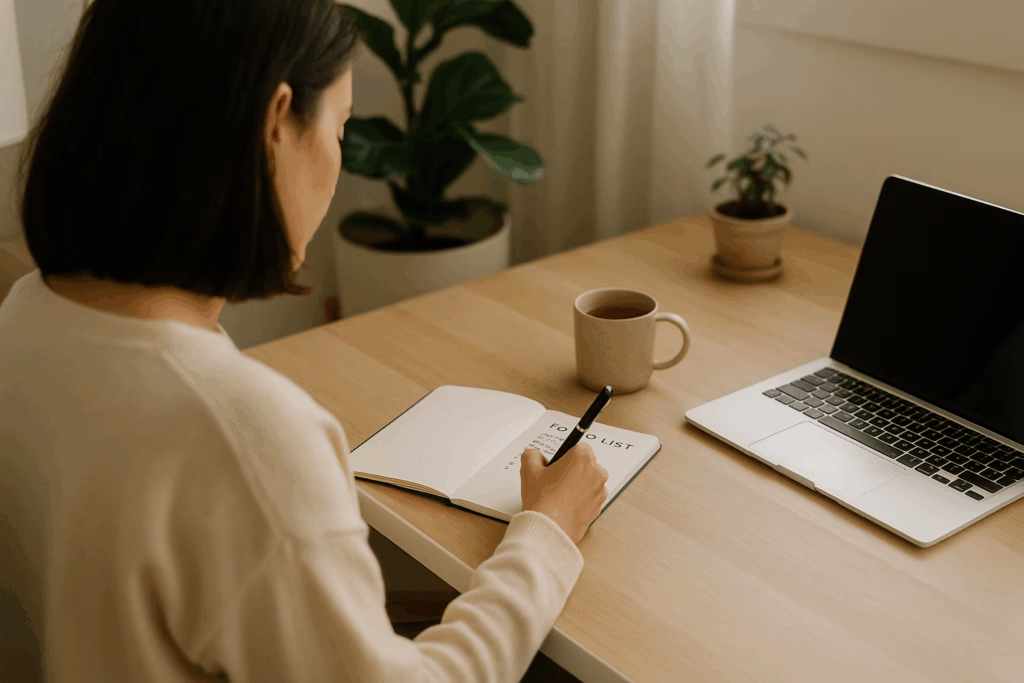
Mindset Check-In: This can be prayer, meditation, journaling, or simply a minute of deep breathing, whatever helps you get mentally centered. I was skeptical of meditation at first, but even 5 minutes of calm breathing or using an app like Headspace can seriously dial down anxiety. Some prefer journaling, writing a few lines about what you’re grateful for or your intention for the day. It’s like a warm-up for your mind, setting a positive tone.
Healthy Fuel: Don’t skip breakfast if you can help it, but also don’t scarf a donut and wonder why you crash at 11. A combo of protein + healthy carbs + some fat works best for me. Think Greek yogurt with fruit and nuts or a protein smoothie. Coffee or tea is fine too, just maybe after you hydrate and eat a little. Pro-tip: if you get jitters from coffee, try adding L-Theanine (it’s a natural amino acid from green tea, available as a supplement), it takes the edge off caffeine and improves focus. Some focus supplements pair these together, like Alpha BRAIN nootropic which contains L-theanine and B6 for cognitive support. In any case, caffeinate with intention, not as a crutch for exhaustion. I limit myself to a mid-morning and an afternoon coffee while breakfast consists of a bowl of skyr, Greek yoghurt, protein powder, vanilla extract, dark chocolate, almond butter, tigernut flour and a dash of maple syrup- my version of a cookie dough bowl.
Mid-Morning (Focus Mode): This is when many people have a mental high, roughly 1-3 hours after waking and cortisol (your wake-up hormone) is up. Use this golden window for your deep work or most important task of the day. Time-block it on your calendar: e.g. 9–11 AM: Project XYZ focus time. During this block, eliminate distractions. Close email, silence phone notifications (utilize “Do Not Disturb” modes or apps like Freedom). If you’re in an office with chatty coworkers, maybe pop in earbuds as a subtle “do not disturb” sign, even if you’re playing no music, noise-cancelling headphones can save your concentration. Own office? Close the door. We have an open door policy at work, so if the door’s closed, it’s a sign that you don’t want to be disturbed. Do what works for you. But absolutely plan short breaks; your brain needs to come up for air. Every hour or so, stand up, stretch or walk to the water cooler (refill that water bottle!). This maintains energy and prevents that hunched zombie posture at your desk. Kudos if you have a standing desk available.
Lunch + Midday Reset – Take a lunch break. No really, step away from the laptop. A proper break actually boosts afternoon productivity (vs. eating hunched over emails which drains you). Try to eat something with protein, veggies and not super heavy on simple carbs so you don’t face-plant into a food coma. I often do salads with chicken or wraps. After eating, do a little midday reset: maybe a 10-minute walk outside or some easy stretching at your desk. If you’re overly tired, get a little eyeshut. This combats the post-lunch energy dip and gets your eyes off screens. I also sometimes use lunch break to do a mini digital detox . I’ll leave my phone and take a walk or if at home, sit on the porch and just chill without scrolling. It’s amazing how refreshing even 15 phone-free minutes can be, like a palate cleanser for your brain.
Afternoon (Energy Management): The 2–3 PM slump is real for a lot of us. Instead of reaching for a sugary snack or a 4th coffee (which will come back to bite you at 2 AM), plan your lighter tasks for this window. Do phone calls, administrative work, or creative brainstorming, something a bit more interactive or low-stakes to ride out the dip. If you’re lucky enough to have flexibility, a power nap of 20 minutes can work wonders (just don’t go longer or you’ll be groggy). Often I opt for a second coffee around 3 pm, it has a my caffeine which gives a gentle focus lift without as much risk to my sleep later. Also, hydration check: by afternoon, many of us are running low. That fatigue might be dehydration, so chug some water (yes, again). If you find water boring, try herbal tea or flavored seltzer, just skip the super sugary drinks that spike then crash you.
One trick for afternoons is to do a “transition routine” when ending the workday. It’s easy to let work bleed into evening, especially if working remote. Having a ritual like: clear your desk, write your top 3 tasks for tomorrow on a sticky note (so you offload it from your brain), shut down the computer and maybe even say “shutdown complete” (a cue Mr. Rogers style 😅). This sends a signal: work day over. For me it’s that deep breath on the way to my car and getting ready to hit play on my audio.
Evening (Unwind and Recharge): Evenings are critical for avoiding burnout. This is when you actually refill your tank. Here’s a template:
Dinner: Aim for a wholesome dinner if possible. I’m no chef, but I learned to plan simple meals (sheet pan veggies + protein, stir-fries, etc.). If you hate cooking on weeknights, like me, consider meal prepping on Sundays (we’ll talk about that in a moment) or using a healthy meal service a few times a week. Dinner is also a great time to connect with family or friends, social connection is a huge stress buffer, so don’t eat all your meals in isolation if you can help it. Even a quick phone call to a friend while you prep food can boost your mood. I usually chat with my mum at this time and help her with little tasks and then I focus on dinner. I’m bad at eating in the evening, its a real focus of mine.
Post-Dinner: This is you-time. Do something that relaxes you and doesn’t involve work. Play with your kids or pets, watch a feel-good show, read a book, pursue a hobby (remember hobbies? Those things we loved before work took over!). Giving your mind a break is not wasted time; it’s essential recovery. I give you full permission to enjoy that Netflix episode or video game guilt-free if it helps you unwind. Just try not to lose track of time for hours. Setting a cutoff (“I’ll watch 1–2 episodes max”) can help. I dance in the evening 2x a week and run another two. Walking the dog really is my “finally done” time and I love my evening routine of skincare + tea.
Digital Detox Before Bed: The blue light from screens and the mental stimulation from doom-scrolling are enemies of sleep. Try setting a “screens off” rule at least 30 minutes (ideally 60) before bed. I mentioned I plug my phone away and switch to reading , that’s been a game changer – even if its still a struggle some days. If you must be on a device, consider blue-light filtering glasses or apps, but honestly nothing beats just unplugging. Many folks do a “digital sunset”, when the sun goes down, they start dimming lights and reducing tech use, signaling the brain to wind down.
Bedtime Routine: Just like a morning routine sets you up for the day, a bedtime routine primes you for quality sleep. This could be as simple as: take a warm shower, put on comfy PJs, do skincare, then read or journal in low light. Some people like gentle stretches or yoga to release tension. I usually do my shower and skincare, reading in bed and drinking tea routine. If you struggle with a racing mind at bedtime, journaling or a short meditation can really help quiet the mental chatter. Also, keep the bedroom cool and dark, a slightly chilly room (65–68°F) and blackout curtains or an eye mask can dramatically improve sleep quality. And, cuddling into my blanket really is the best feeling. Also, warming eye masks*… elite. And remember that gallon of water from 75 Hard? Yeah, maybe don’t chug that right before bed unless you enjoy 3 bathroom trips at 1 AM 😜. Sip water earlier in the evening and cut off heavy fluids an hour before sleep. If you’re not good at hydrating in the evening, like me, a tea before bed works just fine. Just don’t try to play water catch up.
By ~10-11 PM (or whatever time gives you ~7-8 hours of sleep before your wake-up, for me 9 – 10 PM), aim to be lights out. Consistency here is golden: going to bed and waking up around the same time trains your body to get sleepy and alert like clockwork. When I started actually prioritizing sleep as a non-negotiable, my productivity next day soared and I stopped feeling like a bus hit me every morning. And, I am tired at the same time every evening. Funny how that works.
Feel free to adjust this daily template, not everyone has a 9-5 or no kids interrupting, etc. The key is to find a rhythm that includes breaks, nutritious food, movement, focus time, and relaxation. Even if your schedule is chaotic, you can create micro-routines. (E.g. if you travel a lot, maybe your “morning routine” lives in your carry-on: you always do a 5-min stretch in your hotel, have oatmeal and tea, etc., to create consistency amidst change.)
Weekly Routine: The Sunday Reset & Other Rituals
In addition to your day-to-day habits, it helps to have a weekly routine to ground you. For me (and many productive people I know), Sundays are the holy grail. Think of Sunday as your day to reset and plan for a smoother week. Here’s how a typical Sunday routine could look:
Weekly Planning: Set aside even 30 minutes on Sunday to plan your week. I grab a cup of coffee, my planner or app, and map out the big stuff: upcoming deadlines, appointments, workouts, and most importantly when I’ll do personal things (grocery runs, family time, etc.). This is where time-blocking on a macro level helps. If I know Tuesday is insane with meetings, I plan a lighter evening and maybe move my workout to Wednesday. Laying it out mentally prepares me and reduces the Sunday Scaries because I feel in control going into Monday. I’ll also prioritize: I choose 2-3 main goals for the week (work or personal). That way, if chaos ensues, I at least know what to focus on. And, it’s where I schedule in down time without anyone approaching me. And yes, during that scheduled one hour extra me time it’s: doom-scrolling allowed.
Meal Prep or Food Planning: I’m not an Instagram meal prep guru with 37 containers of chicken and broccoli, but doing some prep is a lifesaver. On Friday, I plan a few dinners for the week, hit the grocery store, and on Sunday I prep basics: chop veggies, marinate something, cook a batch of grains, or make a big one-pot meal that gives leftovers. This means on Wednesday night when I’m tired, I don’t resort to pizza delivery (okay, sometimes I still do, moderation! That’s what the emergency frozen Pizza in my freezer is for). Even just having healthy snacks ready, carrot sticks, hummus, nuts and maybe prepping lunches for the next day if you go into the office can reduce a lot of decision fatigue during the week. Remember, the less you have to think about what to eat each day, the easier it is to eat well.
Sunday Sweep (Clutter Patrol): Physical clutter can add to mental clutter. Or rather mirrors my messy mind. Sunday is for deep cleaning. It’s not fun per se, but boy does Monday-me thank Sunday-me for not having to clean it all on Monday after dance practice. It’s like clearing the slate. Some people do a “weekly reset” checklist that includes cleaning, inbox zero, reviewing finances, etc. If that’s your jam, go for it. Put on some music and make it a ritual. I started decluttering one room or corner every evening and it helps me wind down as well.
Digital Detox & Family/Friend Time: I try to keep at least part of Saturday or Sunday as low-tech as possible. Maybe it’s a walk in nature or a leisurely brunch with friends where phones stay pocketed. Human connection and time in the real world refuel you in ways mindless internet scrolling can’t. By Saturday evening, I often do a screen-free hour, light some candles, talk with my partner or call my friends or read. It grounds me and reminds me there’s life outside of email.
Self-Check-In: Lastly, I do a quick reflection on Sunday night. How did I feel this past week? Did I overcommit and exhaust myself or did I keep balance? What was one win I’m proud of (however small) and one thing I want to improve this week? This little self-feedback loop is important. It’s not about beating yourself up; it’s about learning your patterns. For instance, I noticed on weeks where I scheduled back-to-back evening social events, I felt drained. So I learned to spread them out or keep some evenings for myself. Another time I realized I was skipping workouts because didn’t feel happy with them, so I adjusted. Treat it like experimenting with what routine makes you feel best. We’re all works in progress, baby.
By implementing a “Sunday Reset,” you enter the week feeling more prepared and less chaotic. It’s like the difference between waking up to a tidy room vs. a messy one, one gives you calm, the other subtle anxiety. Weekly routines can also include fun traditions :Taco Tuesdays, Friday movie night, Saturday morning farmer’s market run, whatever gives you little anchors to look forward to. These joyful rituals boost your emotional wellbeing, which is just as crucial in avoiding burnout.
Smart Tools & Supplements to Boost Energy and Focus
Alright, now for some bonus hacks. We live in an age where we have a gadget or pill for everything. I’m not saying you need any fancy tech or magic supplements to be healthy (the basics – sleep, food, movement – are first). But I have found a few tools and supplements that genuinely support my energy, focus, and overall wellbeing. Sharing my faves (and yes, these include a few affiliate links, but I only hype what I use and love):
Productivity & Wellness Apps: I joke that I have a “personal coach in my pocket.” Apps can nudge you towards good habits. For focus, I like the Forest app , it turns avoiding your phone into a game (grow a tree as you focus, leave the app and the tree dies… surprisingly motivating!). For habit tracking, try Habitica (RPG style leveling up for completing habits) or plain HabitBull. Meditation apps like Headspace or Calm provide guided sessions that make it easier to actually meditate regularly. As mentioned before, I love my Second Brain on Notion. So, if you’re a to-do list person, a tool like Todoist or Notion helps offload the mental load. I basically dump all tasks there and schedule them, so I’m not trying to mentally remember 37 things (which causes stress). Use technology to support your systems – like setting reminders for drinking water, or wind-down alerts at night. It’s like a gentle prod keeping you on track. You can even ask ChatGPT to do a daily checkin with you and give you little tasks per day. Don’t like digital planners? Try out a calender or bullet journal.
Time-Blocking Planners/Calendars: Whether digital (Google Calendar, Outlook) or physical (bullet journal, Passion Planner), find a system to plan your day. I personally use Outlook calender to block everything, including lunch, workouts, even “read for fun” or doom-scrolling. It sounds rigid but actually it frees me. When it’s 6pm and my calendar says “Family time” or “Go for a walk”, I feel I have permission to do just that, guilt-free. If you prefer paper, check out planners that prompt you to set daily priorities and schedule blocks (the Full Focus Planner and Panda Planner are popular). The key is to treat your self-care activities with the same respect as work meetings by scheduling them. You can even get personalized planners like this one*.
Noise-Canceling Headphones: Possibly my favorite productivity tool. They are worth every penny if you work in a noisy environment or have trouble focusing. Put them on, play some instrumental beats or white noise, and boom, you’re in your own bubble. They help during relaxation too (hello, calming rain sounds or whales singing before sleep). Basically, they remove external chaos so you can maintain internal calm and focus. Or if it is possible for you and you can’t wear headphones the whole day: built an office library into the attic or a quiet corner of the house and declare it your pull-back corner. Most quiet place in the house to let me think.
Fitness Tech: If staying active is a challenge, a fitness tracker or smartwatch (Fitbit, Apple Watch, Oura Ring, Garmin) can be a great coach. They remind you to stand, track your steps, analyze your sleep, and can even nudge you at 10 PM to start winding down. I use a Garmin to ensure I hit my 10k steps and it’s oddly motivating, that little buzz celebration when I reach my goal makes me smile every time. If you’re data-driven, these devices turning health into a game can really help. Just don’t become obsessed with numbers , use it as gentle feedback, not a judgment tool.
Ergonomic & Environmental Helpers: Part of sustaining energy is not wrecking your body at your desk. Consider a good chair or a standing desk (or a hybrid that lets you sit/stand). Posture issues = pain = fatigue. I got an ergonomic chair, hybrid desk and footrests and my neck strain improved, which improved my overall energy at day’s end. Also, lighting matters, if you can, get a desk lamp with warm light for evenings to reduce harsh blue light exposure or even a sunrise alarm clock that wakes you with gradually increasing light (don’t work for me because I sleep like the dead). Small investments in your workspace can prevent the subtle energy drains that contribute to burnout over time.
Now onto supplements. Quick disclaimer: I’m not a doctor, and supplements aren’t a cure-all or a substitute for a healthy diet. But certain ones have solid research and can fill gaps or give you a little boost. Always check with a healthcare provider if you’re unsure, especially if you take other meds. With that said, here are a few that helped me go from zombie to functional human:
Adaptogens (e.g. Ashwagandha, Rhodiola, Ginseng): Adaptogens are herbs that help your body adapt to stress. I was skeptical, but there’s decent evidence behind some. Ashwagandha in particular has been shown to reduce stress hormones and support energy levels and mood. It basically helps you feel less frazzled and improves resilience. I drink it in a tea in the evenings to unwind (some take in morning, see what works for you). Rhodiola Rosea is another , often taken in the morning, as it can improve mental fatigue and focus under stress. Panax Ginseng is known to help with mental performance and energy too. I don’t use Ginseng regularily, but if I do it’s a tea in the morning. These aren’t like caffeine; you won’t feel them kick in immediately. It’s more like over weeks they can improve your baseline stress tolerance.
B-Vitamins Complex: B vitamins (especially B12, B6, folate) are crucial for energy metabolism in your cells. If you’re low, you’ll feel tired and brain-foggy. Many people, especially if you’re vegetarian or under lots of stress, can be low in B12 or B6. A quality B-complex or a multivitamin can cover your bases. You can also get B’s from food (leafy greens, eggs, whole grains) a blood test can help show you if you have any deficiancies.
Vitamin D and Magnesium: I call these the mood and sleep helpers. Vitamin D (which most of us get from sun exposure) often runs low if you’re in an office all day or live in northern climates. Low D can cause fatigue and low mood. Hello, me every winter. I got my levels checked, was indeed low, and started supplementing D3, it improved my overall energy and winter blues. Magnesium is a mineral that aids relaxation; it’s great in the evening to ease muscle tension and improve sleep quality. I drink it again in a electrolyte mix (yes, I supplement a lot via teas and drinks as I am not critically low). Many adults don’t hit the RDA of magnesium through diet, so this one’s a common helper. And it both factor in for longevity and anti-aging.
Omega-3 (Fish Oil or Algae Oil): Omega-3 fatty acids (EPA/DHA) are fantastic for brain health, reducing inflammation and even supporting mood. If you don’t eat fish a couple times a week, consider a fish oil supplement. I did’t feel like these were helping me, but I know others swear on it.
Caffeine (strategically) + L-Theanine: Okay, caffeine is obvious, it gives energy. But how you use it matters. I limit myself to 1-2 cups of coffee before 4 PM. Any more or later and my sleep suffers (and that fuels a vicious cycle of fatigue). Pairing caffeine with L-Theanine (as I mentioned earlier) is awesome for focus, it smooths out jitters and extends the focus time. Green tea naturally has both, or you can find supplements that combine them in a pill. It’s like a cheat code for clean energy: you feel alert but calm. Often I enjoy a cup of green tea in the morning before my coffee and it really improved my mood.
“Brain Boosters”: There are complex nootropic supplements out there with blends of herbs, amino acids, etc. A well-known one is Alpha BRAIN (with ingredients like bacopa, Huperzine-A, etc. aimed at memory and focus). I’ve tried a couple of these ,they might give a subtle cognitive boost, but they’re not miracles and can be pricey. If you have the disposable income and are curious, they could be worth a shot. But honestly, adequate sleep, exercise, and diet do 1000x more for your brain than any fancy pill. I view nootropics as the cherry on top if you’ve got the basics handled.
Hydration Helpers: Not exactly a supplement, but I’d be remiss not to mention hydration. Sometimes afternoon fatigue or headache is just dehydration. If plain water bores you, consider electrolytes or cold brew teas. I like cold teas for flavor and extra minerals (yes, that’s available), especially on days I workout or it’s hot out. It encourages me to drink more, and maintaining electrolyte balance helps me avoid that sluggish feeling.
Adaptogenic Mushrooms: Things like Lion’s Mane (for focus) and Reishi (for sleep/stress). I never tried these. But some people swear by them for overall resilience.
Remember, supplements are supplemental ,they add to a healthy lifestyle, they don’t replace it. Think of them as supportive tools, like a good pair of running shoes if you’re a runner. The shoes won’t run the miles for you, but they make the run smoother. And if you need special soles – get the supplements you really need.
FAQ: “Help, Real Life Is Getting in the Way!”
I hear you: all these routines and habits sound great in theory, but what about when life happens? Crazy work deadlines, kids getting sick, vacations, sheer lack of motivation… Let’s tackle some common questions I get from friends (and that I asked myself too):
Q: What if I fall off the wagon and miss a bunch of days? A: First off – welcome to the club! Falling off the wagon is part of the process. No one, I repeat no one, is perfect at their routine 100% of the time. The difference between people who succeed long-term and those who don’t is simply getting back on track. Don’t let a slip turn into a slide. If you miss a day (or a week) of workouts or healthy eating, the worst thing you can do is spiral into all-or-nothing thinking (“I missed three workouts, I’m a failure, might as well quit”). Nope. Next meal is a chance to get back to veggies. Tomorrow morning is a chance to lace up and go for that walk. One of my favorite tiny habits mantra is “never miss twice”. It’s not about never missing, it’s about cutting off the lapse early. And when you do restart, start small again to rebuild momentum. Maybe you got to Week 3 of waking up early then fell off, when restarting, don’t immediately expect yourself to do the full 6am workout. Maybe do a 6:30 wake for a few days and a 5-minute stretch. The key is to restore the routine first, then ramp it back up. Importantly, ditch the guilt. Guilt is not productive; it usually just makes you avoid the habit because it now has a bad vibe. Forgive yourself fast, and approach getting back to routines with a positive mindset (“I’ll feel so good once I’m back in my groove”). Remember, consistency isn’t ruined by one off day – it’s built over months and years. One of my habit hero analogies: If you get a flat tire, you don’t puncture the other three on purpose, you fix the flat and keep driving. Treat missed days the same way. And another thing that I found really helped me: regular audits. Yes, I have regular meetings with myself (usually summer, new year and when needed) and look at everything I am doing and where I could improve to live a better life.
Q: I don’t have time for long routines – what if my schedule is insane? A: Ah, the time crunch, the number one obstacle everyone cites. I get it; some days you barely have time to breathe, let alone hit the gym for an hour or cook an Insta-worthy quinoa bowl. But here’s a mindset shift: You don’t need large blocks of time to build habits. Micro-habits and “habit stacking” are your best friends when busy. Can’t do a 30-minute workout? Do 10 minutes. Can’t meal-prep fancy lunches? Throw some nuts, fruit, and Greek yogurt in your bag, 2 minutes, done. Squeeze healthy practices into things you already do: do calf raises while brushing your teeth, or practice mindful breathing during your commute. Also, analyze your day for hidden time wasters, you might be surprised. The average person still finds time to scroll social media or watch Netflix; could you borrow 15 minutes from that to stretch or prep overnight oats? Often we do have time, but we’re exhausted so we default to easy, less beneficial behaviors. One solution: systems to reduce decision fatigue (like a fixed weekly menu or a set workout time) actually create more free time/energy in the long run. Yes, it takes effort up front to establish, but then it runs on autopilot. A trick I use on truly packed days: combine habits with existing tasks e.g. I’ll listen to an audiobook or informative podcast (Atomic Habits audiobook, anyone?) while commuting or doing chores, effectively stacking self-improvement onto necessary tasks. If you have kids, involve them, maybe family walk after dinner (quality time + exercise, two birds one stone). And remember, some is better than none. A 5-minute meditation in your car between meetings is better than zero. One healthy snack is better than none. Give yourself permission to do the minimum viable habit on hectic days. Consistency isn’t about perfect execution; it’s about showing up in whatever capacity you can. Over time, those small actions compound. If something consistently feels impossible to fit in, maybe it’s not the right habit for your life right now, adjust it to something more feasible rather than abandoning the idea of routines altogether. Also, that’s why I dislike setting numbers on my habits. I feel they limit me, when everything is just too busy around me.
Q: How do I keep routines when I travel or my schedule changes? A: Travel and schedule changes, the routine-killers! I used to completely derail every business trip or vacation, then struggle to restart. The fix was planning and flexibility. Before traveling, I do a little research: Does the hotel have a gym? Is there a park or safe area to run? Can I pack portable healthy snacks or even instant oatmeal for hotel breakfasts? I’ll pencil in a rough plan like “Tuesday: hotel gym 7am” or “Walk to client site instead of cab if possible.” Not all plans will happen, but having the intention helps. Pack a travel habit kit: a refillable water bottle, some protein bars,yoga clothes (light and lets you do exercises in a hotel room) and maybe a travel journal to keep up gratitude or planning. For flights, I download audio or reading material in advance. Adapt your habits to the context: if you normally do 30-min workouts at home, maybe on a trip you just do 10 minutes of bodyweight exercises in your room. If you usually cook, you might eat out but choose grilled over fried, or add a side salad , small healthy choices. Have room for running shoes in your cabin bag? Go for a morning run to explore. Sleep might get disrupted by time zones; to keep some circadian rhythm, try to get morning light in the new location and go to bed/wake up on the new time as soon as you can. I also bring magnesium or herbal tea to help wind down in unfamiliar places. And yes, my warming eye mask. And if travel is for fun (vacation), don’t beat yourself up for indulging, just keep a couple core routines to feel good (like staying hydrated and walking a lot). The goal is to return from travel without feeling like you’re starting from zero. Have a “restart day” plan when you get back, for me, I plan my first day home to include a grocery run for fresh produce and a short workout to get back in the groove. Jet lagged me hates it, but afterwards I feel back on track. In short: plan ahead, pack smart, adapt your expectations (maybe it’s habit maintenance mode rather than progress), and resume normal programming ASAP after travel. You can absolutely be a road warrior and keep healthy habits. I know folks who do push-ups in airport lounges and use phone alarms to do breathing exercises on long flights. It’s doable with intention.
Q: I just can’t get motivated. How do I start when I don’t feel like it? A: Oh boy, the motivation monster. Here’s a secret: Action often comes before motivation. We usually assume we need to feel motivated first, then we act. But psychology suggests the opposite can happen, if you force yourself to do something small, the progress and dopamine you get can create motivation to do more. So when you really don’t feel like it, tell yourself, “Okay, just 5 minutes.” Five minutes of walking, or write just one sentence, or eat one piece of fruit. Make it comically easy to start. 99% of the time, once you start, you’ll do more than you intended. And if you truly only do 5 minutes? Hey, that’s still a win and likely more than zero. Another trick: make it fun or add something you enjoy. Struggling to go on a run? Promise yourself you can listen to your favorite true-crime podcast but only while running, suddenly you want to go so you can hear the next episode. Or if you’re like me, include military running cadences in your run playlist. Hate cooking? Do it while video chatting a friend or play your favorite music and turn it into a mini dance party. Hate cleaning or gardening? Listen to your favourite party music during. Yes, I garden and clean to hard style techno. Also, remember your “Why.” Take a moment to recall why you want to build these habits. More energy to play with your kids? To feel confident in your skin? To crush it at work then actually enjoy your downtime? Visualize that end goal or feeling. It can reignite your drive. Sometimes I even read journal entries from my burnt-out days to remind me why I never want to go back. That lights a fire under me. And if you’re really in a funk, seek support: enlist a workout buddy or an accountability partner who’ll text you, hire a coach or join a challenge group for a short-term kickstart. Human accountability is powerful when your internal motivation is low. But bottom line: you won’t always feel motivated – do it anyway, starting tiny, and trust that motivation often catches up with action.
Q: How can I stick to routines without becoming a boring robot? A: Haha, I love this question because honestly, I don’t have those worries, but I am regularily called an ice queen. In reality, routines give you more free space to be spontaneous because you’re not burning energy deciding basic things or cleaning up messes from poor habits (like constantly catching up on sleep debt or dealing with health issues). It’s a safety net. But balance is key. I’m all for the 80/20 rule: 80% of the time, stick to your systems; 20% of the time, live a little! Have that late-night out with friends, eat the cake at the party, skip the morning run to sleep in on your birthday, it’s all good. The whole point of having better health and energy is to enjoy life more, not to live like a monk. If your routines are so strict that they make you unhappy or isolated, loosen up. You might shift to a “mostly on track during weekdays, more flexible on weekends” approach. I personally allow myself Fridays as a wildcard day, if I skip the gym and go to happy hour, fine. I’ll still drink water in between cocktails and maybe dance (hey, that counts as exercise! 😜). And that’s where I have my scheduled doom-scrolling! The trick is to intentionally decide when to break routine for a good reason (joy, connection, a special occasion), and then intentionally return to routine after. One dinner of pizza and beer with friends is not going to undo your health; just don’t let it turn into a week. Also, periodically refresh your routines so you don’t get bored. Try a new healthy recipe, rotate a new playlist for workouts, experiment with a different meditation app, etc. We humans like novelty, my safe foods change all the time, you can keep the structure consistent while introducing small changes to keep it interesting. For example, I always exercise Mon/Tue/Fri/Sun, but I’ll try new workout classes or running routes to mix it up. Routine doesn’t mean identical repetition like Groundhog Day; it means a reliable pattern with room for variety and fun. So fear not, you won’t become a robot. In fact, with good habits giving you more vitality, you’ll probably find life more colorful.
Conclusion: Small Steps, Big Changes – You’ve Got This 💛
If you’ve made it this far, cue applause. We covered a lot, from my burnout sob story to brain science, from 75 Hard to Tiny Habits, from daily schedules to travel hacks. It might feel a tad overwhelming, like “Where do I even start?” My advice: start small (notice a theme?). Pick one tip or idea from this post that resonated and try it out this week. Maybe it’s drinking a glass of water each morning, or doing a 5-minute journal at night, or implementing a Sunday planning session. One thing. Master that, then come back and add another. Rome wasn’t built in a day; neither is a burnout-free life.
But brick by brick, habit by habit, you will build a fortress of routines that protect your energy and wellbeing. And those “bricks” don’t stay tiny, they compound. Trust me, a few years ago I was a husk of a person. I started with just fixing my sleep and doing short daily walks. Then added eating a real breakfast. Then a bit more exercise. Then some mindfulness. Now, I’m thriving. I still have tough days (I’m human, and I still work in corporate, stress didn’t vanish), but I don’t spiral like before. I have tools and defaults to catch me. I feel in control of my life again, not at the mercy of it.
And you deserve to feel that way too. Your energy is worth protecting. Your health and sanity are non-negotiable assets, when you safeguard them, everything in life gets better. You show up as a better leader, partner, parent, friend, and you actually enjoy the ride instead of crawling through each day on fumes. Burnout is a sneaky thief; it robs you of joy, productivity, and health. But you can stop it in its tracks by taking consistent, loving action for yourself.
So here’s your gentle kick in the pants (delivered with love, of course): Take that first small step. Schedule a walk for tomorrow, or set out water and vitamins tonight, or call a friend and make a plan to hit the gym together – whatever floats your boat. And when you feel that resistance (“ugh, tomorrow me won’t want to do it”), remember you have a whole arsenal of strategies now , make it tiny, pair it with something fun, set a cue, make it a game. You have the power to design a life with less burnout and more balance.
Lastly, let me say: I’m rooting for you. Imagine me as that friend sending you a voice note: “Hey, I know it’s hard but you freaking got this! One day at a time, okay?” Because it’s true. Small changes add up, and you’re capable of amazing things – including beating burnout and feeling good again. Here’s to you, your journey, and the sustainable, healthy, and yes, sometimes sarcastic and hilarious road ahead. Now go forth and thrive, you’ve earned it. 💪🎉