


Monday, 5:00 a.m. My alarm blares for the third time and I’m already negotiating with myself. Just ten more minutes. I was supposed to be up at 4 a.m. for yoga, lemon water, and journaling (you know, the whole miracle morning routine). Instead, I wrap myself in a blanket burrito, dozing and trying to beat the sleepiness. I’m sure, were I to open Instagram another post would show a CEO touting her 4:30 a.m. wake-up. Meanwhile, I’m lying here, dreading the 9 a.m. Zoom meeting. The guilt sinks in: Why can’t I hustle like that without feeling exhausted?
Sound familiar? By 11 a.m., I’ve downed two coffees and my to-do list is still glaring at me with 15 unchecked tasks. My brain feels like an internet browser with 37 tabs open (and I can’t tell which one the music is coming from). I catch myself staring blankly at the screen, daydreaming about escaping to a quiet cabin or a Bali beach. At this point, burnout isn’t a hypothetical, it’s my daily reality. I did everything the hustle gurus said: early alarms, late nights, side projects. And yet here I am, one minor Slack notification away from a meltdown. There’s got to be a better way to be productive. One that doesn’t make us feel like we’re towing a boat with an Opel Corsa (a.k.a. pushing way beyond our brain’s capacity).
Enter soft productivity. I first heard the term from the psycholgist I was writing to when my mum suffered a stroke and I was completely overwhelmed trying to juggle the hospital visits, law school exams and my grandmas dementia on my own. She said, “Have you tried being gentle with yourself for a change?” At first, I laughed, gentle? I have to-dos to crush and bills to pay! But that night, lying in bed completely drained, I realized the hustle was hollowing me out. Many of us millennial women feel this: we strive to “have it all” but end up feeling like we’ve lost ourselves. So, I started digging into a radical idea: What if we could get things done without running ourselves into the ground? What if being kinder to ourselves actually made us more productive?
What Is “Soft Productivity” (and Why We’re Craving It)
We’ve all heard of hustle culture, the rise-and-grind mindset that tells us to devote every waking hour to work, always push harder, never say no. It’s that “never enough” feeling: no matter what you do, someone else is doing more. Hustle culture glorifies being busy at the expense of every other aspect of life in a way I have never seen before. Sure, it might win short-term results (and a few smug #TeamNoSleep posts), but it often leaves us stressed out, anxious, and chronically exhausted.In fact, constant overwork is linked to higher stress, anxiety, and even depression for many women chasing that “Girlboss” ideal by forgetting to care for themselves.
Soft productivity is the antidote to this hustle hangover. It’s a term popping up all over social media and wellness circles, essentially a gentler, more sustainable approach to getting things done. If hustle culture is all about do more, more, more and external validation, soft productivity is about do less, but better, driven by your own well-being and values. As one article put it, soft productivity strays away from the “rise and grind” mantra and rejects the idea that your worth is measured by how busy you are. Instead, it focuses on aligning your work with your purpose and passion, and making sure your actions match what truly matters to you The true defintion of work smarter, not harder.
Think of soft productivity as a sibling of the “soft life” trend you may have heard of, the movement where millennials decide not to work themselves to death for a corporate dream that isn’t paying off. The “soft life” revolution prioritizes not working yourself to the bone or to “lean in” 24/7. In other words, it’s a rejection of the notion that constant busyness equals success. With soft productivity, rest isn’t a reward for hard work, it’s part of the process of great work. You still have goals and ambition, but you pursue them in a way that doesn’t wreck your mental health and that you can continue for years and years to come.
To paint a clearer picture, let’s compare the old hustle-hard approach (what we’ll call “hard productivity”) with this new soft productivity mindset:
| Hard (Hustle) Productivity | Soft Productivity |
|---|---|
| Mindset: “Never not working.” Feels guilty when not busy. Success is measured by hours worked and constant output. Burnout is worn as a badge of honor. Result: Frequent stress and overload, long hours with diminishing returns. Burnout and physical symptoms possible | Mindset: “Work smarter, not harder.” Values balance and intentional effort. Success is measured by meaningful progress and well-being. Rest is seen as productive, not a weakness. Result: Sustainable pace, less stress and higher long-term productivity (no more 3 p.m. breakdowns). |
| Approach to Tasks: Multitasking and jam-packed to-do lists. Always saying “yes” to more. Little room for personal life or recovery. Focus: Quantity over quality, get as much done as possible, even if it’s on autopilot. | Approach to Tasks: Single-tasking and prioritization. Focuses on the critical few things each day. Makes space for breaks, hobbies, and life outside work. Focus: Quality over quantity, do fewer things, but do them thoughtfully and well |
| Motivation: Largely driven by external validation, promotions, accolades, being seen as “the hardest worker in the room.” There’s an underlying fear of being labeled lazy or “falling behind.” | Motivation: Driven by personal fulfillment and alignment with one’s values. Purpose and passion guide the work. There’s a sense of internal validation, you’re doing it because it matters to you, not just to impress others. |
| View of Rest: “Rest later (if ever).” Downtime often comes with guilt or is squeezed in only after crashing. Vacation days go unused; hustle culture might even silently brag about it. Self-care: Often neglected or seen as indulgent. | View of Rest: “Rest now, because it helps.” Breaks and leisure are deliberately built into the schedule, seen as fuel, not a waste. Taking a vacation or a lazy Sunday is embraced as a way to recharge creativity and prevent burnout. Self-care: Non-negotiable. Mental health, sleep, and play are part of the productivity plan, not afterthoughts. |
Notice the theme? Soft productivity is holistic. It considers your whole self (mind, body, and soul), not just your worker-bee output. It’s about doing less on purpose so you can achieve more of what truly matters. As one coach described it, soft productivity means prioritizing your energy over sheer output, working with your body and mind – not against them – and letting rest be part of the workflow, not merely the reward at the end (camelotlifecoach.com). In short, it’s a shift from “How much can I do?” to “What actually feels right to do now? And how can I do it most efficiently”. And for a lot of us, that mindset shift is downright liberating.
The Science of Slowing Down: Why Soft Productivity Works
If you’re thinking, “This sounds lovely, but will I actually get anything done?” Let’s talk science. It turns out that hustle culture is at odds with how our brains function best. Pushing yourself to the limit isn’t just unpleasant; it can seriously impair your effectiveness. Here’s why a softer approach is scientifically smarter:

- Your Brain Has a Bandwidth Limit. Cognitive load theory tells us that our minds can only handle so much information and focus at once. When you overload it with 12 tasks, endless notifications, and zero breaks, it’s like overstuffing a circuit, something’s going to blow. Psychologists note that modern knowledge workers are drowning in information and task-switching, leading to cognitive overload. And nothing good comes from powering through once you’ve hit that mental max. In fact, cognitive overload can result in psychological distress, poorer memory, worse decision-making, and even symptoms of depression. Essentially, when your brain is fried, you start working slower and making mistakes. Ever tried to send one last email at 10 p.m. only to realize the next day it was full of errors? That’s what overload does.
- “Do More” Often Achieves Less. Ironically, the more we try to cram into a day, the less truly productive we become. Researchers have found that when we’re overwhelmed, we tend to either freeze up (staring at the wall because we don’t know where to start) or default to easy, low-value busywork just to feel somewhat accomplished. Hello, reorganizing your desk for the tenth time instead of tackling that big project. Plus, all those so-called productivity “hacks” that add more complexity – think breaking every task into 10 subtasks, or maintaining five different tracking apps – can backfire. You might end up with more to manage than before! As one expert quipped, if you have 3 things to do and you break them into 26 micro-tasks, now your brain is juggling 26 things, you’ve undermined yourself by over-planning. The key insight here: simpler is better. It’s more effective to do a few things well than to scatter your energy in all directions.
- Dopamine: The Hustle Drug (and How to Regulate It). Let’s talk brain chemistry for a second. Dopamine is the neurotransmitter often nicknamed the “motivation molecule”. It rewards us for accomplishing things and makes us want to seek rewards. Hustle culture gives us plenty of little dopamine hits: the buzz of crossing an item off the to-do list, the rush of an email “Ping!”, the thrill of hitting a target. But here’s the catch: modern life bombards us with too many dopamine triggers. Endless social media notifications, emails, news alerts, you name it. Each ping gives a tiny burst of pleasure, a quick reward that feels satisfying momentarily, yet ultimately erodes our attention and patience. We essentially become addicted to the stimulus, craving the next notification like a lab rat pressing a lever for pellets. Over time, chasing these instant hits undermines our motivation for deeper, more meaningful work. It’s like we’ve trained our brains to prefer candy over a healthy meal, lots of quick highs, no sustained nourishment. The soft productivity approach implicitly involves dopamine regulation. By slowing down, single-tasking, and setting boundaries on those constant pings, you’re controlling your brain’s reward system instead of letting it control you. We stop the Dopamine addiction and reset our nervous system. This means when you do sit down to focus on a task, your brain isn’t already overstimulated and distracted; you can actually enjoy the satisfaction of deeper work. Balanced dopamine levels lead to better focus, too little stimulation and you’re unmotivated, but too much and you’re scattered and restless. Soft productivity finds that sweet spot. And we can support that with a healthy diet and movement, that we now have time to enjoy.
- Rest Recharges Your Productivity. Ever notice how your best ideas come to you in the shower, during commute or on a casual walk or during a weekend getaway? That’s not a coincidence. When you pause and let your mind breathe, you engage a mode of thought that’s more creative and strategic. Studies show that taking breaks and vacations boosts productivity and performance. In one company, employees who actually took their vacation days had better year-end performance. An internal study at Ernst & Young found that for every additional 10 hours of vacation time taken, employees’ performance ratings improved by 8% on average. Yes, you read that right: take your PTO = do better at your job. How to do it efficiently? I wrote a post about it here. Those well-rested employees were also less likely to quit their jobs, meaning rest isn’t just good for you, it’s good for your career longevity too. Another experiment at a company that mandated vacations saw clear spikes in creativity, happiness, and (surprise!) productivity when people actually unplugged for a while. Science and psychology back up the idea that we shouldn’t run on empty. As one set of experts put it, the best way to get more done when you’ve hit your limit is actually the most straightforward, take a break. Even a 15-minute pause or a real lunch break can reset your brain during a hectic day. Yes, that is your sign to leave your desk for lunch regularily. And outside of work hours, truly unplugging (no checking emails at midnight) lets your mind recover so you come back sharper. Rest is a productivity strategy in soft productivity, not a sign of slacking.
In a nutshell, the neuroscience and psychology agree: slowing down can help you speed up in the ways that count. By avoiding cognitive overload, managing your dopamine cycles, your cortisol cycles and honoring the need for rest, you set yourself up for more consistent, sustainable productivity, the kind where you’re producing quality work and feeling good doing it.
Soft Productivity Tools: Notion, Planners, and Time-Blocking Magic
Alright, so how do we actually do soft productivity in our day-to-day lives? Fortunately, there are some fantastic tools and techniques to support this gentle approach and yes, they can be as aesthetic and cozy as you want (bring on the cute stationery and calming apps!). Here are a few that millennial women are loving:
- Notion – Your Second Brain (Digital Bliss): If you haven’t tried it yet, Notion is a popular all-in-one workspace app that’s like a Lego kit for organizing your life. For a soft productivity approach, Notion can be a lifesaver because it lets you offload the mental clutter onto a beautifully organized dashboard. Instead of juggling everything in your head (and risking Did I forget something? panic at 3 a.m.), you can create pages for your to-do lists, project plans, habit trackers, even journals, all in one place. The best part? You design it to fit you. Love minimalist spreads with pastel colors and inspirational quotes? Go for it. Prefer a simple list view with due dates? That works too. By tailoring your productivity system to feel good and reflect your style, you’re more likely to use it consistently. Just be wary of going overboard: the goal is to support you, not create a new chore. (I confess, I once spent two hours tweaking a Notion template instead of actually doing my work, a classic productivity pitfall!). Remember, tools should simplify your life, not complicate it! Setting up overly intricate systems can end up consuming more time than the tasks they’re meant to streamline. So keep it soft and simple. Use Notion to capture your ideas and tasks, so your brain doesn’t have to hold everything at once. This frees up mental RAM and reduces stress, you know your plan is safely laid out. Many women with ADHD or just “scattered-brain syndrome” find Notion helpful for staying on track without the rigid structure of old-school planners. It’s like having a personal assistant that never gets overwhelmed. I know I love it as an autistic girl and I especially love that its synced on all of my devices.
- Analog Planners & Journals – Pen-and-Paper Therapy: There’s something undeniably satisfying about writing in a pretty planner or journal. The scritch-scratch of a good pen, the sight of tasks neatly crossed off, the little doodles in the margins… it can turn planning into a self-care ritual. Using an analog planner (think those gorgeous Papier or Erin Condren planners, or even a bullet journal you create yourself) is a cornerstone of soft productivity for many. Why? Firstly, it slows you down, in a good way. When you write by hand, you have to be more intentional. Research shows that writing things down engages your brain more deeply and can improve memory and learning. (In one study, students who took notes by hand had significantly higher brain activity in areas related to memory than those who typed notes, apparently our brains love the tactile process.) By planning your week on paper, you’re not just making a schedule, you’re processing and prioritizing what’s important. It’s a mindful moment with yourself. Secondly, analog planners are distraction-free. No pinging notifications on that sheet of paper! You can brainstorm your day without an app trying to steal your attention. Many find that a cute planner on their desk also serves as a visual reminder to pace yourself. It might have inspirational quotes, or dedicated space for a daily affirmation, gratitude or noting your mood. These little touches reinforce that productivity isn’t just about output, it’s about well-being. A planner that includes areas for meal planning, water intake, or self-care to-dos (like “20 minutes reading” or “call a friend”) can subtly retrain you to value those things as much as your work tasks. I have a leather bound filofax calender that I can change out daily and a golden pen. A calm and perfect setup for me, with lists and monthly reflexions, it makes my weekly admin meetings with myself every sunday feel like a selfcare ritual. If you’re more of a journal person, using a reflection journal at night to brain-dump worries or celebrate small wins can improve mental clarity. Consider it a way to close those mental tabs. You might write about what went well, what you’re grateful for or set intentions for tomorrow. This practice not only helps you sleep better (fewer racing thoughts), but also gives you a motivational boost in the morning. You wake up knowing what you’re aiming for, without the overnight anxiety.
- Time-Blocking (with a Twist): Time-blocking is a classic productivity technique where you schedule chunks of time for specific tasks (instead of just working off an endless to-do list). The soft productivity twist is to time-block around your energy and natural rhythm, not just around your task list. Traditional time-blocking might say: “Answer emails from 9–10, work on Project A from 10–12,” etc. We’re going to personalize that. Start by noticing when you have the most energy and focus during the day. Are you a morning person or do you hit your stride after lunch? Maybe you get a creative burst in the evening. Use that self-knowledge to your advantage. For example, if you’re sharper in the morning, block that time for high-focus work like writing, analysis, or tackling your hardest task (your “frogs” as some say). Reserve the low-energy afternoon slot for lighter activities like administrative work, replying to routine emails or brainstorming ideas while you take a walk. By structuring your day so the cognitive load of each task matches your energy level, you’ll work with your brain’s flow, not against it. That is why every Tuesday from 6 – 8 AM is my deep work time, where I don’t answer the phone or reply to Teams chats. This prevents that feeling of banging your head against a wall when you’re trying to do heavy analysis at 4 p.m. and your brain is just done. Time-blocking also encourages you to schedule breaks and non-work activities into your day. Literally put “Lunch break” or “15-min walk” on your calendar. When 3 p.m. hits and your calendar says “Stretch and coffee break,” you’re more likely to actually do it and you’ll return to your desk refreshed. The company doctor once advised me to get up every hour and move, either by going to the printer, getting water or stretch a little. And I have to say, it helps my productivity. Pro tip: treat these personal blocks as you would a meeting with your boss: non-negotiable!
Another benefit: time-blocking can reduce anxiety because you’ve given every important thing a place in your day. Instead of a looming cloud of tasks, you see a manageable plan: e.g., “That report will be handled in my 2-3 p.m. focus block, so I don’t need to stress about it at 10 a.m.” It builds trust in your schedule and allows you to be fully present in whatever you’re doing at the moment. - Aesthetic & Functional Workspace Tweaks: This isn’t a single tool, but rather a philosophy: make your environment support your soft productivity. That could mean using noise-cancelling headphones to play soothing lo-fi music during deep-work blocks, if office noise distracts you. I created a jazzy/lo-fi playlist for work. You can find it here.
It could be decluttering your desk and adding a comfy candle or a small plant to give your space a calming vibe. If you love tech, maybe it’s using a focus app that gently reminds you to take breaks (some apps play the sound of a ticking clock or ocean waves to keep you in the zone, then chime when break time comes). If analog is your jam, perhaps it’s sticking an inspiring quote or your vision board above your monitor to remind you why you’re doing what you do. Soft productivity is supported by soft surroundings, anything that makes you feel cozy, focused, and motivated. Even a cup of herbal tea in your favorite mug by your side can set the tone that you’re in a nurturing, not punishing, work mode. I always have a cuppa and when I WFH a scented candle lit. And don’t forget to leverage basic tools like calendar reminders or smartphone wellness settings (like Night Shift or Do Not Disturb) to minimize distractions. Scheduling an automatic “Wind Down” on your phone at 10 p.m. (which dims the screen and silences non-urgent notifications) can help you disconnect from work at day’s end. Little changes like these create an environment that nudges you toward balance and away from burnout.
Structuring Your Workweek with More Rest and Ease
So far we’ve covered mindset and tools – now let’s get practical about your week. How can a busy professional structure her workweek to embody soft productivity? Here are some tried-and-true tips (that you can start implementing as early as today) to work a bit softer, whether you’re in a corporate 9–5, managing a team, or juggling multiple projects:
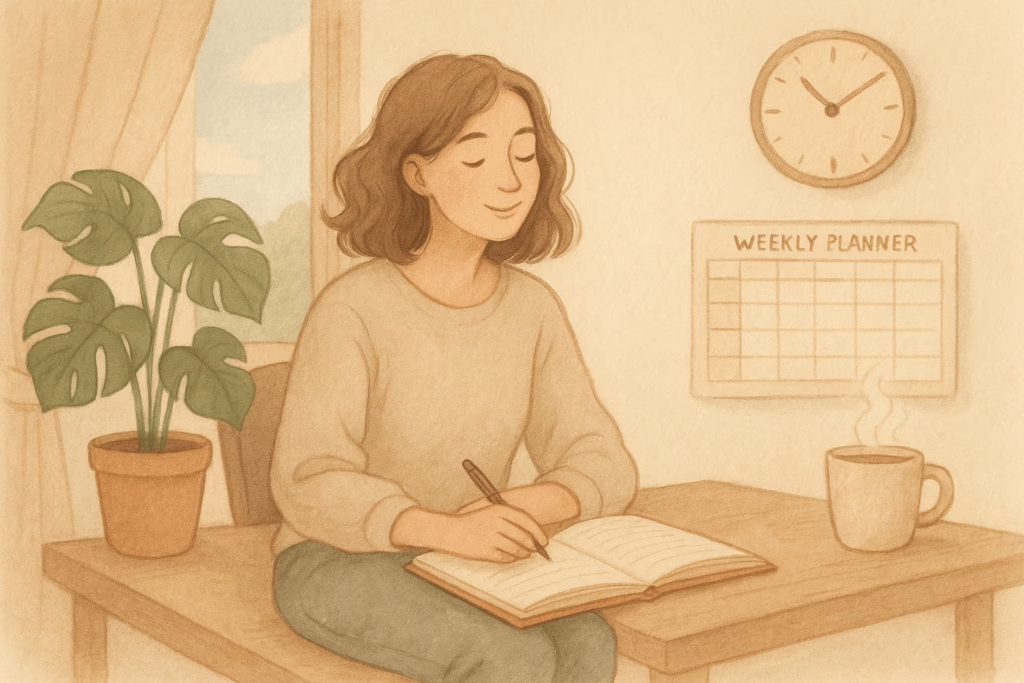
- Start with 1–3 Top Priorities per Day: Ditch the 20-item to-do list that looms over you like a dark cloud. Each morning (or the evening before), identify the one to three most important tasks for the next day. Focus on what truly moves the needle in your job or brings you closer to your goals. By narrowing your focus, you’ll achieve more meaningful progress without feeling overwhelmed. As one coach advises, no more 15-item lists, when you pick your top 1–3 tasks and do them with full presence, you’ll end the day more fulfilled. Everything else beyond those top items is gravy. If you finish early and have energy, you can always tackle another small task, but the psychological win of completing your priorities is huge. It builds confidence that yes, you are getting the right things done.
- “Batch” Your Week and Theme Your Days: If your job allows, try batching similar tasks on specific days or times. For example, block every Thursday morning for meetings, Tuesday early mornings for deep work, Friday for planning and creative projects, etc. This way, your brain isn’t switching gears constantly. Corporate professionals often suffer from meeting overload. One trick is to allocate a “No-Meeting” half-day each week, if you have the authority, make it a team norm! Say every Wednesday after 1 p.m., no meetings allowed, that becomes sacred focus time for everyone. Or schedule them from the end of the day up. That way you don’t have to interrupt your focused work time for a meeting. I personally like to schedule them directly after lunch before going back into focus mode. Similarly, grouping routine tasks (like expense reports, timesheets, admin) into one block means they’ll interfere less with your real work. Batching reduces context switching, which in turn reduces mental fatigue. When you know, for instance, that all client calls happen on Mondays and all strategy thinking happens on Wednesdays, you can prepare yourself accordingly and flow through tasks more smoothly.
- Build in Rest Like You Schedule Meetings: This is non-negotiable in a soft productivity week. Schedule your downtime and treat it as seriously as a work appointment. For instance, block 12:30–1:00 each day as a true lunch break (and step away from your computer. Yes, the emails can wait 30 minutes). Pick an afternoon for a “walking meeting” or personal break, put it on your calendar as “Creative thinking time” or whatever label you need to make it legit. If you have the flexibility, consider a mid-week evening purely for yourself: Wednesday Wind-Down, perhaps? That could mean no social obligations, no extra work. Just you recharging (Netflix in pajamas, a long bath, hobby time, playing with your kids, whatever fills your cup). By intentionally resting before you’re exhausted, you’ll maintain a steadier level of energy and avoid crashes that wipe out an entire day. Also, pay attention to your sleep schedule all week long. Consistent sleep is the ultimate productivity hack, nothing will make you feel “softer” (in a good way) than being well-rested. So yes, log off at a reasonable hour, and don’t hesitate to use that “Do Not Disturb” mode on your work apps after hours. Your future self will thank you. On that note: some European countries are making it illegal to contact workers after hours and they don’t do that lightly…
- Embrace the “Soft No” and Set Boundaries: A huge part of gaining more ease in your week is learning to say no (or “not right now”) to tasks and meetings that aren’t priorities. This can be tough for driven women who are used to saying yes to everything to prove themselves. Start small: maybe you decline one optional meeting that usually drains you or you push back on a timeline that’s unrealistic. You might tell your team, “I’m focusing on Project X this morning, let’s handle other topics this afternoon.” Most of the time, people will understand and if you deliver quality work, that speaks louder than being constantly available. Also, communicate your working style to colleagues: e.g., “I take lunch away from my desk, but I’ll be back online at 1.” This sets expectations that you have boundaries (and implicitly gives them permission to have some too!). If you’re worried about fallout, remember that burnt-out you is far less useful to your team than a healthy, focused you. By protecting your time and energy, you’re actually enabling yourself to contribute more in the ways that count. One trick: use “soft no” language that is polite but firm. For example, “I’d love to help, but I wouldn’t be able to give it the attention it deserves right now with my other commitments.” Or, “Can we schedule this for next week? I want to ensure I can devote proper time to it.” You’re not slacking off; you’re practicing strategic prioritization, a hallmark of soft productivity.
- Celebrate Small Wins (and then log off!): In the hustle world, we tend to only celebrate when big goals are achieved (and then immediately set the next goal, in an endless cycle of striving). Soft productivity encourages us to acknowledge and enjoy the small victories that happen every single day. Finished writing that slide deck? Awesome! Take a moment to savor the accomplishment, maybe do a tiny desk dance or mark it with a satisfying tick in your planner. Did you manage to handle a tense client call with calm? That’s huge, give yourself credit. By celebrating small wins, you reinforce a positive cycle and keep yourself motivated without needing external applause. And don’t be afraid to ask for results. I one time hunted down my boss to ask about the results of a very challenging legal assessment and to hear that it went through every review on the upper floors without the slightest change felt indescribable.
One idea is to keep a “Done List” in addition to your to-do list. At day’s end or week’s end, jot down everything you completed or handled, no matter how minor. You’ll be surprised how much it adds up (including intangible wins like “stayed patient in team meeting” or “took a 15 min walk and felt refreshed”). Soft productivity is emotionally rewarding because you learn to pat yourself on the back regularly, not just when you hit the year-end targets. And once you’ve logged those wins for the day – log off. Close the laptop, mute the work chat, and transition to personal time. You’ve done enough for today; it’s time to recharge for tomorrow. - Sprinkle in Micro-Adventures or “Life” Moments: We can’t talk about rest and balance without mentioning the joy of a change of scenery. If you can, incorporate a bit of life into your workweek. This could be as simple as a mid-week coffee date with a friend, working from a cozy cafe one morning for a change, or attending a fun class in the evening (art, dance, anything non-work). To me, my monday dance classes are holy. And yes, sometimes it means taking some time off. Have you been postponing using those vacation days? Consider planning a Friday off for a long weekend getaway or a home staycation. Travel and breaks are not frivolous , they fuel your spirit. In fact, taking a proper vacation can significantly improve your work outcomes when you return. One study found that employees who took more vacation were rated higher in performance by the end of the year and they were less likely to burn out or quit. Even a short trip can give you a mental reset. So go ahead and book that weekend trip to the countryside or that yoga retreat you’ve been eyeing. Or if travel isn’t feasible, simply be a tourist in your own city on a day off. The key is to disconnect from work and remind yourself that your life is more than your job title. When you return to work, you’ll likely find you’re more creative, focused, and energized. As the saying goes, “A change is as good as a rest.” Soft productivity embraces these changes and pauses as part of the rhythm of a fulfilling life.
Remember, integrating these practices is a journey. You don’t have to revamp your entire routine overnight. Maybe start with one or two changes (say, a daily break and a shorter to-do list) and gradually build from there. The goal is to find a gentle groove that works for you and replaces that constant sense of pressure with a sense of peace and control.
FAQs: Soft Productivity for the Overwhelmed Go-Getter
You might still have some questions about how this “soft productivity” actually plays out, especially in the real world of deadlines and duties. Let’s tackle a few common questions:
Q: Isn’t “soft productivity” just a fancy term for being lazy?
A: Not at all! This is a classic misconception. Soft productivity is intentional productivity. It’s about focusing your effort where it matters most and not sweating the small stuff. You’re still getting things done. In fact, you’re likely getting more of the right things done because you’re not burned out. Laziness implies apathy or doing nothing; soft productivity is very much doing things, just in a sustainable, self-compassionate way. Think of it as being a smart worker instead of a frantic worker. You’re aiming for effective, not just busy. And remember, even top performers and athletes incorporate rest as part of their training regimen. It’s what makes them stronger. If anyone questions your softer approach, you can even point to research that shows working nonstop actually diminishes output, whereas strategic rest improves it. In short, soft productivity is about working with your brain and body, not against them. That’s definitely not laziness; it’s savvy.
Q: Can I still advance in my career if I’m not hustling 24/7?
A: Yes, yes, a thousand times yes. In fact, you might advance even faster (and happier). Here’s why: When you abandon the 24/7 hustle mindset, you free yourself to produce higher-quality work and to show up as a better leader/employee because you’re not exhausted. People notice that. Your manager would rather have you deliver one thoughtful, error-free report than five sloppy ones you churned out at midnight. Plus, by avoiding burnout, you remain consistent and reliable. Colleagues and bosses appreciate someone who can perform well over time, not just sprint and then collapse. There’s a growing recognition in many industries that hustle culture leads to diminishing returns – burned-out employees, mistakes, high turnover. On the flip side, professionals who set boundaries and take care of their mental health often exhibit more creativity and clear-headed decision-making. Also, when you’re practicing soft productivity, you’re usually better at prioritizing tasks that align with team or company goals (since you’re intentionally choosing where to put your effort). That can make you stand out as a strategic thinker. So don’t fear that stepping off the gas will stall your career, think of it as switching to a smarter navigation system that will actually get you to the destination more efficiently (and with your sanity intact).
Q: How do I even start if my workplace is super high-pressure?
A: It can be challenging to practice soft productivity in a hard-productivity environment, but it’s definitely possible with small steps. First, lead by example in the areas you can control. You might not control the overall company culture, but you can control your personal habits and your immediate sphere. For instance, you could start taking that lunch break and encouraging a teammate to join you (creating a micro-culture that it’s okay to pause for lunch). You could gently push for sanity in meetings, e.g., propose that your team have at least one afternoon with no meetings. Also, use your vacation time, sometimes people need to see one person do it to feel they have permission. In emails or chats, you can set expectations by not replying at all hours. Maybe you delay-send emails to the next morning instead of firing off replies at 11 p.m. (letting others know you don’t expect them to be “always on” either). If you have a supportive manager, talk to them. Frame it not as “I want to do less work,” but “I want to find ways to work smarter so I can deliver my best. Here’s what I’m trying…” Most reasonable bosses will value that you’re seeking efficiency. You might be surprised, sometimes your colleagues are relieved you spoke up because they all feel the same pressure. And if the culture truly insists on 24/7 availability (to the detriment of employees), it might be worth reflecting on whether that environment is the right fit for you long-term. More companies are waking up to the importance of employee well-being, so high-pressure holdouts may find they’re losing talent. In the meantime, protect your own well-being with whatever soft productivity moves you can, even if it’s just small things like stepping outside for 5 minutes of air when you feel overwhelmed. Every bit helps.
Q: I often feel guilty or anxious when I’m resting – how do I get over that?
A: Ah, hustle guilt – so common and so tricky. We’ve been conditioned to feel like we must be productive all the time, or we’re somehow failing. Overcoming this guilt is a process, but here are a few strategies: Reframe rest as productive. Remind yourself (even write it on a sticky note) that “Resting now recharges me to be effective later.” This is not fluff – it’s backed by research that breaks actually sharpen your saw. Keep a note of that stat we mentioned: every 10 hours of vacation = 8% performance improvement. Science says rest works! Another tip: schedule your rest. When rest is on the calendar, it feels more “authorized.” If it’s 8 p.m. and your calendar says “Reading + tea time,” then following your schedule is itself an act of productivity. Also, practice being present in your leisure. If you’re off work but mentally berating yourself for it, you’re not truly resting. Engage in activities that occupy your mind enough to keep you from ruminating; try a new recipe, go to a fitness class, watch a movie with subtitles (so you really have to pay attention!). Over time, start with short breaks and build up tolerance. You might feel twitchy taking a 30-minute break; do it anyway, and notice that the world didn’t collapse. Start a journal where you log “How I felt before and after resting.” Often, you’ll see that you feel better and more productive after a break, which reinforces permission to do it. Lastly, remember that you are more than your productivity. It might sound cliché, but cultivate identities and pleasures outside of work, friend, parent, artist, traveler, whatever. When you have a rich sense of self, it’s easier to allow yourself downtime because you know that time is valuable too. It’s the time you’re living your life, which is the whole point, right?
Q: What are some quick soft productivity wins I can try today or this week?
A: Great question! If you’re eager to dip your toes into the soft productivity pool, here are a few quick wins:
- Do a 2-minute breathing or meditation break sometime in the middle of your workday (you can literally set a timer for 120 seconds, close your eyes, inhale and exhale deeply – it’s a mini-reset that costs nothing and can reduce stress).
- Clean up one aspect of your digital life – maybe your email inbox or your phone notifications. Delete or hide notifications from apps that distract you (those social media pings that are hijacking your focus. A quieter phone = a calmer mind.
- Set a cutoff time tonight for work – decide that, say, after 7 p.m., you won’t check work email. Use that time for something relaxing or fun. See how it feels to have an “end” to the workday.
- Write tomorrow’s top 3 tasks before you leave work today. This takes just a few minutes, but it gives your tomorrow-self a head start and can ease any overnight work anxiety. It’s a soft productivity habit that creates structure and peace of mind.
- Incorporate one mini self-care act into your workday. For example, play your favorite song at lunchtime and do a silly dance, or step outside and feel the sun for a moment between meetings. It might feel trivial, but these tiny moments of joy and pause make a big difference in your mood and energy.
Each of these is small and doable, and each one will give you a taste of what it’s like when you honor your well-being as part of your productivity. Pay attention to any positive changes; did you concentrate better after taking a real lunch? Were you less anxious in the evening after disconnecting at a set time? Use those observations as motivation to keep going.
Embrace the Soft Life (You Deserve It)
At the end of the day, soft productivity is about thriving, not just surviving. It’s about finding your flow and pace, where you can excel at your work and savor your life, without feeling constantly on the brink of burnout. For millennial women like us, who have spent our early careers sprinting on the hamster wheel, consider this your permission slip to step off and walk at your own rhythm. You are allowed to slow down. You are allowed to find joy in a quiet morning journaling, to take that Friday off for a mini vacation, to close your laptop at 5 and go do yoga or play with your kids or have a lazy Netflix night. In fact, not only are you allowed; it might be the secret sauce that makes you more successful in the long run.
Imagine waking up on a workday feeling rested (it is possible!), knowing exactly what your top priority is, and calmly starting your day with a cup of coffee and a plan that doesn’t make you want to cry. Imagine actually having energy after work to meet a friend or dive into a hobby, because you didn’t pour from an empty cup all day. Soft productivity is about creating that reality. It’s choosing a path of less resistance and more resilience, a path where your work gets done and you get to have a life. As we’ve discussed, it’s not just feel-good rhetoric; it’s grounded in research and real success stories. When you protect your time, balance your brain’s load, and feed your soul with rest and play, you set yourself up for authentic, sustainable success.
So, the next time you catch yourself feeling guilty for resting or uneasy because you’re not “hustling” like that influencer claims she is – take a deep breath. Remind yourself that you’re playing the long game for your well-being and goals. You’re cultivating focus, creativity, and passion in a way that burnout culture can’t match. This is a brave choice in a world that’s addicted to hustle, but it’s so worth it. Your work will improve, your mood will improve, and your life will feel more yours.
I’ll leave you with this emotional nugget: You are not a machine. You’re a beautifully complex human being who deserves gentleness and care, even as you strive for greatness. In fact, your greatness will shine even brighter when you give yourself that care. So light a candle, close those extra browser tabs in your mind, and step into your soft, productive era.
Ready to embrace soft productivity and design a life that feels as good as it looks on paper? Join our community by subscribing to the DREAM Newsletter – every week, I share cozy tips, science-backed hacks, dreamy travel destinations and personal stories to keep you motivated on this gentler journey. Remember, you deserve to work in a way that loves you back. Let’s make that your new normal, together.