The answer depends on what you want to come home with. During my burnout recovery, I started treating free time differently. A day off was no longer an empty space I had to fill with errands. A weekend away was no longer a chance to prove how much I could fit into forty-eight hours. I began asking a quieter question before making plans:
How much of this experience will I actually enjoy?
That question changed the way I travel.
I stopped counting only nights in a hotel. I started counting the time it takes to get to the airport, find the hotel, eat something, sleep, find my way around and return home. Those hours are part of the trip too. If I leave them out, I create an itinerary for an imaginary version of myself who has endless energy and never needs a shower.
For most people with a full-time job, three nights and two full days is a sensible starting point for a city break. Four nights gives you more breathing room, especially if the journey is long, the city is spread out or your energy can change from day to day.
Two nights can still work. It simply needs a clearer purpose and a lighter plan.
The shortest trip is not always the most efficient trip. A cheap weekend can become expensive when you spend the following Monday trying to feel normal again.
Start with usable time, not the number on the booking confirmation
A three-night trip does not automatically give you three days in a city.
The first day may include a flight, train journey, airport transfer, check-in and the mental effort of working out where everything is. The last day may disappear into breakfast, packing, getting to the airport and waiting to go home.
You might have ten hours between leaving home and reaching your hotel. That does not mean you have ten spare hours for sightseeing. I find it helpful to divide a trip into three kinds of time:
Full days
These are the days when you wake up in the city and do not need to travel home that evening. They are the best days for your main plans.
Soft days
These are arrival and departure days. You may have enough energy for one simple plan, a good meal or a slow walk. You should not build the entire trip around them.
Protected time
This is the space you leave open on purpose. It may become a café stop, a nap, a change of clothes, an early dinner or an unexpected place you want to explore. Protected time looks unproductive on an itinerary. In practice, it is often the part that makes the trip feel like a holiday.
A simple starting point
Use this as a guide rather than a rule:
Two nights: choose one clear purpose and keep the plan light.
Three nights: a strong default for a first city break, with two full days or one full day plus two soft days.
Four nights: a better choice for a larger city, a longer journey, a day trip or changing energy.
Five nights or more: useful when you want the city and the surrounding area or when slow travel matters more than ticking off sights.
The right length depends on the trip you want to have. A concert weekend, a museum-focused trip and a city break designed for rest have different requirements.
A meaningful city break needs enough time for one thing to go wrong without taking the whole trip with it.
Decide what the trip is for
Before choosing a destination or opening a map, finish this sentence:
I want to come home feeling…
Maybe the answer is inspired. Maybe it is rested, curious, confident, connected or simply glad to have left your usual routine for a few days.
Your answer affects the number of days you need.
If you want to see one exhibition and have dinner somewhere special, two nights may be enough. If you want to understand a city, move slowly and leave room for discoveries, three or four nights will serve you better.
If you are travelling because you are exhausted, a full itinerary may give you more things to remember and less time to recover. A gentle trip can still feel rich when the goal is to feel present.
Three useful trip types
When I plan a city break, I like to choose the pace before I choose the individual activities. This stops every interesting recommendation from becoming a commitment.
Gentle
A Gentle trip has few fixed plans and generous open space. You might choose one main activity for the entire day or one activity every other day. The rest can stay flexible. This works well when you are recovering from a demanding period, travelling alone or visiting a city where the pleasure comes from wandering rather than completing a list.
A Gentle plan might include:
one pre-booked activity;
one restaurant or café you genuinely want to try;
plenty of time between plans;
no pressure to cross the city several times in one day.
Balanced
A Balanced trip has one main point each day and free time around it. This is the pace I would recommend as a default for many working professionals. You get enough structure to make the trip feel intentional, with enough room to sit down, change plans or follow your curiosity. A Balanced day might include a museum in the morning, lunch without a strict end time and an open afternoon. Or it might include one neighbourhood, one meaningful meal and a slow walk back to the hotel.
Full
A Full trip suits people who enjoy a faster pace and already know they have the energy for it. You can include more than one major activity in a day, move between different parts of a city and book more of your time in advance. The plan still needs a break, a meal and a way to adjust if the day takes longer than expected.
Full does not mean better. It means fuller.
How this looks in real destinations
The same destination can become three completely different trips depending on the pace you choose.
Vienna
For a Gentle Vienna trip, you might choose one cultural anchor, a comfortable place to eat and plenty of time for cafés, rest and unplanned wandering.
A Balanced version could include one main point each day, with the afternoon left open. A Full version might add more museums, more neighbourhoods and a tighter schedule for someone who enjoys moving quickly.
Three nights can work well when you choose your priorities before you arrive. If you want a slower visit or a day outside the city, four nights will feel less compressed.
London
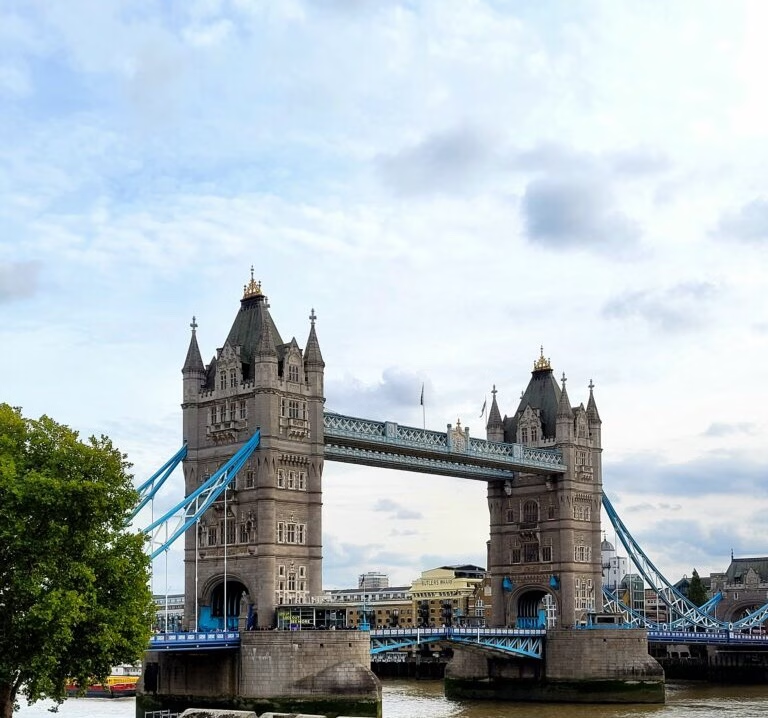
London rewards careful planning because it is easy to spend a large part of the day travelling between places.
A Gentle version might focus on one area at a time. A Balanced version could give each day one main destination and a nearby second option. A Full version might combine several areas, but it needs realistic travel time between them.
For a first visit, four nights can give you more room to see the city without turning every morning into a race against the clock.
Dublin
A three-night Dublin trip can work for a focused city break. You could use the city itself as the main experience and leave a full day open for food, conversation and walking.
If you want to add a day trip or travel more slowly, four nights gives you space to do that without sacrificing the final day to logistics.
The point is not that one destination always needs a certain number of days. The point is that travel time, energy and ambition all count when you make the decision.
Edinburgh
Let me tell you about two very different trips I took to the same city. A few years ago, I visited Edinburgh for the first time. Energy level was good and we decided on a balanced trip.
For this two nights trip, we arrived in the evening, checked in and found a nice pub for some food. The next day we toured the city centre on foot, climbed Calton Hill, explored some shops and headed for Hogmanay in the evening. The next morning we had a late breakfast, walked up to the castle, browsed some shops and took an evening tour to the underground and to Greyfriars Kirkyard. I absoluteley loved the tour, but for those two days with the major event of Hogmanay, not much of anything else was planned ahead.
Now, I am visiting again for five nights, four days. This time we planned a bit more into it and as I am going within two weeks off, I have a lot of energy to spare.
We planned for lunch at the Devil’s Advocate, an evening walking tour to the underground, again because I loved it. We want to climb Arthur’s Seat and will spent a day heading to Sterling. As we are in the City for the Riding of the Marshes, we will of course head for that. Explore Dean Village, the Walk of Leith and Stockbridge and just walk the city again. My non-negotiable thing for this trip is a visit to Edinburgh Castle. Last time I didn’t and I would absolutely regret not visiting again.
Do you get the idea, yet?
The easiest way to overbook a short trip
The problem often starts with a list of places rather than a reason for going. A saved video suggests a restaurant. Someone recommends a gallery. A guide adds a neighbourhood, a market, a day trip and a viewpoint. Suddenly, a two-day visit has twelve non-negotiable stops.
I use a simple filter:
What is the one thing I would regret missing?
What would make the trip feel good even if everything else changed?
Which plans can wait for another visit?
The answers become your anchors. Everything else is a candidate for the flexible list. It can happen if the weather is good, your energy holds and you still want to do it. It does not get to compete with the reason you booked the trip in the first place.
The best itinerary is not the one with the most recommendations. It is the one that still works when you wake up tired.
A quick planning box
Quick answer: how many days should you book?
Book three nights when you want a focused city break with two full days and a manageable pace. Book four nights when the journey is long, the destination is large, your energy varies or you want to add a day trip. Book two nights only when you have one clear purpose and are happy to leave many things for another time.
Then choose your pace: Gentle, Balanced or Full. Your itinerary should match the energy you expect to have, not the energy you wish you had.
Questions I get about city-break length
Is two nights too short?
No. Two nights can be enough for one clear experience, especially when the journey is short and the destination is easy to reach. It becomes difficult when you expect a short trip to include several neighbourhoods, multiple attractions, a day trip and plenty of rest. Choose the one thing that matters most. Build around that. Let the rest stay optional.
Is three nights enough for a first visit?
Often, yes. Three nights gives you a useful middle ground: enough time to get a feel for a city without requiring a large amount of annual leave. Keep arrival and departure days light, then use the full days for your main plans. A larger destination or a long journey may deserve four nights.
How do I plan a city break when my energy is unpredictable?
Plan from your energy floor. Ask what you could still manage after a poor night of sleep or a demanding week at work. Make that version of the trip enjoyable on its own. You can always add something when you feel well. It is much harder to remove half an itinerary after you are already tired and every booking feels important.
Should I choose the destination before the number of days?
Choose them together. A destination that needs several days may not suit a short window, while a smaller or more focused trip may work beautifully over a long weekend. Your available leave, travel time, energy and purpose should all be part of the same decision.
Plan the trip you can actually enjoy
I am building the first version of my City Break Planner around this exact problem. It will help you calculate your usable time, choose your trip purpose, set a budget, decide how much comfort matters and build a Gentle, Balanced or Full version of the same destination. The goal is simple: fewer plans that look good in a spreadsheet and more trips that feel good in your body.
Join my newsletter and get The City Break Capacity Check free as soon as it’s being published. It is going to be a short planning worksheet for choosing your trip length, energy level, pace and first priorities before you book anything. You will also receive practical ideas for traveling well around a full-time job, limited annual leave and a life that still exists when you return home.
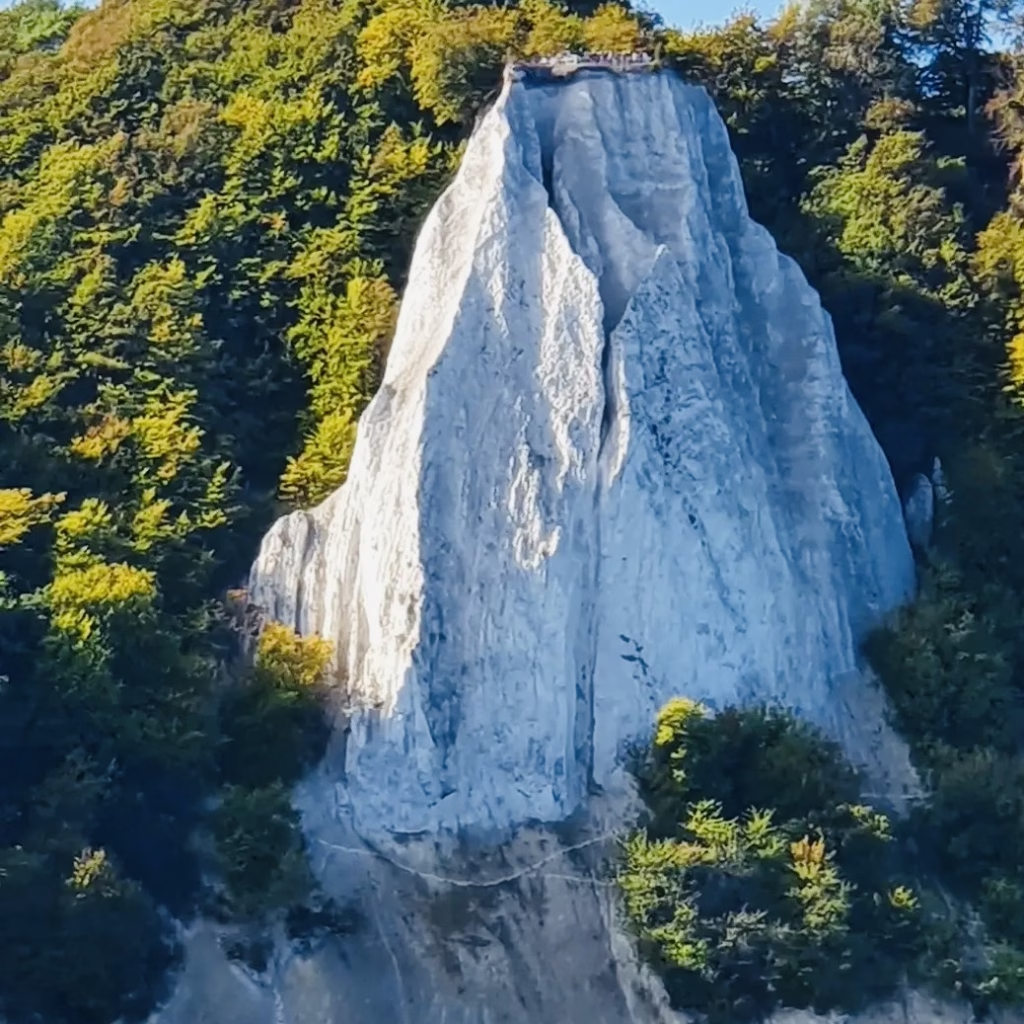
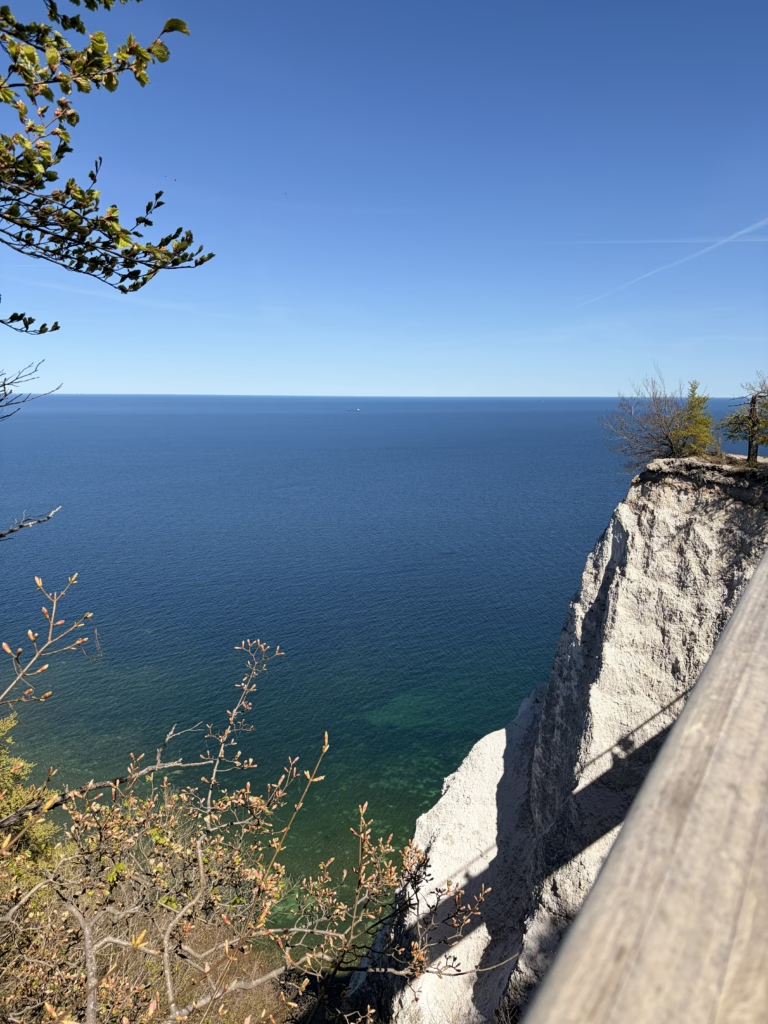
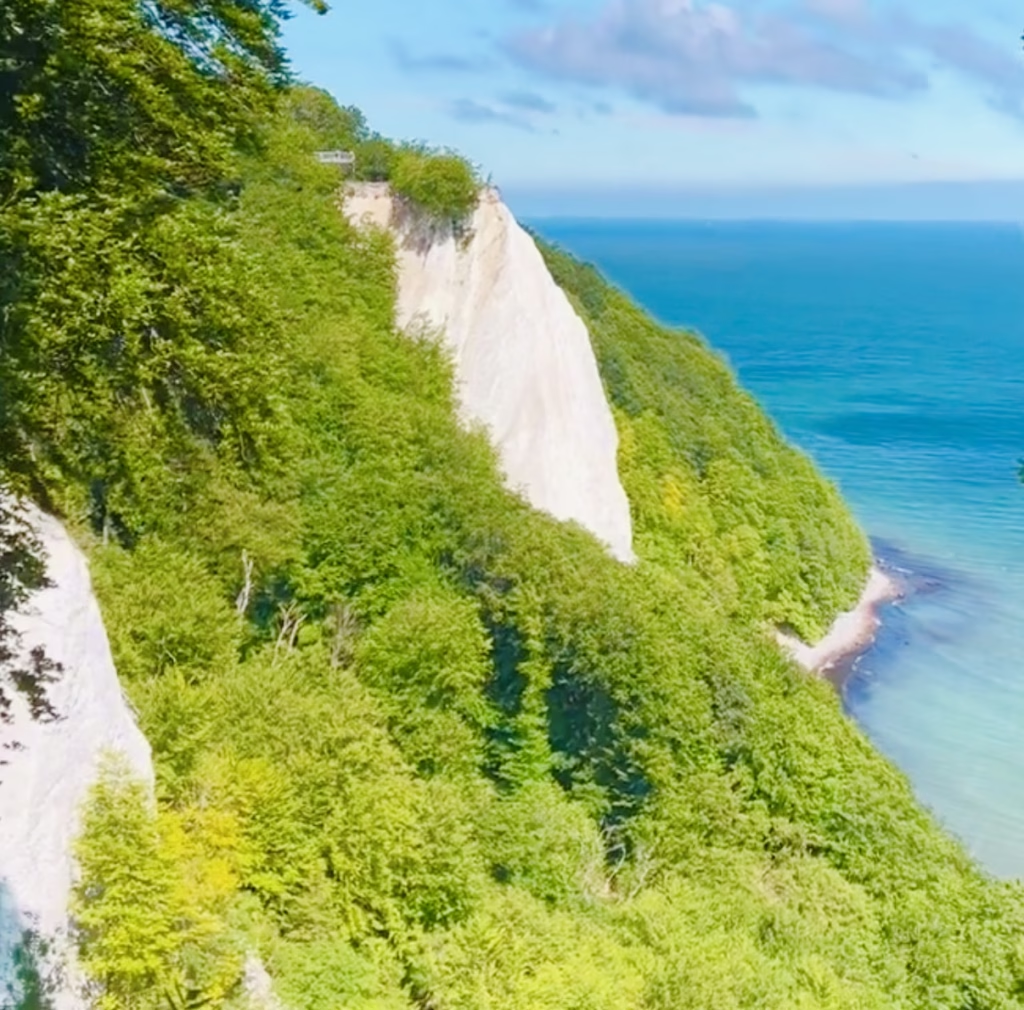
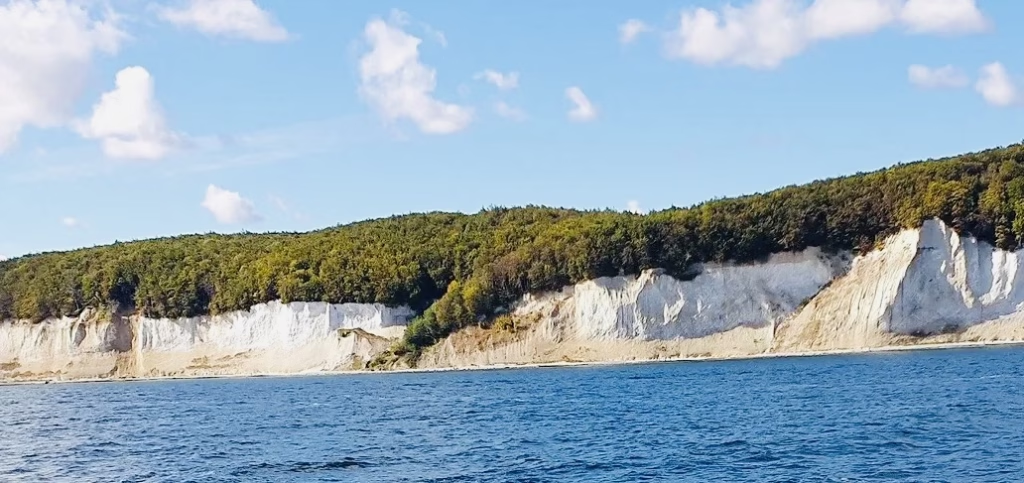
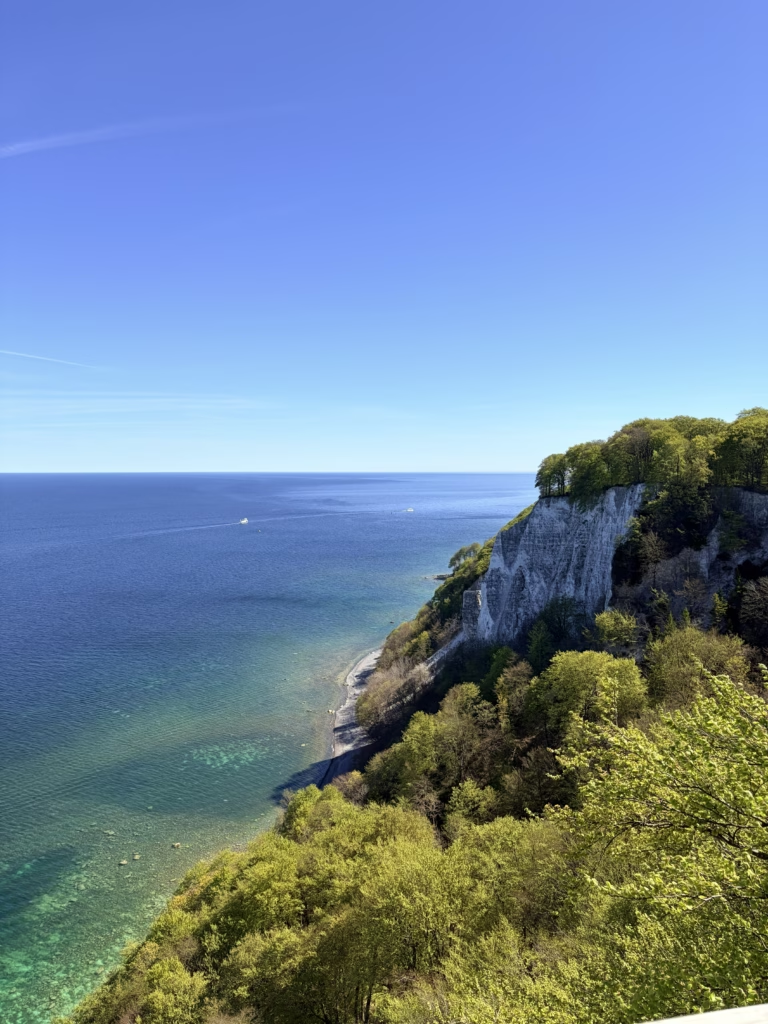
Germany’s White Cliffs of Rügen (Kreidefelsen) are stunning: chalk cliffs soaring 118 meters above the Baltic Sea, wild beaches, and hiking trails with beautiful viewpoints. This is Jasmund National Park, Germany’s smallest but most spectacular national park. Think Dover meets Jurassic Coast, but with fewer crowds and more fairy-tale vibes.
Fun fact: The cliffs are made of chalk. The same stuff as school chalk! But don’t try to write on them. In fact, you probably don’t want to get too close because of breakoff risks. Chalk is a soft stone.
🗺️ How to Get to the White Cliffs of Rügen
By Car:
From Berlin:3.5-hour drive via the A20 and A205.
From Hamburg:4-hour drive via the A1 and A20.
Parking:P1 Königsstuhl (€5/day) or P2 Nationalpark-Zentrum (€3/day). Pro tip: During travel season (from May to September) arrive before 9 AM to beat the crowds.
Make a whole Rügen vacation out of your trip and drive from Binz, Sellin or Sassnitz
By Train + Bus:
*Take the ICE train from Berlin or Hamburg to Binz (3–4 hours).
*Transfer to Bus 241 to Sassnitz (30 mins, €3).
*Walk or take the shuttle bus (€2) to Königsstuhl.
By Bike:
Rügen is bike-friendly if you don’t mind hilld, rent a bike in Binz or Sassnitz (€15/day) and cycle to the cliffs (~1 hour). Pro tip:Follow the Rügen Coastal Cycle Path, scenic and flat.
🏞️ What to See and Do: The Ultimate Guide
1. Königsstuhl (The King’s Chair)
Why it’s iconic: The most famous cliff, a chalk monolith that juts into the Baltic. The views are unreal. And there are quite the interesting legends on how it earned its name.
What to do:
*Hike to the Viktoria viewpoint (10 mins from the bus lot).
*Visit the Nationalpark-Zentrum Königsstuhl (15), interactive exhibits on the cliffs and park.
2. The Wissower Klinken
Why it’s special: A series of chalk pinnacles that look like giant teeth. Photographers love this spot.
What to do:
*Hike the Wissower Klinken Trail (1.5 hours, moderate).
*Climb the wooden stairs for views of the cliffs.
3. The Victoria Viewpoint (Viktoriasicht)
Why it’s special: The bestphoto spot, panoramic views of the cliffs and sea.
What to do:
*Hike from Königsstuhl (30 mins) or from the parking lot.
*Bring waiting time, that platform is small.
4. The Stubbenkammer Cliff
Why it’s special: The tallest cliff on Rügen (118m), dramatic and less crowded than Königsstuhl.
What to do:
*Hike the Stubbenkammer Trail (2 hours, challenging). Pro tip: Wear sturdy shoes, the trail is steep.
🥾 Hiking Trails: The Best Routes for Every Level
Trail
Difficulty
Time
Highlights
Königsstuhl Loop
Easy
1 hour
Cliff views
Wissower Klinken
Moderate
1.5 hours
Chalk pinnacles
Stubbenkammer
Hard
2 hours
Panoramic views
Victoria Viewpoint
Moderate
1 hour
Sunset views, photo spots
Pro tip: Download the Komoot app for offline maps and trail details.
📸 Best Photo Spots (And How to Get the Shot)
Spot
Best Time
Tip
Königsstuhl
Sunrise/Sunset
Less crowds
Victoria Viewpoint
Golden hour
Bring a tripod
Stubbenkammer
Midday
Contrast of white cliffs and blue sea
Boat Cruise
Mornings
The only way to view the cliffs in all of their glory
Pro tip: Use a polarizing filter, enhances the blue of the sea and white of the cliffs.
🍽️ Where to Eat Near the Cliffs
1. Nationalpark-Gaststätte Königsstuhl
Why go? Right next to the cliffs, local seafood and German dishes. Order this:Rügen herring with potatoes, fresh and delicious. Pro tip: Sit on the terrace for views of the Baltic.
Why go? Luxury with sea views, perfect for a post-hike meal. Order this: Their fish and desserts are to die for Pro tip: Reserve a table, popular in summer.
💡 Pro Tips for the Ultimate Rügen Experience
Visit in Shoulder Season:
May–June or September, fewer crowds, milder weather.
Wear Layers:
The wind off the Baltic is chilly, even in summer.
Bring Water and Snacks:
Limited food options near the cliffs, pack a picnic.
Respect the Cliffs:
Stay on marked trails, chalk is fragile and dangerous if you wander too close to the edge. I cannot mention this enough. People have died by being at the cliffs edge or below them at the wrong time.
❓ FAQ: Because You’ve Got Questions
Q: Are the cliffs safe for kids? A: Yes, but supervise them closely and stay on marked trails.
Q: What’s the best time of year to visit? A: May–September, best weather and access to trails. I honestly loved visiting at the very end of April, because dogs are still allowed on the beaches. Winter is dramatic but some trails and even restaurants and shops on the island close.
Q: Can I find amber on the beach? A: Yes! Look after storms, best spots are Stubbenkammer and Prorer Wiek. But be careful, some of it might be yellow phosphor from the mines of WWII that is washed ashore now that the mines are all rusty.
Q: Is there a fee to enter the park? A: No, Jasmund National Park is free. Only the Nationalpark-Zentrum has an entry fee and the busshuttle to the Königsstuhl isn’t free either.
🎉 Final Thought: Why Rügen’s Cliffs Are Germany’s Hidden Gem
Rügen’s White Cliffs are more than just a scenic spot, they’re a feeling. Standing on the edge of the cliffs, watching the Baltic crash against the chalk, you’ll understand why this place inspires artists, writers, and dreamers. It’s wild, beautiful and unforgettable. Germany’s answer to the Cliffs of Moher, but with fewer crowds and more charm.
So pack your hiking shoes, grab your camera and dive into Rügen’s magic. And when you’re standing on the cliffs, wind in your hair and sea spray on your face, you’ll know why this is Germany’s most dramatic coastline. Want more travel destinations? Here are some of my favourites. And I even offer full itineraries, so you don’t have to lift a finger to plan your trip. You just need to book.
P.S. Want more Rügen secrets? Sign up for my newsletter The Long Game and get exclusive guides, local tips and zero tourist traps.
P.P.S. Got a favorite Rügen spot or hidden gem? Share in the comments. I’m always adding to my list! 🏞️✨
I still remember the first time I wandered into Osnabrück. It wasn’t part of any grand Euro tour or famous “must-see” list, but it was the city I chose to study law in and yet a place I knew little about. But by the end of my university time, Osnabrück had etched itself onto my heart as one of those underrated German cities that surprises you at every turn, a true hidden gem in Germany’s travel scene. If you’re a busy professional craving an off-the-beaten-path Germany escape that mixes unique experiences with comfort or a student trying to chose a cozy city to study in or spent a semester abroad, follow along. This Osnabrück travel guide will show you how to savor history, culture and coziness in one long weekend. I promise, afterwards you’ll want to stay.
Day 1: First Impressions : Old Town Charms and Cozy Welcomes
Stepping off the train in Osnabrück (after an easy ride from Hamburg or Frankurt (Main)), I felt an immediate sense of calm. The city’s pace is unhurried, and everything seems within arm’s reach, ideal when you’ve only got a weekend or a poor student biking everywhere. After checking into a boutique hotel in the Altstadt (Old Town), I chose a lovely spot right near the market square, ensuring all the sights were walkable, I set out to explore on foot.
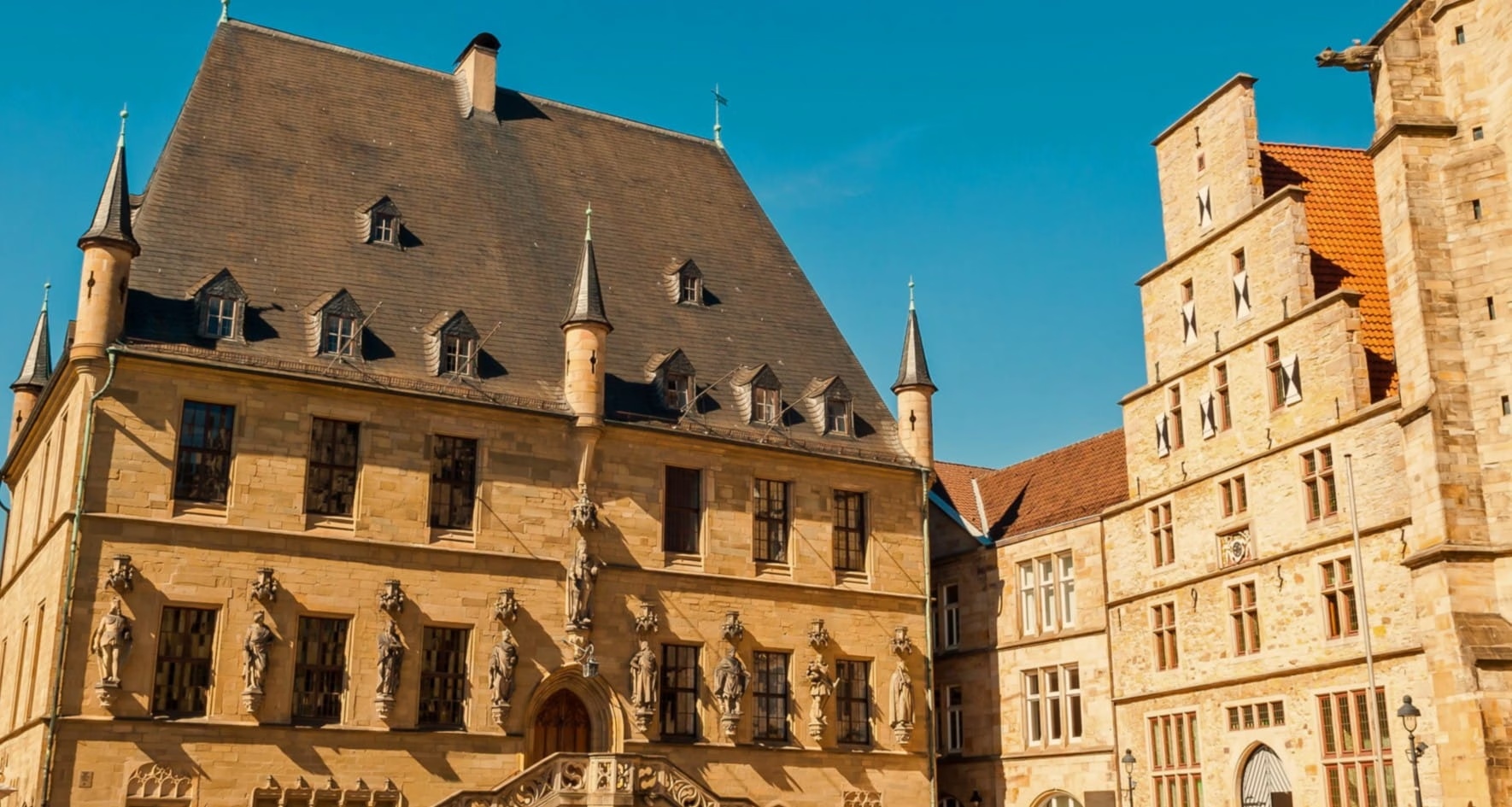
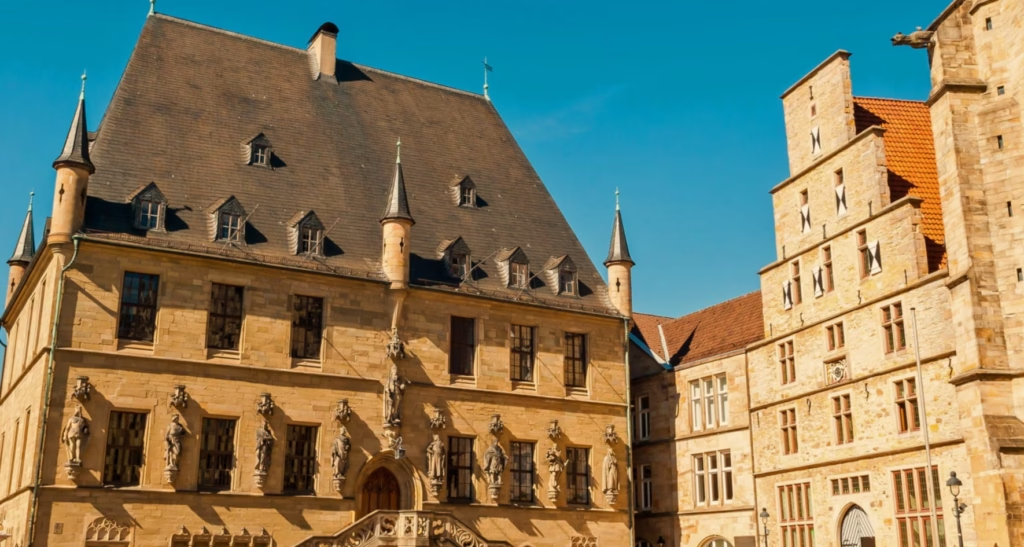
My first stop was the Historic Market Square, the storybook heart of Osnabrück’s Old Town. Framed by rows of colorful, gabled merchant houses, the square exudes Hanseatic medieval charm. At its center stands the Gothic City Hall of the Peace of Westphalia, where a golden dove-shaped door handle welcomes you into history. Inside the wood-paneled Peace Hall, I sat on the same benches where, in 1648, delegates negotiated the end of the 30 Years’ War, you can literally feel the breath of history in the air. Outside, the Bürgerbrunnen (Citizens’ Fountain) tells 1200 years of city stories through intricate bronze figures. As a history buff, I was in heaven. As a traveler, I was simply in awe, it’s not every day you casually stroll through the birthplace of European peace treaties. The historic Osnabrück City Hall on the Market Square, where the Peace of Westphalia was signed in 1648.
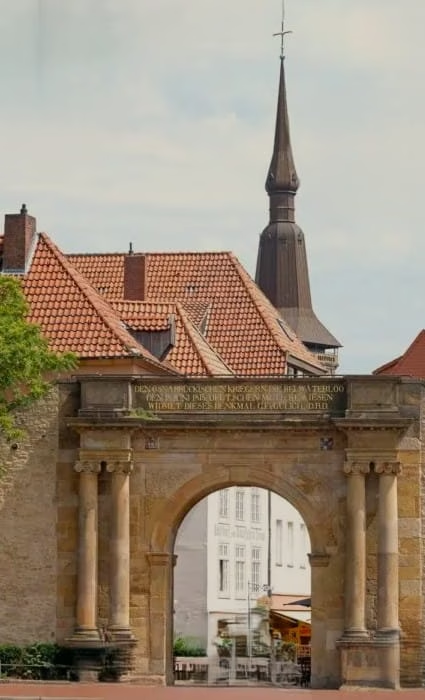
From the square, I wandered past St. Mary’s Church and into Heger Tor, a grand neoclassical gate that once guarded the city. Locals call it the Waterloo Gate, a memorial to soldiers who fell at Waterloo. Passing through, I entered the Heger Tor Viertel, a district of cobbled lanes lined with half-timbered houses, quirky boutiques, and inviting taverns. It’s incredibly walkable, you won’t need anything more than comfy shoes to explore Osnabrück’s Old Town alleys. Around each corner, I found something photo-worthy: a hidden courtyard here, a whimsical street sculpture there and always the mix of medieval and modern life blending effortlessly.
Heger Tor
By mid-afternoon I craved a caffeine fix. I ducked into Café Kommode, a cozy little café beloved by locals. True to its name (“kommode” means dresser in German), it’s adorably furnished with vintage cabinets and armchairs, as if you’re having coffee in a stylish grandmother’s living room. I ordered their house specialty cappuccino and a slice of hazelnut cake. Legend has it a priest once called their homemade chocolate pralines “heavenly,” and after tasting one, I couldn’t agree more. Sinking into an antique sofa, sipping my coffee, I felt the stress of office emails melt away.
Travel tip: Osnabrück’s café scene is fantastic, take the time to slow down and people-watch. You’ll notice everyone from university students to friendly grandpas enjoying the afternoon “Kaffee und Kuchen” ritual. In this city, relaxation is practically a cultural heritage.
Refreshed, I continued my stroll. Just a few blocks away stands Osnabrück Cathedral (St. Peter’s) with its twin towers and peaceful cloister. I fondly remember it as the church where my best friend got married. Outside on the square, people are strolling in every direction or having a coffee or pizza under the statue of Justus Möser (a famous jurist born here), giving the square a friendly buzz. It was the perfect teaser for the next day’s plans. As dusk fell, Osnabrück’s Old Town took on a warm glow. Many buildings lit up and lively murmurs drifted from restaurants. For dinner, I craved something hearty and local. I found it at the Hausbrauerei Rampendahl, a historic brewery tavern on Hasestraße. The atmosphere was just what I needed: rustic wood interiors, the clink of beer glasses, and the smell of home-brewed beer and hearty food wafting from the kitchen. I devoured an order of cheese “Spätzle” paired with their house pilsner, of course. The portions were generous (I later learned you can order half-portions that still fill you up), prices reasonable, perfect as a student and the convivial vibe made a solo traveler like me feel right at home. If you prefer vegetarian or lighter fare, no worries: Osnabrück’s city center offers everything from organic Italian and tasty soups, to vegan street food, all within a few minutes’ walk. This city truly has culinary fulfillment for every taste and budget.
After dinner, I wasn’t quite ready to call it a night. Instead, I followed the sound of laughter and clinking glasses to Sonderbar, a tucked-away local bar known for its impressivly quirky decor. . By midnight, I realized I’d experienced exactly what I came for: authentic connection in an underrated city that doesn’t feel touristy at all. I walked back to my hotel under the gentle glow of old street lamps, already excited for what the next day would bring.
Day 2: Culture and Discovery: Markets, Masterpieces and a Dash of Quirk
I woke to church bells and sunlight filtering through medieval-paned windows, a glorious Saturday in Osnabrück. Today was all about diving deeper into the city’s culture. First up: breakfast at the Weekly Market. This market, held in the square by the cathedral, is a Saturday tradition. By 9 AM, it was in full swing. I joined locals browsing stalls piled high with fresh produce, artisan bread, and flowers. Hungry, I made a beeline for a bakery stand and treated myself to a “Franzbrötchen” (a cinnamon-sugar pastry native to northern Germany) and a cup of local roast coffee. I enjoyed them right there in the square, perched on a bench near the statue of Justus Möser, watching Osnabrück come to life. There’s something heartwarming about being part of a city’s morning routine. I felt less like a visitor and more like I belonged. After fueling up, I headed to the nearby Museum Quarter, specifically to the Felix Nussbaum Haus. This museum was a highlight I’d been anticipating, blending art, history, and striking architecture. Designed by renowned architect Daniel Libeskind (who also created the Jewish Museum in Berlin), the Felix Nussbaum House is a modern architectural marvel nestled amid old city walls. Its design is all sharp angles and tilted lines, Libeskind intended it to feel a bit disorienting, reflecting the tragic story of the artist inside. Felix Nussbaum was an Osnabrück-born painter whose life was darkly interrupted by the Nazi regime; he was murdered at Auschwitz in 1944. Walking through the museum’s corridors, I felt his story in every painting: from the bright, hopeful early works to later pieces filled with fear and anguish. It’s rare that a museum moves me emotionally, but one self-portrait of Nussbaum hiding in an attic, painting himself with haunted eyes was incredibly poignant. Yet the experience wasn’t depressing; it was inspiring. The very existence of this museum, with over 200 of Nussbaum’s works on display, felt like a triumph of art over darkness. I left with a deeper appreciation for Osnabrück’s commitment to remembering its history while embracing creativity.
Emerging back into the sunshine, I decided a lighthearted pick-me-up was in order. Fortunately, Osnabrück has just the thing for a sweet tooth. I strolled over to Leysieffer, a famous local chocolate shop and café that’s been delighting residents for over a century. Fun fact: Osnabrück is the original home of Leysieffer, founded in 1909, so you know they’ve perfected their craft. I sat in their pretty café and savored one of Leysieffer’s signature Himmelspralinen (“heavenly pralines”). Let’s just say I now fully understand why their chocolates are legendary. It was the perfect palate cleanser after the heavy emotions of the museum. Next, I decided to experience a bit of Osnabrück’s modern local culture. Just a short walk from the Old Town is the L&T shopping center, an upscale department store that hides a very unexpected attraction: in its sports department basement, there’s an indoor surfing wave called the Hasewelle! Yes, you read that right, surfing in the middle of a German city. I couldn’t resist checking it out. Inside L&T, stylish shoppers mingled with curious onlookers like me, all gathered around a large glass pool where wetsuit-clad surfers were riding a never-ending wave. The energy was contagious. I didn’t try it myself, but watching locals catch a wave in a store was a delightfully quirky reminder that Osnabrück isn’t afraid to mix old and new. If shopping is more your thing, L&T also offers 22,000 square meters of retail therapy, from high fashion to outdoor gear, but I was content with the free surfing show.
For the afternoon, I had two options: delve into nature or visit another museum. Osnabrück tempts you with both. Ultimately, the sunny weather lured me outdoors. Did you know Osnabrück is the only major city situated inside a nature park? The UNESCO GeoPark TERRA.vita surrounds the city with rolling hills, forest, and even geological wonders. On a whim, I hopped on a local bus (public transit is efficient here) to the edge of town for a short hike at the Piesberg, a former quarry that’s been transformed into a scenic park. The trail was easy and the views from the top, rugged sandstone cliffs and green countryside, were worth the mild climb. I found it pretty cool that I could be immersed in nature just 20 minutes after being in a bustling market. If hiking isn’t your style, another popular option is the Osnabrück Zoo, uniquely set in a forest and even featuring an underground zoo exhibit (yep, there are animals that live below ground, talk about offbeat!). Families especially love it, but as an adult I can attest it’s quite fun to explore for a few hours. Whether you choose a nature walk or the zoo, it’s a relaxing change of pace that shows off Osnabrück’s softer side.
As evening approached, I returned to the city center for one more cultural treat: a classical opera at the theatre. I lucked into a ticket for Mozarts Zauberflöte. Sitting among local music lovers, letting the orchestra’s melodies wash over me, I felt an uplifting sense of belonging and inspiration. It’s experiences like this, blending with the community, enjoying a shared love of art, that make small-city travel so rewarding. For my final dinner in Osnabrück, I opted for a lighter meal. I found the Zinnober, a wine specialist with an amazing restaurant. Over a glass of Riesling and a plate of seasonal veggie risotto, I reflected on how fulfilling yet unhurried the day had been. In big cities I often feel pressure to race from sight to sight, but here I was genuinely relaxed, having seen so much without ever feeling rushed. Osnabrück had quietly worked its magic.
To cap off the night, I followed the sound of live jazz to a tiny bar near the Heger Tor. Inside, a trio was playing upbeat swing while a friendly bartender recommended local craft beers. I recognized a couple of faces, the city is just the right size that you might bump into the people you saw at the market or the concert hall. We exchanged smiles and cheers. Traveling solo in Osnabrück never once felt lonely; it felt like being among old friends.
Day 3: A Fond Farewell: Relaxation and Inspiration
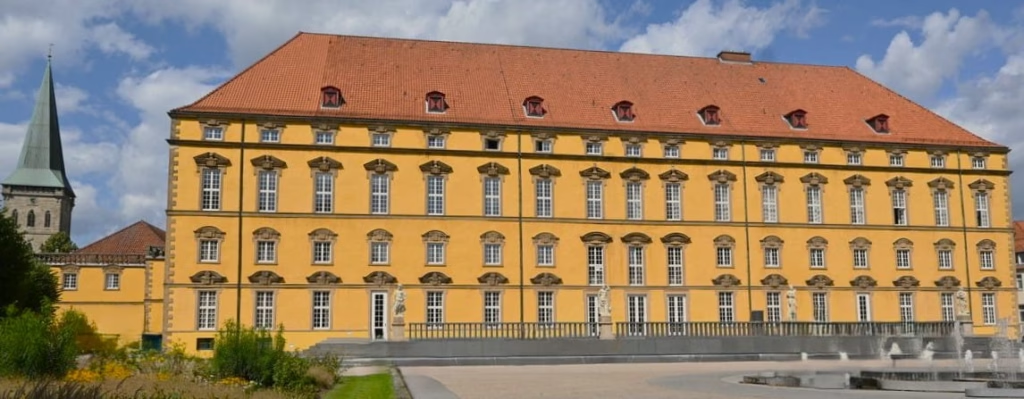
All too soon, Sunday morning arrived, my last day in this lovely city. I allowed myself a lazy start (one of those cozy hotel mornings where you linger over coffee and a German breakfast spread of breads, cheeses, and fruits). Checkout wasn’t until late morning, so I decided to squeeze in one more uniquely Osnabrück experience before catching my afternoon train home.I took a leisurely walk to the Osnabrück Castle, a Baroque palace that now houses the university. The gardens behind the castle practically begged for a stroll. I meandered through the manicured lawns and fountains of the Schlossgarten, watching students study under trees and elderly couples feed the ducks. The castle’s exterior, painted a cheery yellow, made for a great photo-op and the atmosphere was incredibly peaceful. It struck me that Osnabrück seamlessly blends youthful energy (thanks to the university) with a tranquil, almost meditative vibe. Not many cities can be vibrant and chill at the same time, but this one nails it.
With just an hour or two left, I returned to the Old Town for a final dose of its charm. Many shops were closed (note: in Germany, most stores shut on Sundays), which actually made the stroll even more enjoyable, the streets were quiet, almost all mine. I popped into Café am Markt, which was open and busy serving brunch. Snagging a seat by the window, I indulged in one more coffee and a waffle topped with fresh berries. Outside, the bells of nearby St. Mary’s tolled noon. I could see a few tourists gathering by the Town Hall, taking photos of the Peace of Westphalia plaque, but mostly it was locals out for Sunday walks with their dogs or grabbing ice cream with their kids.
Is Osnabrück worth visiting? Absolutely! Precisely because it isn’t overrun with tour buses and selfie sticks. It felt like a secret I was in on, a place where you can deeply engage rather than just “see and tick off” sights. Before heading to the station, I walked one last loop around the Market Square, now calm and sun-drenched. I found myself already feeling nostalgic about this city I hadn’t even left yet. In just three days, Osnabrück had given me exactly what I needed: a mix of inspiration, humor, history, and heart. From the emotional impact of the Felix Nussbaum Museum to the silly delight of indoor surfing, from rich historical lessons at the Peace Hall to laughing with locals over beers, this trip was the perfect reminder of why I love travel. It recharged my batteries and broadened my perspective, all without straying from that mid-budget comfort zone. I didn’t have to sacrifice good food or a nice bed to have an adventure here. Osnabrück proves that sometimes the best getaways are hiding in plain sight, away from the tourist traps.
Did I return? Absolutely! I spent the next seven years in this city, achieving my law degree and still think about this city with nostalgia. Which is why I ever so often return to my alma mater.
Travel Q&A: Planning Your Osnabrück Escape
Q: How do I get to Osnabrück?
A: Osnabrück is well-connected and easy to reach. By train: Direct trains run frequently, roughly 2.5 hours from Berlin (via Hanover) and about 30 minutes from Münster. It’s also on the international rail line between Amsterdam and Hamburg. I took a train from Hamburg and arrived in ~2 hours, relaxed and ready. By air: The nearest airport is Münster/Osnabrück (FMO), about 30 km away, with car rentals and shuttle buses available. Alternatively, fly into Düsseldorf or Hamburg and take a train. By car: Osnabrück lies at the intersection of major Autobahnen (A1 and A30), so driving is straightforward (about 1 hour from Bremen, 1.5 from Dortmund). Once in the city, you won’t really need a car, the center is compact.
Q: Can I do this trip over a long weekend?
A: Definitely! Osnabrück is perfect for a 3-day long weekend. I arrived on a Friday and left Sunday and felt I experienced a lot without rushing. It’s even doable in 2 days if you skip a few things, but three days lets you soak in the atmosphere, include a mix of history, culture and relaxation (as this itinerary shows). Many corporate professionals (myself included) use a Friday off to turn Osnabrück into an easy weekend getaway. It’s also a great add-on city if you’re traveling between bigger German destinations, a worthy stop that won’t eat up too much time but gives you ample memories. I even know some people that visit Osnabrück on daytrips from Bremen or even Cologne.
Q: When is the best time to visit Osnabrück?
A: I’d recommend late spring to early autumn for the best weather. April-June brings mild temperatures, blooming parks and the city’s famous May Week festival (if you enjoy street food and music, time your visit for that!). Summer is lovely and not overly crowded (students generally leave by Juli after graduation or for the semester break and return in September), you can dine outdoors on the market square terraces comfortably. Early fall (September) is also gorgeous, with autumn colors in the surrounding nature park. I visited in August for the first time after my admission letter and had sunny days around 23°C (73°F). Winter is chilly and quiet, but Osnabrück does host a magical Christmas Market worth seeing if you’re in the region during the holidays. Just bundle up and enjoy the lights and Glühwein in the historic square. Overall, there’s no bad time for this hidden gem, but fair weather lets you enjoy all the outdoor cafés and walking tours to the fullest.
Schloss Osnabrück
Q: Is Osnabrück solo-travel friendly?
A: Absolutely. I traveled solo and felt completely safe and welcomed. The city is medium-sized (~165,000 residents) with a laid-back, friendly vibe. Many locals speak English (and are eager to help if you need directions or recommendations). There are many international students in the city and overall it has a very relaxed campus feeling. As a solo traveler, I loved the ease of striking up conversations, whether at Café Kommode, in a brewery or during the night watchman tour (which I highly recommend for solo folks; you’ll inevitably chat with others carrying lanterns alongside you!). The city is well-lit and populated in the evenings, especially around the Old Town, so I was comfortable walking back to my hotel at night. For women traveling alone, Osnabrück feels as safe as it gets. Just watch yourself around the main station at night (that’s also where the red light district is located) and keep an overall watchfulness. In all of my seven years in the city I had one unsafe situation and luckily that was right around the corner from the district attorney and the police station. You’ll also find plenty of spots to enjoy your own company: quiet museum mornings, cozy reading nooks in cafés and benches in the Schlossgarten for journaling (or bring a blanket and join the students grilling there). It’s an ideal place to slow down and enjoy some “me time.”
Q: Where should I stay for comfort and convenience? Aim to stay in or near the Altstadt (Old Town) so you can walk everywhere. There are a few great mid-range hotels that balance comfort, style and location. I stayed at the Romantik Hotel Walhalla, a beautiful half-timbered inn right by the Market Square, it had modern amenities and a historic ambiance (and a fantastic breakfast!). Another solid choice is the Dom Hotel near the Cathedral, which is contemporary, comfortable and literally steps from the weekly market. If you prefer boutique design, look up Hotel Fraser (just an example; Osnabrück has several chic small hotels). All these options keep you central, meaning you can drop off your shopping bags or take an afternoon rest easily. Prices are moderate (I paid far less here than I would in bigger German cities for equivalent quality). For budget travelers, there are a couple of hostels and pensions, and for luxury seekers, a few upscale options with spa facilities on the outskirts. But truthfully, mid-range in the center hits the sweet spot, you’ll have the Old Town charm at your doorstep without sacrificing comfort.
Q: How do I get around the city?
A: On foot, mostly! Osnabrück’s main attractions are clustered in the city center and the Old Town is very walkable. I never once needed a taxi within the Altstadt. The cobblestone lanes are pedestrian-friendly (and you’ll keep stumbling on hidden gems by walking). For farther spots like the zoo or Piesberg, the city bus network is reliable, frequent and safe. A single ticket costs just a few euros. I used the bus to reach the Piesberg trailhead and it was a smooth 20-minute ride. If you enjoy cycling, the city also offers bike rentals and has decent bike lanes (Osnabrück is aiming to become a certified biking city) plus, biking is a fun way to explore the parks or along the Hase River that runs through town. Driving in the center isn’t necessary (and parking in those ancient streets can be tricky and pricey), so I’d suggest parking the car if you brought one and enjoying Osnabrück at a human pace.
Conclusion: Don’t Wait, Osnabrück Awaits You!
Leaving Osnabrück after finishing uni, I felt a mix of contentment and nostalgia. Content from the wonderful experiences I’d collected and nostalgia because I’d found a home in this city that I am going to miss, but also happy I can share it with others. This city proved that a place doesn’t have to be famous to be extraordinary. In fact, its very under-the-radar status is part of the charm. Osnabrück let me slow down, learn, laugh and rejuvenate, all in one short trip and by living here. If you’re dreaming of a getaway that balances inspiring history, friendly vibes, a touch of humor and plenty of comfort, Osnabrück is calling your name. So, what are you waiting for? Life is busy and the “right time” to travel might never announce itself, make the time. Plan that long weekend, go experience this hidden gem of Germany and create your own story in the City of Peace. I promise you’ll come back not only with beautiful photos, but with a refreshed spirit and maybe a few new friends (and definitely a box of Leysieffer chocolates!).
Don’t miss out on more offbeat travel inspiration! Subscribe to my newsletter for practical guides and heartfelt tales that fit into a real working person’s schedule. And before your next adventure, check out our related articles on other hidden gems in Germany and Europe, your perfect trip might be closer than you think. Travel well, travel often and remember: sometimes the lesser-known path leads to the most unforgettable destinations.
Cheers to your next journey, perhaps it’ll be Osnabrück! 🌟
I once wasted 15 of my 30 PTO days on two beach weekends and still came back to the office snoozing 😴. It hit me then: why burn precious days on predictably short trips? After a few failed “I’m on vacation” outrages, I learned you can stretch 30 days into months of adventure with clever planning. In this blog, we’ll spill all the tricks, from mastering Germany’s Brückentage to milking UK bank holidays, plus where to go for every long weekend. Think of it as a secret playbook for corporate travel junkies who refuse to let a normal calendar cramp their style. Let’s turn your desk days into days of travel bliss without angering your boss or ghosting your career. Ready?
This post contains affiliate links, meaning by clicking on them, I may earn a small commission to no extra cost to you. Links are marked as “*”.
Hack the Calendar
Brückentage & Bank Holidays
Germany’s Brückentage: The Germans have a secret weapon: “Brückentage” – the days you can bridge between a public holiday and a weekend. Plan ahead and 24–30 vacation days can become up to 60 days off. For example: Easter 2025: Good Friday to Easter Monday are holidays. Take off April 14–17 and April 22–25 (just 8 PTO days), and you’ll enjoy 16 days of spring break. Labor Day (May 1, Thurs): Book Friday May 2 as vacation for a 4-day weekend (Thu–Sun) with only 1 PTO day. Or take the whole week (Apr 28–May 2) off for a full week with just 4 days of leave. Ascension (May 29, Thurs): Same trick as May Day; take Fri May 30 for a 4-day break, or the entire week (May 26–30) for just 4 PTO days. Whit Monday (June 9): Book off June 10–13 for 9 days off in a row with only 4 PTO days – perfect for an early summer getaway.
Using the long weekend around Unity Day to visit London regularily
Unity Day (Oct 3, Fri): Take Thurs Oct 2 off and score a 4-day autumn break. Each small extension turns a long weekend into a mini-vacay. With Germany’s 2026 calendar, we’re practically living in holiday mode if we play it right.
Wanderlust Wishlist: Top Short-Trip Destinations
Time to pick locations for those crafty long weekends and micro-breaks. We’ve got citybreak dreams for every corner of Europe (and beyond), all just a quick flight or train away. London: Britain’s own backyard, if you’re UK-based. (If you’re in Germany, a cheap flight or even Eurostar will get you there fast.) Enjoy quirky pubs, free museums, and fake accents. (For travel tips, see our London city guide.) Paris: Whether you’re flying from Berlin or taking the Eurostar from London, the City of Light is always within reach. Flâner through Montmartre or relax with crêpe and wine under blooming cherry trees. (Paris Pass holders can see Louvre and Versailles for one flat price – up to 50% savings on attractions.)This is definitely on my list for 2026. Amsterdam: Just a short flight (or even train from London/Berlin), Amsterdam offers canal-side cafés, Van Gogh’s art, and picnics in Vondelpark. Rent a bike and feel 16 again. Prague: The fairytale Czech capital is only 1–2 hours by air from Germany/UK. Think medieval castles, cheap beer, and Instagrammable cobblestone streets.
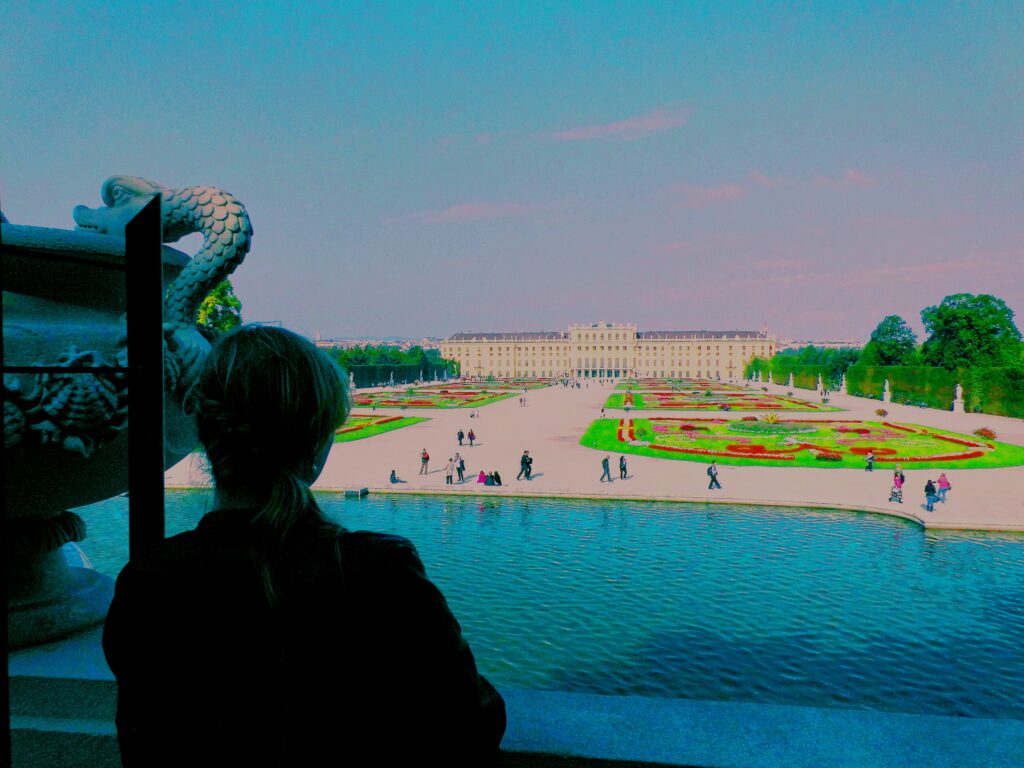
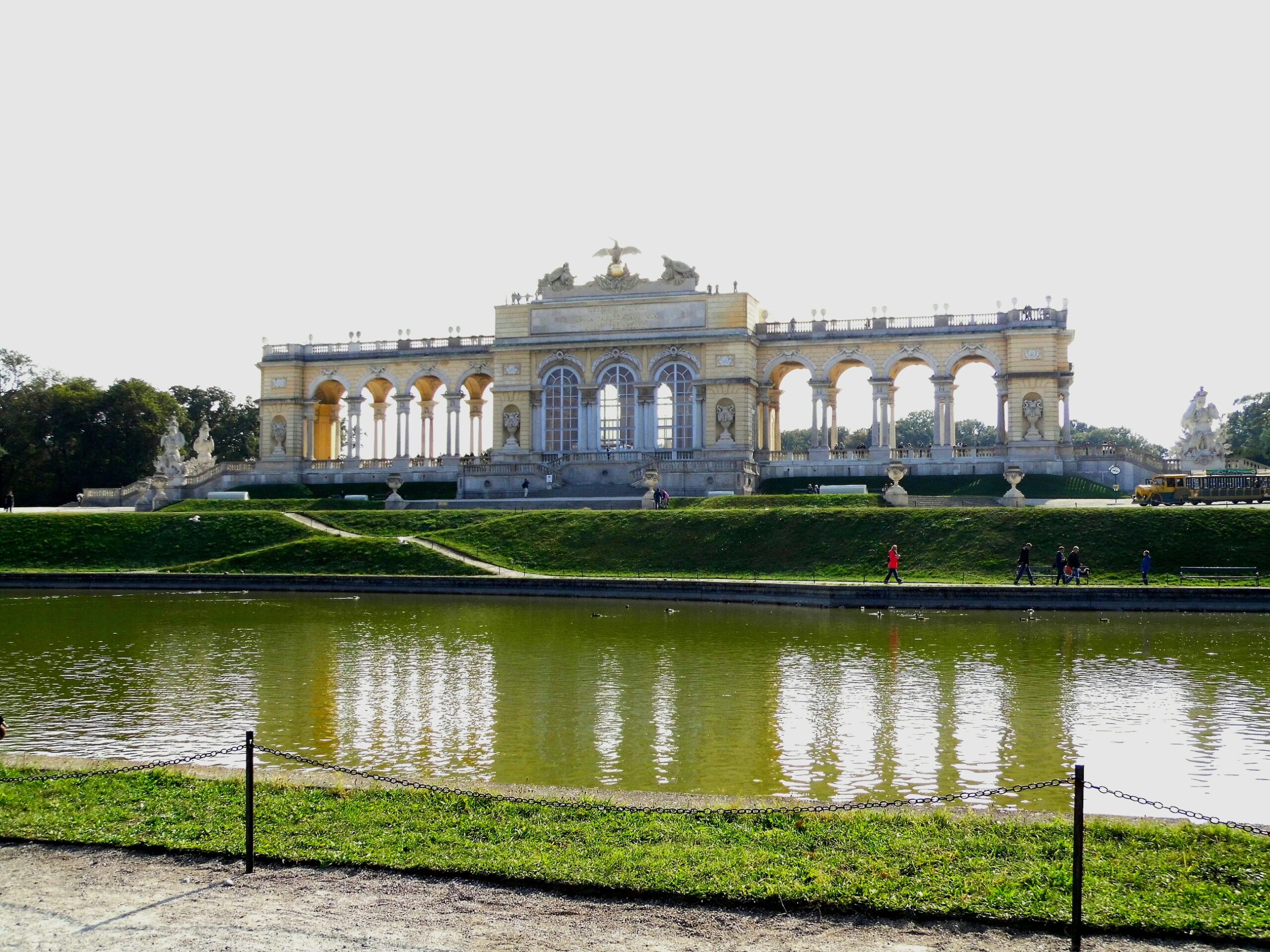
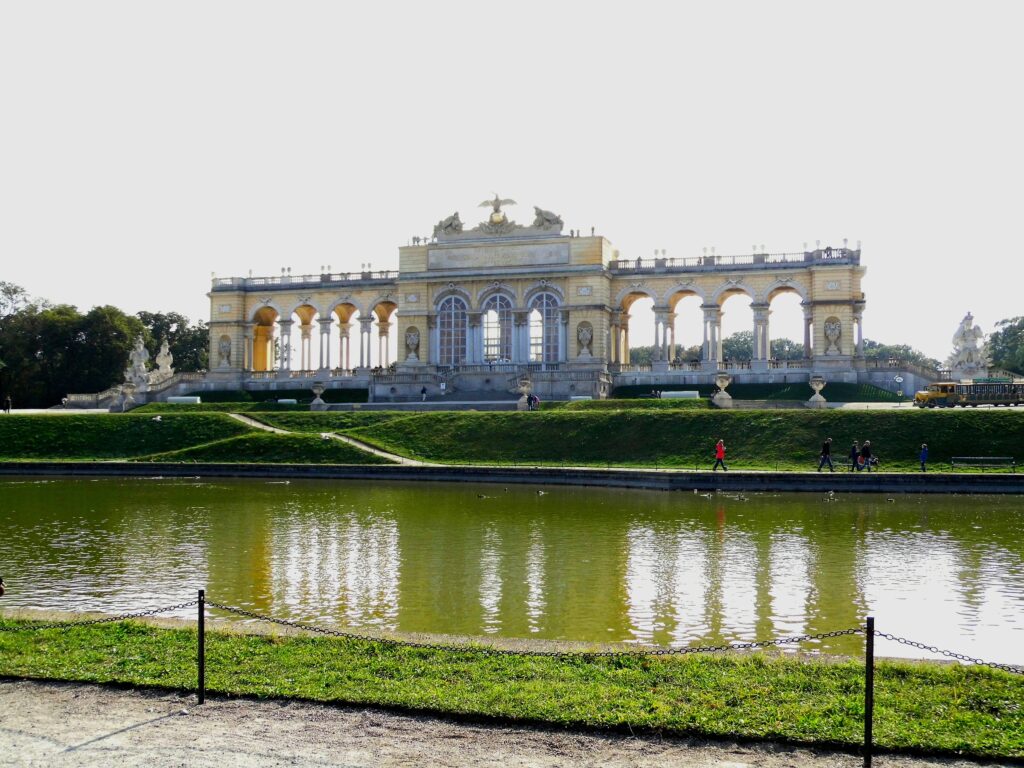
Vienna, Schloss Schönbrunn
Vienna: A 2‑hour flight away. Waltz through palaces, sip coffee in historic cafés, and feast on schnitzel. Bonus: flights often drop to under $100 round-trip if you’re flexible. Copenhagen: Scandinavia’s coolest city. Fly 1.5 hours, and wander Nyhavn’s colorful harbor or snag hygge at a cozy Danish bakery. (Heads-up: cold in winter, so pack a warm scarf.) Madrid/Lisbon: Both around 2½ hours by plane. Even in a long weekend you can eat tapas till sunrise in Madrid or catch a soulful fado show in Lisbon. (Pro tip: shoulder seasons see great airfare on Skyscanner and near-empty beaches.) Rome: From London or Munich it’s just a 2‑hour flight. Ancient ruins and gelato await and flights sometimes dip below €40 each way in off-peak. Munich/Hamburg: Local gems in Germany. Hop on a 1–2 hour train for a weekend exploring beer gardens or the Reeperbahn. No passport needed! Lake Como: Scenic Italian getaway. Fly into Milan (≈2.5h from London/Berlin) then train to the lake. Perfect for a chill mini-break; throw in a fancy hotel stay to finish the romance. Barcelona: Or any Balearic vibe city. If in the UK, a 2‑hr flight and voilà – tapas in sunshine.
Use your PTO like a ninja: mix local gems and European classics. (And on all flights/hotels, our go-to hack is searching Skyscanner for deals and Booking.com* for accommodations. They cover 2+ million properties worldwide. Pro tip: leverage points where you can and maximise your stay. Don’t forget city passes: for example, the London Pass covers 100+ attractions with huge savings.
4. I Plan Early – But Not Too Early
Flights are often cheapest 6–8 weeks out for short-haul trips. Planning too early locks you in; waiting too long gets expensive. I set flight alerts, then book when prices dip. But don’t wait too long. If you’re unlucky – and it happens in the “book as cheap as possible” game, prices only rise. Unfortunately you need to be quite flexible in dates and destinations to find the biggest deals. But it is also a fun experience, as I found destinations that hadn’t been on my radar yet that way.
5. I Batch Content + Memories
If you’re also creating content: I shoot everything in batches on day 1 or 2. If I am on the road I only shoot in little blogs or get some content in and then lose the camera. That way I can be fully present the rest of the trip. Plus, it gives me a whole photo bank for later storytelling. Because as much as I love to bring a destination alive in a blog post or on instagram, I also want to enjoy the trip.
And we are not talking about collaborations here. Just so you know.
6. I Use Google Maps Like a Vision Board
Before each trip, I create a custom map and drop pins on cafés, bookstores, and scenic walks. It keeps me from overplanning, but I always have dreamy options nearby. It also helps plan little side quests along the road to hopefully find some hidden gems. It really pays off to look into the side streets along your way.
7. I Treat Travel As Self-Investment – Not a Luxury
Mindset matters. Once I stopped treating travel like a splurge and started treating it like something I deserve, as rest, discovery, and self-expansion, I found more ways to make it happen.
Want to Steal My Travel Systems? I post travel tips and tricks, as well as hidden gems destinations twice a week here and even more often on instagram. Make sure to follow, so you don’t miss a thing.
Can’t get enough? Make sure to subscribe to my newsletter, be the first to know about new travel hacks and destinations and bring your travel dream into reality.
Vienna is a city that doesn’t whisper its history, it sings it in operatic tones. As a lover of slow travel, quiet cafés, and stories etched into architecture, I fell for Vienna. Not in the grand palaces (though yes, they’re stunning and I love them!) but in the spaces in between: the scent of old paper in a 19th-century library, the click of my boots on cobbled paths in the Museum Quarter, the soft glow of a chandelier above my coffee.
This 3-day Vienna itinerary is for the romantic, the reader, the detail-observer. For those of us who like our cities with a side of melancholy beauty – and a touch of Dark Academia.
Day 1: Classical Beginnings + Candlelight Café Corners
Morning: Imperial Vienna
Start at Schönbrunn Palace, but go early. Let the grandeur greet you with quiet. Walk through the gardens with coffee in hand and imagine the whispered conversations of the Habsburg court.
Afternoon: Coffeehouse Culture
Find your way to one of the many beautiful cafés, order an Einspänner (espresso with whipped cream) and bring a book. This was a favorite of Trotsky and Freu and if you sit long enough, you’ll see why.
Evening: Candlelit Stroll & Opera House
Walk through the Innere Stadt and end your night at the Vienna State Opera. Even if you don’t book tickets, just standing in front of it at night feels like you’re in a scene from a novel. If the opera isn’t for you, go for a theatre play or a musical. It’ll be a blast.
Day 2: Museums, Manuscripts & Melancholy Beauty
Morning: Art + Silence
Visit the Kunsthistorisches Museum for oil paintings that look like they could blink. Don’t rush. Let Caravaggio hold your gaze. If you’re not into art, Vienna is full of museums and there’s something for every taste. I liked the Militärgeschichtliches Museum as well as the Kriminalmuseum.
Afternoon: The National Library
This is the heart of the Dark Academia dream. The Austrian National Library is breathtaking, wood-paneled, gold-lined, and full of forgotten knowledge. It’s the kind of place that makes you write poetry in your Notes app. Head into the Hofburg for a visit to the Sisi museum, it’s a personal favourite of mine. I went there’s twice already.
Evening: Wine & Words
Dinner in Spittelberg, followed by a glass of Grüner Veltliner at a candlelit wine bar. Bonus points if you journal about it.
Day 3: Romantic Decay + Rooftop Views
Morning: Belvedere & Klimt
Yes, The Kiss is here. But the real magic is how the rooms echo with the slow hush of visitors falling in love with Austrian art.
Again, if you’re not into art, visit the Spanische Hofreitschule and watch them work the beautiful Lippizaner in the morning. Afterwards head to the gardens of Belvedere.
Afternoon: Walk the Ringstrasse
Loop the city’s most beautiful buildings: Parliament, City Hall, the University. You’ll feel like you’re in a 19th-century academic’s dream. You don’t even have to enter a single one of them for the feeling.
Head for the Stephans Dom, soak in the beautiful interior and head into the crypts for a glimpse into a darker past of Vienna.
Evening: Rooftop Farewell
End with a view. Head to Das Loft or Sky Bar for a dusk-lit panorama of Vienna. Bring a coat. Stay awhile.
Before You Go:
Vienna is the kind of place that lingers. It’s not about the checklist, it’s about how it feels. How the past walks with you. How the candlelight flickers against stone walls. If you’re craving a trip that feeds both intellect and soul, this city is your next love affair. And its a city you can explore again and again and keep finding new corners, new cafés and new delights.
If you liked this post, make sure to subscribe to my newsletter so you don’t miss my weekly tips and tricks for smarter travel.
A PTO-Friendly Weekend in Dublin: 2.5 Days of Craic, Coffee & Culture
I had exactly 2.5 days in Dublin and exactly one single day of PTO to make it happen. And somehow? It was perfect. If you’re a corporate girly (or guy) who wants a fun, low-stress, mid-budget city break that delivers history, pub culture, and literary charm in a compact, walkable package… Dublin is about to be your new favorite fling. Small in size, rich in soul, and the kind of place that makes you feel instantly part of the story, Dublin will serve you cozy vibes, witty banter, and a pint of something dark faster than you can say sláinte.
Here’s my exact long weekend itinerary (plus a few things I’d 100% skip next time).
This post contains Affiliate-Links meaning by you clicking on them, I may earn a small commission. Links are marked as “*”.
🗓 My 2.5-Day Dublin Itinerary (PTO-Friendly Edition)
Day 1 – Friday PM: Arrival & First Impressions
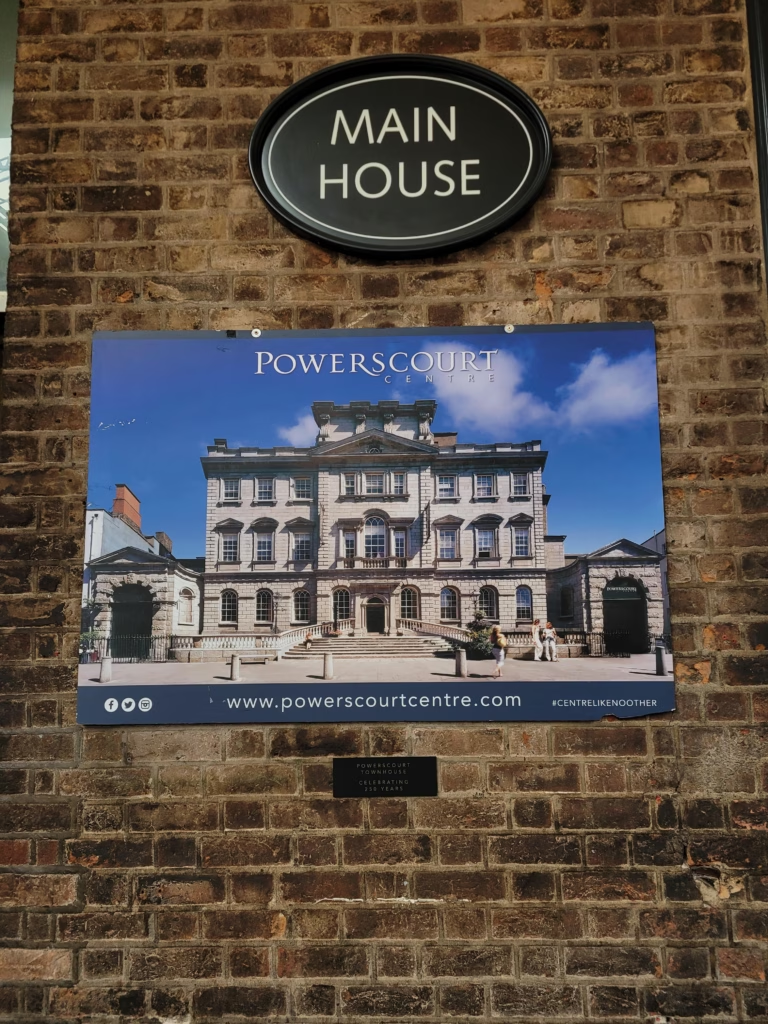
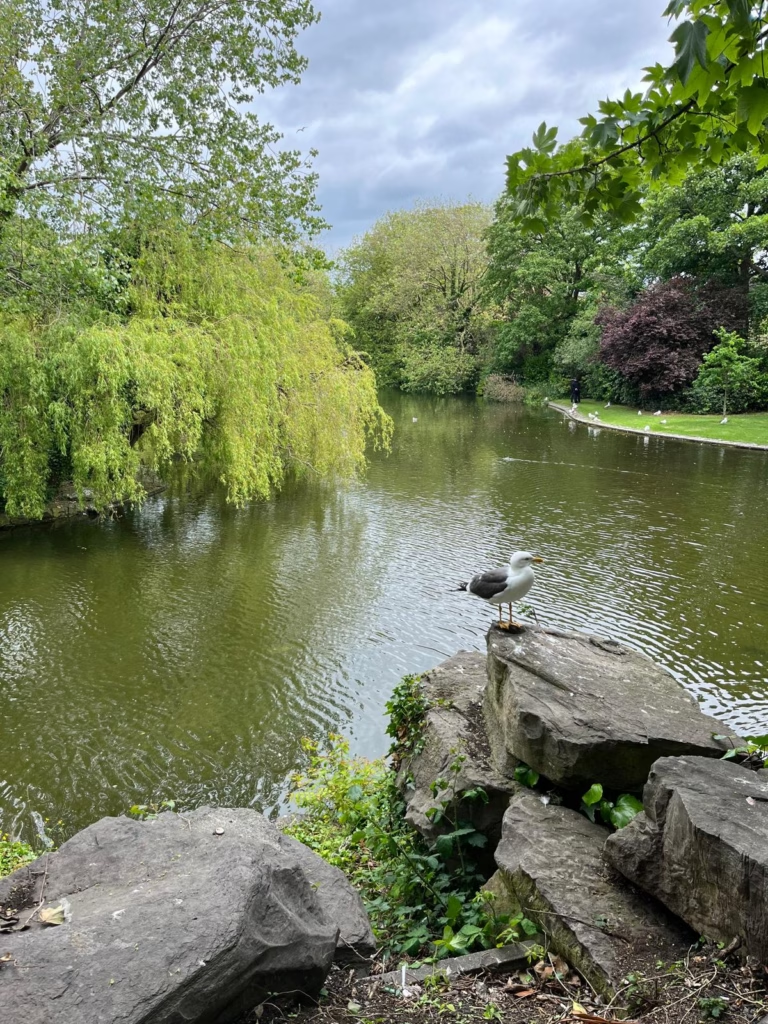
Land around midday and hop on the Aircoach into the city. It’s fast, easy, and you can people-watch on the way in. Check into a boutique hotel like The Alex or The Dean or – my favourite – into Motel One* think stylish, central, and “corporate chic meets cozy.” Stretch your legs with a walk through St. Stephen’s Green. Depending on where your hotel is, you’ll enjoy a walk through the city centre at the same time. Did you discover the Powerscourt Townhouse yet?
If you still have time, get into the Post Office for some Easter Rising history lessons.
Dinner + first Guinness at The Hairy Lemon (quirky) or The Brazen Head (Ireland’s oldest pub). Bonus points if you end the night chatting with locals at the bar.
Day 2 – Saturday: Culture & Craic
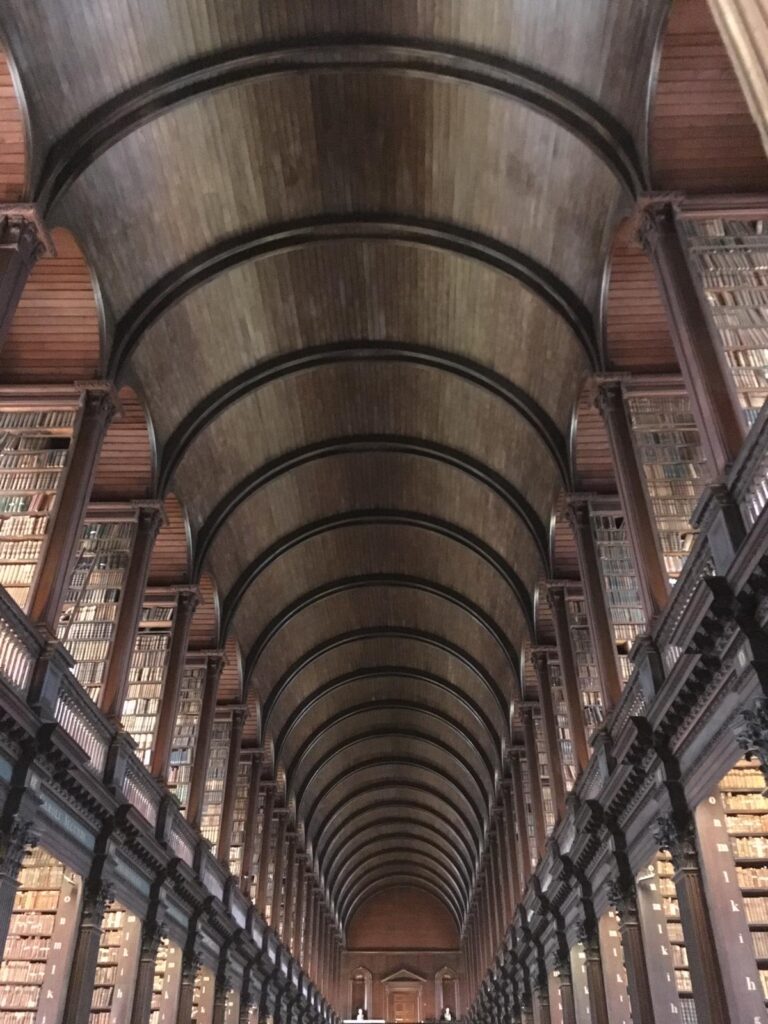
Breakfast at Queen of Tarts. Trinity College Library, aka Dark Academia heaven( Book ahead). The smell of old books? Intoxicating. Right across is the Irish Whisky Museum. Walk in for a nice history and whisky tasting lesson.
Wander Grafton Street and don’t miss Sweny’s Pharmacy (yes, the one from Ulysses).
Afternoon choice: Guinness Storehouse for the panoramic Gravity Bar view (and the touristy action) or Liberties Distillery if even more whiskey is more your speed.
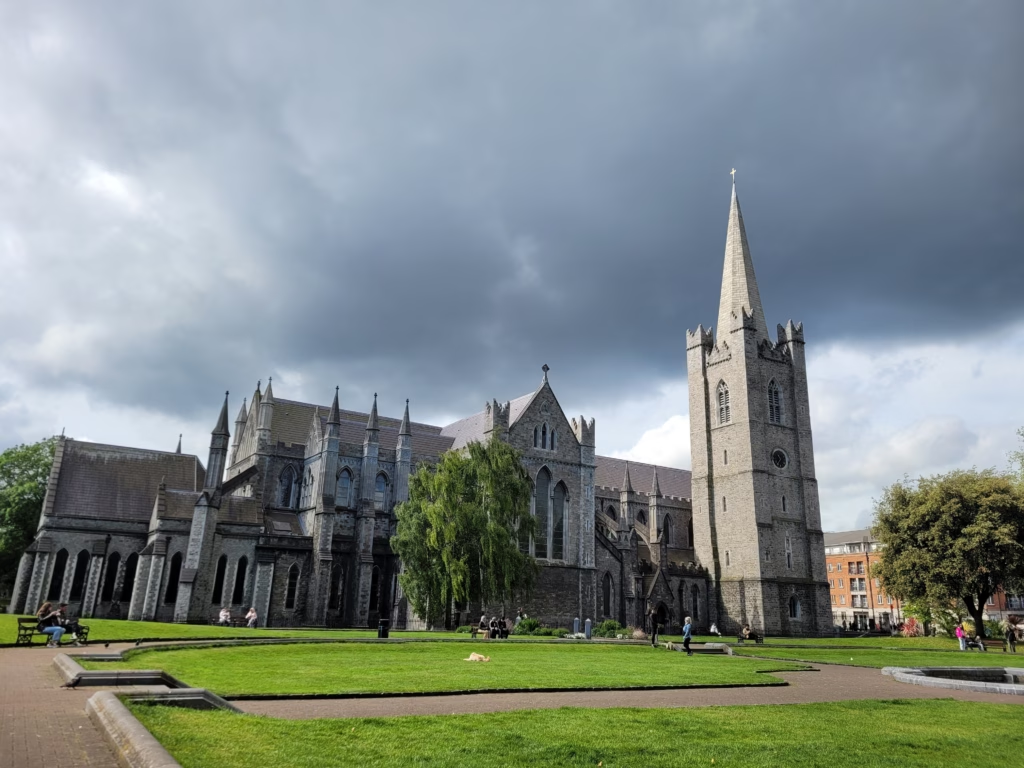
Stop at St. Patrick’s Cathedral and enjoy the gardens.
Evening: Live music & storytelling at The Cobblestone or Whelan’s. Order a pint, get lost in the music.
Day 3 – Sunday: Slow & Sweet
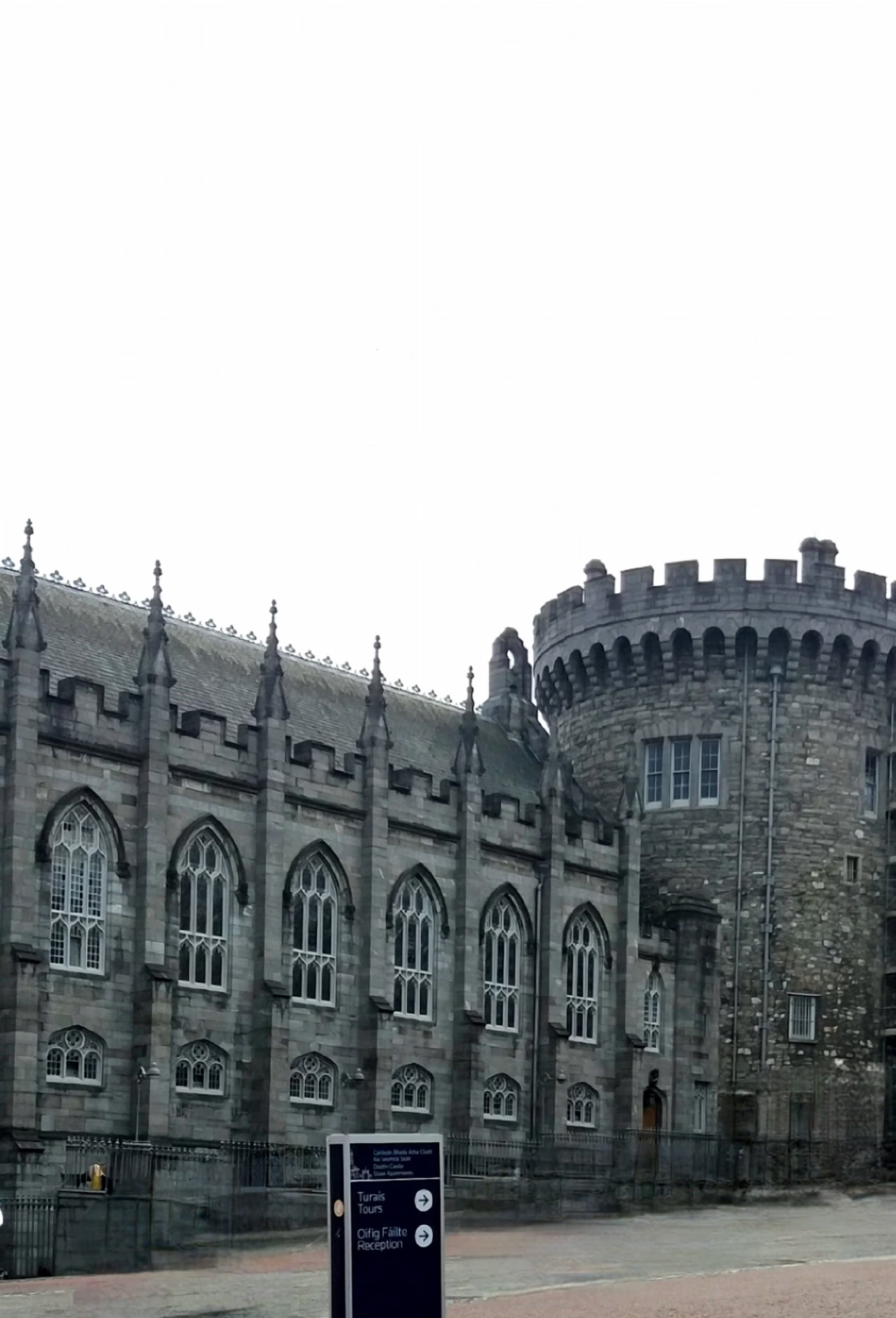
Brunch at Tang or Bibi’s Café. Stroll along the River Liffey or explore Dublin Castle.
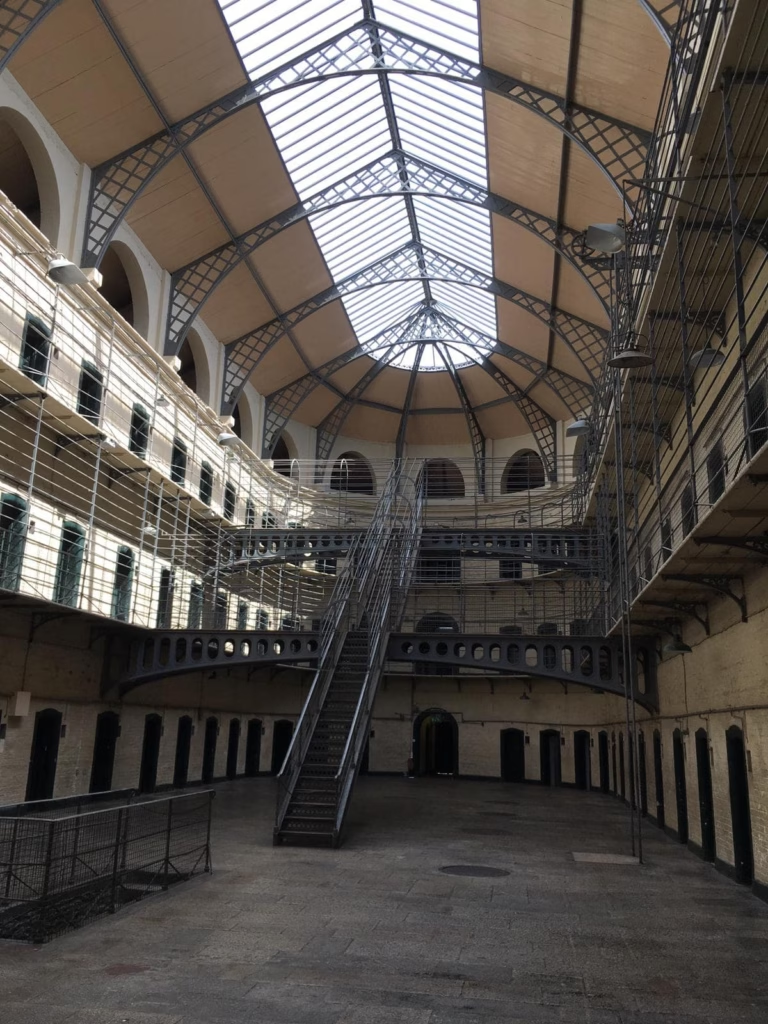
Before heading to the airport, stop my Kilmainham Gaol for even more history.
💼 PTO Tip:Flying from Europe?
Taking just Friday off gets you 2 nights of fun. Can swing Monday too? You’ll have a more relaxed return. Either way, Dublin is a short-haul, high-reward win.✨
What I Loved
The warmth of the people. You’ll end up chatting with strangers constantly. And not just because I’m a red head and people believe me to be local until I open my mouth.
The literary roots, if you’re into Dark Academia vibes like me, you’ll be in heaven.
The walkability, no taxis needed unless you’re feeling fancy.
What I’d Skip Next Time
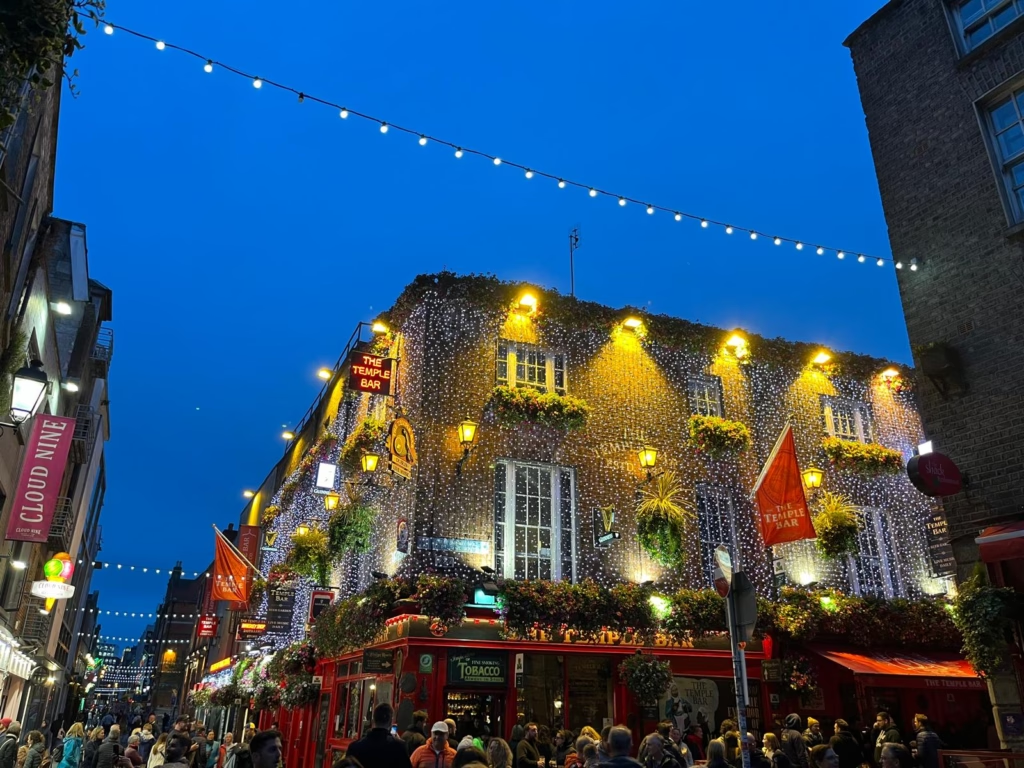
Temple Bar: fun once, but there are cozier, less touristy, less expensive pubs that feel more authentic.
Over-scheduling: Dublin works best when you slow down and just… be. Let the street musicians, pub conversations, and hidden corners find you.
Want to Travel Like a Pro?
Before every quick getaway, I map out my weekend so I’m not wasting precious hours deciding what to do. I even have a 2-day city break template that keeps flights, transport, and food spots in one place. Seriously, it saves so much brainpower.
Final Word:
Dublin isn’t a place you just visit. It’s a place you chat with, toast with, and carry home in your chest. And yes, you can do all that on one day of PTO.
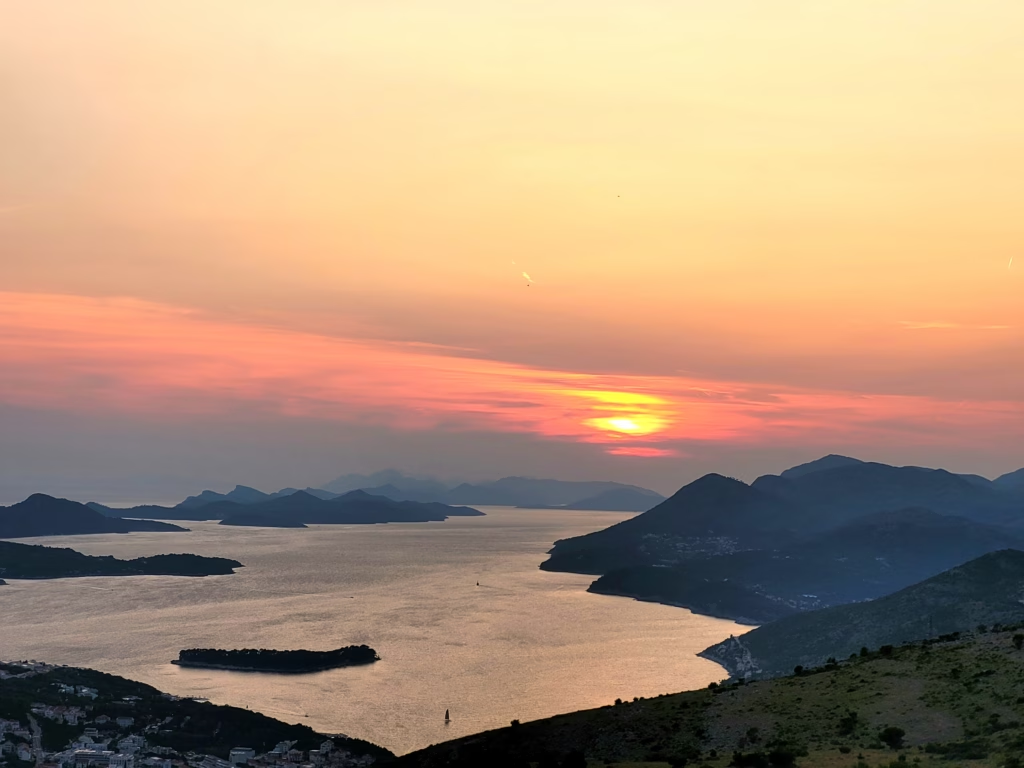
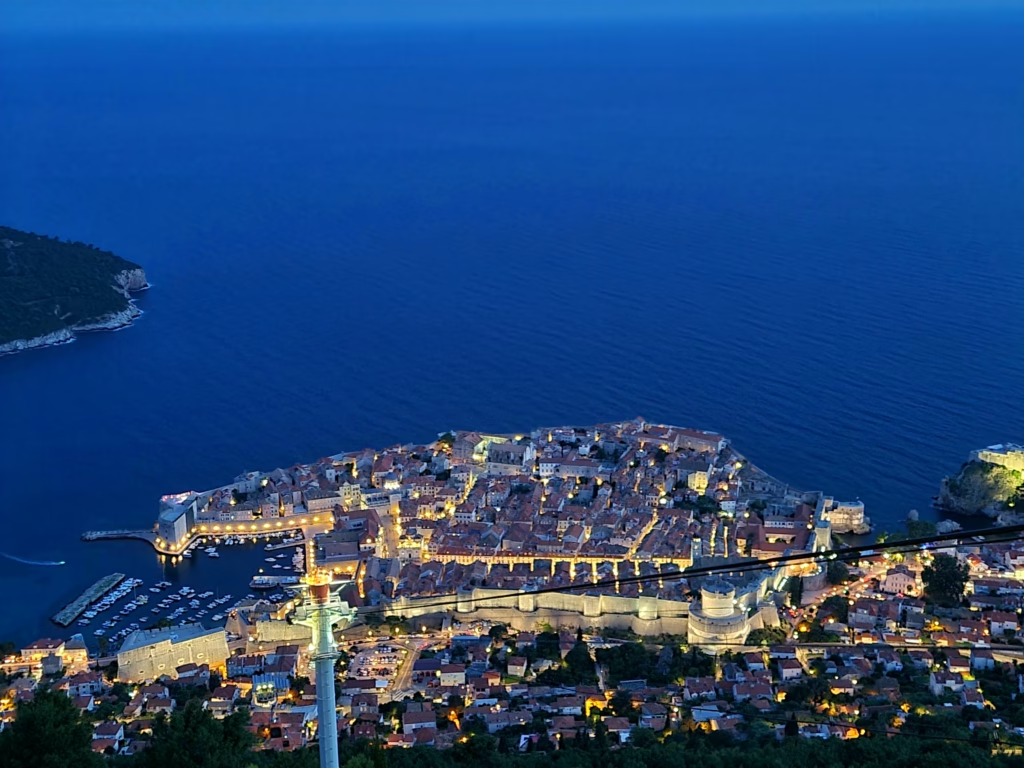
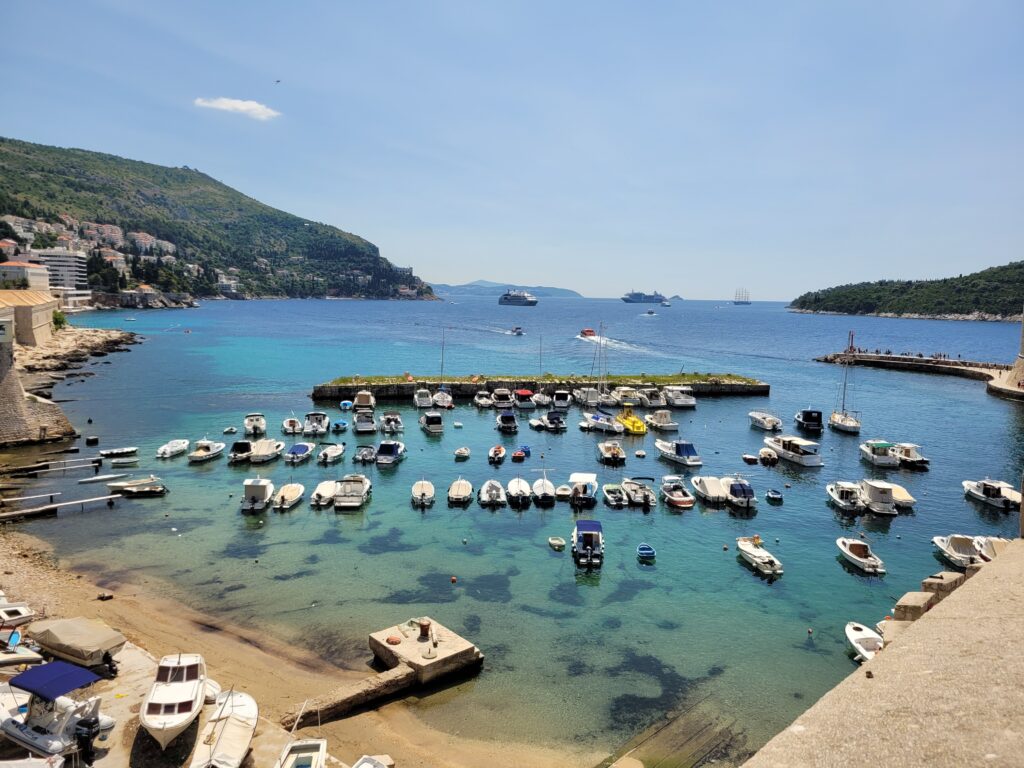
I visited Dubrovnik during shoulder season, right before the start of the busy season and I’ll say this upfront: it was one of the smartest travel decisions I’ve made. The crowds? Thinner. The sea? Already warm. The sunsets? Golden enough to make you question every life choice that’s kept you away from the Adriatic until now.
If you’re dreaming of marble stone streets, sea-salted air, and the kind of golden-hour light that makes you want to move here immediately, without paying in sweaty elbow jabs for every photo, shoulder-season is your time. Whether you’re traveling solo, with your favorite human or as part of a group of equally wanderlust-stricken friends, this guide has you covered for three glorious days in Dubrovnik that balance sightseeing, relaxation, and a sprinkle of Adriatic indulgence.
☀️ Why shoulder-season in Dubrovnik is chef’s kiss 💋
You get the magic without the mayhem. Summer Dubrovnik is gorgeous, but it’s also… packed to put it lightly. Think cruise ships unloading thousands of people in the same alleyways you’re trying to wander. In spring or autumn, you can walk the Old Town walls without forming part of a human conga line.
The weather is still dreamy. Mid-20s°C (70s°F), warm sea, soft breezes. Perfect for swimming, exploring, and – crucially – not sweating through your linen shirts.
Your wallet breathes (a little) easier. Hotels and tours start lowering prices in fall or haven’t yet risen them in spring. It’s not budget backpacker cheap, but you do get more value. Think boutique hotel with breakfast instead of a hostel bunk with a questionable shower.
🗓️ Dubrovnik Long Weekend Itinerary (3 Days)
Day 1 – Arrival & Sunset Vibes
Afternoon: Check in at your hotel. If you can swing it, stay inside the Old Town walls for at least one night (Booking.com has gorgeous boutique options that drop in price before/after summer). Waking up here feels cinematic.
Late afternoon: Stroll the Stradun (main street) and get lost in the alleys.
Sunset: Walk up to Fort Lovrijenac for a quiet golden-hour view of the Old Town and sea.
Dinner: Grab a table at Taj Mahal (Bosnian, not Indian). Order the klepe dumplings.
Day 2 – Old Town, Sea Views & Wine
Morning: Do the City Walls walk before 10 am for dreamy light and minimal people.
Midday: Head to Buža Bar (yes, the cliffside one) for a coffee or cold drink with sea views.
Afternoon: Take a private boat tour to the Elafiti Islands (GetYourGuide has good off-season offers). Pack snacks, wine, and your camera.
Evening: Wine tasting at D’vino Wine Bar—Croatian wine flights are a must.
Day 3 – Day Trip & Farewell Swim
Morning: Day trip to Cavtat (30 min by bus or boat). It’s quieter, charming, and perfect for a relaxed seaside breakfast.
Afternoon: Back in Dubrovnik, take a final swim at Banje Beach or the more secluded Sveti Jakov.
Evening: Farewell dinner at Barba, fresh seafood in a cozy, modern space.
🧭 What I’d Do Differently Next Time
Venture further. Places like Ston (famous for oysters) are easy in off-season and way less crowded.
Takeaway
Dubrovnik during shoulder season is for travelers who want romance without rush. The kind of trip where you feel the city exhale after summer or not yet quite awoken from winter and you get to breathe with it. If you’ve been hoarding your PTO like a dragon on gold, this is the trip worth spending it on.
Feeling burnt out from endless meetings and Zoom calls? September is the perfect time for a mental reset trip in Europe. The summer crowds have thinned, prices drop, and a cozy autumn vibe takes over the continent. In fact, more travelers are embracing September travel than ever. 22% of Europeans are eyeing trips this month, drawn by better weather, lower costs, and fewer crowds. As a 30–45 year-old corporate professional, you deserve a soul-soothing break.
So pack your scarf, your favorite leather-bound notebook, and maybe a spare memory card , we’re going on a “Europe mental reset trip” through some of the continent’s most moody, intellectual cities! ✈️
In this guide, we’ll explore 7 dark academia-inspired European cities perfect for a September escape. Think ivy-draped libraries, winding cobblestone alleys, candlelit cafés, and autumn leaves swirling around Gothic spires. Each destination comes with mid-budget friendly hotel picks (from charming boutiques to familiar chains like Marriott, IHG, and Hyatt at ~€100–€250/night), solo travel tips (safety, transit, walkability), offbeat attractions to avoid the crowds, and even pointers on using your Amex, Chase, or Bonvoy points to save money. We’ll keep it friendly, funny, and warm, like an old friend dishing out travel advice over coffee (or perhaps a pint of Guinness 😉). Ready to recharge Dark-Academia-style? Let’s go! 🎒✨
This post contains affiliate links. By clicking on the link I may earn a commission to no extra cost to you. Links are marked “*”.
For a mix of intellectual charm and hearty fun, you can’t beat Dublin in the fall. This city blends moody academia with the warm soul of Ireland. At Trinity College, the 18th-century Long Room library will take your breath away, two levels of ancient books under a vaulted wooden ceiling, complete with the scent of aged parchment and dust motes dancing in sunbeams. It’s basically a dark academia pilgrimage site (don’t miss seeing the Book of Kells exhibit too for some illuminated-manuscript magic).
Outside, Dublin’s autumn brings misty mornings and the occasional soft rain (“a good excuse to duck into a pub” as the locals say!). Literature is everywhere, from James Joyce quotes on plaques to the heritage bookstores along the River Liffey.
Offbeat Charm: After the must-do’s (Trinity, St. Patrick’s Cathedral, maybe the Guinness Storehouse for some craic), discover Dublin’s quieter corners. Tuck into Marsh’s Library near St. Patrick’s. It’s one of Europe’s oldest public libraries (1707) and often overlooked. Creaky oak bookcases, chained books, and zero crowds , you might feel like an 18th-century scholar here. Wander the Georgian streets of Merrion Square where Oscar Wilde’s childhood home stands (a statue of Wilde lounges in the park, as witty and carefree as his writing). In the evening, skip the over-touristy Temple Bar pub hub and head to Davy Byrne’s or The Stag’s Head . Historic pubs where Joyce and other writers drank.
Pro tip: Grab a seat by the fire, order an Irish stew or a pint of Guinness, and you might hear live traditional music or at least some colorful local storytelling.
Solo Travel Tips:
Dublin is very welcoming to solo travelers. The Irish will chat your ear off if you’re up for conversation. English-speaking, of course, so no language barriers. The city center is walkable; you can stroll from Trinity to Dublin Castle to Grafton Street easily. Public transport includes buses and the LUAS tram; they’re safe and convenient if needed (like getting out to the Kilmainham Gaol or Phoenix Park).
Safety: Dublin is generally safe, with the usual city caution. Watch for pickpockets in crowded areas and mind your belongings after a couple pints. Late at night, stick to well-lit central areas, the Temple Bar district can get rowdy (and pricey) after dark, so consider enjoying the pub culture in slightly quieter neighborhoods like Rathmines or Smithfield if you prefer a mellower vibe.
Stay:
Dublin has a range of mid-budget accommodations. For boutique lovers, The Dean Dublin* is a trendy option: modern design, a cool rooftop bar, and a fun music theme (there’s a record player in your room with some vinyls!). It’s around €200/night and gives a local, creative flavor.
For chain comfort, check out Hyatt Centric The Liberties* Dublin, a new 4-star in the heart of the Liberties area. Rooms are often ~€180, and you can use Hyatt points (~15,000 points/night, a solid deal). It’s walking distance to St. Patrick’s and has a great breakfast to start your day.
Marriott loyalists might try the Moxy Dublin City* in downtown, a playful, boutique-style Marriott property. It’s Ireland’s first Moxy, with a 24/7 bar and stylish lobby, usually well under €200.
Fun fact: The Moxy is near Trinity and Temple Bar, and Moxy even notes that Dublin’s literary heritage surrounds you, with writers, artists and intellectuals having flocked to these streets for centuries. So you’ll be in good company (past or present)!
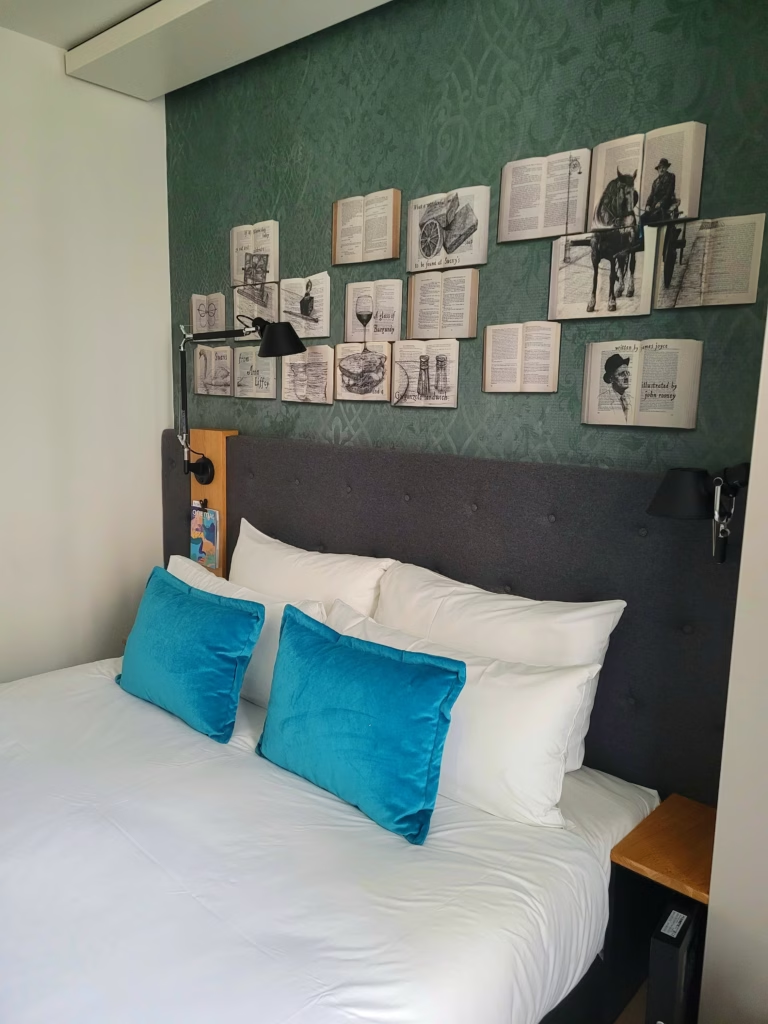
I, personally love the Motel One* Hotels in every city. They are a design hotel chain, that focuses on local history and culture. I loved our room in Dublin and I would have packed that hotel bar into my luggage if it had fit.
Points & Perks:
Leverage those credit card rewards here. Chase Ultimate Rewards transfer to Avios can book you a flight directly into Dublin (Aer Lingus is an Avios partner, often with low surcharges). Once on the ground, your Amex Platinum card’s Global Entry benefit will speed you through US pre-clearance on the way home (Dublin does US customs pre-clearance, a huge time-saver).
For hotels, Hyatt’s partnership with Chase UR means you could stay at the Hyatt Centric for free if you have some points banked. And if you hold a Marriott Bonvoy free night certificate, the funky Aloft Dublin City (Marriott) is another option around 30k points that could be fully covered. Use those savings to treat yourself to a nice meal at a literary pub or to buy that signed first-edition novel you spotted!
Ghent, Belgium – Medieval Mystery by Candlelight 🕯️📜
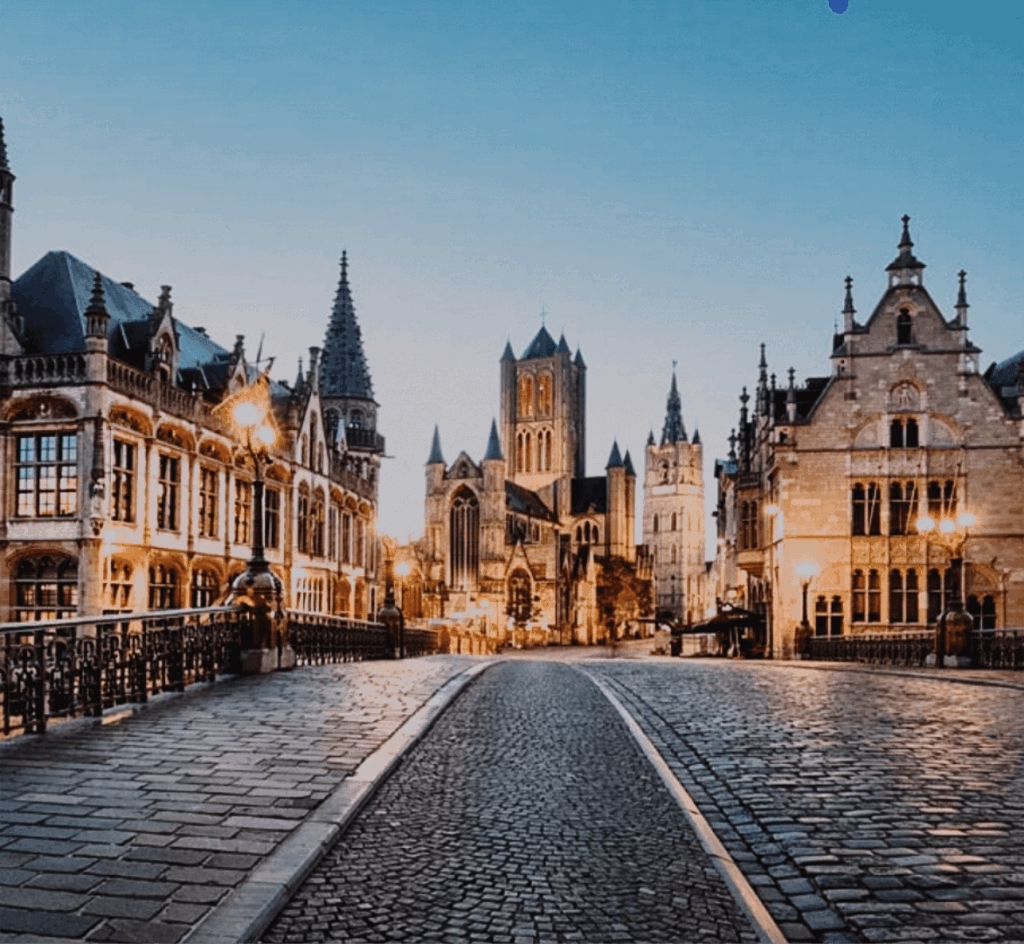
Ghent’s enchanting riverside at twilight, fewer tourists than Bruges, but equally fairytale-like with a moody twist.
Why Go:
Picture a medieval city with canals, gothic spires, and virtually no tourists clogging the streets, that’s Ghent in a nutshell.
Often overshadowed by its pretty neighbor Bruges, Ghent is a hidden gem beloved by those in the know (and apparently 55% of Europeans now prefer such lesser-known spots to avoid overtourism). The city is less crowded than Bruges but just as enchanting, with old stone buildings, flickering lantern-lit lanes, and grand university halls imbued with centuries of scholarship. In autumn, Ghent’s tree-lined canals blaze with color, and a slight fog might roll in over the Lys River at dawn, adding to the mystery.
If you crave dark academia vibes, Ghent delivers with a touch of Flemish coziness.
Offbeat Charm: Start at the Boekentoren (“Book Tower”), Ghent University’s modernist tower library. It holds rare manuscripts and has a panoramic view of the city, a pilgrimage for architecture and book nerds alike. Next, visit St. Bavo’s Cathedral not just for the famous Van Eyck painting, but also for the eerie crypt below, wonderfully chilling and quiet. Meander through the Patershol district, a medieval quarter of narrow alleys now filled with quirky cafes and galleries; at night, lanterns cast golden light on the cobbles. Ghent even has a castle in the city center – Gravensteen Castle – complete with a torture museum (talk about getting dark!). Go in the evening for atmospheric vibes and maybe a ghost story or two.
And if you’re a fan of academia history: the Ghent University Aula is an impressive neoclassical hall often open for events. Poke your head in to imagine attending a 19th-century lecture there.
Solo Travel Tips:
Ghent is compact and extremely walkable (or bikeable – Flanders loves cyclists!). As a solo traveler, you’ll find it safe and easy to get around. The city center is pedestrian-friendly, and you can rent a bike if you want to live like a local student. Many locals speak excellent English, but throwing in a “dank u” (thank you) in Flamish will earn you a smile. Public transit includes trams and buses that connect the train station and outskirts, but within the historic center you likely won’t need them.
Safety: Ghent is very safe; standard awareness is all that’s needed. Perhaps the biggest “danger” is getting lost in picturesque lanes – but hey, that’s half the fun. If you’re out late, the area around Korenmarkt (main square) stays lively with students, and you can always pop into a “brown café” (cozy pub) if you need a break or some company.
Stay:
To fully soak in the atmosphere, consider 1898 The Post,* a boutique hotel set in Ghent’s former main post office building (a gorgeous Neo-Gothic gem). With only 38 rooms, it’s intimate and styled with vintage decor. You’ll feel like you’re staying in a Victorian writer’s private club. It also houses The Cobbler cocktail bar, one of the best in Belgium (don’t miss a nightcap there under the twinkling chandeliers). Rates hover around €200, but the experience is worth every penny.
For a chain option, the Ghent Marriott Hotel sits right on the canal at Korenlei and blends a modern hotel into a row of historic facades. You get the reliability of Marriott with a setting that’s anything but cookie-cutter, the lobby has a giant glass atrium and exposed brick from the 15th-century house it’s built into. Rooms (from ~€160) often have river views. And yes, Marriott Bonvoy points are welcome – about 25,000–30,000 points per night. Bonvoy elites even get free breakfast in the riverfront restaurant, fueling you for long walks.
Points & Perks:
Getting to Ghent can be part of the fun: fly into Brussels (which is easily done on points via United or American Airlines miles) and then take a 30-minute train to Ghent. No flights needed within Belgium, trains and trams do the trick. If you have a Eurail pass or just a ticket, Ghent is on the main line between Brussels and Bruges.
For hotels, consider using a Marriott Free Night Award from your Bonvoy credit card. The Ghent Marriott is a great way to redeem it without high-category prices. Also, if you’re a Chase Sapphire Reserve holder, you could book your hotel through the Chase travel portal using points (at 1.5 cents value), sometimes a good way to use those UR points if you’re short on Bonvoy.
Finally, treat yourself to a Belgian waffle or three, not a points tip, just life advice. You’re in Belgium, after all!
Cambridge, England – Scholars, Punts & Autumn Light 📚🍂
Why Go:
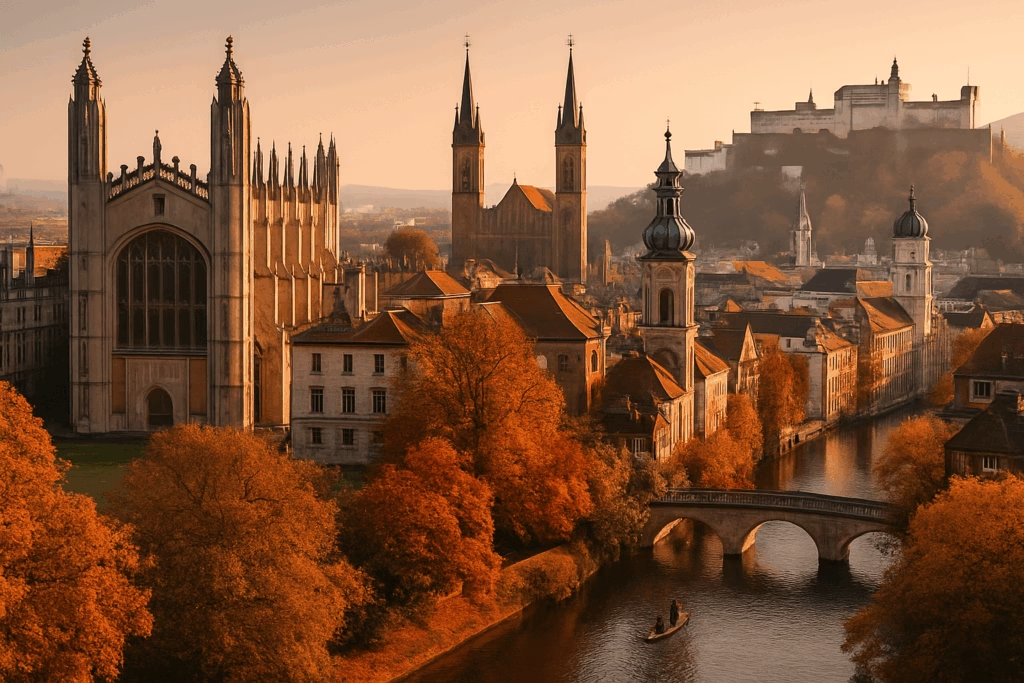
If Oxford is the brooding novel hero, Cambridge is the poetic dreamer. Home to one of the world’s most prestigious universities, this city hums with intellectual energy and history dating back to 1209. In September, the student term is about to begin, so the cobbled lanes and collegiate courtyards buzz with quiet anticipation. Add in the soft golden light over the River Cam, and it’s like stepping straight into a watercolor painting.
You’ll wander past Gothic chapels, lush lawns, and secret gardens and possibly overhear a debate about astrophysics over coffee.
Offbeat Charm:Skip the packed King’s College tour and opt for a punting trip on the Cam, preferably with a guide who peppers the journey with local lore. Visit The Wren Library at Trinity College (free at set times), which houses Newton’s own annotated copy of Principia Mathematica. For something quirkier, explore the Cambridge Museum of Zoology — yes, there’s a whale skeleton hanging from the ceiling. And if you want a cozy, candlelit drink, slip into The Eagle, the pub where Crick and Watson announced their DNA discovery.
Solo Travel Tips:
Cambridge is compact and walkable; you can explore most of it on foot. Buses connect the train station with the center, but strolling in via Mill Road is a treat in itself. Safety-wise, it’s very solo-traveler friendly, especially in the historic core. Avoid wandering too far along the river after dark, simply because it gets very quiet.
Stay:
For boutique charm, The Varsity Hotel & Spa* offers modern rooms, a rooftop bar with city views, and spa access, perfect for post-walk relaxation (around €200/night). Chain lovers can check into Hilton Cambridge City Centre, smack in the heart of town and often available for 50,000 Hilton Honors points/night. It’s business-class comfort but right next to the action.
Points & Perks:
If you’ve got British Airways Avios, you can fly into London Stansted or Heathrow and take a quick train. Hilton Gold status (via Amex Platinum) may score you free breakfast at the Hilton Cambridge, a very welcome perk before a day of exploring colleges.
Kraków, Poland – Gothic Romance & Cozy Cafés 🏰☕
Why Go:
Kraków is where medieval Gothic meets café culture. The Old Town is a UNESCO site, wrapped around the largest medieval market square in Europe.
Come September, the summer crowds thin and a soft chill creeps into the evenings, perfect for slipping into a warm café with a slice of szarlotka (apple cake) and a notebook. Between the spires of St. Mary’s Basilica and the looming silhouette of Wawel Castle, you’ll feel that perfect dark academia balance of beauty and mystery.
Offbeat Charm: Beyond the postcard views, explore Kazimierz, the historic Jewish quarter, now filled with vintage shops, indie bars, and art galleries (you nay recogniseit as a set from “Schindler’s list”). Pop into Massolit Books & Café, a bookshop-café hybrid where you could lose hours. For something atmospheric, visit the Collegium Maius, Jagiellonian University’s oldest building (Copernicus studied here), with its arcaded courtyard and scholarly artifacts. And for an autumn walk, the Planty Park, a green belt around the Old Town, is peaceful and leaf-strewn in September.
If you’ve got the stomach for it, a day-trip to Auschwitz concentration camp will introduce you to the horrors of the Holocaust and bring into reality what you learned in history lessons. It’s been years since I’ve been there and I still remember all the emotions I experienced in that place.
Solo Travel Tips:
Kraków is very safe for solo travelers, with plenty of pedestrian zones and a friendly, youthful vibe thanks to its student population. Walking is the best way to explore the Old Town and Kazimierz. Public trams are easy to use if you venture further.
Stay:
For boutique atmosphere, try Hotel Copernicus*, a 5-star housed in a Renaissance building, with exposed beams and an indoor pool under a vaulted brick ceiling (around €200/night off-season). If you’re looking for a chain, Sheraton Grand Kraków offers modern comfort on the Vistula River, often under €180/night or 40,000 Marriott Bonvoy points.
Points & Perks:
LOT Polish Airlines flights can often be booked with Star Alliance miles (transfer from Amex/Chase to United or Air Canada Aeroplan).
Marriott elites get lounge access and late checkout at the Sheraton, great for squeezing in one more morning castle stroll.
Leiden, Netherlands – Dutch Canals & Quiet Academia 🚲📖
Why Go:
Leiden is Amsterdam’s calmer, scholarly cousin, home to the Netherlands’ oldest university, cobblestone alleys, and canals that look especially magical under September’s golden light. With fewer tourists, you can wander in peace past historic almshouses, 17th-century facades, and ivy-covered walls.
Offbeat Charm: Check out the Bibliotheca Thysiana, a perfectly preserved 17th-century library built by a scholar’s will. Visit the Hortus Botanicus, where the university has cultivated plants since 1590 (and where tulip mania began!). For a quirky side trip, explore De Burcht, a circular medieval fortress offering panoramic city views. Evenings are best spent along the canals with a glass of wine, watching bikes whizz by.
Solo Travel Tips:
Leiden is small and extremely walkable/bikeable. It’s a safe, student-filled city, so you’ll blend right in wandering alone. The train station connects directly to Amsterdam Schiphol Airport in under 20 minutes, making it an easy entry or exit point.
Stay:
For boutique coziness, Boutique Hotel d’Oude Morsch* offers stylish rooms in a restored 19th-century military building (around €150/night).
Gor a chain, the Hilton Garden Inn Leiden is reliable and points-friendly, often available for 30,000 Hilton points.
Points & Perks:
Hilton points are the obvious play here. If flying into Schiphol, book award flights using Delta SkyMiles, KLM Flying Blue, or Virgin points, all partners with Amex/Chase and you’ll be sipping coffee by the canal in no time.
Salzburg, Austria – Baroque Beauty & Alpine Backdrops 🎼🍷
Why Go:
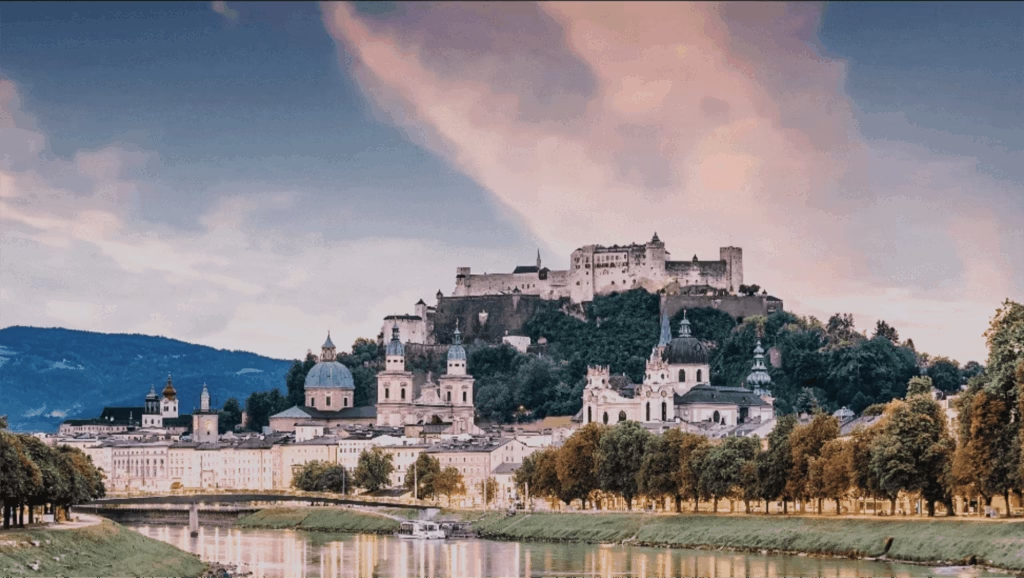
Salzburg is like stepping into a period drama, with pastel Baroque buildings, church domes, and the fortress of Hohensalzburg perched above. The birthplace of Mozart and backdrop to The Sound of Music, it’s steeped in both artistic and scholarly heritage.
September brings crisp air and fewer tour buses, letting you enjoy the Old Town at its most atmospheric.
Offbeat Charm: Wander up to the Nonnberg Abbey, the world’s oldest continuously run convent, with views over the city. Visit the St. Peter’s Cemetery and its catacombs carved into the Mönchsberg rock , eerie, beautiful, and blissfully uncrowded. For a cozy evening, duck into Café Bazar, a century-old haunt of writers and artists. If you’re feeling active, take the funicular to the fortress, then hike along the Mönchsberg ridge for sweeping autumn views.
Solo Travel Tips:
Salzburg is compact and easy to explore on foot. Safe, clean, and friendly, it’s perfect for solo wandering. Public buses connect the airport, train station, and outer sights, but you’ll rarely need them in the center.
Stay:
For boutique charm, Hotel Elefant * offers historic elegance in a 13th-century building steps from Mozart’s birthplace (~€160/night).
For chain reliability, the Sheraton Grand Salzburg delivers modern comfort across from Mirabell Gardens, usually around €200/night or 40,000 Marriott points.
Points & Perks:
Flying into Munich and taking a train (about 90 minutes) is often cheaper and bookable with airline miles.
Marriott Bonvoy elites get perks like upgrades and breakfast at the Sheraton, ideal before a day of Alpine exploration.
Travel Q&A:
Plan Your Perfect September Reset Trip 🌍❓
Q: Is September a good time to travel to Europe for a trip like this?
A: Absolutely! September is often considered part of Europe’s shoulder season, meaning you enjoy decent weather and fewer crowds. Kids are back in school, peak tourist numbers drop, and you’ll find that sweet spot of pleasant temperatures (think light jacket or cozy sweater weather) without the sweltering heat. In many of these cities early fall brings beautiful foliage and seasonal events (harvest festivals, cultural events, etc.). Plus, as travel trends show, more people are choosing shoulder season for better value and less stress. So you’re making a savvy move. Just note: days do get shorter as autumn progresses (especially in northern Europe), so plan your sightseeing accordingly, but a little evening darkness only adds to the dark-academia charm, right?
Q: I have a bunch of credit card points (Amex Membership Rewards, Chase Ultimate Rewards, etc.). How can I use them for this trip?
A: There are so many ways to leverage points and miles here, good on you for saving them up!
For flights, check your Amex or Chase travel portals and transfer partners. For example, Amex MR points can transfer to Avios (British Airways/Aer Lingus), which are great for flights into hubs like London, Dublin, or even for shorter intra-Europe hops (e.g., London to Dublin). Chase UR points transfer to United MileagePlus (fly into Brussels for Ghent, or Munich for Salzburg) and to Flying Blue (Air France/KLM), which can get you to pretty much any major European city via Paris or Amsterdam.
Don’t overlook using points for hotels: Marriott Bonvoy is an Amex and Chase partner, so you could transfer some points to Marriott and cover stays at hotels like the Ghent Marriott with points rather than cash. Hyatt is a Chase partner.
Also, remember the “5th Night Free” perk on Marriott point redemptions: if you book 4 award nights, you get the 5th night free, which can stretch your points further if you decide to linger longer in one spot. Lastly, if you have a travel credit card with broad travel eraser credits (like Capital One Venture or Bank of America Travel Rewards), you can charge things like train tickets, museum passes, or boutique hotels to the card, then wipe those charges with your points.
Bottom line: use points for the big expenses (flights & hotels) and save your cash for the fun stuff (meals, experiences, a vintage book from that cute shop in Dublin…). Your future self, and your wallet, will thank you.
Q: I’ll be traveling solo. How can I stay safe, especially at night?
A: Solo travel in Europe is generally very safe, and all the cities we’ve picked are known for being traveler-friendly and relatively low-crime. Still, it’s wise to follow standard precautions.
Here are some tips: Stay aware of your surroundings: In popular tourist areas, keep an eye on your belongings – pickpockets love distracted sightseers. A crossbody bag or money belt can give you peace of mind. At night: Stick to well-lit, populated areas. Each of these cities has parts that stay lively in the evenings. If somewhere looks deserted or sketchy, trust your gut and maybe grab a taxi or rideshare (Uber operates in many European cities; where it doesn’t, there are local apps or good old licensed taxis). In some larger European cities, the area around the main station may be something of a criminal hotspot. Police are often around in larger numbers, but stay safe especially at night. Some cities have “Nottaxis” (emergency taxis) that’ll take you home save if you’re stranden somewhere. Look into that if you want to explore at night.
Local customs: Be mindful of local norms, e.g., in Italy, dinner runs late, so walking back to your hotel at 10 or 11 pm is normal and the city will still have people out. In smaller cities like Ghent, things might close earlier, so the streets could be quieter after 9 pm. Nothing unsafe per se, just quieter. If you’re uncomfortable, plan to finish your evening activities by then or join a nightlife tour or hostel event to have some company.
Transport safety: Public transport is usually safe and efficient. Still, late at night, you might opt for a taxi if you’re not near your accommodation. For example, some metro stops around midnight, so if you’re out late, use a taxi or Uber.
Let someone know: As a solo traveler, it’s a good idea to keep a friend or family member in the loop about your general itinerary. Also, consider registering your trip with your country’s embassy or using safety apps like GeoSure for city safety scores in real time. If traveling outside of the EU, I usually register with Elefand, the German foreign office emergency services.
Most importantly, confidence and blending in go a long way. Walk with purpose (even if you’re occasionally consulting Google Maps), and don’t flash valuables. The goal is to look like you know what you’re doing – even if you’re delightfully lost in a medieval alley, no one else needs to know that! 😉
Q: What should I pack for a fall trip to Europe?
A: Great question! Fall weather can vary across Europe, so packing smart will keep you comfy. Here’s a handy checklist: Layers, layers, layers.
Mornings and evenings can be chilly, while afternoons might be mild. Pack a mix of t-shirts or light long-sleeves, a couple of sweaters, and a medium-weight jacket. A stylish trench or a packable down jacket can be a lifesaver on cooler days and elevates the dark academia look. 🎩 Comfortable walking shoes: You’ll be logging steps on cobblestones and uneven streets. Bring at least one pair of broken-in shoes (ankle boots or sneakers) with good support. Maybe also a nicer pair of boots or oxfords for evenings out (still comfy, though your feet will thank you).
Travel umbrella or rain jacket: A compact umbrella is gold. September can surprise you with a rain shower, especially in the UK, Belgium, or Ireland. Many European cities have sudden drizzles. Alternatively, a lightweight waterproof jacket with a hood works too.
Scarf and accessories: Not only can a scarf keep you warm on a brisk morning, but it also adds a dash of European flair to your outfit. In true dark academia spirit, perhaps a plaid or neutral-tone scarf. Throw in some gloves and a beanie if your itinerary skews late fall or you’re headed to northern areas.
Day bag: A secure backpack or crossbody bag to carry your daily essentials (camera, guidebook, water bottle, snacks acquired from that cute market). Go for something that closes securely (zippers) to deter pickpockets. Keep valuables close to your body and mind your phone.
Power adapter: Europe’s plugs differ (mostly Type C “Europlug” on the continent, Type G in the UK). Bring a universal adapter and remember voltage is higher (220-240V), so check your electronics or bring a converter if needed (most phone/laptop chargers are dual voltage, though).
Travel journal or Kindle: You’ll have inspiring moments, maybe jot them in a notebook while sitting in a Parisian-esque cafe in Ghent, or load up some classics on a Kindle for train rides.
Medications & small first aid: Include any personal meds, plus some basics like ibuprofen, band-aids (for any blister from walking), and perhaps motion sickness pills if you plan boat rides.
Copies of documents: Keep digital/paper copies of your passport, credit card info and itinerary separately, just in case.
And a reminder: ensure your passport is valid for at least 6 months beyond your trip. Pack versatile pieces that you can re-wear, many European hotels have laundry service (pricey) but also look for self-service laundromats if needed (like Washeteria in Dublin). Ultimately, pack what makes you feel comfortable and confident, you’ll likely pick up a souvenir sweater or two along the way, so leave a little room in your suitcase!
Q: Should I plan to visit all 5–7 cities on one trip, or is it better to pick just a few?
A: While the overachiever in all of us might be tempted to “collect ’em all,” I’d recommend quality over quantity for a mental reset trip. Each of these cities has its own allure and deserves a few days to soak in. If you have a whole month (lucky you!), you could feasibly string together 5–7 cities at a comfortable pace, perhaps spending 3-4 nights in each and using Europe’s excellent train network or short flights to hop between countries. However, most people with limited vacation time might aim for, say, ~2 weeks. In that case, choose 3 or 4 cities that excite you most and are logistically sensible together.
For example: UK & Ireland focus: Camebridge → Dublin (a nice northward progression, flights or train/ferry combos connect them).
Central Europe focus: Ghent → Leiden→ Salzburg (with maybe a Paris or Brussels stop in between for transit).
Mix & match: Dublin→ Camebridge→ Ghent (start cool up north, explore the Euroexpress).
Consider travel times: you don’t want to spend half your trip in transit. Group cities by proximity to minimize long hauls. Also factor in your travel style, do you enjoy rapid pace or slow travel? A mental reset might mean not rushing. It can be incredibly rewarding to linger longer in one spot, become a temporary regular at a café, and really absorb the atmosphere. Maybe you fall in love with Ghent and decide to day-trip to Bruges and Antwerp from there instead of packing up again – go for it!
And for us corporate workers, a long weekend in one city might be the way to go.
Flexibility is the solo traveler’s superpower. A sample 2-week itinerary might be: Krakow(4 nights) – train to Salzburg(3 nights) – fly to Dublin (4 nights) – quick hop to Camebridge/London (3 nights).
Ultimately, plan around what sparks joy for you, and leave a little wiggle room for serendipity. Remember, you can always return for the cities you skip, Europe’s not going anywhere, and having a reason to come back is the best souvenir. 😉
Conclusion – Embrace Your Fall Adventure & Find Your Inspiration 🍂✈️
September in Europe offers the perfect canvas for your mental reset. As you wander through Camebridge ’s quads or Ghent’s lantern-lit lanes, don’t be surprised if you feel a lightness you haven’t in a while. It’s amazing how a change of scenery, especially one with old bookstores and cozy coffee shops , can remind you of the simple joys beyond the 9-to-5 grind.
Each city on this list isn’t just a destination, but a gentle invitation to slow down and savor life: whether that’s journaling under a Gothic archway, people-watching from a café with a frothy cappuccino, or striking up a conversation with a friendly stranger at a pub. You’ll return home with your mind refreshed, creativity rekindled, and maybe a few new anecdotes to spice up those Monday morning meetings (just wait till they hear about the time you got lost in a medieval library at night!).
Feeling motivated and excited yet? The fall winds are changing, and your European adventure is calling. Go ahead, take that “Europe mental reset trip”, invest in yourself, and step into the pages of the story you’ve been dreaming to tell. We’re here cheering you on every step of the way! 🙌
If you found this guide helpful, subscribe to my newsletter for more travel inspiration, insider tips, and itineraries that feed your wanderlust. 📧✨
Got questions or want to share your own travel plans? Drop a comment below or reach out. I love hearing from fellow adventurers. Here’s to making this September your most transformative travel experience yet. Sláinte, Prost, Cheers! 🥂 Safe travels and happy reset!
Escape This Fall Without Quitting Your Job: 8 Early-Autumn European Getaways for Busy Professionals
This post contains Affiliate-Links, marked with a *. I may receive commissions if you click on the link with no extra cost to you.
It was early July and I found myself hunched over my laptop at 11 pm, scrolling through photos of sunlit European plazas while finishing a project. During a long summer of covering for colleagues on vacation, I was itching for a break. A friend texted me about using our credit card points for a spontaneous trip. We debated: Madrid or London? An NFL game was happening in London in October(because nothing says vacation like watching Vikings fans take over a British pub on a Sunday). When we discovered a Hyatt hotel* in London’s East End for €240 total each for two nights, breakfast included, our decision was made. We booked a Saturday 6 a.m. flight and a Monday 9 p.m. return. By 10 a.m. Saturday we were in central London dropping our bags, caffeinated, and ready to explore – and yes, we even caught that Vikings game with the local fan club over pints. That long weekend scratched the travel itch without derailing our work or emptying our wallets. I was back at my desk Tuesday, a bit jet-lagged but very satisfied. 😏
Sound familiar? If you’re a full-time professional (30s, 40s, drowning in emails but daydreaming of faraway places), this post is for you. Contrary to popular belief, you can travel more without writing a resignation letter or burning all your PTO in one go. The secret weapon? Shoulder season – specifically early autumn (Late August to ealry October) in Europe. Below, I’ll share the best European destinations to visit in early fall, each perfect for a quick escape or a “bleisure” stint (business + leisure). Expect fewer crowds, cheaper flights, gorgeous weather, and even a chance to rack up or spend those travel reward points you’ve been hoarding. Let’s dive in!
Why Early Autumn is the Perfect Time to Travel
We all know about summer vacations (crowded and pricey) and winter holidays (cold, often wet and limited daylight in Europe). But early autumn? It’s the unsung hero of travel seasons. In the travel industry, September–October (and I like to include late August in this) is called shoulder season, a Goldilocks period right after peak summer but before the late fall slowdown.
Here’s why this timeframe rocks for working travelers:
Fewer crowds and shorter lines! The hordes of summer tourists have gone home. You can wander a nearly empty medieval alley or actually snap a photo without 50 selfie sticks in the frame. Travel expert Katy Nastro calls shoulder season “a magic time when you can experience [Europe’s] splendor with fewer people, temperate weather, and less sticker shock”.
Imagine walking into the Vatican Museums with no line, whereas in July the queue wraps around the block!
Great weather, no melting in suits! Early fall in Europe brings mild, comfortable temperatures. Think “light jacket in the morning, T-shirt by afternoon” kind of weather. In many southern European spots, it’s still warm enough to feel like summer (Lisbon in late September averages 24–26°C (75–79°F), and the French Riviera stays balmy in the mid-70s °F well into October). But it’s not so hot that you’re sweating through your dress shirt during a Zoom call. Plus, cooler evenings are perfect for relaxing with a glass of wine on a terrace after a day of remote work.
Lower prices and off-peak deals! This is wallet-friendly travel. Flights and hotels drop their prices compared to early August. You’ll often find sales or “stay 3 nights, pay 2” promos as Europe’s high season winds down. Even using points becomes a better deal – many loyalty programs charge fewer points for off-peak dates. (For example, British Airways Avios awards require significantly fewer points in late Sept/early Oct, which is largely off-peak.) In other words, your hard-earned Amex, Hilton, or Marriott points stretch further this time of year, and you’re more likely to actually find award availability for that dream flight or hotel.
Upgrade potential and perks: Fewer travelers means more chances you’ll snag an upgrade. Ever wished for a business class seat or a hotel suite? In shoulder season, airlines have more empty seats to fill, and hotels aren’t at full capacity – meaning your elite status or friendly upgrade request stands a better chance. I’ve had hotels proactively put me on the club floor in October, just because they could. Plus, travel service is often more attentive when staff aren’t overwhelmed.
Shoulder season travelers often enjoy little extras, like the rental car company giving you a better model because they ran out of compacts (true story).
Local events and autumn charm! Fall in Europe brings its own special vibe. Think harvest festivals, fall foliage, and cultural events. Munich has Oktoberfest (late Sept – early Oct) and cities like Vienna or Prague glow with autumn colors and food fairs. In Tuscany, it’s grape and olive harvest season – fewer tourists, but lots of local festivity around wine and food. Traveling now, you get to enjoy these seasonal perks without the high-season chaos.
In short, early autumn in Europe is a sweet spot: You’ll enjoy many of the benefits of summer travel (long daylight, good weather, open attractions) without the downsides (crowds, peak pricing, 100°F heatwaves while you’re trying to look professional on client calls). It’s ideal for those of us balancing work with wanderlust.
Now, let’s get specific. Here are 8 fantastic European destinations to consider for a September or early October trip. I’ve mixed some classic cities with a few offbeat gems, so whether you’re into famous landmarks or bragging rights for discovering somewhere new, I’ve got you covered. For each, I’ll highlight why it’s great in early fall, how to enjoy it as a solo traveler, and even suggest some bleisure-friendly hotels (yes, places where you can get Wi-Fi and a massage, maybe even in the same day). Buckle up your carry-on – here we go!
1. Lisbon, Portugal – Sunshine & Startup Vibes by the Sea
There’s a reason Lisbon has been having a moment lately. This coastal capital offers golden sunshine, colorful neighborhoods, and a laid-back vibe that’s perfect for a workcation. Early autumn is prime time here: summer’s scorching temps mellow out to comfy 24° C (around mid 70s°F) days, and the summer throngs have thinned. You’ll wander the steep Alfama streets alongside locals instead of tour groups, and maybe even snag a seat at that famous pastel de nata bakery with minimal wait.
Why go in early fall:
Lisbon’s shoulder season runs September through early November – you’ll find fantastic flight deals and be able to finally score a reservation at popular spots that were jammed in summer. The city feels lively but not chaotic. Enjoy sunset views from Castelo de São Jorge without elbowing through a crowd, and catch the last of the beach weather on the nearby coastline (the Atlantic beaches are still pleasant for a dip in September). Plus, Lisbon often hosts fall events like the Web Summit tech conference in early November – if you’re around in late October you’ll feel that techy buzz (and maybe justify your trip as “professional development” 😉).
Solo-friendly logistics:
Lisbon is incredibly welcoming for solo travelers. English is widely spoken, public transit (trams, metro, buses) is easy, and the city is safe – you’ll see plenty of other solo wanderers snapping photos from Miradouro viewpoints. It’s a walkable city (if you don’t mind hills = free workout!). For getting work done, Lisbon has no shortage of cafes and coworking spaces, thanks to its growing digital nomad scene. You can pop into a café in Chiado, sip a galão (latte), and answer emails, or try a dedicated cowork spot like Second Home in Mercado da Ribeira – a chic space often filled with remote workers.
Bleisure-friendly stay:
Consider the new Hyatt Regency Lisbon in the Belém district – a 5-star hotel that gets business travelers. It has an on-site spa and a 24-hour fitness center for unwinding, and notably features coworking spaces right in the hotel (so you can take that conference call in a quiet lounge area, then reward yourself with a Pastéis de Belém pastry next door). You can book it with World of Hyatt points; since it’s shoulder season, award availability tends to be better and you might even snag off-peak point rates. Another great option is Selina Secret Garden Lisbon, a trendy hostel-hotel hybrid that specifically caters to digital nomads – there’s a coworking room, communal kitchen, and rooftop deck. It’s budget-friendly and super social, if you prefer a more casual vibe (and maybe some impromptu group outings with fellow travelers after work hours).
Maximize your points:
Flights to Lisbon can be booked with Avios (British Airways/Iberia) – off-peak dates in fall cost fewer points and taxes. For instance, you could transfer Amex Membership Rewards or Chase points to Avios and get a round-trip from NYC or London for a song.
Hotels: Lisbon has Marriott properties (like the cool Moxy Lisbon City for Marriott Bonvoy fans) and Hiltons (the Emerald House Lisbon, Curio Collection by Hilton is a boutique-style pick). Use those Hilton Honors points or free night certificates now; off-peak means standard rooms are easier to find on points. And if you have the Amex Platinum card, check the Fine Hotels & Resorts listings – sometimes you’ll get an amazing shoulder-season rate at a luxury hotel plus perks like free breakfast and late checkout (perfect when you’re squeezing in a morning sightseeing before catching your flight home).
2. Barcelona, Spain – Culture, Co-Working & Tapas on Tap
Barcelona hardly needs an introduction – it’s a world-class city that blends beach, architecture, food, and nightlife. In summer it’s almost too popular (and sweltering). But come September and October, Barcelona truly shines for busy travelers. The weather is still warm enough to swim (early September highs around 26°C/79°F, cooling to low 70s°F by mid-October), and you get blue-sky days ideal for both sightseeing and remote working from a rooftop. The best part? It’s shoulder season, so while the city is far from empty, you’ll find it much easier to breathe – and to get into Sagrada Família without feeling like a sardine.
Why go in early fall:
Barcelona’s shoulder season (Sept–Oct) means warm temperatures with fewer crowds. You won’t have to jostle as much to admire Gaudí’s Casa Milà or Park Güell. In fact, you might even get photos of the Gothic Quarter’s charming alleys people-free if you go early in the day. Attractions that were mobbed in summer become manageable – for example, you can actually snag short-notice tickets to the Picasso Museum or a last-minute table at that hip tapas bar. Also, early fall is festival time: September 24th is La Mercè, Barcelona’s huge city festival, featuring fireworks, parades, concerts – a fantastic cultural experience if you time it right. And sports fans, take note: FC Barcelona’s season is in full swing, so catching a football (soccer) match at Camp Nou on a mild autumn evening is bucket-list worthy.
Solo-friendly logistics:
Barcelona is a big city but generally safe and well-suited to solo travelers – just watch out for pickpockets in crowded spots (that’s true year-round). The city’s walkable, and the metro and buses can get you everywhere fast if you’re running from a client call at the hotel to a Gaudí tour you booked. There’s a sizable expat and remote worker community here, so if you want to meet people, check out weekly meetups or co-working events (places like Cloudworks or OneCoWork host networking happy hours). Language-wise, knowing a few Spanish or Catalan basics helps, but you’ll be fine with English in most hotels and central areas.
Bleisure-friendly stay:
Barcelona has no shortage of stylish hotels, but for a work-meets-play trip I suggest staying central (to cut commute time to fun after work). The W Barcelona is iconic – that sail-shaped building on the beach – and has reliable Wi-Fi, a gorgeous rooftop bar for post-work relaxation, and even a coworking-like lounge area. As a Marriott Bonvoy property, you could use points or free night awards here (though it’s a splurge). For a more boutique experience, Cotton House Hotel, Autograph Collection (also Marriott) offers elegant interiors and a library lounge perfect for sending emails in style. It’s in Eixample, walkable to many sights. If you’re loyal to Hilton, Hilton Diagonal Mar Barcelona is in a newer business district with a co-working space in the lobby and easy metro access; plus in shoulder season they often have rooms available entirely on points.
Fun fact: Barcelona is cracking down on vacation rentals to protect housing for locals, so hotels are the way to go here. Whichever you choose, look for amenities like a gym or spa (to unwind from work stress), a good breakfast (you’ll need fuel for those afternoon sightseeing sprints between meetings), and maybe a nice view to inspire you during Zoom calls (just angle your laptop to capture that panorama of La Sagrada Família… no one has to know it’s real!).
Maximize your points:
Consider using Iberia Avios for flights into Barcelona – Iberia (a Oneworld partner) flies from many cities and often has off-peak award deals in fall. If you have Amex or Chase points, you can transfer to Avios and book in business class for a treat (fewer people travel then, so more award seats open up). Once in Spain, Avios are also handy for short hops – like if you decide to take a side trip to Madrid or the Balearic Islands, you can redeem Avios on Iberia’s flights cheaply. Hotel-wise, Marriott Bonvoy is king in Barcelona; use those points you’ve racked up on work trips to treat yourself here.
Pro-tip: in shoulder season, Marriott’s dynamic pricing often drops, so that Category 6 hotel might cost fewer points in October than it did in July. And if you have a Hilton Honors credit card free night certificate, the Hilton Barcelona (in uptown, near Diagonal) could be nearly free – and Gold/Diamond members get free breakfast, a perk that’s especially valuable when you’re heading to a morning meeting or tour.
3. Nice, France – Riviera Luxury Without the Crowds
Fancy a bit of la dolce vita on the French Riviera, minus the summer madness? Nice in early autumn is calling your name. This Mediterranean seaside city combines old-world glamour with easy logistics, making it perfect for a short bleisure getaway. In September/October, Nice offers luxury on sale: the yachts are still bobbing in the harbor, the beach chairs are out, but you’re not paying July prices and you won’t sit in a traffic jam of tour buses on the Promenade des Anglais.
Why go in early fall:
During shoulder season, Nice lets you have that European seaside getaway for less. September is actually one of the best times here – the sea is warm from the summer (often around 23°C/73°F), and daytime highs hover in the pleasant low-to-mid 20s°C (70s°F). By early October it’s a tad cooler but still very comfortable for outdoor dining, coastal walks, even a swim on a sunny day. Crucially, the crowds thin out: those “hordes” of travelers who make Nice packed in summer? Gone. You’ll find space to breathe on the pebble beach and stroll Old Town’s colorful lanes without constantly sidestepping selfie-takers. Also, early fall brings wine harvest festivals in the surrounding Provence region – you could take a weekend drive to vineyards or attend local food fairs (think truffles, cheese, and wine – très délicieux 🍷🧀).
Solo-friendly logistics:
Nice is extremely easy to navigate solo. The airport is just 15–20 minutes from downtown (and there’s even a tram connecting to the city for €1.50 – no expensive cab needed). The city itself is walkable; you can wander from the waterfront into the historic Old Town in minutes. There’s a great public bus and train network that can take you to Monaco, Cannes, or charming hill villages if you want day trips on your downtime. Safety-wise, Nice is generally safe – just usual city precautions at night. As a solo traveler you’ll enjoy the café culture here: sit at a terrace on Place Massena with a café crème and people-watch in between tasks. And if you want to socialize, many hostels and hotels organize group activities or you can join a local cooking class or a wine tasting tour (fun way to meet others).
Bleisure-friendly stay:
Treat yourself in Nice – this is the land of grand hotels. The Hyatt Regency Nice Palais de la Méditerranée is a top pick: it’s right on the Promenade with ocean views, has a gorgeous art deco facade, plus all the amenities a working traveler could need (fast Wi-Fi, business center, and a 24-hour gym to keep those endorphins up). Hyatt loyalists can use World of Hyatt points here (and off-peak dates might save you some). Another excellent option: Hotel Le Negresco*, a historic five-star hotel and basically a living museum of art. While not part of a major points program, it does offer an old-school luxury experience – and if you have Visa or Amex hotel credits, booking through their luxury hotel collection could snag you free breakfast or upgrades (and shoulder season is when those upgrades often clear). For a modern vibe, AC Hotel Nice by Marriott has a rooftop pool and is a bit more affordable; you can use Marriott points and enjoy the convenience of a known brand with a cool, contemporary style. It’s also a short walk from the beach and has a reputation for being accommodating to remote workers (find a quiet corner in their lobby or rooftop to log on).
Maximize your points:
Flying into Nice is easy with points. Use Delta Skymiles or Air France/KLM Flying Blue (transfer from Amex/Chase) to fly into Nice via Paris or Amsterdam. September often has Flying Blue Promo Awards, meaning discounted mileage rates. If you’re coming from within Europe or UK, Avios can also be used on British Airways or Iberia to Nice (with a connection). Once here, if you have the Chase Sapphire Reserve, its travel portal might get you 1.5x value on hotels – I’ve seen some fancy Riviera hotels bookable via the portal which effectively “pays” you back in points. Also, shoulder season is a good time to use those free night certificates before they expire; properties like the JW Marriott Cannes (just a train ride away) might fit under the category cap in off-peak times. Lastly, don’t forget any elite status perks – if you have Hilton Gold or Marriott Platinum, use that free breakfast and room upgrade benefit.
In a less crowded season, properties in Nice are more likely to upgrade you to that sea-view room or suite for free – bon voyage to that! 😎
4. Rome, Italy – History, Gelato, and “Out of Office” Mornings
Rome in early autumn is the stuff of dreams. The Eternal City’s marble monuments and piazzas take on a special glow in the softer fall sunlight, and you can actually linger at the Trevi Fountain without being elbowed by a million tourists. Even though it’s still crowded. For the busy professional, Rome offers a perfect mix of inspiration and convenience. After all, what better way to start your day than an espresso at a café where locals stop before work, and end it with a twilight stroll past the Colosseum? All while still keeping up with your own work (thank you, Wi-Fi and flexible hours).
Why go in early fall:
Simply put, October is one of the best times to visit Rome. Early fall weather is chef’s kiss: often still t-shirt warm even into October (we’re talking mid-70s°F, ~24°C in early fall, gradually cooling later in October). The summer humidity is gone, and sightseeing becomes enjoyable rather than exhausting. Crucially, the summer crowds dissipate. Yes, Rome will always have tourists, but in September–October the difference is huge – for example, you might walk straight into St. Peter’s Basilica or the Vatican Museums with minimal wait, whereas in July those lines are legendary. You’ll also find that many smaller restaurants and shops (which sometimes close during the August heat) have reopened, eager for business and giving great service.
Fun fact: October 4-10 is usually “Settimana della Cultura” (Culture Week) in Italy when state museums are free or discounted – a bonus if you’re around then. And if you’re a foodie, fall is harvest season: Rome hosts food festivals celebrating everything from truffles to chocolate (the Rome Chocolate Festival is often in October – treat yourself between Zoom calls!).
Solo-friendly logistics:
Rome might seem chaotic, but it’s quite navigable once you get the hang of it. As a solo traveler, you’ll love just wandering with gelato in hand. Public transport (buses, metro) is okay, though sometimes crowded – but with reduced tourists, it’s better in fall. Taxis and ride-shares are available if you need to zip to a meeting. Safety-wise, Rome is generally safe; just mind your belongings in busy areas (like Termini Station or crowded buses). Romans are friendly and many speak some English, especially younger folks and anyone in hospitality. If you get tired of dining alone, consider joining a group walking tour or a cooking class – making pasta with strangers is a fantastic way to make new friends.
One more tip: time-zone-wise, if you’re working U.S. hours, you’ll have your mornings free to explore (since it’ll be the middle of the night back home). Imagine having the Roman Forum nearly to yourself at 8 a.m., then being back at your hotel by lunchtime to log on. It’s doable and magical.
Bleisure-friendly stay:
Rome has plenty of hotels with business amenities, but let’s pick ones that enhance the dolce vita. For Hilton fans, Rome Cavalieri, A Waldorf Astoria Resort is a dream – it’s perched on a hill with a view of the city’s skyline (hello, St. Peter’s dome!). It boasts a fabulous spa and even its own art collection. Importantly, it has a dedicated business center and lots of quiet nooks. You could answer emails from a lounge chair by the garden pool if you wanted. Hilton Honors points can cover this, and in off-peak fall, you might find award nights more available. Marriott loyalists might consider The St. Regis Rome (if you have a pile of Bonvoy points – it’s pricey but an ultra-luxurious experience with butler service, etc.) or the more attainable Le Méridien Visconti Rome, which has a modern design, a rooftop terrace, and a reputation for being friendly to business travelers (fast Wi-Fi, desks in rooms). It’s also walking distance from the Vatican, which is a nice perk for off-hours exploring.
Looking for a hotel with coworking flair? The Hoxton*, Rome (though not a points hotel) is a trendy option where the lobby feels like a co-working space – you’ll see folks with laptops sipping cappuccinos at all hours. It has a creative vibe and is in the Salario neighborhood, slightly off tourist track but still central. They offer free printing and have meeting rooms, in case you need to, say, pitch a client from Italy.
Lastly, if you prefer apartments but want hotel comfort, Rome in fall has abundant availability on platforms like Airbnb or Booking – you can get a lovely apartment with strong Wi-Fi (always check reviews for that!) in neighborhoods like Prati or Monti, which lets you “live like a local” while working.
Maximize your points:
Glying to Rome? Use those Amex Membership Rewards with transfer partners: Air France/KLM often have Promo Awards to Rome via Paris/Amsterdam, or try transferring to Delta for a direct flight if you’re in the U.S. (shoulder season = more award seats open). If you have a Chase Sapphire Reserve, consider using the Pay Yourself Back feature for travel expenses (through Sep 2025 it might still cover travel at 1.25x, check current promos) – you can essentially erase some trip costs with points. Also, Marriott Bonvoy has many properties in Rome; in off-peak times some top-tier hotels might cost slightly fewer points due to dynamic pricing. Keep an eye out for Marriott’s off-peak dates (often mid-week in shoulder season) to book luxury for less. And here’s a hack: if you have the Hilton Aspire (Amex) or Marriott Brilliant credit cards, they give you automatic elite status (Diamond and Platinum, respectively). Use it! In Rome, that could mean free breakfast daily (hello, cappuccino and cornetto) and even a suite upgrade at a Hilton, simply because fewer elites were traveling in October and there were rooms to spare. That’s the beauty of shoulder season: your loyalty gets you even more.
5. Budapest, Hungary – Thermal Baths & Budget-Friendly Bliss
Craving something a bit different? Budapest is an ideal early autumn destination, especially for professionals who want a vibrant city that’s kind to the wallet. The Hungarian capital blends Old World charm with modern conveniences, and in fall it’s downright enchanting. Imagine logging off work and heading straight to a 19th-century thermal bath, steam rising into the cool evening air… talk about stress relief! 😌
Why go in early fall:
Budapest in September and October hits that sweet spot of beautiful weather, fewer tourists, and tons of cultural events. I visited one October and found it perfect – the fall foliage was in full swing, with leaves changing colors along the Danube and in the city parks. Daytime highs in early October reach ~18°C (mid-60s°F), dropping to crisp sweater weather in the evenings. It’s cool enough to justify a soak in the famous Széchenyi or Gellért thermal baths, but not so cold that walking around is uncomfortable. In fact, autumn is considered harvest season in Hungary’s wine regions, so you’ll find wine festivals and food markets almost every weekend. Budapest loves its festivals – from early September’s Budapest Wine Festival at Buda Castle to October’s Pálinka (fruit brandy) Festival and as a visitor you get to partake in these fun local events.
Another reason to come now: cheaper prices. Budapest is already much more affordable than Western Europe, and in off-peak season, hotels and tours often offer discounts. You might snag a Danube river cruise or a guided tour for a bargain.
Solo-friendly logistics:
Budapest is known as one of Europe’s top solo traveler hubs. It’s safe, easy to get around, and packed with backpackers, remote workers, and expats who create a friendly atmosphere. The city is split into Buda (historic hills) and Pest (flat, main city) by the Danube River. Pest side is where you’ll likely stay. It’s lively and where most coworking spaces, cafes, and nightlife are.
Public transport is excellent: you have trams, metro lines, and buses that are timely and cheap. If you fly into Budapest, you can take a simple bus or taxi into town. Language? Hungarian is tricky, but young people and anyone in tourism speak decent English, so you’ll get by fine. One thing I love: the café culture here is strong (much like Vienna’s, but without the price tag). You can easily spend an afternoon working from a beautiful coffeehouse like New York Café (a palace-like café) or at one of the many trendy new wave coffee spots with free Wi-Fi. And if you need a change of scenery, join a free walking tour – they run daily and are tip-based, a great way to sightsee a bit during your lunch “break”.
Bleisure-friendly stay:
Budapest has some awesome accommodation choices for those mixing work and play. If you want to use points, Budapest Marriott Hotel is a standout. It’s right on the Danube Promenade – every room has a river view (imagine waking up to the sight of Castle Hill and the Chain Bridge). It has a great fitness center and an executive lounge where I once happily tapped away on my laptop while enjoying free snacks. Because Budapest is cheaper, the Marriott often costs fewer points than equivalent hotels elsewhere, so it’s a points bargain. Also, Hilton Budapest up in the historic Castle District offers views to die for (overlooking the Parliament building across the river). It’s a quieter locale (good for focus), and as a Hilton Honors member you’d get free breakfast in their stunning terrace restaurant if you have status.
For a more boutique feel, Párisi Udvar Hotel Budapest (part of Hyatt’s Unbound Collection) is pure eye-candy – it’s an Art Nouveau shopping arcade turned hotel. The lobby looks like a cathedral with stained glass and mosaic tiles. They have a spa and solid Wi-Fi, plus since it’s Hyatt, you can use or earn points. Even if you don’t stay there, drop by for a coffee – the setting is inspiring. Lastly, for the ultra-bleisure experience, consider an apartment hotel like K+K Hotel Opera* or one of the many Airbnb Plus apartments in downtown – you’ll get a kitchen and living space (great if you have extended work to do), but also hotel-like services.
Many digital nomads base here for a reason: it’s comfortable living.
Maximize your points:
Getting to Budapest on points is fairly easy via major European hubs. You can use United MileagePlus (Star Alliance) to fly into Budapest on partners like Lufthansa or LOT Polish (which often have award seats and are transfer partners via Chase UR). If you’re coming from Europe, budget airlines are cheap in fall, but you can also use Avios on Iberia (via Madrid) or BA (via London) to redeem short flights.
For hotels, Hilton Honors is a gem here. Hilton often has sales where you can snag 5th night free on points stays, and since cash rates are lower, sometimes using points yields great value (or consider just paying cash if rates are like $100/night – save points for pricier cities).
The World of Hyatt program, if you have some Chase points to transfer, can land you a night at Parisi Udvar for a reasonable rate in points, considering its cash price. Also, if you carry a Capital One Venture card, you could use your miles to “erase” travel costs in Budapest (like tours, smaller hotels, or even that thermal bath entry fee), a nice hack to save money.
And don’t forget: in shoulder season, you might find your status perks go further. I was given late checkout and a room upgrade without even asking at the Marriott, because they had the space available. This meant I could work in my room until 4 pm before heading to the airport – priceless convenience, at no extra cost.
Oh, and one more thing: thermal baths like Széchenyi accept the Budapest City Card (tourist pass) which is often discounted in fall – something to consider if you plan to sightseeing heavily on your off hours. It covers transit too, which saves even more money.
All in all, Budapest proves you don’t need to spend a fortune to live the good life while working abroad.
6. Dubrovnik, Croatia – Adriatic Views with Off-Peak Peace
For an offbeat twist, let’s head to the Dalmatian Coast. Dubrovnik, often called the “Pearl of the Adriatic,” is a medieval walled city dramatically perched above crystal-clear waters. In summer it’s become super popular (thanks Game of Thrones for that), but early autumn is a whole different story. If you’ve dreamed of exploring its cobbled streets and sea-view fortresses without the cruise ship chaos: this is your window.
Why go in early fall:
Many travelers (and Croatians themselves) will tell you September is the best month in Croatia. The weather is still gorgeous – think sunny skies and around 25°C (77°F) in early September, gently cooling to about 19–22°C (mid-60s to low 70s°F) by mid-October. The sea remains warm enough for swimming even into October. But crucially, by late September the peak season crowds have dissipated. The difference is striking: “There’s no way you’ll see everything if you visit in July or August” one local expert said, but in September “you get all the perks of summer but with fewer crowds, lower costs, and less stifling heat”.
Really, the massive cruise ships that inundate Dubrovnik in summer scale back in autumn, meaning you can actually walk the famous city walls without feeling like you’re in a conga line. Prices for lodging drop significantly from their summer peak (sometimes by 30-50%). And locals, who may have been overwhelmed in high season, are much more relaxed and chatty. You’ll get better service and maybe even some heartfelt conversations about how peaceful the town is now.
Early fall also brings truffle season in nearby Istria and wine harvests in Pelješac – if you’re a foodie, the menus in Dubrovnik’s restaurants feature fresh seasonal delights (truffle pasta and Ston oysters, anyone?).
Solo-friendly logistics:
Dubrovnik is a bit smaller and doesn’t have the extensive public transit of a big city, but it’s straightforward for a solo traveler. You’ll likely stay in or near the Old Town (which is pedestrian-only, no cars). Everything in Old Town is walkable – you can cross it end-to-end in 15 minutes. If you land at Dubrovnik Airport, there are shuttle buses timed to flights that drop you right at the gates of Old Town. As a solo visitor, you’ll appreciate that Dubrovnik is very safe – the town is used to tourists, and even at night, the worst you might encounter is a rowdy group of travelers enjoying the bars. English is widely spoken (Croatians learn it young, and the tourist economy ensures most folks you meet – waiters, guides, shopkeepers – speak at least basic English).
One thing to note: if you’re working U.S. hours remotely, you’ll have your days free but evenings filled – that’s actually fine because Dubrovnik’s nightlife is lively. You can flip your schedule: enjoy the beach or island hopping to Lokrum Island during the day, then do your work in the evening when things quiet down (the town pretty much empties after the dinner hour once day-trippers leave). Reliable Wi-Fi can be found at many cafes and hotel lobbies (just avoid the peak of day when a cruise ship is in port, as networks can slow a tad with all the usage).
Pro tip: take your laptop to a café by the Old Harbor – a coffee with that view makes writing emails way more tolerable.
Bleisure-friendly stay:
While Dubrovnik has fewer big chain hotels, it does have some gems that cater to working travelers. The Hilton Imperial Dubrovnik stands out – it’s just outside Pile Gate (the main entrance to Old Town), so a two-minute walk gets you into the action. The Hilton has a beautiful historic facade but modern rooms, a fitness center, and even an executive lounge. If you have Hilton Honors points or status, this is the spot to use them. The lounge offers all-day drinks and snacks – perfect for a working session or a quick bite between calls. I’ve also found Hilton’s Wi-Fi and business services to be reliable here.
Another option: Hotel Excelsior* Dubrovnik, a five-star right on the water about a 10-minute walk from Old Town. It has incredible Adriatic views (you can see the Old Town walls from the seaside terrace), a spa, and conference rooms that double as great workspaces. No points here, but if you have, say, the Chase Sapphire Reserve, you could book it through the Chase portal for 1.5x point value or use the $300 travel credit. Excelsior’s off-season rates in fall can be half of what they charge in July, so it becomes much more reasonable for the luxury you get.
If you’re more into the idea of an apartment (so you can pretend you actually moved to Croatia for a bit)which I recommend, Dubrovnik has plenty of apartments with stellar views and good Wi-Fi. Many are used to housing digital nomads in fall and spring. Check sites like Airbnb for places with a dedicated workspace and strong reviews for internet. It’s common here to find a cute studio carved into the city walls or a modern apartment on the hills above town with a balcony overlooking the sea – at a fraction of summer cost.
Maximize your points:
Getting to Dubrovnik might require a connection, as not all airlines fly direct off-season. Use Avios points on Iberia or British Airways to connect via Spain or London; Dubrovnik flights drop in price (cash and points) after summer. In fact, from Sept 16 onwards, Avios redemptions on Iberia to Dubrovnik often switch to off-peak pricing, costing fewer points. If you’re already in Europe, consider using a small amount of points on Turkish Airlines via Istanbul – they often have award seats and flying via IST adds an exotic stopover if you want (plus lounge access if you’re Star Alliance Gold).
For accommodations, there’s that Hilton – likely the best use of points in town. Off-peak, I’ve seen standard rooms for around 50,000 Hilton points or less, which is decent value especially if cash rates are $250+. If you have a Marriott Bonvoy free night certificate, note that Marriott doesn’t have properties in Old Town, but they do on surrounding islands (like the Sheraton in Župa Dubrovačka, a short drive away). That could be interesting if you want a resort vibe; shoulder season means those resorts are quieter and you might get upgraded to a sea-view room simply because many rooms sit empty.
Finally, take advantage of shoulder season perks: many tour companies offer discounts in fall. You could use a site like Viator (covered by Chase’s Pay Yourself Back for travel perhaps) to book a day trip to Montenegro or Mostar (Bosnia), tours are cheaper and less crowded now. Some even end up semi-private if not enough people book. It’s a great way to see another country on your free weekend days. And trust me, a weekend trip without needing extra PTO, thanks to being already in the region working remotely, will make you feel like you’ve beat the system! 🎉
Okay, hear me out: Bremen might just be Germany’s most underrated city for the fall. It’s like someone took a storybook, added Wi-Fi, sprinkled in a few Michelin stars, and said, “Let’s make this a vibe.” It’s walkable, whimsical, wallet-friendly, and packed with the kind of charm that makes solo travel feel magical and romantic without needing, well… a romance.
Why go in early fall:
Bremen in September and October is basically a Pinterest board come to life. The summer tourists are gone, the autumn leaves are turning golden in Bürgerpark, and the medieval Old Town gets that perfect soft light that makes your phone camera work overtime (no filter needed).
It’s also cozy season in full swing: think steamy cappuccinos in atmospheric cafés, hearty local food, and crisp riverside walks along the Weser. Plus, shoulder season means better hotel prices, easy restaurant reservations, and fewer crowds clogging the narrow cobblestone lanes of the Schnoorviertel. Bremen’s famously tiny, twisty fairy-tale neighborhood.
Solo-friendly logistics:
Bremen is good for solo explorers, if you watch where you’re staying. The airport is just 15 minutes from the city center (yes, seriously), and the public transport is German-level reliable.
But honestly? You can visit a lot of Bremen on foot. The city is relatively safe (especially the old town), extremely photogenic, and very welcoming, especially in fall, when locals are more relaxed and events are more community-focused.
Want to romanticize your lunch break? Grab a Flammkuchen and sit by the river. Want to do a little journaling? The cafés around Viertel or Domshof are made for it. And did I mention everyone speaks English? You won’t feel lost – unless it’s in a good, “ooh a bookstore I didn’t plan on” kind of way.
Bleisure-friendly stay:
If you’re mixing work and wanderlust, Bremen has some seriously cool hotels that understand the assignment. My top pick? The Atlantic Grand Hotel Bremen – it’s modern, central (2 minutes from the Roland statue), and has a full wellness floor with a sauna and gym, plus quiet workspaces that are ideal for knocking out a few emails before heading to a wine tasting. You can book it with Amex Travel and potentially stack those sweet Fine Hotels & Resorts perks like breakfast and late checkout. Plus, its location majes it perfect for solo travelers.
Another great option? The Courtyard by Marriott Bremen, housed in a gorgeous historic building right next to the train station – ideal if you’re doing a combo trip with Hamburg or Berlin (just 1–4 hours away). Use your Marriott Bonvoy points or free night certificate here. They’ve got comfy work desks, fast Wi-Fi, and a lobby that looks straight out of a Wes Anderson film. I don’t recommend it for solo travelers if you want to check out the night life.
Maximize your points:
Flying into Bremen? Fly in with Lufthansa via Frankfurt or Munich, KLM via Amsterdam or chose a budget flight from London.
Once in Germany, use your Amex or Chase points for hotel bookings via the travel portals – Bremen often has 4-star hotels for under €120/night in October, and with points that’s basically a steal.
Bonus tip: if you have the Amex Platinum, check for hotel offers in Bremen’s boutique properties – I once scored a free upgrade and champagne welcome just by booking through Amex Travel. Danke schön, indeed. 🥂
WTF moment you’ll love: There’s an actual statue of four animals standing on top of each other, and yes, it’s as cute as it sounds. The Bremen Town Musicians – a donkey, dog, cat, and rooster – are the city’s beloved mascots (from the Brothers Grimm story), and rubbing their legs for luck is basically a rite of passage.
8. Munich, Germany – Beer, Business, and Autumn Gemütlichkeit
Rounding out our list is a classic that shines in early autumn: Munich.
This Bavarian city may be famous for its late September Oktoberfest revelry, but even after the beer tents fold up, Munich remains a fantastic fall destination. For professionals, Munich offers German efficiency (great infrastructure, punctual everything) wrapped in a cozy, historic setting. It’s the kind of place where you can attend a morning virtual meeting from your hotel, then spend your afternoon in a beer garden under golden-hued chestnut trees, enjoying that crisp autumn air.
Why go in early fall:
Munich straddles late September and early October with big events and then big savings. If you time it during Oktoberfest (usually the last two weeks of Sept into the first weekend of Oct), you’ll get the energy of the world’s largest beer festival – which can be a blast if you’re up for it (just imagine telling your coworkers you had to reschedule a call because you’re in a tent clinking liter mugs with new friends 🍻). However, hotel prices skyrocket and the city is packed then.
The real sweet spot is just after Oktoberfest – mid-October onwards. As Travel + Leisure notes, if you visit after the crowds depart, you’ll find the best deals. Indeed, starting around October 4th or so, Munich’s hotel rates drop significantly, and you can suddenly book tables at popular restaurants again. The weather in early October is generally pleasant: around 15–18°C (60s°F) during the day, cooler at night – sweater and maybe light jacket weather, perfect for walking tours or sitting outside with a warm pretzel. Plus, late October brings the first hints of fall foliage in the city’s many parks (the Englischer Garten in autumn is stunning).
Solo-friendly logistics:
Munich is one of the easiest cities to navigate. The airport is one of the best in Europe and connects to downtown via train in ~40 minutes. Once in the city, the U-Bahn and S-Bahn (subway and suburban rail) plus trams and buses can get you anywhere, efficiently and safely. If you’re working U.S. hours remotely, note that Munich is a great base because you can comfortably sightsee 9–5 local time (when the U.S. is asleep) then work 5pm–midnight local. Germans eat dinner early-ish, so you can grab a meal around 6pm before diving into work in the evening, and perhaps take a break at 9pm for a quick beer (there’s always time for one more beer in Bavaria). Safety is very high; as a solo traveler, you’ll feel comfortable on public transit at all hours. I know that I did.
The city has a very international vibe too (lots of expats and students), so joining an English-language tour or meetup is easy if you want company. Pro tip: check out Munich’s co-working spaces like Impact Hub or Mindspace – they often have day passes and are full of international remote workers. It could be a nice way to have a productive work environment and meet people.
Bleisure-friendly stay:
Munich has some excellent hotels geared towards business travelers that don’t skimp on leisure amenities. One prime example is the Andaz Munich Schwabinger Tor (Hyatt). It’s a newer five-star lifestyle hotel in the trendy Schwabing area, with a coworking-friendly lobby, super fast Wi-Fi, and even soundproof pods you can use for calls. After hours, enjoy its rooftop bar with Alps views or the spa with pool and sauna – very bleisure. Using World of Hyatt points here can be great value, especially as rates fall in shoulder season. If you prefer to be right in the city center, Le Méridien Munich (Marriott) is across from the main train station – convenient if you plan day trips. It has a nice courtyard, an indoor pool, and solid workspaces; Bonvoy points or certificates could cover it.
For Hilton fans, Hilton Munich City is directly above the Rosenheimer Platz S-Bahn station (talk about convenience – there’s literally a train from the airport to your hotel’s basement). It’s modern, has an executive lounge (free snacks and drinks for Honors Elites, great for working quietly), and you can walk to Marienplatz (heart of the city) in 15 minutes along the Isar river. In October, I’ve found this Hilton often has rooms available on points that were blacked out during Oktoberfest.
If boutique is more your style, 25hours Hotel The Royal Bavarian* near the station is funky and fun, with a co-working table in each room and playful decor – though it’s part of Accor’s loyalty program, it’s worth mentioning for its vibe. They even provide free MINI car rentals for guests – handy if you want to zip out to Neuschwanstein Castle on the weekend.
Maximize your points:
Munich being a major business hub means lots of options to use airline miles. If you have United miles or other Star Alliance points, Munich is served by Lufthansa (and partners) extensively – and because October is off-peak, award seats in economy and business are easier to find. I’ve flown to Munich in November for a snag.
Also, consider Delta SkyMiles if you find a sweet deal or Virgin Atlantic Flying Club (they can book Delta flights, sometimes at better rates). For flights within Europe, Avios on BA can get you from London to Munich cheaply; just avoid the few post-Oktoberfest peak dates.
As for hotels, Marriott Bonvoy might be your best friend here – Munich has many Marriott options from budget (Moxy) to luxury (The Westin Grand, etc.), and Bonvoy’s off-peak pricing could make a difference. Check if mid-October dates show off-peak rates in points; sometimes you can save 5k-10k points/night that way.
With Hilton Honors, remember you get the 5th night free on award stays – if you can swing a 5-night stay, one night’s points cost drops off. And given Munich’s central location, you might be tempted to do side trips (Salzburg, Austria is 1.5 hours by train, for example).
Look into the Bayern Ticket – a discounted train day-pass for regional travel in Bavaria, valid after 9am on weekdays (which is fine since you’ll be working mornings). It’s an off-peak special that encourages exploration and is perfect for an extended lunch break trip or a weekend adventure without taking more leave.
Lastly, Munich’s shoulder season might also mean easier access to airport lounges if you have Amex Platinum or Priority Pass – summer travel can make them crowded, but in autumn I’ve strolled into Munich’s lounges with no wait. Nice little perk to start or end your trip smoothly, cappuccino in hand.
Alright, those are our seven stellar early-autumn destinations in Europe! From sipping Port in sunny Lisbon to soaking in Budapest’s hot springs, you’ve got options galore. Now, before we wrap up, let’s tackle a few FAQs I often hear from professionals looking to travel more while keeping their day job secure.
Frequently Asked Questions (FAQs)
Q: Is it safe to travel solo in these places, especially as a woman?
A: Generally, yes! All the destinations listed – Lisbon, Barcelona, Nice, Rome, Budapest, Dubrovnik, Bremen, Munich are well-trodden by solo travelers and have good safety records. Petty theft can happen in big cities (Barcelona and Rome, for instance, are known for pickpockets in tourist areas and Bremen has more dangerous quarters), so follow the usual precautions: keep an eye on your belongings, stay in well-reviewed accommodations, and be aware of your surroundings at night.
Locals are friendly and many speak English, and you’ll often find other solo travelers around. For extra reassurance, research the specific neighborhood you plan to stay in; for example, in Lisbon, Baixa/Chiado or the Avenida Liberdade area are very safe and central. In Budapest, districts V and VI are popular and secure. In Bremen don’t stay in Huchting or Steintor). Trust your instincts – if a street looks sketchy, choose another route. But overall, these cities are solo-traveler approved. I have walked around Munich and Dubrovnik at 10 pm and felt completely at ease. And if you ever need help, don’t hesitate to approach a shop owner or a family – people are generally glad to assist.
Q: What if I only have a long weekend? Can I still make a Europe trip worthwhile?
A: Absolutely! In fact, that’s the whole idea of these shoulder-season jaunts – you can pack a lot into a 3-4 day weekend thanks to overnight flights and efficient planning. For example, if you’re on the East Coast of the US, you can take a Thursday night flight, arrive in Europe Friday morning, and be back by Monday evening (maybe taking that Monday off or working remotely that day).
Early autumn has the advantage of many airlines running summer schedules through October, so you’ll find direct flights that maximize your time.
If you only have a weekend, pick a city with good flight connections (London, Paris, Madrid, etc., then a short hop to your destination). Keep your itinerary focused: don’t try to cover a whole country. Stick to one city or region and really enjoy it. Also, leverage your time: use Friday to see sights, maybe work remotely if needed (since you’re likely taking at least one weekday), enjoy the full Saturday and Sunday, and if flying back Monday, maybe schedule an evening flight so you get Monday day as a bonus (taking an overnight Monday flight if needed and going straight to work Tuesday – done that, survived with enough coffee!).
One more hack for long weekends: check if any public holidays align. For instance, some European countries have late September holidays – if your office is closed (or your clients are), that’s your chance. Even a Friday night to Monday night trip can recharge you – think of it as a “microcation.” I’ve done a Friday flight to Munich, two days of city fun, and back Sunday evening – yes, it’s whirlwind, but man, it was memorable!
Q: How can I maximize my credit card points and travel perks for these trips?
A: This is a great question. Making the most of points is key to affordable travel.
First, plan ahead and book flights with points during off-peak dates. Use tools like Point.me or reward program calendars to find when flights are cheapest in points (as mentioned, late Sept/Oct often avoids peak surcharges). Transfer flexible points (Amex, Chase, etc.) to airline partners for better value.
Second, use hotel points or certificates for your stay. Off-peak means standard award rooms are more likely to be available. That Hilton free weekend night certificate that’s been sitting idle? Use it in Dubrovnik or Nice when it’s not blacked out. Marriott Bonvoy points can often get you a 5-star hotel in Budapest for the price of a 3-star in Paris, for instance. Also consider using your travel credit cards’ perks: the Amex Platinum’s $200 airline fee credit can cover a checked bag or seat selection fees. Its hotel status upgrades (Hilton Gold, Marriott Gold) will get you free breakfast and possible upgrades – which in slower seasons are more readily given. If you have Priority Pass lounge access (via cards like Chase Sapphire Reserve or Amex), use it during layovers to grab a meal – saves money and time. Also, some credit cards like Capital One Venture let you redeem miles for any travel expense – think tours, trains, even that spa booking at the hotel, so charge those, then erase with miles.
Shoulder season often has deals (like hotels offering discount spa packages), so stack that with your points and credits. Lastly, keep an eye on airline and hotel promotions. In fall, programs often run promos because it’s back-to-business time. For example, Hilton might do double points, or airlines might have flash sales in points. Register for those promotions; even if you only do a long weekend, you could come back with enough points from bonus offers to already fuel your next trip!
Q: How can I convince my boss to let me work remotely while traveling?
A: Ah, the delicate art of negotiation! The key is to present it professionally and assure productivity. Outline how you plan to handle your tasks and time zones. For instance: “I’d like to work from [destination] for a week; I will adjust my working hours to overlap with our team sufficiently (e.g., working afternoons into late evening local time to match U.S. mornings). I have checked that I’ll have reliable high-speed internet (mention you’ve verified your hotel’s Wi-Fi or have a backup plan like a mobile hotspot). All meetings can be attended virtually, and I will remain reachable via Slack/Email during your 9-5.”
Essentially, preempt any concerns. It helps if you time it when things are lighter at work or after you’ve hit a big milestone (hard for a boss to say no when you just delivered something great). Or during a lull between projects. You could also frame it as a way to refresh and prevent burnout, which benefits the company – many forward-thinking employers understand that happy employees = productive employees.
Start perhaps with a partial ask: “Can I work remotely 2-3 days attached to a weekend trip? I won’t miss any deliverables.” Once you prove it’s seamless, next time a full week might be fine. And of course, make sure to follow through! Get your work done, be responsive, maybe even slightly over-communicate when remote so they see you’re not slacking off from a beach (even if you answer that email from a beach café, they don’t need to know that!). Often, delivering a small piece of work early during your trip can be a nice way to show, “Look, I’m on top of it.” Finally, each company is different – some are super cool with remote work, others less so. If yours is old-school and won’t allow it, consider using those vacation days strategically around weekends or even exploring if they have a sabbatical program. But generally, post-2020, many employers are more lenient with remote flexibility, you might be surprised with a “sure, go for it” if you simply ask professionally.
Q: What should I pack for a shoulder-season Europe trip?
A: Pack layers! Early autumn weather can swing from warm afternoons to crisp nights. Think in terms of versatile pieces: a light jacket or blazer that looks good on Zoom and works for cooler evenings, a sweater or cardigan for layering, comfortable jeans or chinos, and a mix of short and long-sleeve shirts. Don’t forget a scarf – it’s stylish, keeps you warm, and in a pinch can dress up a simple outfit (Europeans love their scarves in fall). Comfortable walking shoes are a must (you’ll likely explore on foot a lot). I’d also pack a small umbrella or a travel rain jacket because fall can have rain showers. For work gear: noise-cancelling headphones (to take calls from cafés or co-working spaces without distraction), a travel adapter for your electronics (universal adapter covers all countries) and maybe a lightweight laptop stand if you’ll be working from random tables (save your neck!).
One more pro tip: bring a swimsuit. Many hotels have pools/spas, and places like Budapest have thermal baths. It’s off-peak, so you might get to enjoy these without crowds. And those travel point credit cards we talked about? Make sure you have them in your wallet: lounge access cards, hotel loyalty cards, etc., so you can fully leverage your perks on the road.
Conclusion
Ready to Pack Your Bags? By now, I hope you’re feeling inspired (and empowered) to use that shoulder season magic to your advantage. The reality is, you don’t need to quit your job or wait for the elusive sabbatical to enjoy frequent, fulfilling travel. Early autumn in Europe offers a golden opportunity to explore with great weather, manageable crowds, and budget-friendly options that make those quick getaways or work-abroad weeks not just possible, but downright practical.
So, what’s stopping you? The next step is to take action, even if it’s a small one. Maybe start by pricing out a flight or checking how many points you’d need for that dream destination. Block off a long weekend on your calendar (go on, you deserve it!). Imagine yourself sipping cappuccino in Rome on a Monday morning, or logging off at 3 pm in Lisbon and heading straight to the beach. These experiences are within reach, and they’ll likely make you better at your job too: refreshed, globally savvy you is a productive you!
If you found this guide helpful, be sure to subscribe to my newsletter for more travel hacks, point tips, and destination inspiration. I regularly share itineraries and insider info tailored for busy professionals who refuse to give up their travel dreams. 💌
And don’t hesitate to drop a comment or send me a message with your own shoulder season stories or questions – I love hearing from our community.
Happy travels – see you out there in the world (I’ll be the one with a laptop in one hand and a local delicacy in the other, living that work-travel balance 🍷💻)! Safe journey, and remember: the world is your office in shoulder season. 🌍✈️