
I still remember the first time I wandered into Osnabrück. It wasn’t part of any grand Euro tour or famous “must-see” list, but it was the city I chose to study law in and yet a place I knew little about. But by the end of my university time, Osnabrück had etched itself onto my heart as one of those underrated German cities that surprises you at every turn, a true hidden gem in Germany’s travel scene. If you’re a busy professional craving an off-the-beaten-path Germany escape that mixes unique experiences with comfort or a student trying to chose a cozy city to study in or spent a semester abroad, follow along.
This Osnabrück travel guide will show you how to savor history, culture and coziness in one long weekend. I promise, afterwards you’ll want to stay.
Day 1: First Impressions : Old Town Charms and Cozy Welcomes
Stepping off the train in Osnabrück (after an easy ride from Hamburg or Frankurt (Main)), I felt an immediate sense of calm. The city’s pace is unhurried, and everything seems within arm’s reach, ideal when you’ve only got a weekend or a poor student biking everywhere. After checking into a boutique hotel in the Altstadt (Old Town), I chose a lovely spot right near the market square, ensuring all the sights were walkable, I set out to explore on foot.
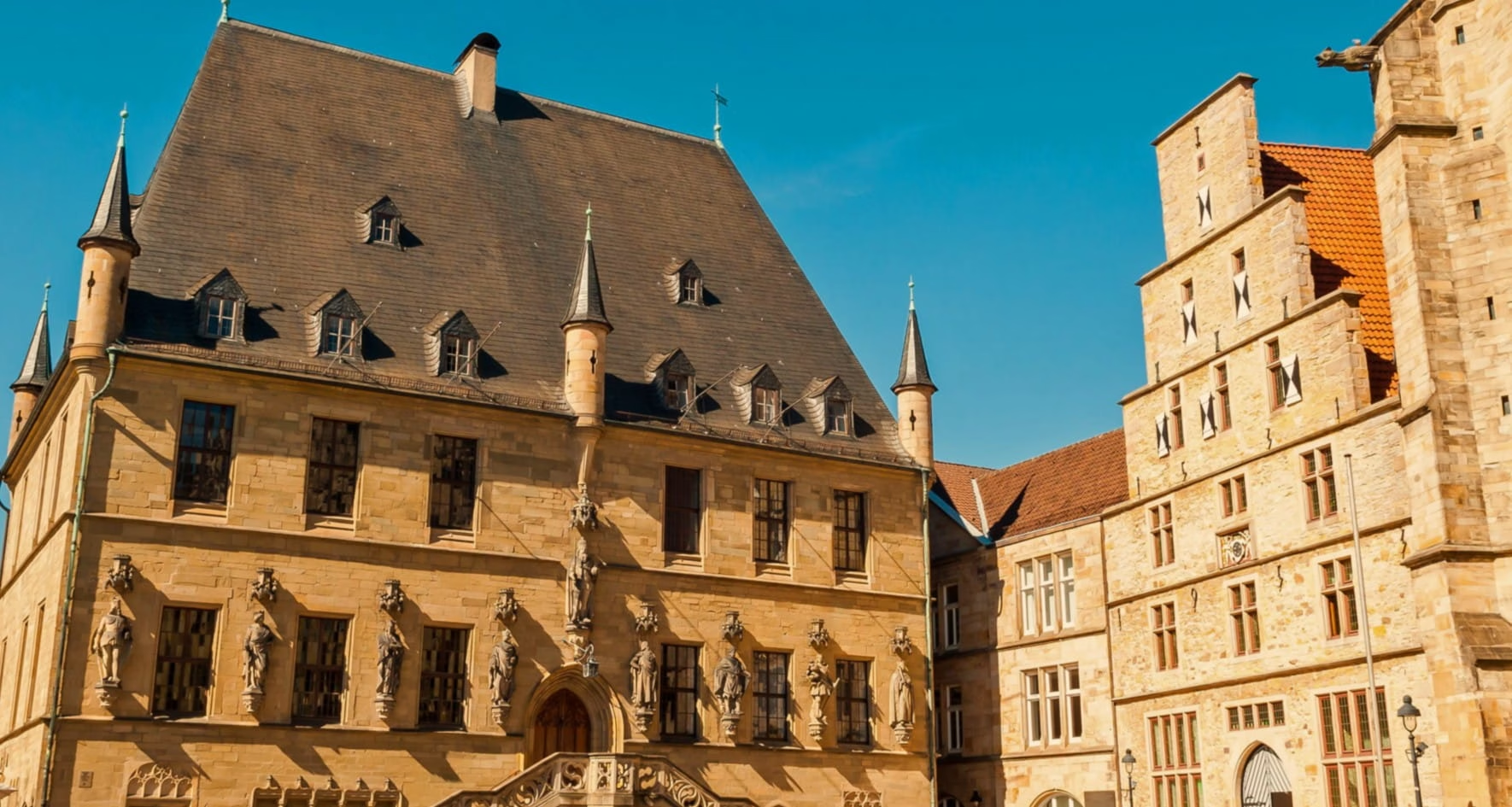
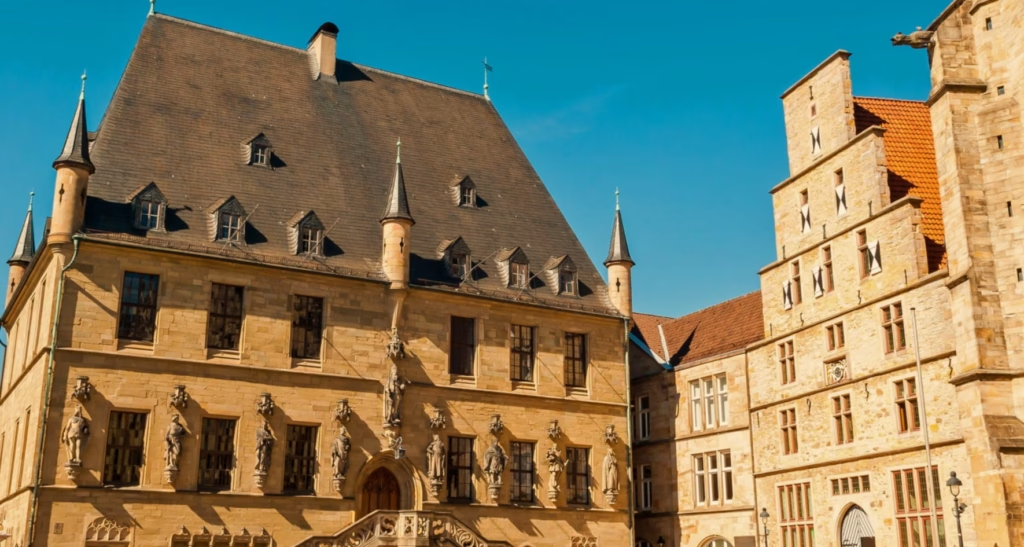
My first stop was the Historic Market Square, the storybook heart of Osnabrück’s Old Town. Framed by rows of colorful, gabled merchant houses, the square exudes Hanseatic medieval charm. At its center stands the Gothic City Hall of the Peace of Westphalia, where a golden dove-shaped door handle welcomes you into history. Inside the wood-paneled Peace Hall, I sat on the same benches where, in 1648, delegates negotiated the end of the 30 Years’ War, you can literally feel the breath of history in the air. Outside, the Bürgerbrunnen (Citizens’ Fountain) tells 1200 years of city stories through intricate bronze figures. As a history buff, I was in heaven. As a traveler, I was simply in awe, it’s not every day you casually stroll through the birthplace of European peace treaties. The historic Osnabrück City Hall on the Market Square, where the Peace of Westphalia was signed in 1648.
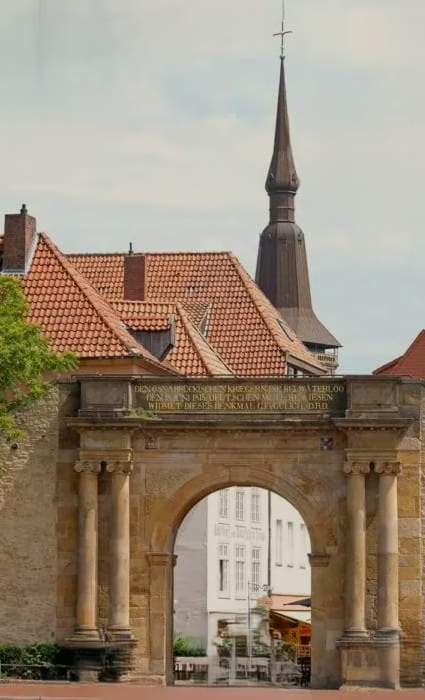
From the square, I wandered past St. Mary’s Church and into Heger Tor, a grand neoclassical gate that once guarded the city. Locals call it the Waterloo Gate, a memorial to soldiers who fell at Waterloo. Passing through, I entered the Heger Tor Viertel, a district of cobbled lanes lined with half-timbered houses, quirky boutiques, and inviting taverns. It’s incredibly walkable, you won’t need anything more than comfy shoes to explore Osnabrück’s Old Town alleys. Around each corner, I found something photo-worthy: a hidden courtyard here, a whimsical street sculpture there and always the mix of medieval and modern life blending effortlessly.
By mid-afternoon I craved a caffeine fix. I ducked into Café Kommode, a cozy little café beloved by locals. True to its name (“kommode” means dresser in German), it’s adorably furnished with vintage cabinets and armchairs, as if you’re having coffee in a stylish grandmother’s living room. I ordered their house specialty cappuccino and a slice of hazelnut cake. Legend has it a priest once called their homemade chocolate pralines “heavenly,” and after tasting one, I couldn’t agree more. Sinking into an antique sofa, sipping my coffee, I felt the stress of office emails melt away.
Travel tip: Osnabrück’s café scene is fantastic, take the time to slow down and people-watch. You’ll notice everyone from university students to friendly grandpas enjoying the afternoon “Kaffee und Kuchen” ritual. In this city, relaxation is practically a cultural heritage.
Refreshed, I continued my stroll. Just a few blocks away stands Osnabrück Cathedral (St. Peter’s) with its twin towers and peaceful cloister. I fondly remember it as the church where my best friend got married. Outside on the square, people are strolling in every direction or having a coffee or pizza under the statue of Justus Möser (a famous jurist born here), giving the square a friendly buzz. It was the perfect teaser for the next day’s plans. As dusk fell, Osnabrück’s Old Town took on a warm glow. Many buildings lit up and lively murmurs drifted from restaurants. For dinner, I craved something hearty and local. I found it at the Hausbrauerei Rampendahl, a historic brewery tavern on Hasestraße. The atmosphere was just what I needed: rustic wood interiors, the clink of beer glasses, and the smell of home-brewed beer and hearty food wafting from the kitchen. I devoured an order of cheese “Spätzle” paired with their house pilsner, of course. The portions were generous (I later learned you can order half-portions that still fill you up), prices reasonable, perfect as a student and the convivial vibe made a solo traveler like me feel right at home. If you prefer vegetarian or lighter fare, no worries: Osnabrück’s city center offers everything from organic Italian and tasty soups, to vegan street food, all within a few minutes’ walk. This city truly has culinary fulfillment for every taste and budget.
After dinner, I wasn’t quite ready to call it a night. Instead, I followed the sound of laughter and clinking glasses to Sonderbar, a tucked-away local bar known for its impressivly quirky decor. . By midnight, I realized I’d experienced exactly what I came for: authentic connection in an underrated city that doesn’t feel touristy at all. I walked back to my hotel under the gentle glow of old street lamps, already excited for what the next day would bring.
Day 2: Culture and Discovery: Markets, Masterpieces and a Dash of Quirk
I woke to church bells and sunlight filtering through medieval-paned windows, a glorious Saturday in Osnabrück. Today was all about diving deeper into the city’s culture. First up: breakfast at the Weekly Market. This market, held in the square by the cathedral, is a Saturday tradition. By 9 AM, it was in full swing. I joined locals browsing stalls piled high with fresh produce, artisan bread, and flowers. Hungry, I made a beeline for a bakery stand and treated myself to a “Franzbrötchen” (a cinnamon-sugar pastry native to northern Germany) and a cup of local roast coffee. I enjoyed them right there in the square, perched on a bench near the statue of Justus Möser, watching Osnabrück come to life. There’s something heartwarming about being part of a city’s morning routine. I felt less like a visitor and more like I belonged. After fueling up, I headed to the nearby Museum Quarter, specifically to the Felix Nussbaum Haus. This museum was a highlight I’d been anticipating, blending art, history, and striking architecture. Designed by renowned architect Daniel Libeskind (who also created the Jewish Museum in Berlin), the Felix Nussbaum House is a modern architectural marvel nestled amid old city walls. Its design is all sharp angles and tilted lines, Libeskind intended it to feel a bit disorienting, reflecting the tragic story of the artist inside. Felix Nussbaum was an Osnabrück-born painter whose life was darkly interrupted by the Nazi regime; he was murdered at Auschwitz in 1944. Walking through the museum’s corridors, I felt his story in every painting: from the bright, hopeful early works to later pieces filled with fear and anguish. It’s rare that a museum moves me emotionally, but one self-portrait of Nussbaum hiding in an attic, painting himself with haunted eyes was incredibly poignant. Yet the experience wasn’t depressing; it was inspiring. The very existence of this museum, with over 200 of Nussbaum’s works on display, felt like a triumph of art over darkness. I left with a deeper appreciation for Osnabrück’s commitment to remembering its history while embracing creativity.
Emerging back into the sunshine, I decided a lighthearted pick-me-up was in order. Fortunately, Osnabrück has just the thing for a sweet tooth. I strolled over to Leysieffer, a famous local chocolate shop and café that’s been delighting residents for over a century. Fun fact: Osnabrück is the original home of Leysieffer, founded in 1909, so you know they’ve perfected their craft. I sat in their pretty café and savored one of Leysieffer’s signature Himmelspralinen (“heavenly pralines”). Let’s just say I now fully understand why their chocolates are legendary. It was the perfect palate cleanser after the heavy emotions of the museum.
Next, I decided to experience a bit of Osnabrück’s modern local culture. Just a short walk from the Old Town is the L&T shopping center, an upscale department store that hides a very unexpected attraction: in its sports department basement, there’s an indoor surfing wave called the Hasewelle! Yes, you read that right, surfing in the middle of a German city. I couldn’t resist checking it out. Inside L&T, stylish shoppers mingled with curious onlookers like me, all gathered around a large glass pool where wetsuit-clad surfers were riding a never-ending wave. The energy was contagious. I didn’t try it myself, but watching locals catch a wave in a store was a delightfully quirky reminder that Osnabrück isn’t afraid to mix old and new. If shopping is more your thing, L&T also offers 22,000 square meters of retail therapy, from high fashion to outdoor gear, but I was content with the free surfing show.
For the afternoon, I had two options: delve into nature or visit another museum. Osnabrück tempts you with both. Ultimately, the sunny weather lured me outdoors. Did you know Osnabrück is the only major city situated inside a nature park? The UNESCO GeoPark TERRA.vita surrounds the city with rolling hills, forest, and even geological wonders. On a whim, I hopped on a local bus (public transit is efficient here) to the edge of town for a short hike at the Piesberg, a former quarry that’s been transformed into a scenic park. The trail was easy and the views from the top, rugged sandstone cliffs and green countryside, were worth the mild climb. I found it pretty cool that I could be immersed in nature just 20 minutes after being in a bustling market. If hiking isn’t your style, another popular option is the Osnabrück Zoo, uniquely set in a forest and even featuring an underground zoo exhibit (yep, there are animals that live below ground, talk about offbeat!). Families especially love it, but as an adult I can attest it’s quite fun to explore for a few hours. Whether you choose a nature walk or the zoo, it’s a relaxing change of pace that shows off Osnabrück’s softer side.
As evening approached, I returned to the city center for one more cultural treat: a classical opera at the theatre. I lucked into a ticket for Mozarts Zauberflöte. Sitting among local music lovers, letting the orchestra’s melodies wash over me, I felt an uplifting sense of belonging and inspiration. It’s experiences like this, blending with the community, enjoying a shared love of art, that make small-city travel so rewarding. For my final dinner in Osnabrück, I opted for a lighter meal. I found the Zinnober, a wine specialist with an amazing restaurant. Over a glass of Riesling and a plate of seasonal veggie risotto, I reflected on how fulfilling yet unhurried the day had been. In big cities I often feel pressure to race from sight to sight, but here I was genuinely relaxed, having seen so much without ever feeling rushed. Osnabrück had quietly worked its magic.
To cap off the night, I followed the sound of live jazz to a tiny bar near the Heger Tor. Inside, a trio was playing upbeat swing while a friendly bartender recommended local craft beers. I recognized a couple of faces, the city is just the right size that you might bump into the people you saw at the market or the concert hall. We exchanged smiles and cheers. Traveling solo in Osnabrück never once felt lonely; it felt like being among old friends.
Day 3: A Fond Farewell: Relaxation and Inspiration
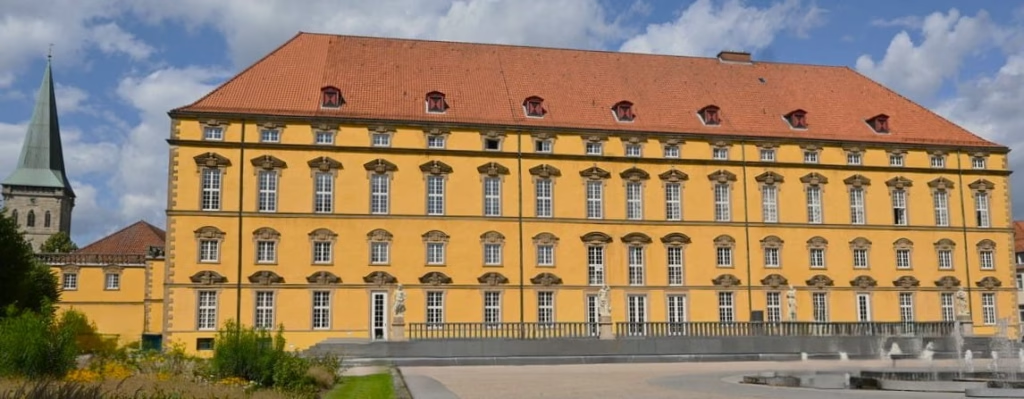
All too soon, Sunday morning arrived, my last day in this lovely city. I allowed myself a lazy start (one of those cozy hotel mornings where you linger over coffee and a German breakfast spread of breads, cheeses, and fruits). Checkout wasn’t until late morning, so I decided to squeeze in one more uniquely Osnabrück experience before catching my afternoon train home.I took a leisurely walk to the Osnabrück Castle, a Baroque palace that now houses the university. The gardens behind the castle practically begged for a stroll. I meandered through the manicured lawns and fountains of the Schlossgarten, watching students study under trees and elderly couples feed the ducks. The castle’s exterior, painted a cheery yellow, made for a great photo-op and the atmosphere was incredibly peaceful. It struck me that Osnabrück seamlessly blends youthful energy (thanks to the university) with a tranquil, almost meditative vibe. Not many cities can be vibrant and chill at the same time, but this one nails it.
With just an hour or two left, I returned to the Old Town for a final dose of its charm. Many shops were closed (note: in Germany, most stores shut on Sundays), which actually made the stroll even more enjoyable, the streets were quiet, almost all mine. I popped into Café am Markt, which was open and busy serving brunch. Snagging a seat by the window, I indulged in one more coffee and a waffle topped with fresh berries. Outside, the bells of nearby St. Mary’s tolled noon. I could see a few tourists gathering by the Town Hall, taking photos of the Peace of Westphalia plaque, but mostly it was locals out for Sunday walks with their dogs or grabbing ice cream with their kids.
Is Osnabrück worth visiting? Absolutely! Precisely because it isn’t overrun with tour buses and selfie sticks. It felt like a secret I was in on, a place where you can deeply engage rather than just “see and tick off” sights. Before heading to the station, I walked one last loop around the Market Square, now calm and sun-drenched. I found myself already feeling nostalgic about this city I hadn’t even left yet. In just three days, Osnabrück had given me exactly what I needed: a mix of inspiration, humor, history, and heart. From the emotional impact of the Felix Nussbaum Museum to the silly delight of indoor surfing, from rich historical lessons at the Peace Hall to laughing with locals over beers, this trip was the perfect reminder of why I love travel. It recharged my batteries and broadened my perspective, all without straying from that mid-budget comfort zone. I didn’t have to sacrifice good food or a nice bed to have an adventure here. Osnabrück proves that sometimes the best getaways are hiding in plain sight, away from the tourist traps.
Did I return? Absolutely! I spent the next seven years in this city, achieving my law degree and still think about this city with nostalgia. Which is why I ever so often return to my alma mater.
Travel Q&A: Planning Your Osnabrück Escape
Q: How do I get to Osnabrück?
A: Osnabrück is well-connected and easy to reach. By train: Direct trains run frequently, roughly 2.5 hours from Berlin (via Hanover) and about 30 minutes from Münster. It’s also on the international rail line between Amsterdam and Hamburg. I took a train from Hamburg and arrived in ~2 hours, relaxed and ready. By air: The nearest airport is Münster/Osnabrück (FMO), about 30 km away, with car rentals and shuttle buses available. Alternatively, fly into Düsseldorf or Hamburg and take a train. By car: Osnabrück lies at the intersection of major Autobahnen (A1 and A30), so driving is straightforward (about 1 hour from Bremen, 1.5 from Dortmund). Once in the city, you won’t really need a car, the center is compact.
Q: Can I do this trip over a long weekend?
A: Definitely! Osnabrück is perfect for a 3-day long weekend. I arrived on a Friday and left Sunday and felt I experienced a lot without rushing. It’s even doable in 2 days if you skip a few things, but three days lets you soak in the atmosphere, include a mix of history, culture and relaxation (as this itinerary shows). Many corporate professionals (myself included) use a Friday off to turn Osnabrück into an easy weekend getaway. It’s also a great add-on city if you’re traveling between bigger German destinations, a worthy stop that won’t eat up too much time but gives you ample memories. I even know some people that visit Osnabrück on daytrips from Bremen or even Cologne.
Q: When is the best time to visit Osnabrück?
A: I’d recommend late spring to early autumn for the best weather. April-June brings mild temperatures, blooming parks and the city’s famous May Week festival (if you enjoy street food and music, time your visit for that!). Summer is lovely and not overly crowded (students generally leave by Juli after graduation or for the semester break and return in September), you can dine outdoors on the market square terraces comfortably. Early fall (September) is also gorgeous, with autumn colors in the surrounding nature park. I visited in August for the first time after my admission letter and had sunny days around 23°C (73°F). Winter is chilly and quiet, but Osnabrück does host a magical Christmas Market worth seeing if you’re in the region during the holidays. Just bundle up and enjoy the lights and Glühwein in the historic square. Overall, there’s no bad time for this hidden gem, but fair weather lets you enjoy all the outdoor cafés and walking tours to the fullest.
Q: Is Osnabrück solo-travel friendly?
A: Absolutely. I traveled solo and felt completely safe and welcomed. The city is medium-sized (~165,000 residents) with a laid-back, friendly vibe. Many locals speak English (and are eager to help if you need directions or recommendations). There are many international students in the city and overall it has a very relaxed campus feeling. As a solo traveler, I loved the ease of striking up conversations, whether at Café Kommode, in a brewery or during the night watchman tour (which I highly recommend for solo folks; you’ll inevitably chat with others carrying lanterns alongside you!). The city is well-lit and populated in the evenings, especially around the Old Town, so I was comfortable walking back to my hotel at night. For women traveling alone, Osnabrück feels as safe as it gets. Just watch yourself around the main station at night (that’s also where the red light district is located) and keep an overall watchfulness. In all of my seven years in the city I had one unsafe situation and luckily that was right around the corner from the district attorney and the police station.
You’ll also find plenty of spots to enjoy your own company: quiet museum mornings, cozy reading nooks in cafés and benches in the Schlossgarten for journaling (or bring a blanket and join the students grilling there). It’s an ideal place to slow down and enjoy some “me time.”
Q: Where should I stay for comfort and convenience? Aim to stay in or near the Altstadt (Old Town) so you can walk everywhere. There are a few great mid-range hotels that balance comfort, style and location. I stayed at the Romantik Hotel Walhalla, a beautiful half-timbered inn right by the Market Square, it had modern amenities and a historic ambiance (and a fantastic breakfast!). Another solid choice is the Dom Hotel near the Cathedral, which is contemporary, comfortable and literally steps from the weekly market. If you prefer boutique design, look up Hotel Fraser (just an example; Osnabrück has several chic small hotels). All these options keep you central, meaning you can drop off your shopping bags or take an afternoon rest easily. Prices are moderate (I paid far less here than I would in bigger German cities for equivalent quality). For budget travelers, there are a couple of hostels and pensions, and for luxury seekers, a few upscale options with spa facilities on the outskirts. But truthfully, mid-range in the center hits the sweet spot, you’ll have the Old Town charm at your doorstep without sacrificing comfort.
Q: How do I get around the city?
A: On foot, mostly! Osnabrück’s main attractions are clustered in the city center and the Old Town is very walkable. I never once needed a taxi within the Altstadt. The cobblestone lanes are pedestrian-friendly (and you’ll keep stumbling on hidden gems by walking). For farther spots like the zoo or Piesberg, the city bus network is reliable, frequent and safe. A single ticket costs just a few euros. I used the bus to reach the Piesberg trailhead and it was a smooth 20-minute ride. If you enjoy cycling, the city also offers bike rentals and has decent bike lanes (Osnabrück is aiming to become a certified biking city) plus, biking is a fun way to explore the parks or along the Hase River that runs through town. Driving in the center isn’t necessary (and parking in those ancient streets can be tricky and pricey), so I’d suggest parking the car if you brought one and enjoying Osnabrück at a human pace.
Conclusion: Don’t Wait, Osnabrück Awaits You!
Leaving Osnabrück after finishing uni, I felt a mix of contentment and nostalgia. Content from the wonderful experiences I’d collected and nostalgia because I’d found a home in this city that I am going to miss, but also happy I can share it with others. This city proved that a place doesn’t have to be famous to be extraordinary. In fact, its very under-the-radar status is part of the charm. Osnabrück let me slow down, learn, laugh and rejuvenate, all in one short trip and by living here. If you’re dreaming of a getaway that balances inspiring history, friendly vibes, a touch of humor and plenty of comfort, Osnabrück is calling your name.
So, what are you waiting for? Life is busy and the “right time” to travel might never announce itself, make the time. Plan that long weekend, go experience this hidden gem of Germany and create your own story in the City of Peace. I promise you’ll come back not only with beautiful photos, but with a refreshed spirit and maybe a few new friends (and definitely a box of Leysieffer chocolates!).
Don’t miss out on more offbeat travel inspiration! Subscribe to my newsletter for practical guides and heartfelt tales that fit into a real working person’s schedule. And before your next adventure, check out our related articles on other hidden gems in Germany and Europe, your perfect trip might be closer than you think. Travel well, travel often and remember: sometimes the lesser-known path leads to the most unforgettable destinations.
Cheers to your next journey, perhaps it’ll be Osnabrück! 🌟
Leave a Reply