(Or: How to Walk in the Footsteps of Hannibal, Wander Through 1,000 Years of History, and Sip Mint Tea in a Village That Looks Like a Painting)
Tunis in One Day (Quick Plan)
Best order: Carthage → Medina → Sidi Bou Said
Time: 8–10 hours (full day, but a good one)
Getting around: TGM train + short taxis
Budget (rough): €25–€60 per person (transport, entry tickets, food)
Small things that save your mood: download offline maps + carry cash for snacks/tickets
Carthage: The Rise and Fall of Africa’s Greatest Ancient City
Why Carthage Matters
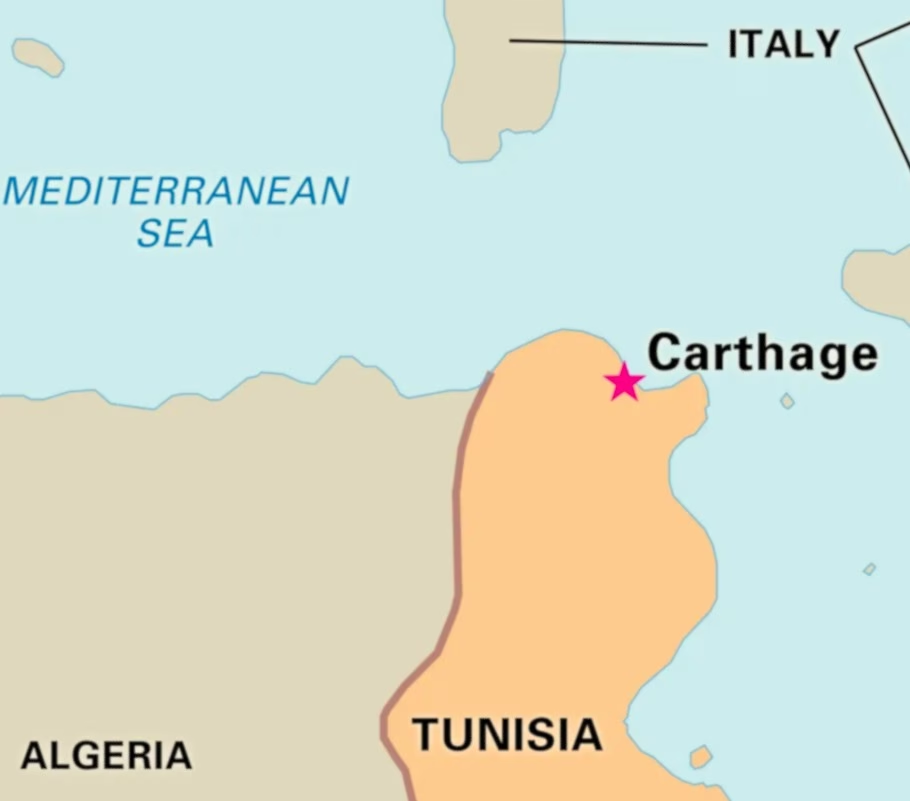
Phoenician settlers founded Carthage in the 9th century BCE. It grew into the wealthiest and most powerful city in the ancient Mediterranean, until Rome destroyed it in the Punic Wars. Today the ruins are a UNESCO World Heritage Site. A place that was once glorious, then gone.
One thing worth knowing: Carthage’s general Hannibal crossed the Alps with elephants to attack Rome. It did not end well for him.
How to Get to Carthage
Location: 15 km northeast of Tunis, about 20 minutes by car.
Taxi: Around €10 from Tunis.
Train (TGM): From Tunis Marine to Carthage-Hannibal station. 15 minutes, ~ €0.50.
Tour: Half-day tours from Tunis run around €30.
What to See in Carthage
1. Byrsa Hill
This was the heart of ancient Carthage. Climb it and you get panoramic views over the ruins and the Gulf of Tunis. While you’re up there, visit the Carthage Museum (~ €5). It holds Punic masks, Roman mosaics and enough context to make the ruins actually make sense.
2. The Punic Ports
These harbors made Carthage a superpower. The circular one was for warships. Hannibal’s fleet sailed from here. The commercial port handled traders from across the Mediterranean. After Rome destroyed Carthage, they copied the port design. That tells you everything.
3. The Roman Ruins
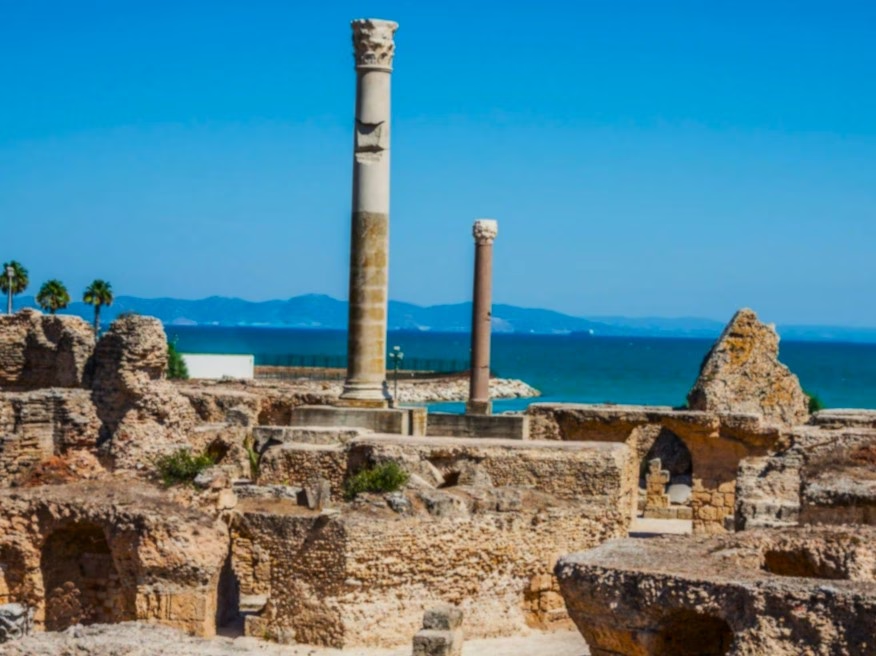
Rome razed Carthage in 146 BCE, then rebuilt it as a Roman city. The Antonine Baths are massive, second only to the Baths of Caracalla in Rome. Walk through the Roman Villas too. The mosaics are still intact.
4. The Tophet
A sacred site often linked to the most contested part of Carthaginian history. Some sources claim children were sacrificed here to Ba’al Hammon; others argue the remains point to a cemetery and symbolic burials. Either way, it’s a heavy place, worth visiting if you’re up for it, and easy to skip if you’re not. Reading up on the debate beforehand changes what you notice once you’re there.
Where to Eat Near Carthage
Restaurant Le Golfe: Seafood with views of the Gulf of Tunis. Order the grilled octopus.
Café des Délices: Casual, good Tunisian salads and fresh juice.
Carthage and Sidi Bou Said are close to each other. Combine them in one day and you will not regret it. Carthage is quieter than people expect, which is exactly why it works.
The Medina of Tunis: A Walking Tour Through 1,000 Years of History
Why the Medina Matters
The Medina of Tunis is a UNESCO-listed maze of narrow streets, mosques and souks that date back to the 8th century. Arabs, Berbers, Andalusians and Ottomans all left their mark here. You can feel it in the architecture, the smells, the way the light falls through the alleyways. At one point this was a center of Islamic intellectual life. Scholars and poets came from across the world. That history is still in the walls.
How to Get to the Medina
Metro: Place de Barcelone station, Line 4.
Taxi: Around ~ €3 from anywhere in Tunis.
Hire a guide for around €15 or download Google Maps offline. The alleys are genuinely confusing and that is part of the charm, but a guide saves time.
What to See in the Medina
1. The Zitouna Mosque
Built in 732 AD, this is the second largest mosque in Tunisia. The courtyard has marble columns and geometric tiles. If the minaret is open to non-Muslims, climb it. The view over the medina is worth it. Dress modestly, cover shoulders and knees. This should actually be a no-brainer.
2. The Souks
This is where Tunis comes alive. Spices, textiles, copper… everywhere you look. Go in the morning when it is less crowded.
Souk El Attarine: Perfumes and essences. Stop and smell the amber and oud.
Souk des Chéchias: Traditional red felt hats. They have been made here for centuries.
Souk des Orfèvres: Gold and silver jewelry. Haggle. Start at half the asking price.
3. Dar Ben Abdallah
An 18th-century palace turned museum. It shows you how Tunisian elites actually lived, mosaics, fountains, lavish tiles in the harem quarters. Entry is ~ €3 and worth every cent.
4. The Al-Zaytuna Madrasa
A 17th-century Islamic school that still functions as a center of learning. The library holds ancient manuscripts on science and philosophy. Ask to see the roof. The view over the medina is one of the better ones you will find.
5. The Hidden Courtyards
Behind unmarked doors, tucked away from the crowds, you find these quiet courtyards. Dar Lasram is a restored 19th-century house turned cultural center. Dar El Jeld has a stunning Andalusian courtyard you can visit for free. And sometimes, if you knock on a wooden door, a homeowner will let you peek inside (proceed with caution, especially when traveling alone).
Where to Eat in the Medina
Café des Nattes: A hidden café. Mint tea and pastries.
Dar El Jeld Restaurant: Fine dining in a palace. Order the lamb couscous.
Fondouk El Attarine: Rooftop views of the medina. Good for lunch.
Try lablabi while you are here. It is a chickpea soup and it is Tunis’s best street food. Simple, filling, and nothing like what you expect. It’s magical, but it can be a lot. Give yourself permission to take breaks.
Sidi Bou Said: Tunisia’s Blue and White Village by the Sea
Why Sidi Bou Said Looks Like a Painting
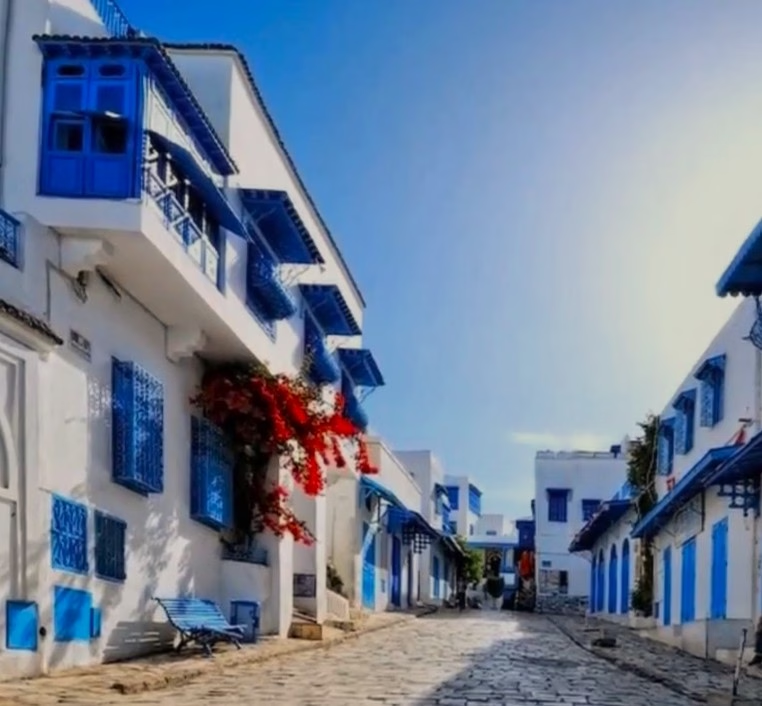
Perched on a cliff over the Mediterranean, Sidi Bou Said is all cobalt-blue doors, whitewashed walls, and bougainvillea. It looks like a Greek island dropped into North Africa. The village was shaped by Andalusian refugees in the 12th century, and the blue and white color scheme was introduced by a Baron in the 1920s. It is now protected by law.
How to Get to Sidi Bou Said
Location: 20 km north of Tunis.
Taxi: Around €15 from Tunis.
Train (TGM): From Tunis Marine to Sidi Bou Said station. 25 minutes, €0.50.
Tour: Half-day tours from Tunis run around €25.
Go in the late afternoon. The light at that hour is something else for photos.
What to See in Sidi Bou Said
1. The Streets
Every door, window and alley is painted cobalt and white. Get lost on purpose. Each door is different. Look for the Street of the Cats, there are cats everywhere and they do not care about your schedule.
2. Café des Nattes
The best spot for mint tea with a view of the Mediterranean. Order the mint tea with pine nuts and a brik à l’œuf, a Tunisian pastry with egg inside, crispy and good. Sit on the terrace. Take your time.
3. Dar El Annabi
A 19th-century palace that shows traditional Tunisian life. The courtyard has mosaics and fountains. The rooftop gives you panoramic views of the village and the sea. Entry is ~ €3.
4. The Cliffside Walk
A path along the cliff with views of the Mediterranean and Tunis below. Walk to the lighthouse. That is the best spot for sunset. The sky turns pink and the sea goes quiet. It is one of those moments you do not plan for but remember for a long time.
5. The Artisan Shops
Pottery, textiles, jewelry. Blue and white ceramics and handwoven rugs. Bargain politely and start at half the asking price. Most sellers expect it.
Where to Eat in Sidi Bou Said
Restaurant Le Café des Délices: Seafood with views of the village.
Au Bon Vieux Temps: Traditional Tunisian dishes in a historic house.
Pâtisserie des Nattes: Best pastries in town. Try the makroudh, a date-filled pastry.
Order a fricassé too, a Tunisian sandwich, spicy and crunchy. It is the kind of thing you eat standing up and then immediately want another one. Yes, it’s photogenic. No, you’re not the first person to think so, go late and you’ll still love it.
Practical Tips Before You Go
You can do all three in one day. Carthage in the morning, the Medina in the afternoon, Sidi Bou Said at sunset. It is a full day but a good one.
Hire a guide in the Medina. Worth around €15 to €20. The alleys are a maze and a good guide shows you things you would never find alone.
Wear comfortable shoes. Cobblestones and hills everywhere. Not the day for flip-flops.
Eat the street food. Brik, lablabi, makroudh. Do not skip this.
Dress modestly in the Medina. Cover shoulders and knees. It is a sign of respect and locals notice.
Quick Answers to Common Questions
Can I visit all three in one day? Yes. Carthage in the morning, the Medina in the afternoon, Sidi Bou Said at sunset. That is the order that works best.
Is the Medina safe? Yes. Stick to the main streets and avoid empty alleys after dark.
When is the best time to visit? Spring (March to May) or fall (September to November). The weather is mild and the crowds are manageable.
Can I take photos in the Medina? Yes, but ask before photographing people or the inside of mosques.
How do I get from Carthage to Sidi Bou Said? Taxi for around €10 or the TGM train for around €1.
Why This Trip Stays With You
Tunisia is a country of layers. Ancient ruins, medieval medinas and a cliffside village that looks like it was painted by hand. In Carthage you walk where Hannibal walked. In the Medina you get lost in a thousand years of history. In Sidi Bou Said you sit in a blue doorway and watch the sun go down over the Mediterranean. As a Latin student and history nerd this was by far my highlight of my Tunisia travel.
Pack your camera, wear good shoes and go. You will figure out the rest when you get there.
P.S. Want more Tunisia tips? Sign up for my newsletter Dream. I’ll send you my calm, no-drama Tunisia notes: a one-day Tunis route you can copy, what’s worth paying for, what’s not and the small logistics that save you from spending your trip negotiating with Google Maps.
P.P.S. Got a favorite spot in Tunisia or a memory from a trip? Share it in the comments. I am always adding to my list.
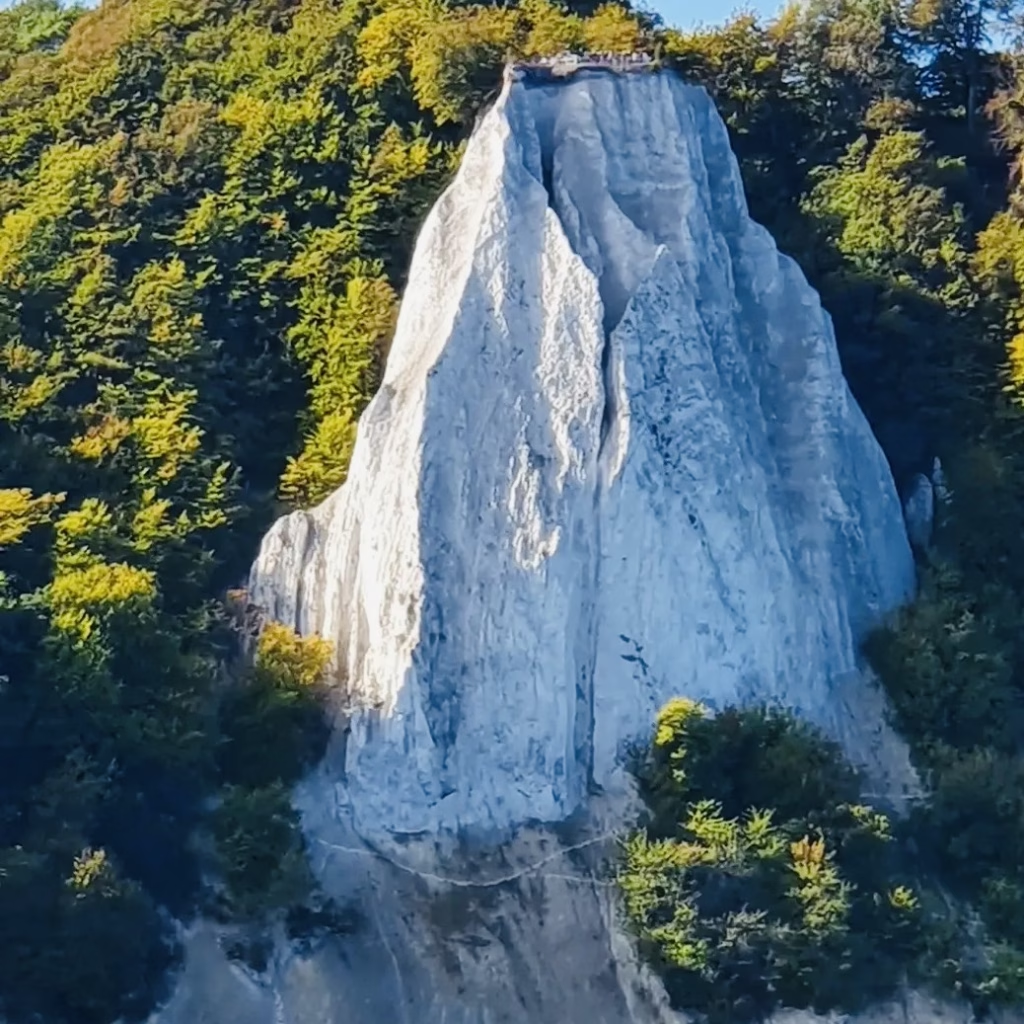
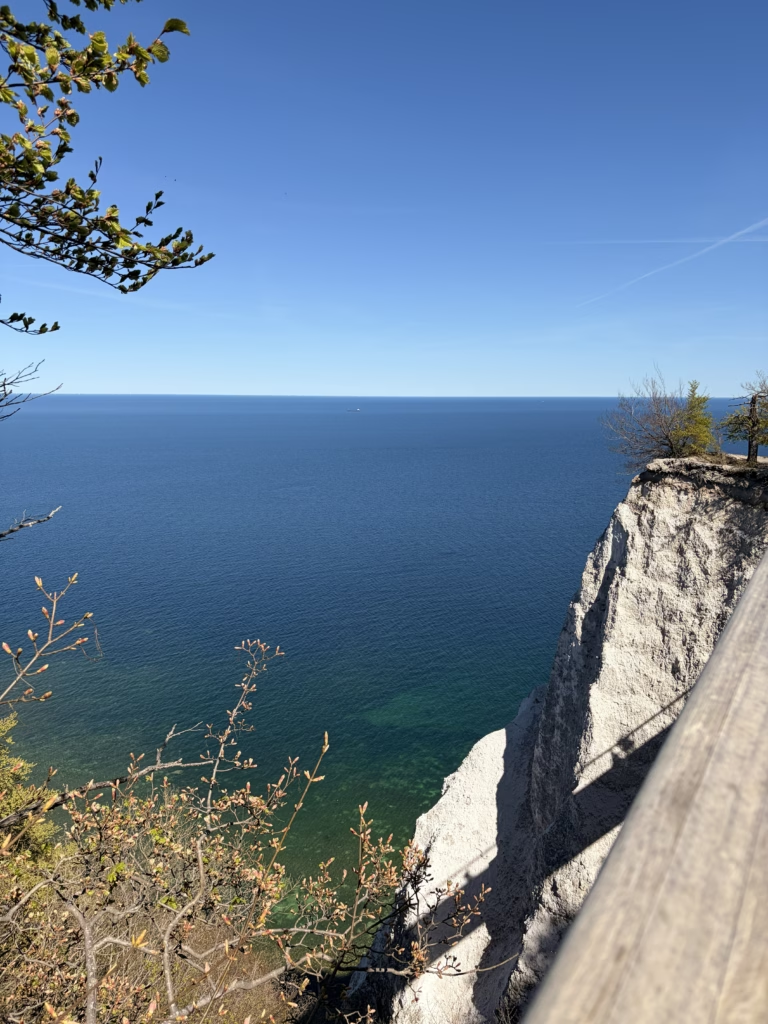
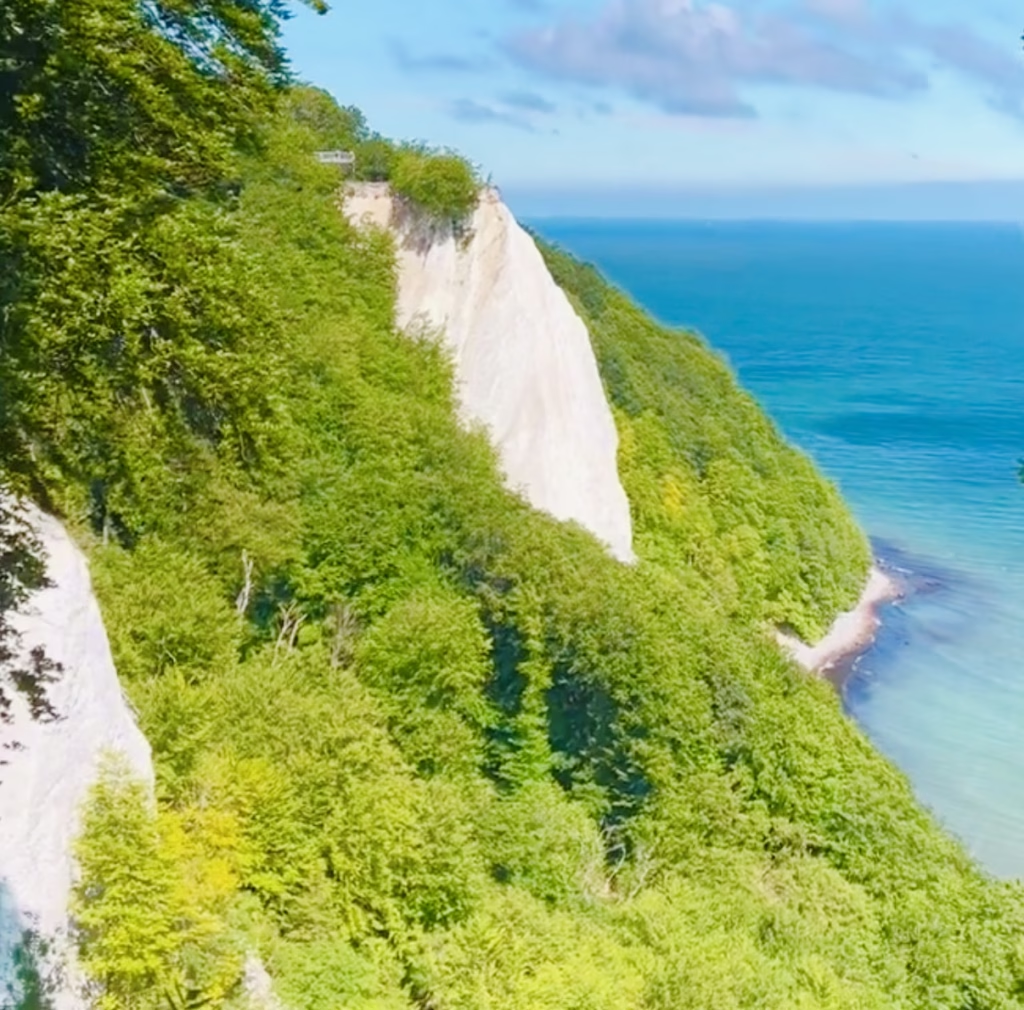
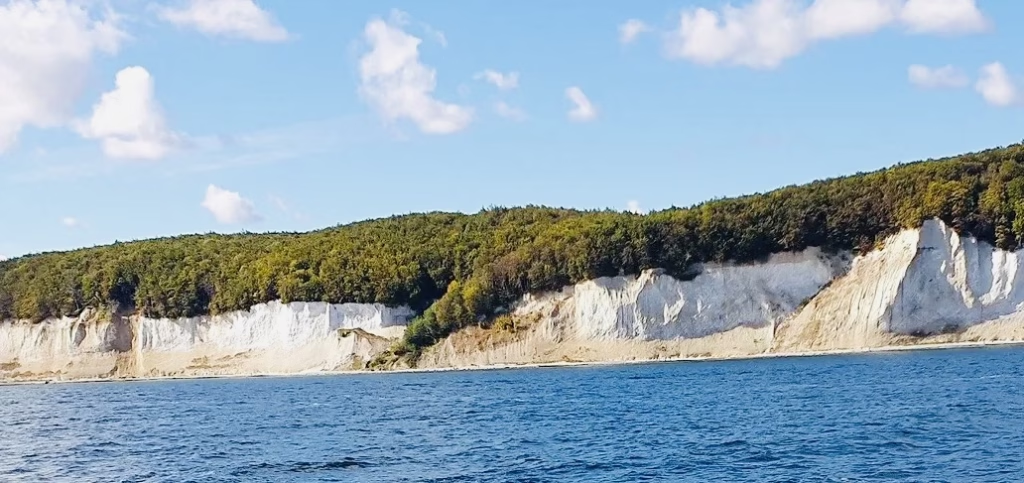
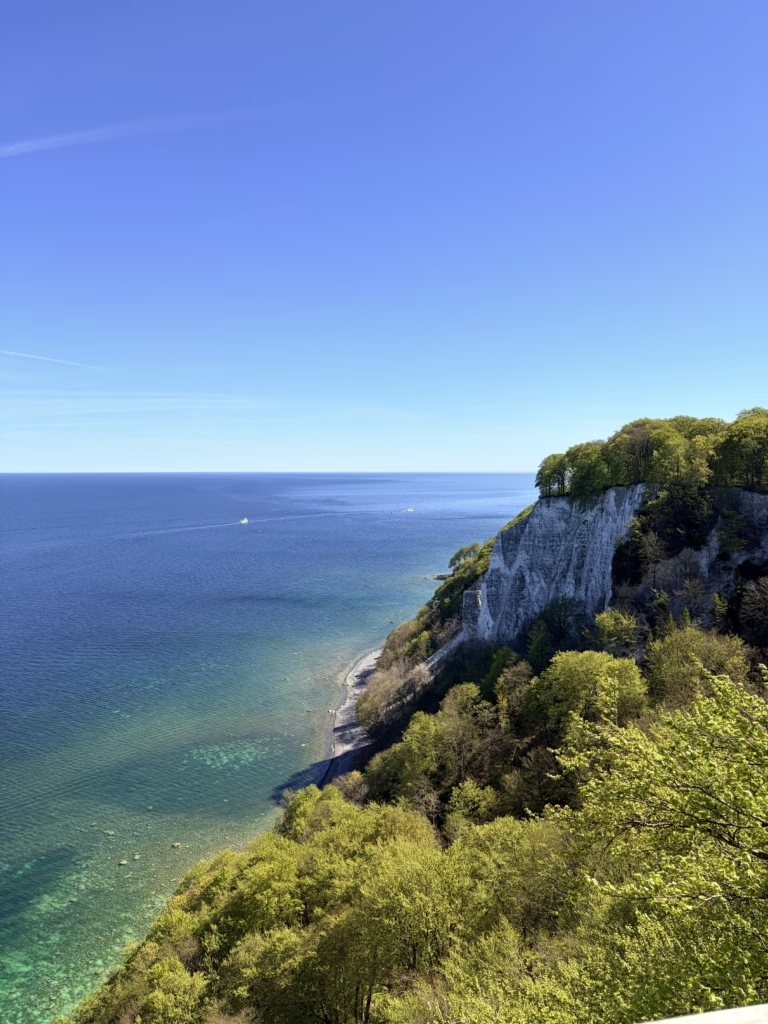
Germany’s White Cliffs of Rügen (Kreidefelsen) are stunning: chalk cliffs soaring 118 meters above the Baltic Sea, wild beaches, and hiking trails with beautiful viewpoints. This is Jasmund National Park, Germany’s smallest but most spectacular national park. Think Dover meets Jurassic Coast, but with fewer crowds and more fairy-tale vibes.
Fun fact: The cliffs are made of chalk. The same stuff as school chalk! But don’t try to write on them. In fact, you probably don’t want to get too close because of breakoff risks. Chalk is a soft stone.
🗺️ How to Get to the White Cliffs of Rügen
By Car:
From Berlin:3.5-hour drive via the A20 and A205.
From Hamburg:4-hour drive via the A1 and A20.
Parking:P1 Königsstuhl (€5/day) or P2 Nationalpark-Zentrum (€3/day). Pro tip: During travel season (from May to September) arrive before 9 AM to beat the crowds.
Make a whole Rügen vacation out of your trip and drive from Binz, Sellin or Sassnitz
By Train + Bus:
*Take the ICE train from Berlin or Hamburg to Binz (3–4 hours).
*Transfer to Bus 241 to Sassnitz (30 mins, €3).
*Walk or take the shuttle bus (€2) to Königsstuhl.
By Bike:
Rügen is bike-friendly if you don’t mind hilld, rent a bike in Binz or Sassnitz (€15/day) and cycle to the cliffs (~1 hour). Pro tip:Follow the Rügen Coastal Cycle Path, scenic and flat.
🏞️ What to See and Do: The Ultimate Guide
1. Königsstuhl (The King’s Chair)
Why it’s iconic: The most famous cliff, a chalk monolith that juts into the Baltic. The views are unreal. And there are quite the interesting legends on how it earned its name.
What to do:
*Hike to the Viktoria viewpoint (10 mins from the bus lot).
*Visit the Nationalpark-Zentrum Königsstuhl (15), interactive exhibits on the cliffs and park.
2. The Wissower Klinken
Why it’s special: A series of chalk pinnacles that look like giant teeth. Photographers love this spot.
What to do:
*Hike the Wissower Klinken Trail (1.5 hours, moderate).
*Climb the wooden stairs for views of the cliffs.
3. The Victoria Viewpoint (Viktoriasicht)
Why it’s special: The bestphoto spot, panoramic views of the cliffs and sea.
What to do:
*Hike from Königsstuhl (30 mins) or from the parking lot.
*Bring waiting time, that platform is small.
4. The Stubbenkammer Cliff
Why it’s special: The tallest cliff on Rügen (118m), dramatic and less crowded than Königsstuhl.
What to do:
*Hike the Stubbenkammer Trail (2 hours, challenging). Pro tip: Wear sturdy shoes, the trail is steep.
🥾 Hiking Trails: The Best Routes for Every Level
Trail
Difficulty
Time
Highlights
Königsstuhl Loop
Easy
1 hour
Cliff views
Wissower Klinken
Moderate
1.5 hours
Chalk pinnacles
Stubbenkammer
Hard
2 hours
Panoramic views
Victoria Viewpoint
Moderate
1 hour
Sunset views, photo spots
Pro tip: Download the Komoot app for offline maps and trail details.
📸 Best Photo Spots (And How to Get the Shot)
Spot
Best Time
Tip
Königsstuhl
Sunrise/Sunset
Less crowds
Victoria Viewpoint
Golden hour
Bring a tripod
Stubbenkammer
Midday
Contrast of white cliffs and blue sea
Boat Cruise
Mornings
The only way to view the cliffs in all of their glory
Pro tip: Use a polarizing filter, enhances the blue of the sea and white of the cliffs.
🍽️ Where to Eat Near the Cliffs
1. Nationalpark-Gaststätte Königsstuhl
Why go? Right next to the cliffs, local seafood and German dishes. Order this:Rügen herring with potatoes, fresh and delicious. Pro tip: Sit on the terrace for views of the Baltic.
Why go? Luxury with sea views, perfect for a post-hike meal. Order this: Their fish and desserts are to die for Pro tip: Reserve a table, popular in summer.
💡 Pro Tips for the Ultimate Rügen Experience
Visit in Shoulder Season:
May–June or September, fewer crowds, milder weather.
Wear Layers:
The wind off the Baltic is chilly, even in summer.
Bring Water and Snacks:
Limited food options near the cliffs, pack a picnic.
Respect the Cliffs:
Stay on marked trails, chalk is fragile and dangerous if you wander too close to the edge. I cannot mention this enough. People have died by being at the cliffs edge or below them at the wrong time.
[
]
❓ FAQ: Because You’ve Got Questions
Q: Are the cliffs safe for kids? A: Yes, but supervise them closely and stay on marked trails.
Q: What’s the best time of year to visit? A: May–September, best weather and access to trails. I honestly loved visiting at the very end of April, because dogs are still allowed on the beaches. Winter is dramatic but some trails and even restaurants and shops on the island close.
Q: Can I find amber on the beach? A: Yes! Look after storms, best spots are Stubbenkammer and Prorer Wiek. But be careful, some of it might be yellow phosphor from the mines of WWII that is washed ashore now that the mines are all rusty.
Q: Is there a fee to enter the park? A: No, Jasmund National Park is free. Only the Nationalpark-Zentrum has an entry fee and the busshuttle to the Königsstuhl isn’t free either.
🎉 Final Thought: Why Rügen’s Cliffs Are Germany’s Hidden Gem
Rügen’s White Cliffs are more than just a scenic spot, they’re a feeling. Standing on the edge of the cliffs, watching the Baltic crash against the chalk, you’ll understand why this place inspires artists, writers, and dreamers. It’s wild, beautiful and unforgettable. Germany’s answer to the Cliffs of Moher, but with fewer crowds and more charm.
So pack your hiking shoes, grab your camera and dive into Rügen’s magic. And when you’re standing on the cliffs, wind in your hair and sea spray on your face, you’ll know why this is Germany’s most dramatic coastline. Want more travel destinations? Here are some of my favourites. And I even offer full itineraries, so you don’t have to lift a finger to plan your trip. You just need to book.
P.S. Want more Rügen secrets? Sign up for my newsletter – Dream -and get exclusive guides, local tips and zero tourist traps.
[
]
P.P.S. Got a favorite Rügen spot or hidden gem? Share in the comments. I’m always adding to my list! 🏞️✨
I still remember the first time I wandered into Osnabrück. It wasn’t part of any grand Euro tour or famous “must-see” list, but it was the city I chose to study law in and yet a place I knew little about. But by the end of my university time, Osnabrück had etched itself onto my heart as one of those underrated German cities that surprises you at every turn, a true hidden gem in Germany’s travel scene. If you’re a busy professional craving an off-the-beaten-path Germany escape that mixes unique experiences with comfort or a student trying to chose a cozy city to study in or spent a semester abroad, follow along. This Osnabrück travel guide will show you how to savor history, culture and coziness in one long weekend. I promise, afterwards you’ll want to stay.
Day 1: First Impressions : Old Town Charms and Cozy Welcomes
Stepping off the train in Osnabrück (after an easy ride from Hamburg or Frankurt (Main)), I felt an immediate sense of calm. The city’s pace is unhurried, and everything seems within arm’s reach, ideal when you’ve only got a weekend or a poor student biking everywhere. After checking into a boutique hotel in the Altstadt (Old Town), I chose a lovely spot right near the market square, ensuring all the sights were walkable, I set out to explore on foot.
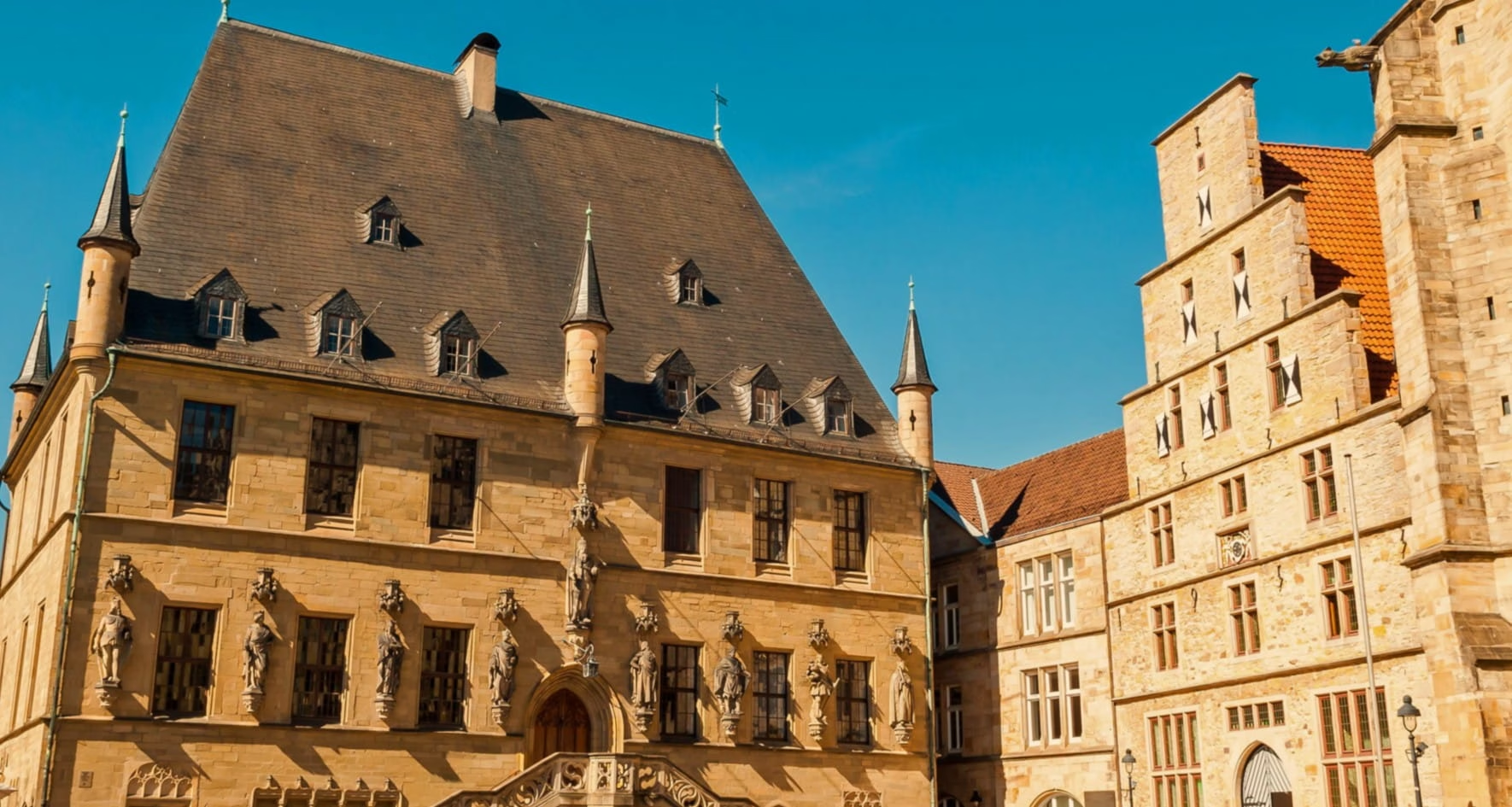
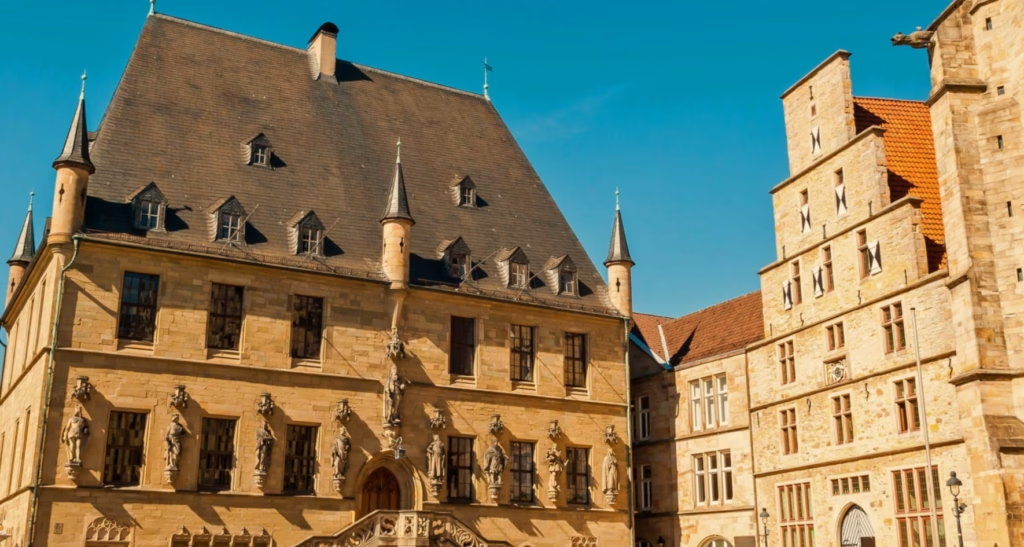
My first stop was the Historic Market Square, the storybook heart of Osnabrück’s Old Town. Framed by rows of colorful, gabled merchant houses, the square exudes Hanseatic medieval charm. At its center stands the Gothic City Hall of the Peace of Westphalia, where a golden dove-shaped door handle welcomes you into history. Inside the wood-paneled Peace Hall, I sat on the same benches where, in 1648, delegates negotiated the end of the 30 Years’ War, you can literally feel the breath of history in the air. Outside, the Bürgerbrunnen (Citizens’ Fountain) tells 1200 years of city stories through intricate bronze figures. As a history buff, I was in heaven. As a traveler, I was simply in awe, it’s not every day you casually stroll through the birthplace of European peace treaties. The historic Osnabrück City Hall on the Market Square, where the Peace of Westphalia was signed in 1648.
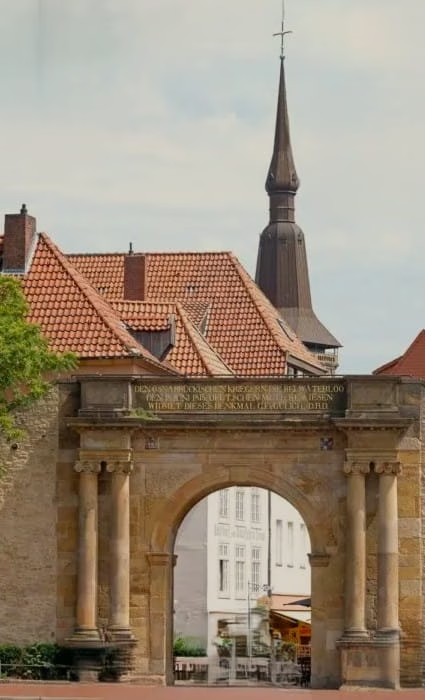
From the square, I wandered past St. Mary’s Church and into Heger Tor, a grand neoclassical gate that once guarded the city. Locals call it the Waterloo Gate, a memorial to soldiers who fell at Waterloo. Passing through, I entered the Heger Tor Viertel, a district of cobbled lanes lined with half-timbered houses, quirky boutiques, and inviting taverns. It’s incredibly walkable, you won’t need anything more than comfy shoes to explore Osnabrück’s Old Town alleys. Around each corner, I found something photo-worthy: a hidden courtyard here, a whimsical street sculpture there and always the mix of medieval and modern life blending effortlessly.
Heger Tor
By mid-afternoon I craved a caffeine fix. I ducked into Café Kommode, a cozy little café beloved by locals. True to its name (“kommode” means dresser in German), it’s adorably furnished with vintage cabinets and armchairs, as if you’re having coffee in a stylish grandmother’s living room. I ordered their house specialty cappuccino and a slice of hazelnut cake. Legend has it a priest once called their homemade chocolate pralines “heavenly,” and after tasting one, I couldn’t agree more. Sinking into an antique sofa, sipping my coffee, I felt the stress of office emails melt away.
Travel tip: Osnabrück’s café scene is fantastic, take the time to slow down and people-watch. You’ll notice everyone from university students to friendly grandpas enjoying the afternoon “Kaffee und Kuchen” ritual. In this city, relaxation is practically a cultural heritage.
Refreshed, I continued my stroll. Just a few blocks away stands Osnabrück Cathedral (St. Peter’s) with its twin towers and peaceful cloister. I fondly remember it as the church where my best friend got married. Outside on the square, people are strolling in every direction or having a coffee or pizza under the statue of Justus Möser (a famous jurist born here), giving the square a friendly buzz. It was the perfect teaser for the next day’s plans. As dusk fell, Osnabrück’s Old Town took on a warm glow. Many buildings lit up and lively murmurs drifted from restaurants. For dinner, I craved something hearty and local. I found it at the Hausbrauerei Rampendahl, a historic brewery tavern on Hasestraße. The atmosphere was just what I needed: rustic wood interiors, the clink of beer glasses, and the smell of home-brewed beer and hearty food wafting from the kitchen. I devoured an order of cheese „Spätzle“ paired with their house pilsner, of course. The portions were generous (I later learned you can order half-portions that still fill you up), prices reasonable, perfect as a student and the convivial vibe made a solo traveler like me feel right at home. If you prefer vegetarian or lighter fare, no worries: Osnabrück’s city center offers everything from organic Italian and tasty soups, to vegan street food, all within a few minutes’ walk. This city truly has culinary fulfillment for every taste and budget.
After dinner, I wasn’t quite ready to call it a night. Instead, I followed the sound of laughter and clinking glasses to Sonderbar, a tucked-away local bar known for its impressivly quirky decor. . By midnight, I realized I’d experienced exactly what I came for: authentic connection in an underrated city that doesn’t feel touristy at all. I walked back to my hotel under the gentle glow of old street lamps, already excited for what the next day would bring.
[
]
Day 2: Culture and Discovery: Markets, Masterpieces and a Dash of Quirk
I woke to church bells and sunlight filtering through medieval-paned windows, a glorious Saturday in Osnabrück. Today was all about diving deeper into the city’s culture. First up: breakfast at the Weekly Market. This market, held in the square by the cathedral, is a Saturday tradition. By 9 AM, it was in full swing. I joined locals browsing stalls piled high with fresh produce, artisan bread, and flowers. Hungry, I made a beeline for a bakery stand and treated myself to a “Franzbrötchen” (a cinnamon-sugar pastry native to northern Germany) and a cup of local roast coffee. I enjoyed them right there in the square, perched on a bench near the statue of Justus Möser, watching Osnabrück come to life. There’s something heartwarming about being part of a city’s morning routine. I felt less like a visitor and more like I belonged. After fueling up, I headed to the nearby Museum Quarter, specifically to the Felix Nussbaum Haus. This museum was a highlight I’d been anticipating, blending art, history, and striking architecture. Designed by renowned architect Daniel Libeskind (who also created the Jewish Museum in Berlin), the Felix Nussbaum House is a modern architectural marvel nestled amid old city walls. Its design is all sharp angles and tilted lines, Libeskind intended it to feel a bit disorienting, reflecting the tragic story of the artist inside. Felix Nussbaum was an Osnabrück-born painter whose life was darkly interrupted by the Nazi regime; he was murdered at Auschwitz in 1944. Walking through the museum’s corridors, I felt his story in every painting: from the bright, hopeful early works to later pieces filled with fear and anguish. It’s rare that a museum moves me emotionally, but one self-portrait of Nussbaum hiding in an attic, painting himself with haunted eyes was incredibly poignant. Yet the experience wasn’t depressing; it was inspiring. The very existence of this museum, with over 200 of Nussbaum’s works on display, felt like a triumph of art over darkness. I left with a deeper appreciation for Osnabrück’s commitment to remembering its history while embracing creativity.
Emerging back into the sunshine, I decided a lighthearted pick-me-up was in order. Fortunately, Osnabrück has just the thing for a sweet tooth. I strolled over to Leysieffer, a famous local chocolate shop and café that’s been delighting residents for over a century. Fun fact: Osnabrück is the original home of Leysieffer, founded in 1909, so you know they’ve perfected their craft. I sat in their pretty café and savored one of Leysieffer’s signature Himmelspralinen (“heavenly pralines”). Let’s just say I now fully understand why their chocolates are legendary. It was the perfect palate cleanser after the heavy emotions of the museum. Next, I decided to experience a bit of Osnabrück’s modern local culture. Just a short walk from the Old Town is the L&T shopping center, an upscale department store that hides a very unexpected attraction: in its sports department basement, there’s an indoor surfing wave called the Hasewelle! Yes, you read that right, surfing in the middle of a German city. I couldn’t resist checking it out. Inside L&T, stylish shoppers mingled with curious onlookers like me, all gathered around a large glass pool where wetsuit-clad surfers were riding a never-ending wave. The energy was contagious. I didn’t try it myself, but watching locals catch a wave in a store was a delightfully quirky reminder that Osnabrück isn’t afraid to mix old and new. If shopping is more your thing, L&T also offers 22,000 square meters of retail therapy, from high fashion to outdoor gear, but I was content with the free surfing show.
For the afternoon, I had two options: delve into nature or visit another museum. Osnabrück tempts you with both. Ultimately, the sunny weather lured me outdoors. Did you know Osnabrück is the only major city situated inside a nature park? The UNESCO GeoPark TERRA.vita surrounds the city with rolling hills, forest, and even geological wonders. On a whim, I hopped on a local bus (public transit is efficient here) to the edge of town for a short hike at the Piesberg, a former quarry that’s been transformed into a scenic park. The trail was easy and the views from the top, rugged sandstone cliffs and green countryside, were worth the mild climb. I found it pretty cool that I could be immersed in nature just 20 minutes after being in a bustling market. If hiking isn’t your style, another popular option is the Osnabrück Zoo, uniquely set in a forest and even featuring an underground zoo exhibit (yep, there are animals that live below ground, talk about offbeat!). Families especially love it, but as an adult I can attest it’s quite fun to explore for a few hours. Whether you choose a nature walk or the zoo, it’s a relaxing change of pace that shows off Osnabrück’s softer side.
As evening approached, I returned to the city center for one more cultural treat: a classical opera at the theatre. I lucked into a ticket for Mozarts Zauberflöte. Sitting among local music lovers, letting the orchestra’s melodies wash over me, I felt an uplifting sense of belonging and inspiration. It’s experiences like this, blending with the community, enjoying a shared love of art, that make small-city travel so rewarding. For my final dinner in Osnabrück, I opted for a lighter meal. I found the Zinnober, a wine specialist with an amazing restaurant. Over a glass of Riesling and a plate of seasonal veggie risotto, I reflected on how fulfilling yet unhurried the day had been. In big cities I often feel pressure to race from sight to sight, but here I was genuinely relaxed, having seen so much without ever feeling rushed. Osnabrück had quietly worked its magic.
To cap off the night, I followed the sound of live jazz to a tiny bar near the Heger Tor. Inside, a trio was playing upbeat swing while a friendly bartender recommended local craft beers. I recognized a couple of faces, the city is just the right size that you might bump into the people you saw at the market or the concert hall. We exchanged smiles and cheers. Traveling solo in Osnabrück never once felt lonely; it felt like being among old friends.
Day 3: A Fond Farewell: Relaxation and Inspiration
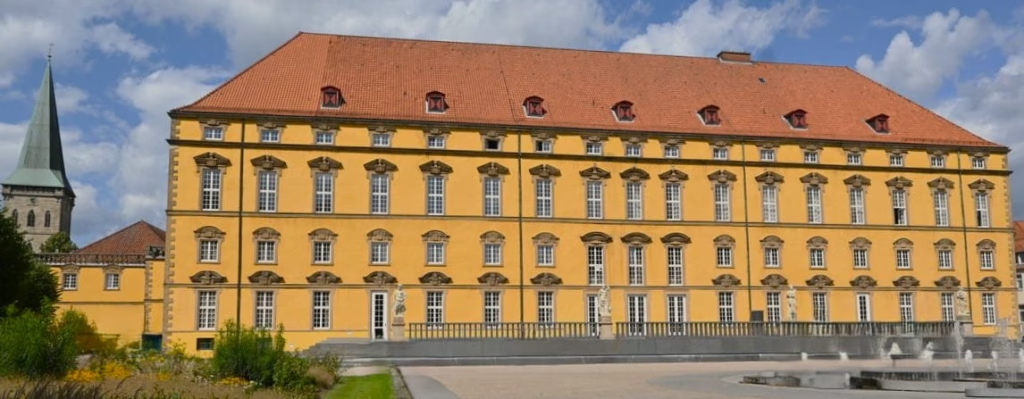
All too soon, Sunday morning arrived, my last day in this lovely city. I allowed myself a lazy start (one of those cozy hotel mornings where you linger over coffee and a German breakfast spread of breads, cheeses, and fruits). Checkout wasn’t until late morning, so I decided to squeeze in one more uniquely Osnabrück experience before catching my afternoon train home.I took a leisurely walk to the Osnabrück Castle, a Baroque palace that now houses the university. The gardens behind the castle practically begged for a stroll. I meandered through the manicured lawns and fountains of the Schlossgarten, watching students study under trees and elderly couples feed the ducks. The castle’s exterior, painted a cheery yellow, made for a great photo-op and the atmosphere was incredibly peaceful. It struck me that Osnabrück seamlessly blends youthful energy (thanks to the university) with a tranquil, almost meditative vibe. Not many cities can be vibrant and chill at the same time, but this one nails it.
With just an hour or two left, I returned to the Old Town for a final dose of its charm. Many shops were closed (note: in Germany, most stores shut on Sundays), which actually made the stroll even more enjoyable, the streets were quiet, almost all mine. I popped into Café am Markt, which was open and busy serving brunch. Snagging a seat by the window, I indulged in one more coffee and a waffle topped with fresh berries. Outside, the bells of nearby St. Mary’s tolled noon. I could see a few tourists gathering by the Town Hall, taking photos of the Peace of Westphalia plaque, but mostly it was locals out for Sunday walks with their dogs or grabbing ice cream with their kids.
Is Osnabrück worth visiting? Absolutely! Precisely because it isn’t overrun with tour buses and selfie sticks. It felt like a secret I was in on, a place where you can deeply engage rather than just “see and tick off” sights. Before heading to the station, I walked one last loop around the Market Square, now calm and sun-drenched. I found myself already feeling nostalgic about this city I hadn’t even left yet. In just three days, Osnabrück had given me exactly what I needed: a mix of inspiration, humor, history, and heart. From the emotional impact of the Felix Nussbaum Museum to the silly delight of indoor surfing, from rich historical lessons at the Peace Hall to laughing with locals over beers, this trip was the perfect reminder of why I love travel. It recharged my batteries and broadened my perspective, all without straying from that mid-budget comfort zone. I didn’t have to sacrifice good food or a nice bed to have an adventure here. Osnabrück proves that sometimes the best getaways are hiding in plain sight, away from the tourist traps.
Did I return? Absolutely! I spent the next seven years in this city, achieving my law degree and still think about this city with nostalgia. Which is why I ever so often return to my alma mater.
Travel Q&A: Planning Your Osnabrück Escape
Q: How do I get to Osnabrück?
A: Osnabrück is well-connected and easy to reach. By train: Direct trains run frequently, roughly 2.5 hours from Berlin (via Hanover) and about 30 minutes from Münster. It’s also on the international rail line between Amsterdam and Hamburg. I took a train from Hamburg and arrived in ~2 hours, relaxed and ready. By air: The nearest airport is Münster/Osnabrück (FMO), about 30 km away, with car rentals and shuttle buses available. Alternatively, fly into Düsseldorf or Hamburg and take a train. By car: Osnabrück lies at the intersection of major Autobahnen (A1 and A30), so driving is straightforward (about 1 hour from Bremen, 1.5 from Dortmund). Once in the city, you won’t really need a car, the center is compact.
Q: Can I do this trip over a long weekend?
A: Definitely! Osnabrück is perfect for a 3-day long weekend. I arrived on a Friday and left Sunday and felt I experienced a lot without rushing. It’s even doable in 2 days if you skip a few things, but three days lets you soak in the atmosphere, include a mix of history, culture and relaxation (as this itinerary shows). Many corporate professionals (myself included) use a Friday off to turn Osnabrück into an easy weekend getaway. It’s also a great add-on city if you’re traveling between bigger German destinations, a worthy stop that won’t eat up too much time but gives you ample memories. I even know some people that visit Osnabrück on daytrips from Bremen or even Cologne.
Q: When is the best time to visit Osnabrück?
A: I’d recommend late spring to early autumn for the best weather. April-June brings mild temperatures, blooming parks and the city’s famous May Week festival (if you enjoy street food and music, time your visit for that!). Summer is lovely and not overly crowded (students generally leave by Juli after graduation or for the semester break and return in September), you can dine outdoors on the market square terraces comfortably. Early fall (September) is also gorgeous, with autumn colors in the surrounding nature park. I visited in August for the first time after my admission letter and had sunny days around 23°C (73°F). Winter is chilly and quiet, but Osnabrück does host a magical Christmas Market worth seeing if you’re in the region during the holidays. Just bundle up and enjoy the lights and Glühwein in the historic square. Overall, there’s no bad time for this hidden gem, but fair weather lets you enjoy all the outdoor cafés and walking tours to the fullest.
Schloss Osnabrück
Q: Is Osnabrück solo-travel friendly?
A: Absolutely. I traveled solo and felt completely safe and welcomed. The city is medium-sized (~165,000 residents) with a laid-back, friendly vibe. Many locals speak English (and are eager to help if you need directions or recommendations). There are many international students in the city and overall it has a very relaxed campus feeling. As a solo traveler, I loved the ease of striking up conversations, whether at Café Kommode, in a brewery or during the night watchman tour (which I highly recommend for solo folks; you’ll inevitably chat with others carrying lanterns alongside you!). The city is well-lit and populated in the evenings, especially around the Old Town, so I was comfortable walking back to my hotel at night. For women traveling alone, Osnabrück feels as safe as it gets. Just watch yourself around the main station at night (that’s also where the red light district is located) and keep an overall watchfulness. In all of my seven years in the city I had one unsafe situation and luckily that was right around the corner from the district attorney and the police station. You’ll also find plenty of spots to enjoy your own company: quiet museum mornings, cozy reading nooks in cafés and benches in the Schlossgarten for journaling (or bring a blanket and join the students grilling there). It’s an ideal place to slow down and enjoy some “me time.”
Q: Where should I stay for comfort and convenience? Aim to stay in or near the Altstadt (Old Town) so you can walk everywhere. There are a few great mid-range hotels that balance comfort, style and location. I stayed at the Romantik Hotel Walhalla, a beautiful half-timbered inn right by the Market Square, it had modern amenities and a historic ambiance (and a fantastic breakfast!). Another solid choice is the Dom Hotel near the Cathedral, which is contemporary, comfortable and literally steps from the weekly market. If you prefer boutique design, look up Hotel Fraser (just an example; Osnabrück has several chic small hotels). All these options keep you central, meaning you can drop off your shopping bags or take an afternoon rest easily. Prices are moderate (I paid far less here than I would in bigger German cities for equivalent quality). For budget travelers, there are a couple of hostels and pensions, and for luxury seekers, a few upscale options with spa facilities on the outskirts. But truthfully, mid-range in the center hits the sweet spot, you’ll have the Old Town charm at your doorstep without sacrificing comfort.
Q: How do I get around the city?
A: On foot, mostly! Osnabrück’s main attractions are clustered in the city center and the Old Town is very walkable. I never once needed a taxi within the Altstadt. The cobblestone lanes are pedestrian-friendly (and you’ll keep stumbling on hidden gems by walking). For farther spots like the zoo or Piesberg, the city bus network is reliable, frequent and safe. A single ticket costs just a few euros. I used the bus to reach the Piesberg trailhead and it was a smooth 20-minute ride. If you enjoy cycling, the city also offers bike rentals and has decent bike lanes (Osnabrück is aiming to become a certified biking city) plus, biking is a fun way to explore the parks or along the Hase River that runs through town. Driving in the center isn’t necessary (and parking in those ancient streets can be tricky and pricey), so I’d suggest parking the car if you brought one and enjoying Osnabrück at a human pace.
Conclusion: Don’t Wait, Osnabrück Awaits You!
Leaving Osnabrück after finishing uni, I felt a mix of contentment and nostalgia. Content from the wonderful experiences I’d collected and nostalgia because I’d found a home in this city that I am going to miss, but also happy I can share it with others. This city proved that a place doesn’t have to be famous to be extraordinary. In fact, its very under-the-radar status is part of the charm. Osnabrück let me slow down, learn, laugh and rejuvenate, all in one short trip and by living here. If you’re dreaming of a getaway that balances inspiring history, friendly vibes, a touch of humor and plenty of comfort, Osnabrück is calling your name. So, what are you waiting for? Life is busy and the “right time” to travel might never announce itself, make the time. Plan that long weekend, go experience this hidden gem of Germany and create your own story in the City of Peace. I promise you’ll come back not only with beautiful photos, but with a refreshed spirit and maybe a few new friends (and definitely a box of Leysieffer chocolates!).
Don’t miss out on more offbeat travel inspiration! Subscribe to my newsletter for practical guides and heartfelt tales that fit into a real working person’s schedule. And before your next adventure, check out our related articles on other hidden gems in Germany and Europe, your perfect trip might be closer than you think. Travel well, travel often and remember: sometimes the lesser-known path leads to the most unforgettable destinations.
Cheers to your next journey, perhaps it’ll be Osnabrück! 🌟
Only have a day in Athens? Don’t worry, this compact city packs ancient grandeur, artistic soul and Mediterranean charm into a walkable experience. Whether it’s a layover, cruise stop, or your first taste of Greece, this 24-hour itinerary blends iconic sights with hidden gems and authentic moments.
Here’s how to see the best of Athens in one incredible day, without feeling rushed:
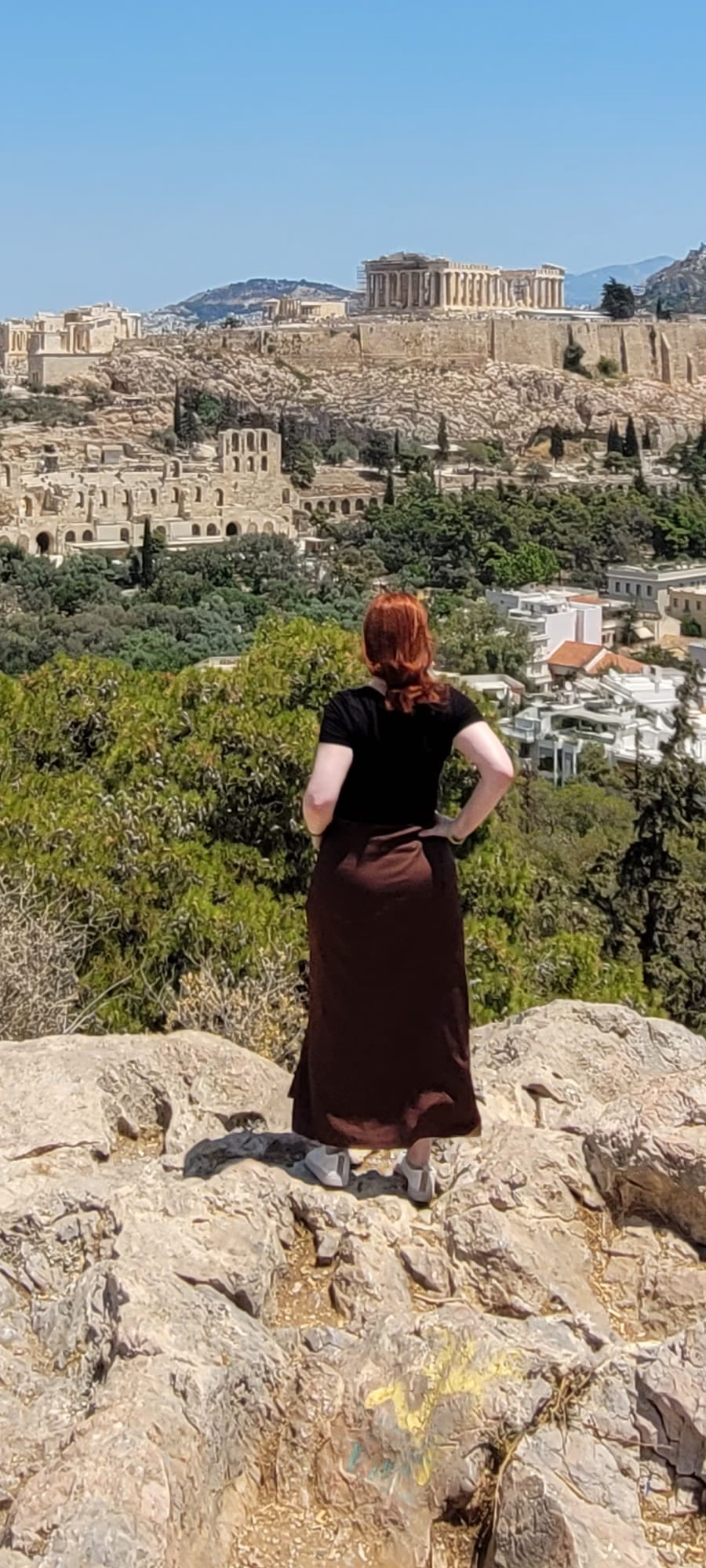
🌅 7:30 AM – Sunrise at the Areopagus Hill (Mars Hill)
Why start here: Skip the Acropolis crowd and greet the day with a golden view of the Parthenon and the city waking up. This free hilltop spot is just below the Acropolis entrance and perfect for peaceful photos. Bring coffee and breakfast pastry from a nearby bakery. Wear shoes with grip – marble rocks get slippery.
🏛️ 8:30 AM – Explore the Acropolis
Arrive early to beat the tour groups and the heat. The Acropolis opens at 8:00 AM and it’s magical in the morning light. Must-sees: The Parthenon (iconic temple of Athena), the Erechtheion with its graceful Caryatids, panoramic city views. 🧠 Tip: Buy a combo ticket online (€30) that also includes the Ancient Agora, Roman Agora and more, valid for 5 days. 📸 Don’t linger too long here, you have a lot more to see!
🏛️ 10:00 AM – Acropolis Museum
Just a few minutes‘ walk from the ruins, this award-winning modern museum adds context and beauty to what you just saw. Budget: ~1–1.5 hours. Great bathrooms, AC and a peaceful rooftop café. Don’t miss the glass floor over ancient ruins. 🎟️ Entry: €15 in high season / €10 in low season.
☕ 11:30 AM – Coffee Break in Koukaki
Head to the leafy neighborhood of Koukaki, just south of the Acropolis but far quieter than Plaka. Try a freddo espresso or traditional Greek coffee. Café picks: Little Tree Books & Coffee or Lotte Café-Bistro for cozy vibes 🧠 Bonus: Pick up a handmade notebook or Greek poetry book while you sip.
🏘️ 12:30 PM – Wander Anafiotika & Plaka
This is Old Athens at its dreamiest, whitewashed houses, blue shutters, winding alleys, and flowering vines. You’ll feel like you’ve left the city and entered a Cycladic island. Start at Anafiotika, hidden behind the Acropolis slopes. Meander down into Plaka for neoclassical buildings, artisan shops and postcard-perfect streets 🎁 Souvenir tip: Look for handmade leather sandals or small-batch olive oil.
🥙 1:30 PM – Light Lunch at a Garden Courtyard
While we’re avoiding food content in-depth, aim for something quick, fresh and in a shady spot to refuel. Neighborhood suggestion: Psyrri for local character and fewer tourists. Eat light so you stay energized for the afternoon.
🏛️ 2:30 PM – Ancient Agora
Often overlooked, this was the true heart of Ancient Athens, a lively space where Socrates once debated and citizens voted. Highlights: Stoa of Attalos (now a museum), Temple of Hephaestus (incredible preservation), shady olive trees and wildflowers in spring 🎟️ Combo ticket from the Acropolis covers entry.
Temple of Hephaestus from above
🛍️ 4:00 PM – Flea Market + Local Finds in Monastiraki
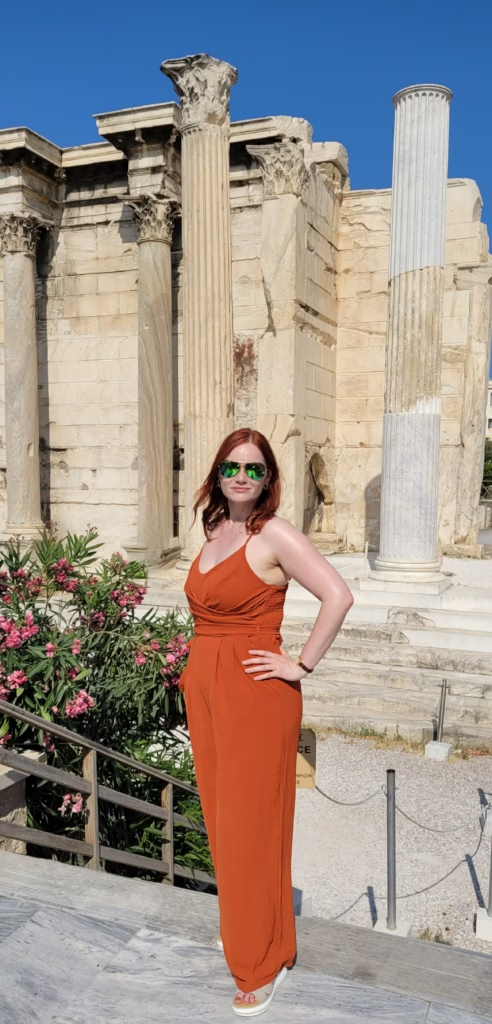
Browse vintage books, quirky souvenirs and antiques in the buzzing Monastiraki Flea Market. You’ll find everything from orthodox icons to vinyl records. Visit Hadrian’s Library ruins next door. Grab a snack or drink from a street vendor (local fruit or koulouri ring). It’s a great place to people-watch and soak up energy.
Hadrian’s library
🌇 6:00 PM – Sunset Viewpoint: Lycabettus Hill or Philopappos Hill
You have two dreamy sunset options: 1. Lycabettus Hill (highest point in Athens). Take the funicular or hike (~20–30 min). Epic city views, especially of the Parthenon lit up. 2. Philopappos Hill (near the Acropolis). Quieter, romantic ruins, easier walk. Ideal if you’re short on time or energy. Bring a small bottle of wine or just sit and reflect as Athens glows golden and the city lights begin to flicker.
🌙 8:00 PM – Stroll Through Lit-Up Plaka
Even if you don’t dine here, Plaka by night is magical. Bougainvillea climbs the walls, soft music floats from cafés and the Parthenon glows above you. Snap a photo from Lysikratous Street. Enjoy a final walk or pop into a quiet bookshop or boutique.
✈️ Leaving or Staying? If you’re catching a night flight, book a cab via Beat or take Metro Line 3 to the airport (last train departs ~11:30 PM). If you’re staying another night, wind down with a drink at a rooftop bar like A for Athens or Couleur Locale.
🧭 Final tips for 24 Hours in Athens. Wear grippy shoes (you’ll thank yourself). Stay hydrated (bring a refillable water bottle). Avoid overplanning, give yourself space to wander and feel the city
I used to think I had to choose between my career and my passport. Between moving up and moving on. But once I learned how to work with my 9 to 5 not against it, I realized I could travel more than I ever imagined. Not luxury. Not backpacker budget. Just smart, mid-budget trips that felt good, looked great, and didn’t leave me broke or burned out.
Here are 7 practical, tested, corporate-girly-approved travel hacks that help me travel consistently, while still showing up in the office like a boss.
1. I Anchor Trips Around Holidays and Fridays
I call it my “golden PTO rule. ”Book a 3-day trip by using only 1 day off, ideally a Friday (that’s a short work day for me) and anchor it to a holiday weekend or quiet work period. I’ve traveled across Europe with just a long weekend and a bit of planning magic.
2. I Stay in Boutique Hotels, But I Book Creatively
No bland chains. No backpacker bunk beds.I look for smaller, locally-owned hotels that feel aesthetic but cost less.
Pro tip? Booking.com’s “secret deals” and direct emails often beat the big platforms if you’re on their list.
3. I Pack a Carry-On Only
Always. It saves time, stress, and money. But also? It forces me to get intentional. I rotate capsule pieces, wear my heaviest item on the plane and always bring a scarf. It doubles as a pillow, wrap, or style piece.
(Need help packing? I may or may not have written a blog post about packing a capsule wardrobe for different adventures.)
4. I Plan Early – But Not Too Early
Flights are often cheapest 6–8 weeks out for short-haul trips. Planning too early locks you in; waiting too long gets expensive. I set flight alerts, then book when prices dip. But don’t wait too long. If you’re unlucky – and it happens in the „book as cheap as possible“ game, prices only rise. Unfortunately you need to be quite flexible in dates and destinations to find the biggest deals. But it is also a fun experience, as I found destinations that hadn’t been on my radar yet that way.
5. I Batch Content + Memories
If you’re also creating content: I shoot everything in batches on day 1 or 2. If I am on the road I only shoot in little blogs or get some content in and then lose the camera. That way I can be fully present the rest of the trip. Plus, it gives me a whole photo bank for later storytelling. Because as much as I love to bring a destination alive in a blog post or on instagram, I also want to enjoy the trip.
And we are not talking about collaborations here. Just so you know.
6. I Use Google Maps Like a Vision Board
Before each trip, I create a custom map and drop pins on cafés, bookstores, and scenic walks. It keeps me from overplanning, but I always have dreamy options nearby. It also helps plan little side quests along the road to hopefully find some hidden gems. It really pays off to look into the side streets along your way.
7. I Treat Travel As Self-Investment – Not a Luxury
Mindset matters. Once I stopped treating travel like a splurge and started treating it like something I deserve, as rest, discovery, and self-expansion, I found more ways to make it happen.
Want to Steal My Travel Systems? I post travel tips and tricks, as well as hidden gems destinations twice a week here and even more often on instagram. Make sure to follow, so you don’t miss a thing.
Can’t get enough? Make sure to subscribe to my newsletter, be the first to know about new travel hacks and destinations and bring your travel dream into reality.
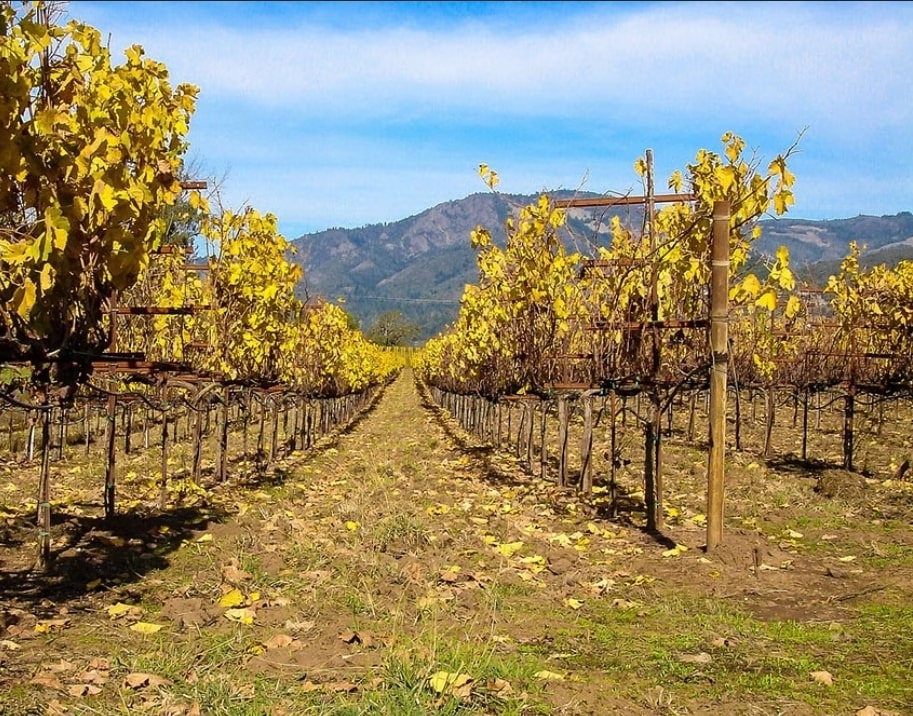
Let me tell you about the moment I fell head-over-heels for wine season. It was a chilly September evening in Föhr; my carry-on was 90% knitwear, 10% snacks, and I swear the air literally smelled like grapes and toasted barrels. I’d just swapped my laptop for a tasting glass and boom – the calendar girl inside me (hi, corporate girly 👋) realized: harvest season is the perfect time to travel. Vineyards are buzzing, cellar doors are open, and the energy? Amazing. Also: there are so many smart ways to book tastings and tours online for less than the sticker price. Your PTO can stay intact, and your bank account won’t cry into a Merlot.
If you’re 30–45, travel-curious, and allergic to wasting time or money, this is your sign. Below you’ll find ready-to-book wine travel itineraries (US + Europe), both self-guided and organized tours, plus a booking playbook to keep things mid-budget and stress-free. Sprinkle in a few “WTF, why didn’t I know this?!” tips and you’ve got the loveliest harvest game plan.
This post contains affilitate links. By clicking on them I may earn a small commission to no extra cost to you. Affiliate links are marked with „*“.
What “Wine Season” Actually Means (so you can plan PTO like a pro)
Northern Hemisphere harvest runs roughly late August to October, peaking through September (give or take by region, grape, and weather). Vineyards are alive, tasting rooms are fun (sometimes packed)and special events pop up everywhere. Think grape-stomping, cellar dinners, fall festivals, and limited harvest tours.
Why go now?
You’ll see the real behind-the-scenes: sorting tables, full presses, and the glorious chaos that makes your favorite Pinot happen.
Seasonal events = unique experiences you can’t replicate in spring.
Shoulder-season perks on flights and stays (especially midweek). Cool.
How to keep the trip mid-budget:
Travel Sun – Thu when prices dip.
Book combo passes (more on that below) for built-in discounts.
Mix one guided day (no driving, tastings included) with DIY days (pay per tasting, split a flight).
The “Book-It-Now” Harvest Itineraries
Short, decisive, PTO-friendly. Each includes a guided day you can book online plus self-guided suggestions you can reserve directly.
PSA for first-timers: tours sell out for harvest weekends. If a Saturday is non-negotiable, book that guided day first, then hang everything else around it.
EUROPE
1) Porto & Douro Valley (Portugal) 3 Days of Gold Terraces, Boats & Port
Day 1 – Porto warm-up Rabelo boats on the river, walk the Ribeira, pop into a lodge in Vila Nova de Gaia for an intro Port tasting (many do bookable mini-flights). Early night; you’ve got vines in the morning.
Day 2 – Guided Douro day (no driving, big views) Book a small-group Douro Valley tour that includes two wineries, lunch, and a short river cruise. You’ll get logistics handled and tastings bundled = mid-budget sweet spot.
My pick: Small-group Douro tour with lunch & cruise (typical from ~€125–€150). Bookable online.
Day 1 – Reims Cathedral ➝ family-run grower tasting ➝ grand house tour. Book an afternoon small-group Champagne tour starting from Reims if you’d like a driver + curated stops.
Day 2 – Épernay Stroll Avenue de Champagne, tour a prestige house (Moët et Chandon’s cellars are classic). Many vendors run day trips or half-days you can reserve in a tap. GetYourGuide*
Pass hack: Grab the Reims–Épernay City Pass (48h or 72h) for unlimited transport, museum entries, and discounts on Champagne experiences. Great value if you’re hopping between the two hubs. Prices typically start ~€30 for 48h. Book it online before you go.
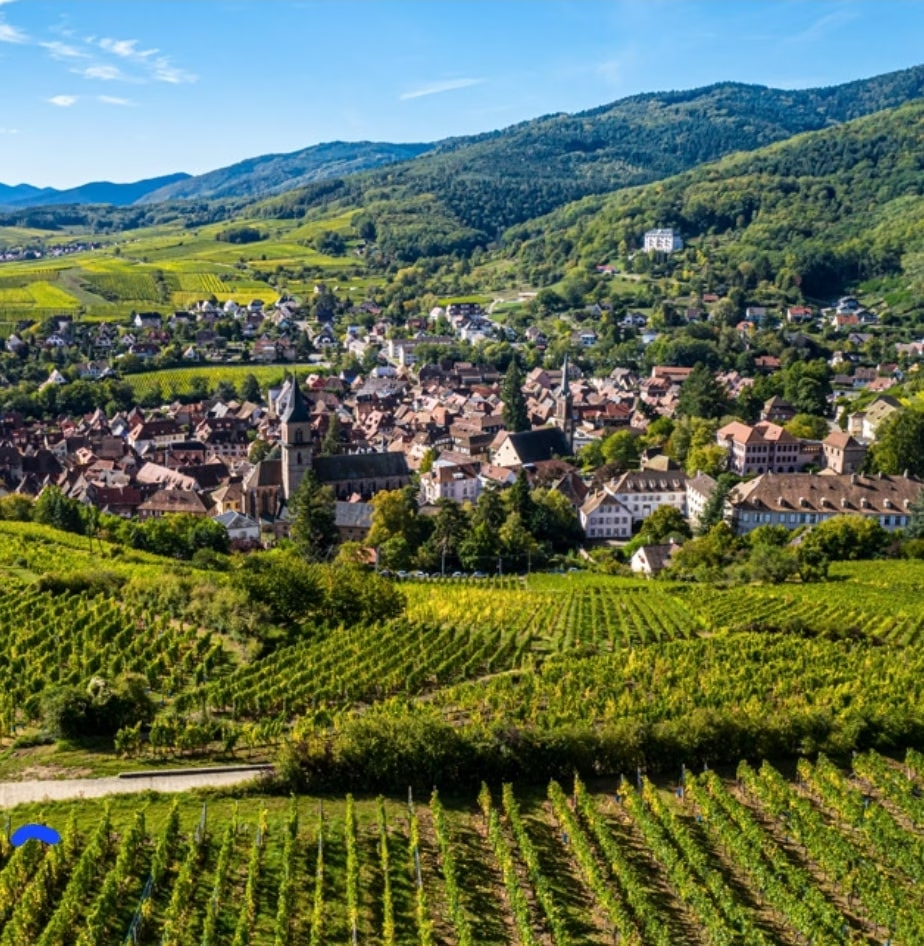
3) Alsace Wine Route (Colmar base), France 2–3 Days of Half-Timbered Fairytale & Riesling
Day 1 – Storybook villages Colmar ➝ Eguisheim ➝ Riquewihr. Keep tastings light and walkable.
Day 2 – Guided half-day to 2–3 villages + cellar Book a half-day wine route tour from Colmar, driver, tastings, and distilled highlights. Very time-efficient and mid-budget.
Optional Day 3 – Strasbourg or more cellars Pick a favorite village and go deeper. (Alsace in autumn is lovely.)
4) Bordeaux City & Left/Right Bank, France 3 Days for Museum + Medoc/Graves Tastings
Day 1 – Bordeaux city & Cité du Vin Visit La Cité du Vin and sip the panorama from the belvedere. Money move: buy the Bordeaux CityPass. It includes Cité du Vin entry, museums, and a city tour option.
Day 2 – Medoc (guided) Book a half-day with 2 châteaux + transport (easy online). Evening on the Garonne.
Day 3 – Graves/Sauternes or St-Émilion Another guided hop, or rent a car for a short DIY day.
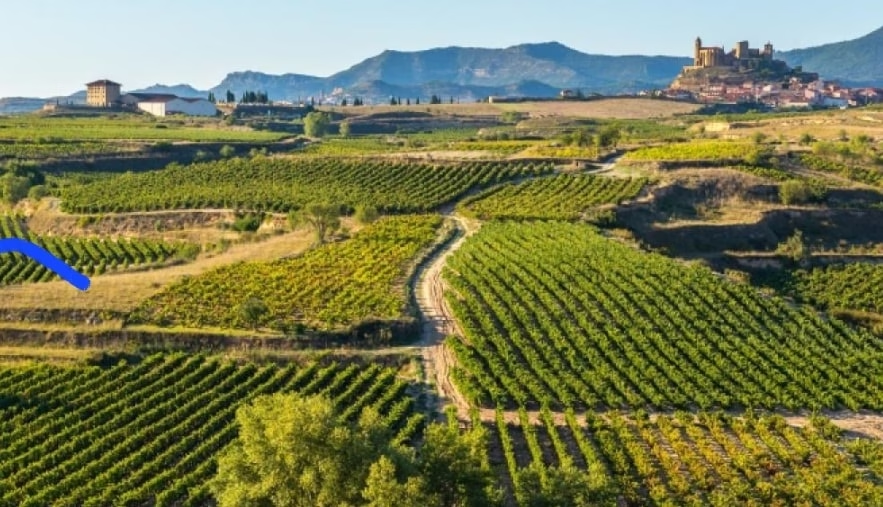
5) La Rioja (Spain) 2–3 Days + an Iconic Harvest Festival
Day 1 – Logroño tapas crawl Check into Logroño and do a pintxos-and-crianza stroll down Calle Laurel.
Day 2 – Guided wineries If you’re not renting a car, choose a Ribera del Duero or Rioja day tour (both bookable from major cities). From Madrid, Ribera day trips visit 2–3 wineries with tastings included. Rioja-only outfits also run private/small-group days ex-Bilbao/San Sebastián.
Bonus timing: San Mateo / Rioja Wine Harvest Festival in Logroño runs September 20–26, 2025: grape-stomping, parades, and that festive, only-in-harvest atmosphere. Aim your PTO if you love lively.
Day 1 – Chianti Classico lanes Base in Greve/Radda/Castellina. One pre-booked tasting in the late afternoon.
Day 2 – Harvest experience Book a vendemmia (grape harvest) day. Some estates include grape-stomping + lunch + guided tasting. It’s theatrical in the best way and 100% core-memory material.
Day 3 – Brunello or San Gimignano whites Choose your vibe and line up 1–2 pre-booked tastings.
7) Mosel & German Wine Route (Germany) 2–3 Days of Riesling River Magic + Festivals
Mosel (Cochem base) Book a castle + boat + wine combo day from Cochem for a tidy, car-free harvest sampler (guided castle visit, river cruise, and tasting tray). Add a second day for slow village hopping.
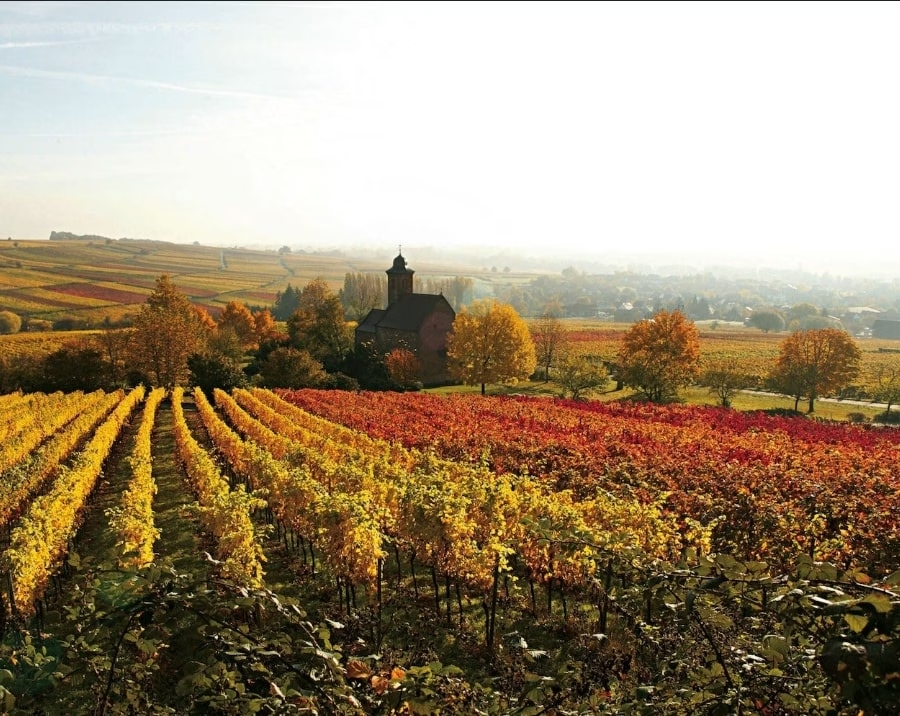
Deutsche Weinstraße (Neustadt/Bad Dürkheim) Harvest in the Palatinate means huge festivals. Think Bad Dürkheim Wurstmarkt (two weekends in September) and Neustadt’s Deutsches Weinlesefest (Sept 26–Oct 13, 2025). If you love live bands + Federweißer + parade confetti, build a weekend around them. Official city and state listings confirm dates and details. Happy to Wander
8) Willamette Valley (Oregon) 3 Days of Pinot & a Passport
Day 1 – McMinnville/Dundee base Check in, sunset tasting flight within walking/Uber distance.
Day 2 – Guided north valley Book a small-group Willamette day tour (driver + curated Pinot line-ups). Then dinner in Newberg, early night.
Day 3 – DIY with a tasting passport The Heart of Willamette Wine Passport (digital) runs $45 (two for $80) and gets you tasting deals across ~19 participants, super handy for a budget-savvy DIY day (note: passports are region-specific; buy the one that matches your route). visitcorvallis.com
Did you try this? If you’ll roam broader Oregon regions, the Oregon Wine Passport also lists comp tastings/discounts statewide, a nice discovery tool when you’re driving between hubs. Oregon Wine Reserve
9) Finger Lakes (New York) 3 Days + Two Money-Saving Passes
Day 1 – Keuka Lake Self-drive loop, lake views, pre-booked tastings spaced with café stops.
Day 2 – Canandaigua Lake Grab the Canandaigua Lake Wine Trail Passport (digital), typically about $60 for ~$95 in value, with pre-paid tastings and extra bottle discounts. Lovely for hopping without pulling out your wallet every stop.
Day 3 – More Keuka with a tasting passport The Keuka Wine Trail Tasting Passport bundles pre-paid tastings at six member wineries + bottle discounts. Ideal if you’re basing around Hammondsport or Penn Yan.
10) Paso Robles (California) 2–3 Days, Big Value via 2-for-1s
Day 1 – Westside scenic sips Start slow, book a late-afternoon flight.
Day 2 – Passport hack day The Priority Wine Pass frequently includes 2-for-1 tastings and discounts at Paso wineries (and beyond), which is fantastic for couples/friends splitting tastings. Several Paso guides track current two-for-ones, savings add up fast in harvest. Paso Winery GuidePriority Wine Pass
Day 3 – Picnic + one splurge Choose one appointment-only winery for a special tasting, picnic at a viewpoint, and call it a win.
11) Napa & Sonoma (California) 3 Days, Classic But Smarter
Day 1 – Sonoma Valley Start in Glen Ellen/Kenwood for gentler crowds. Late-day flight.
Day 2 – Calistoga/Upper Napa with a pass Use Priority Wine Pass for 2-for-1s (for example, Sterling offers a 2-for-1 on the Stroll Experience via the pass, savings like this keep a polished day mid-budget). Priority Wine Pass
Day 3 – Healdsburg or Carneros Art-meets-wine tasting rooms, a long lunch, lazy flight home.
WTF moment: tasting fees can hit €/$40–$80 per person at premium estates. A 2-for-1 knocks that in half immediately—without sacrificing the quality of the experience. Priority Wine Pass
Where & How to Book Online (for Less Than the Sticker Price)
Here’s the playbook I use to keep things mid-budget and smooth:
Use regional/city passes
Bordeaux CityPass → includes Cité du Vin entry + museums + a city tour option; lowers your overall cost if you’re doing culture + tastings. visiter-bordeaux.combordeaux-tourism.co.uk
Reims–Épernay Pass → unlimited local transport + museum entries + discounts on Champagne tours; great for 48–72h bubble breaks. reims-tourisme.com Epernay
Finger Lakes: Canandaigua Wine Trail Passport (approx $60 for $95 value) + Keuka Wine Trail Tasting Passport (pre-paid tastings at six wineries). Canandaigua Lake Wine Trail keukawinetrail.com
Stack “2-for-1” tasting passes
Priority Wine Pass (Napa/Sonoma/Paso & beyond): widespread 2-for-1 or 50% off tastings and periodic free tastings—enormous value in harvest season. Check offers for your exact dates. Priority Wine Pass
Book 1 guided day / 1-2 DIY days
Guided days I love for harvest:
Douro small-group tour (two estates + river cruise + lunch). Viator
Champagne small-group afternoon from Reims. GetYourGuide*
Alsace half-day wine route from Colmar. GetYourGuide*
Ribera del Duero 3-winery day from Madrid. GetYourGuide*
DIY days: use the passports/passes above and pre-book 2–3 tastings max. Leave buffers. Your future self will thank you.
Time your trip with a harvest fest (and book early)
Rioja San Mateo: Sept 20–26, 2025 in Logroño. Spanien.info
Midweek tastings are calmer and sometimes cheaper.
Consider wine club perks if you genuinely want ongoing bottles—many clubs include complimentary tastings or guest passes at their tasting rooms (example perks from wineries like Northstar show discounts and guest passes; always check the benefits at the winery you’re visiting). northstarwinery.com
Micro-Itineraries You Can Copy-Paste Into Your Calendar
Champagne 48 hours (no car needed)
Day 1: Arrive Reims → Cathedral → Afternoon small-group tour (2 producers). GetYourGuide*
Day 2: Train to Épernay (covered on some Reims-Épernay passes), tour a prestige house, Avenue de Champagne stroll → late train back. reims-tourisme.com
Douro 2 days from Porto
Day 1: Guided Douro valley day with 2 estates + lunch + cruise. Viator
Day 2: Vila Nova de Gaia lodge tastings, sunset by the river.
Alsace 2 days from Colmar
Day 1: Half-day wine route tour (villages + cellar). GetYourGuide*
Day 2: DIY: Eguisheim stroll, family cellar, tarte flambée, soft roll back to Colmar.
Willamette 3 days (fly into PDX)
Day 1: Newberg/Dundee check-in, sunset tasting.
Day 2: Guided day (driver saves you) + dinner in McMinnville.
Day 3: DIY using Heart of Willamette Passport to stretch your budget. visitcorvallis.com
Day 3: Hammondsport brunch → lake views → one last flight.
How to Turn These Into “Under the Sticker Price” Bookings
Step 1: Pick your hub + dates. Step 2: Buy the relevant city/wine pass first (it may include transit or museum entries you were going to buy anyway). Examples: Bordeaux CityPass, Reims-Épernay Pass, Heart of Willamette Passport. visiter-bordeaux.com reims-tourisme.com visitcorvallis.com Step 3: Choose one guided day (link above) for logistics + tastings included. Step 4: Fill remaining days with 2–3 pre-booked tastings; layer a 2-for-1 tasting pass (Priority Wine Pass) where it works. Priority Wine Pass Step 5: Keep one “wildcard” slot open. Harvest magic happens.
Harvest Packing & Etiquette (because you’re classy but comfy)
Shoes you can walk in (vineyards = uneven ground).
Layers (mornings crisp, afternoons warm).
Snack base + water (highly underrated money saver).
App slots on your phone + pass QR codes + tour vouchers downloaded.
Tasting etiquette: Don’t chug (obviously), spit cups exist, be honest about your preferences, and tip if you received table service or a hosted experience (varies by region).
Driving: If you’re driving, book morning tours, then do one DIY tasting later or alternate designated drivers. Even better: group tour days = everyone sips, nobody stresses.
Quick “Book It” Buttons (organic picks I genuinely like)
Douro Valley small-group: 2 wineries + lunch + river cruise. A reliable, no-stress harvest day. Viator
Champagne small-group (Reims): Grower focus + Dom Pérignon church stop; afternoon timing is chef’s kiss for train arrivals. GetYourGuide*
Ribera del Duero (Madrid pick-up): 3 wineries, classic cast-iron reds, no car needed. GetYourGuide*
Priority Wine Pass (CA/WA/OR): Broad 2-for-1 coverage; can halve tasting costs for two—especially clutch in Napa/Sonoma/Paso. Priority Wine Pass
(Prices and availability change, always check your dates on the booking page.)
Q&A: Your Top Harvest Questions Answered
1) When’s the best month to go? September is the sweet spot for most of Europe and the US, with festivals and crush in full swing. If you hate crowds, aim early September midweek or the first half of October (weather permitting). For festivals, target specific dates like San Mateo in Logroño (Sept 20–26, 2025) or Neustadt’s Weinlesefest (Sept 26–Oct 13, 2025). Spanien.info Neustadt
2) Do I need a car? Not necessarily. A guided day tour covers distance + multiple tastings safely (Douro, Champagne, Alsace, Ribera all have strong options). Then add a car-free day in the city or one village cluster you can do on foot/Uber. Viator GetYourGuide
3) How do I ship wine home without tears? Ask wineries about licensed shipping to your state/country (varies by destination). Otherwise, pack a wine shipper or padded sleeves in your checked bag. Keep receipts for customs if needed. If you travel carry-on only, ask for a 100 ml bottle. Many wineyards offer them especially for that reason.
4) Are tasting fees ever waived? Often they’re waived with a bottle purchase (policy varies). Some wineries offer club member perks like comp tastings or guest passes—worth it if you love their wines and plan to order throughout the year. northstarwinery.com
5) What’s a realistic daily tasting pace? 2–3 stops/day is plenty in harvest. Give yourself travel + snack buffers. Your palate (and PTO energy) will thank you.
Final Sips
Travel during wine season hits differently. You’re not just “tasting”—you’re stepping into the annual heartbeat of a region. Do one guided day to learn, one DIY day to linger, and stitch in a pass or two to keep the budget cute. It’s simple, it’s smart, it’s—dare I say—super chic.
If this made you crave a harvest escape, subscribe to my newsletter for weekly PTO-friendly travel plans (and my mid-budget luxury hacks that magically appear right when you need them). Want me to tailor a harvest itinerary to your dates, vibe, and budget? DM me on Instagram—let’s plan something lovely.
Go on. Book the bubbles. Book the boat. Book the Barolo. Your future self will clink a glass to this. 🍷
Vienna is a city that doesn’t whisper its history, it sings it in operatic tones. As a lover of slow travel, quiet cafés, and stories etched into architecture, I fell for Vienna. Not in the grand palaces (though yes, they’re stunning and I love them!) but in the spaces in between: the scent of old paper in a 19th-century library, the click of my boots on cobbled paths in the Museum Quarter, the soft glow of a chandelier above my coffee.
This 3-day Vienna itinerary is for the romantic, the reader, the detail-observer. For those of us who like our cities with a side of melancholy beauty – and a touch of Dark Academia.
Day 1: Classical Beginnings + Candlelight Café Corners
Morning: Imperial Vienna
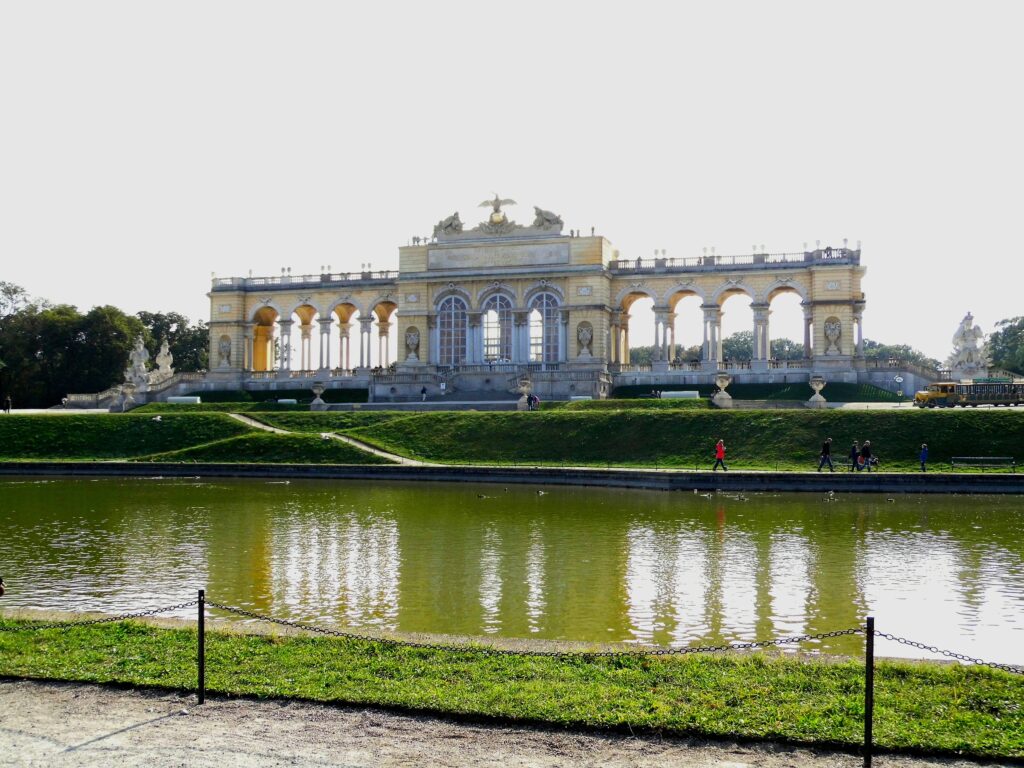
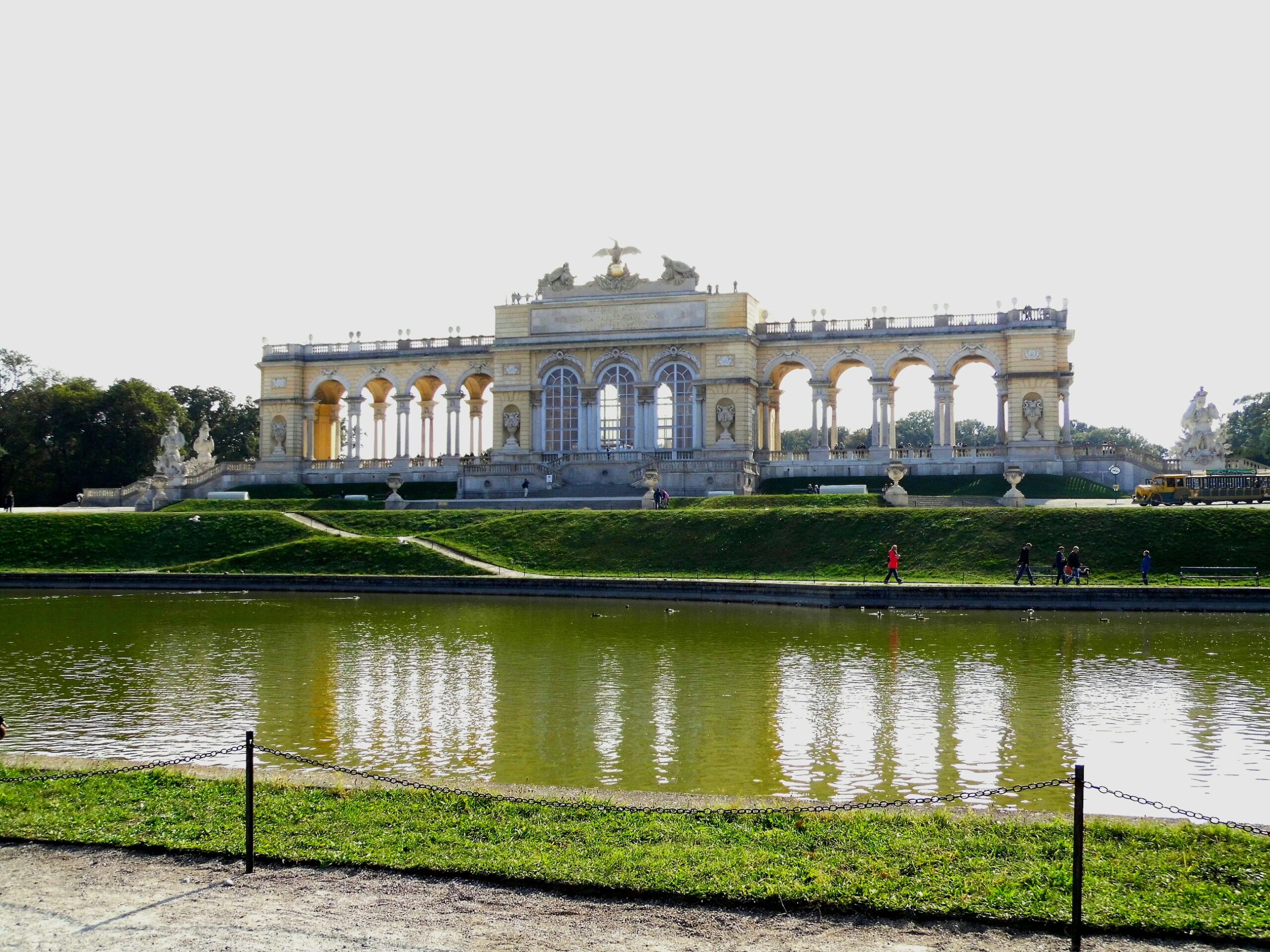
Start at Schönbrunn Palace, but go early. Let the grandeur greet you with quiet. Walk through the gardens with coffee in hand and imagine the whispered conversations of the Habsburg court.
Afternoon: Coffeehouse Culture
Find your way to one of the many beautiful cafés, order an Einspänner (espresso with whipped cream) and bring a book. This was a favorite of Trotsky and Freu and if you sit long enough, you’ll see why.
Evening: Candlelit Stroll & Opera House
Walk through the Innere Stadt and end your night at the Vienna State Opera. Even if you don’t book tickets, just standing in front of it at night feels like you’re in a scene from a novel. If the opera isn’t for you, go for a theatre play or a musical. It’ll be a blast.
Day 2: Museums, Manuscripts & Melancholy Beauty
Morning: Art + Silence
Visit the Kunsthistorisches Museum for oil paintings that look like they could blink. Don’t rush. Let Caravaggio hold your gaze. If you’re not into art, Vienna is full of museums and there’s something for every taste. I liked the Militärgeschichtliches Museum as well as the Kriminalmuseum.
Afternoon: The National Library
This is the heart of the Dark Academia dream. The Austrian National Library is breathtaking, wood-paneled, gold-lined, and full of forgotten knowledge. It’s the kind of place that makes you write poetry in your Notes app. Head into the Hofburg for a visit to the Sisi museum, it’s a personal favourite of mine. I went there’s twice already.
Evening: Wine & Words
Dinner in Spittelberg, followed by a glass of Grüner Veltliner at a candlelit wine bar. Bonus points if you journal about it.
Day 3: Romantic Decay + Rooftop Views
Morning: Belvedere & Klimt
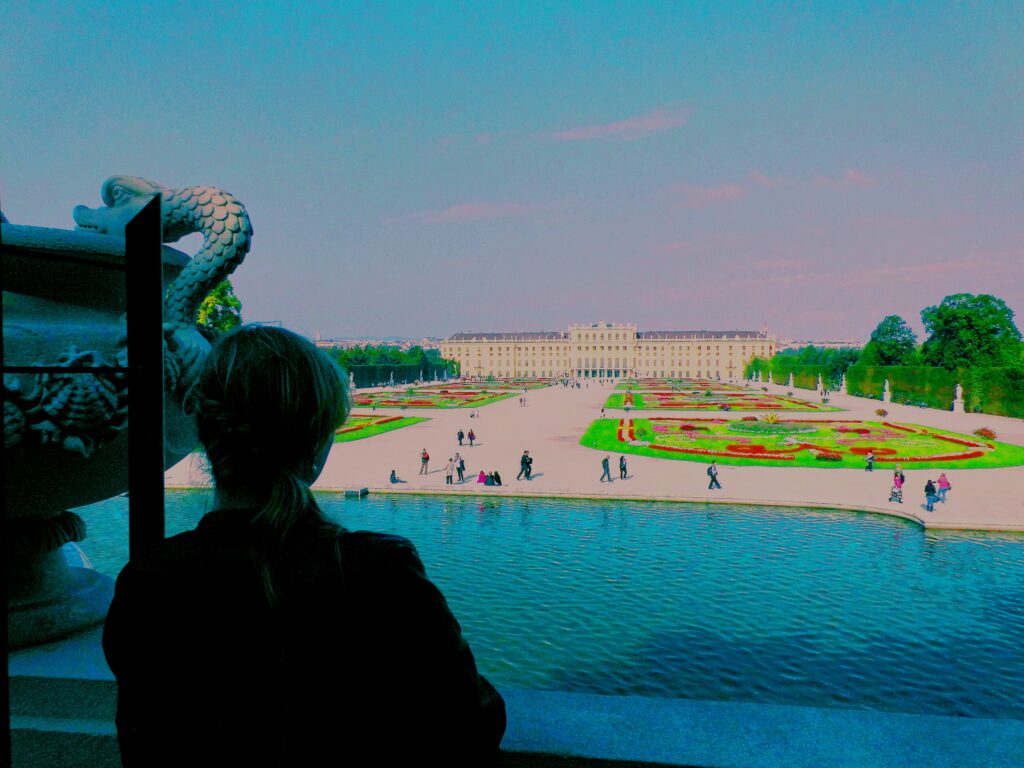
Yes, The Kiss is here. But the real magic is how the rooms echo with the slow hush of visitors falling in love with Austrian art.
Again, if you’re not into art, visit the Spanische Hofreitschule and watch them work the beautiful Lippizaner in the morning. Afterwards head to the gardens of Belvedere.
Afternoon: Walk the Ringstrasse
Loop the city’s most beautiful buildings: Parliament, City Hall, the University. You’ll feel like you’re in a 19th-century academic’s dream. You don’t even have to enter a single one of them for the feeling.
Head for the Stephans Dom, soak in the beautiful interior and head into the crypts for a glimpse into a darker past of Vienna.
Evening: Rooftop Farewell
End with a view. Head to Das Loft or Sky Bar for a dusk-lit panorama of Vienna. Bring a coat. Stay awhile.
Before You Go:
Vienna is the kind of place that lingers. It’s not about the checklist, it’s about how it feels. How the past walks with you. How the candlelight flickers against stone walls. If you’re craving a trip that feeds both intellect and soul, this city is your next love affair. And its a city you can explore again and again and keep finding new corners, new cafés and new delights.
If you liked this post, make sure to subscribe to my newsletter so you don’t miss my weekly tips and tricks for smarter travel.
A PTO-Friendly Weekend in Dublin: 2.5 Days of Craic, Coffee & Culture
I had exactly 2.5 days in Dublin and exactly one single day of PTO to make it happen. And somehow? It was perfect. If you’re a corporate girly (or guy) who wants a fun, low-stress, mid-budget city break that delivers history, pub culture, and literary charm in a compact, walkable package… Dublin is about to be your new favorite fling. Small in size, rich in soul, and the kind of place that makes you feel instantly part of the story, Dublin will serve you cozy vibes, witty banter, and a pint of something dark faster than you can say sláinte.
Here’s my exact long weekend itinerary (plus a few things I’d 100% skip next time).
This post contains Affiliate-Links meaning by you clicking on them, I may earn a small commission. Links are marked as „*“.
🗓 My 2.5-Day Dublin Itinerary (PTO-Friendly Edition)
Day 1 – Friday PM: Arrival & First Impressions
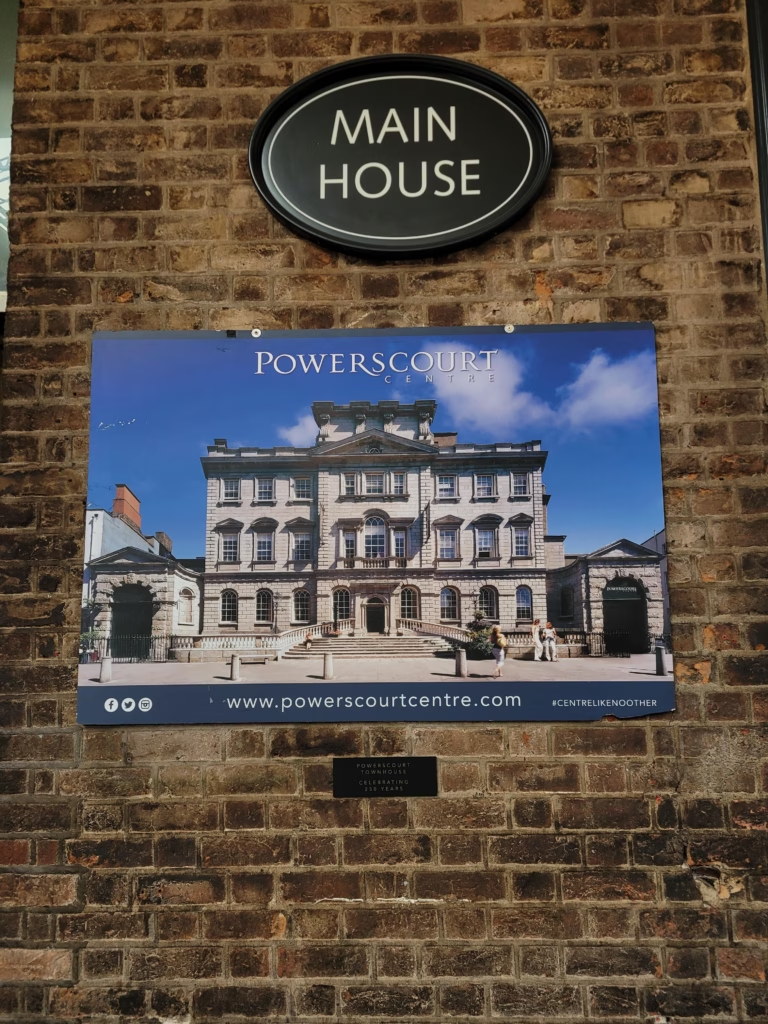
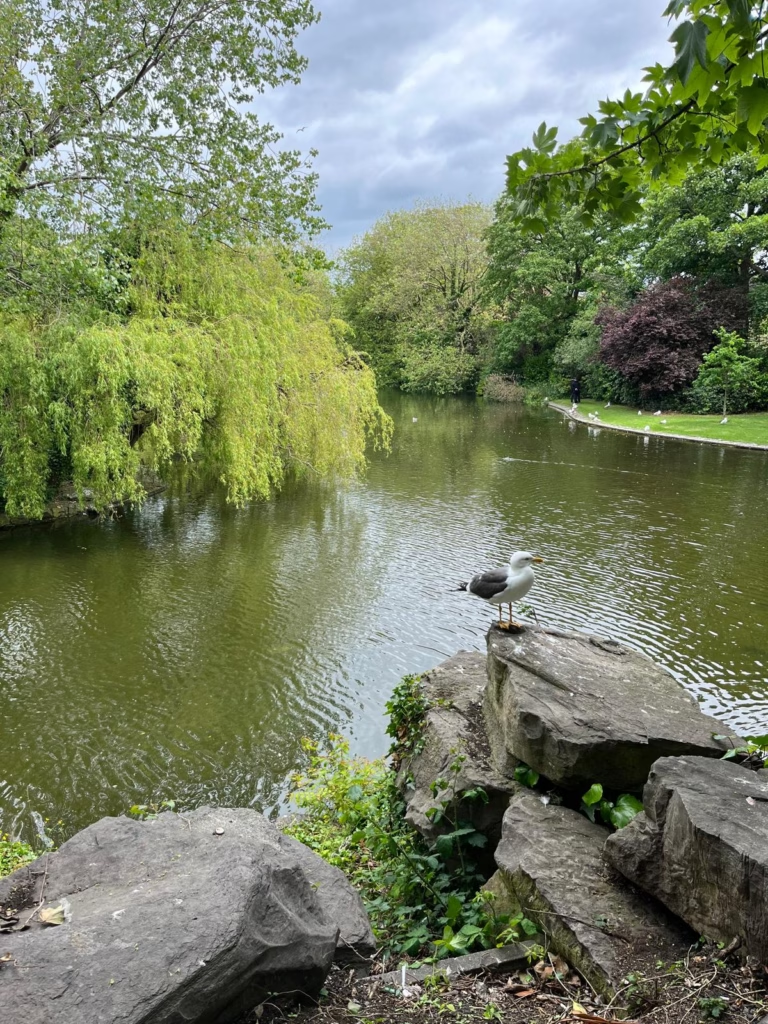
Land around midday and hop on the Aircoach into the city. It’s fast, easy, and you can people-watch on the way in. Check into a boutique hotel like The Alex or The Dean or – my favourite – into Motel One* think stylish, central, and “corporate chic meets cozy.” Stretch your legs with a walk through St. Stephen’s Green. Depending on where your hotel is, you’ll enjoy a walk through the city centre at the same time. Did you discover the Powerscourt Townhouse yet?
If you still have time, get into the Post Office for some Easter Rising history lessons.
Dinner + first Guinness at The Hairy Lemon (quirky) or The Brazen Head (Ireland’s oldest pub). Bonus points if you end the night chatting with locals at the bar.
Day 2 – Saturday: Culture & Craic
Breakfast at Queen of Tarts. Trinity College Library, aka Dark Academia heaven( Book ahead). The smell of old books? Intoxicating. Right across is the Irish Whisky Museum. Walk in for a nice history and whisky tasting lesson.
Wander Grafton Street and don’t miss Sweny’s Pharmacy (yes, the one from Ulysses).
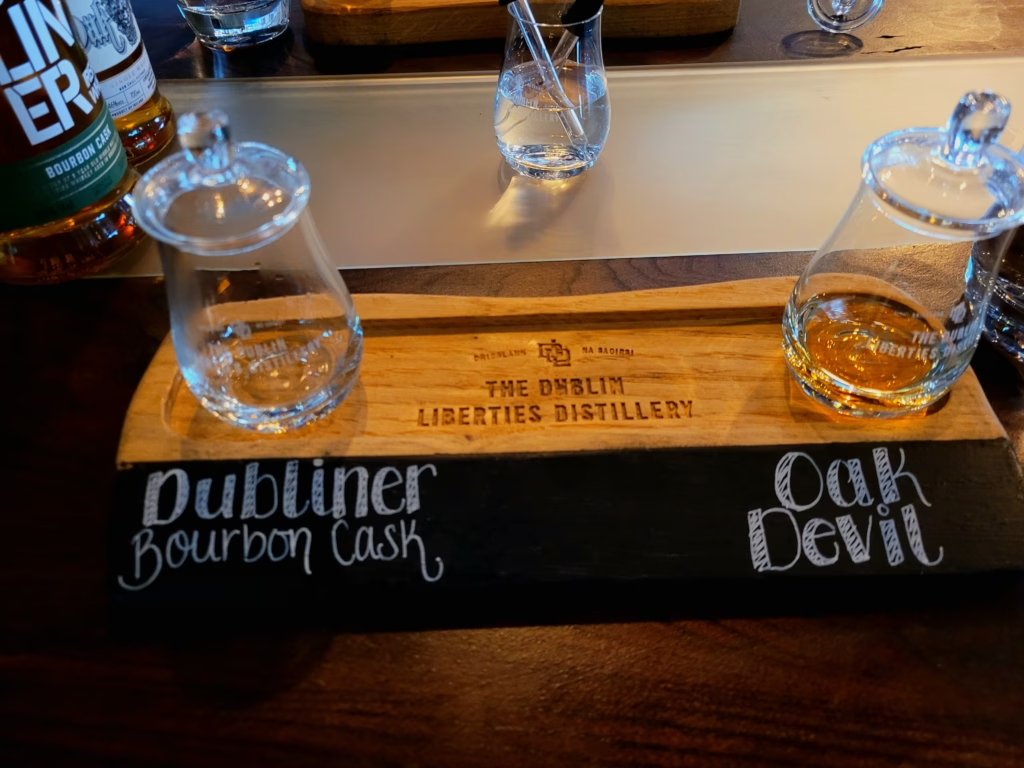
Afternoon choice: Guinness Storehouse for the panoramic Gravity Bar view (and the touristy action) or Liberties Distillery if even more whiskey is more your speed.
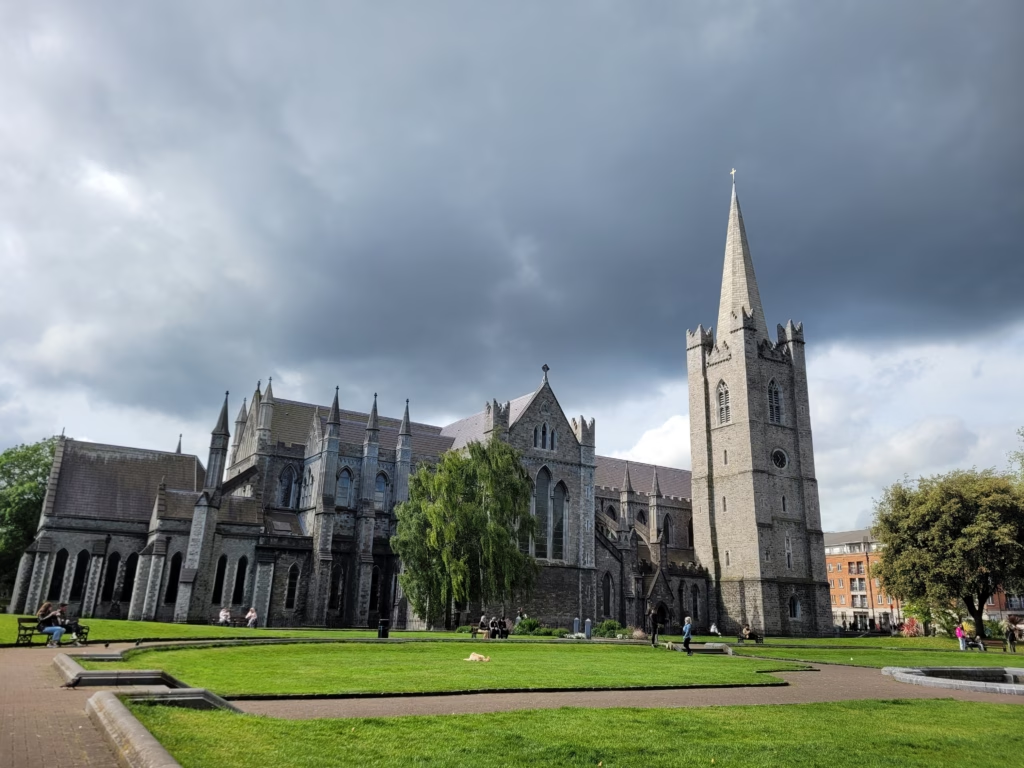
Stop at St. Patrick’s Cathedral and enjoy the gardens.
Evening: Live music & storytelling at The Cobblestone or Whelan’s. Order a pint, get lost in the music.
Day 3 – Sunday: Slow & Sweet
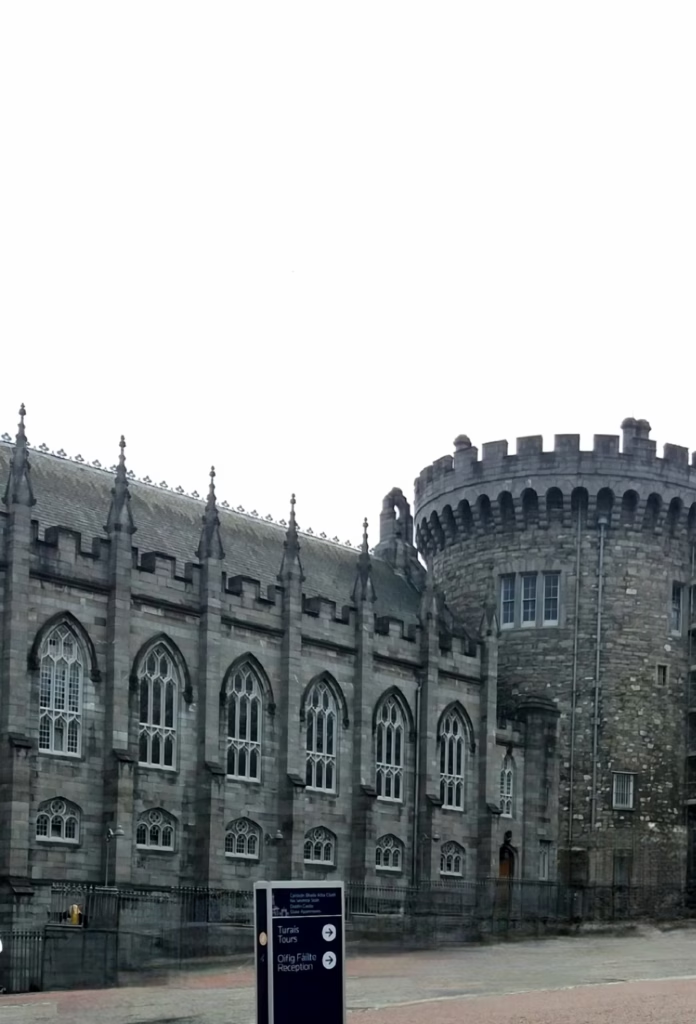
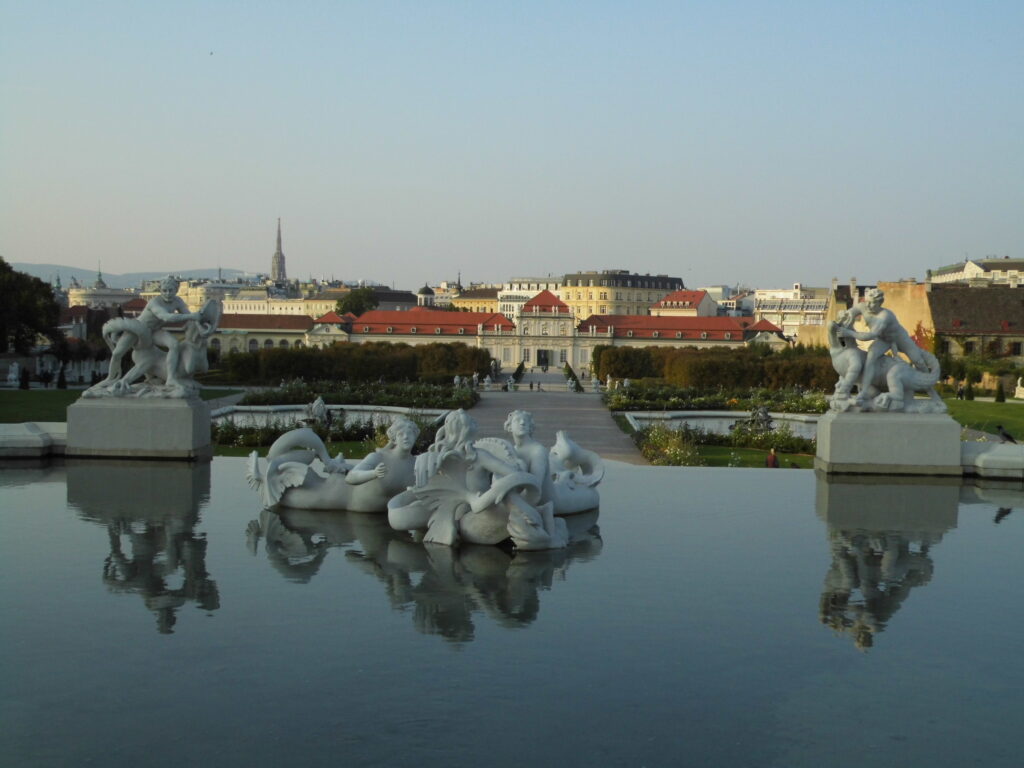
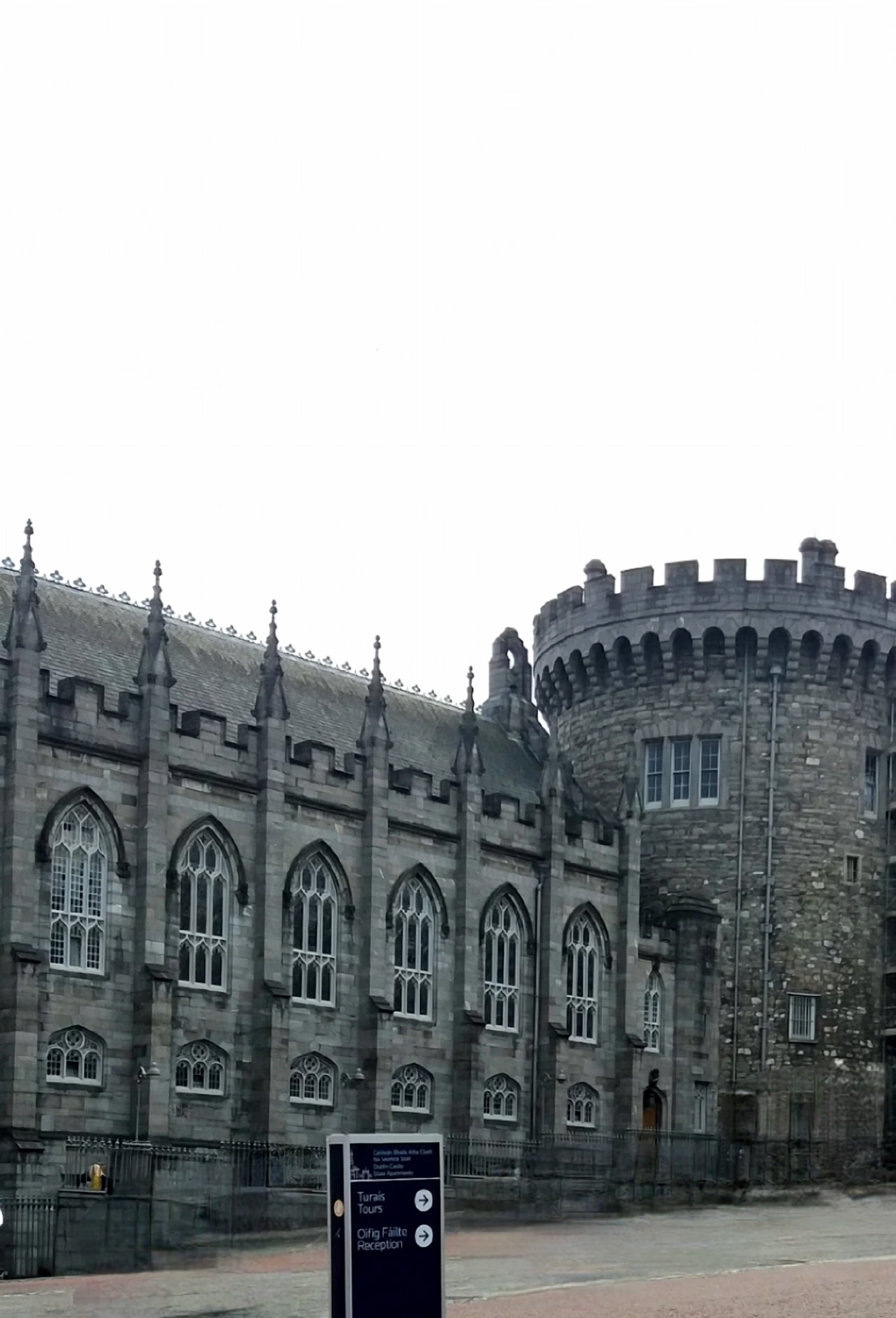
Brunch at Tang or Bibi’s Café. Stroll along the River Liffey or explore Dublin Castle.
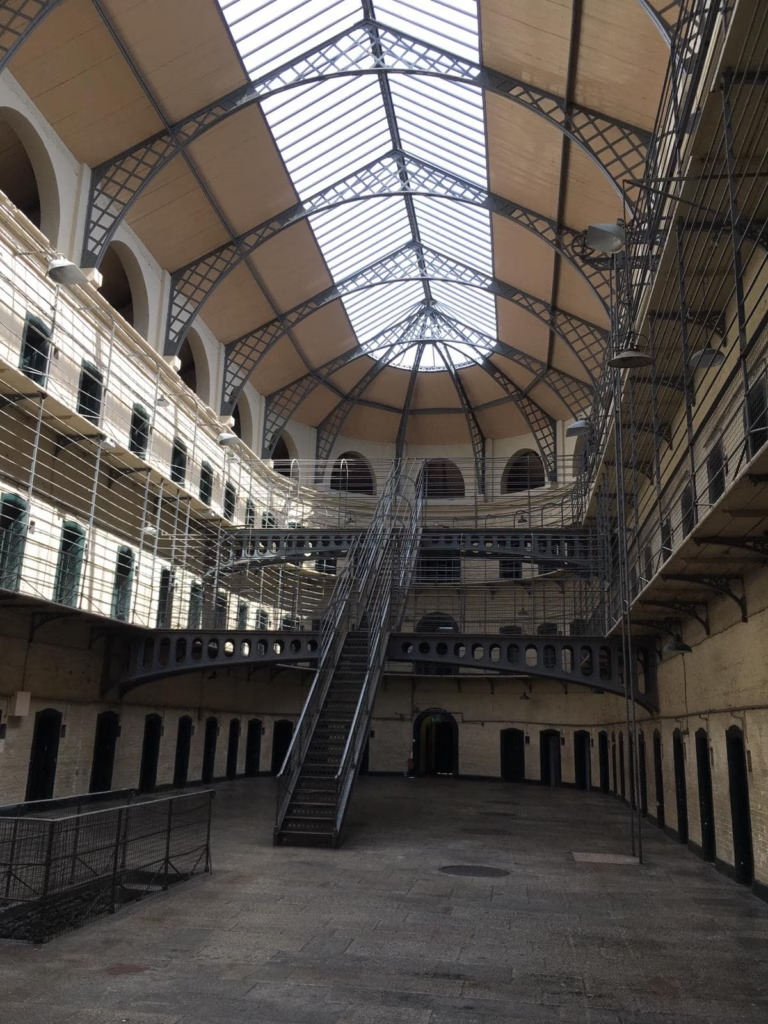
Before heading to the airport, stop my Kilmainham Gaol for even more history.
💼 PTO Tip:Flying from Europe?
Taking just Friday off gets you 2 nights of fun. Can swing Monday too? You’ll have a more relaxed return. Either way, Dublin is a short-haul, high-reward win.✨
What I Loved
The warmth of the people. You’ll end up chatting with strangers constantly. And not just because I’m a red head and people believe me to be local until I open my mouth.
The literary roots, if you’re into Dark Academia vibes like me, you’ll be in heaven.
The walkability, no taxis needed unless you’re feeling fancy.
What I’d Skip Next Time
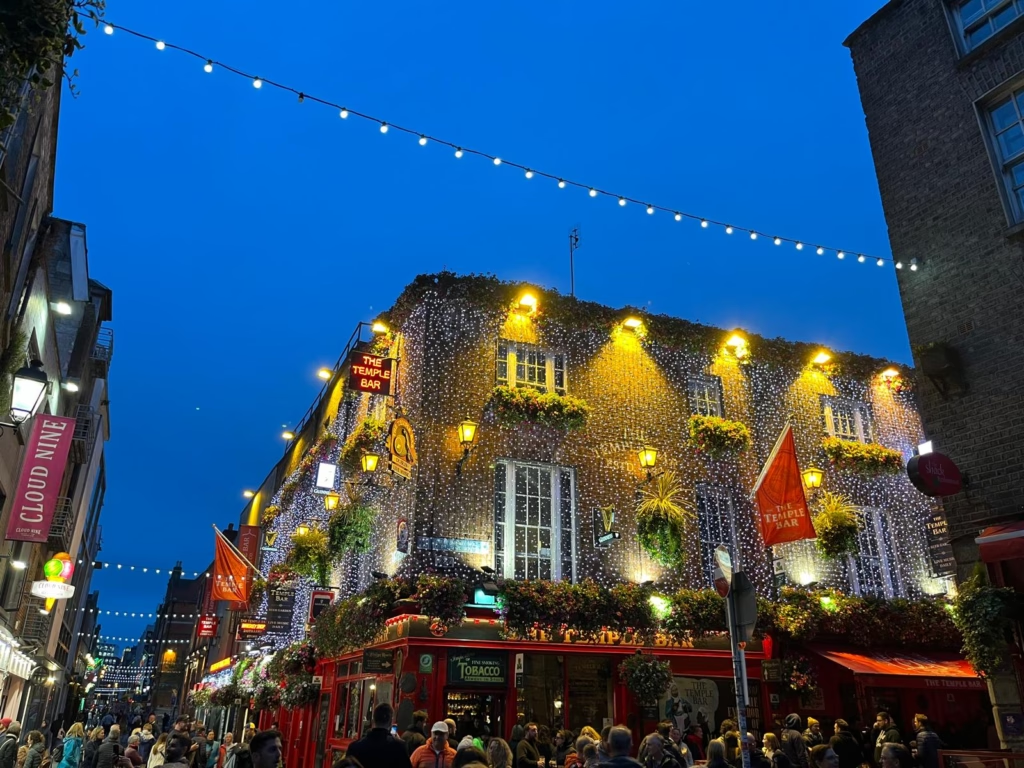
Temple Bar: fun once, but there are cozier, less touristy, less expensive pubs that feel more authentic.
Over-scheduling: Dublin works best when you slow down and just… be. Let the street musicians, pub conversations, and hidden corners find you.
Want to Travel Like a Pro?
Before every quick getaway, I map out my weekend so I’m not wasting precious hours deciding what to do. I even have a 2-day city break template that keeps flights, transport, and food spots in one place. Seriously, it saves so much brainpower.
Final Word:
Dublin isn’t a place you just visit. It’s a place you chat with, toast with, and carry home in your chest. And yes, you can do all that on one day of PTO.
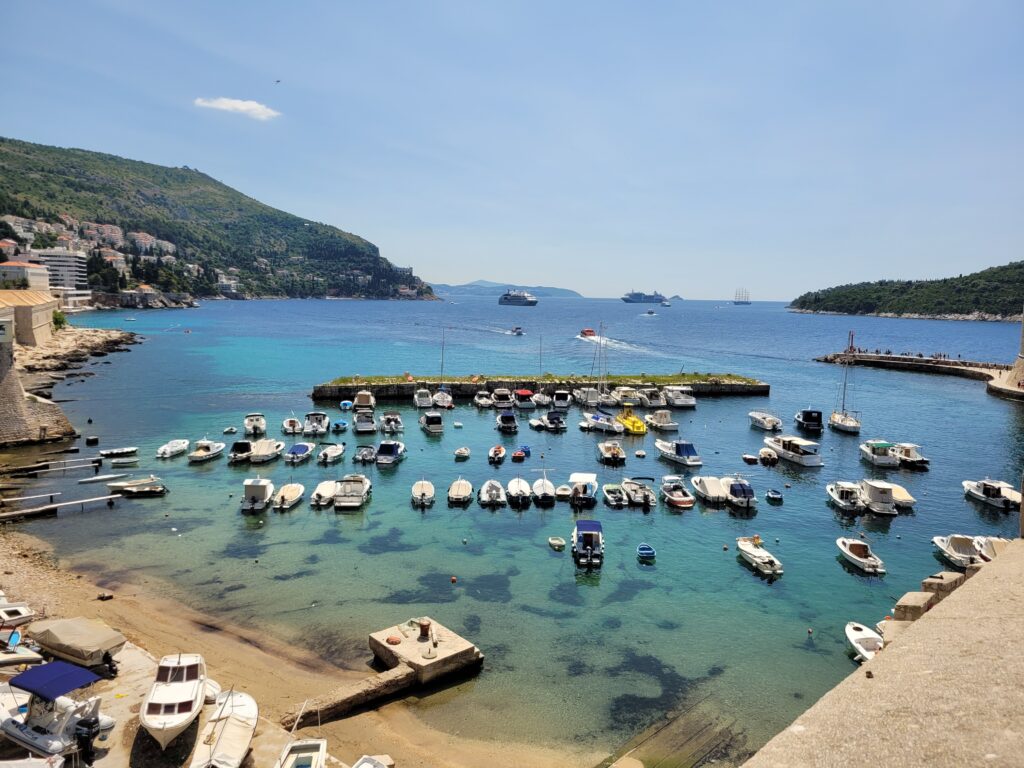
I visited Dubrovnik during shoulder season, right before the start of the busy season and I’ll say this upfront: it was one of the smartest travel decisions I’ve made. The crowds? Thinner. The sea? Already warm. The sunsets? Golden enough to make you question every life choice that’s kept you away from the Adriatic until now.
If you’re dreaming of marble stone streets, sea-salted air, and the kind of golden-hour light that makes you want to move here immediately, without paying in sweaty elbow jabs for every photo, shoulder-season is your time. Whether you’re traveling solo, with your favorite human or as part of a group of equally wanderlust-stricken friends, this guide has you covered for three glorious days in Dubrovnik that balance sightseeing, relaxation, and a sprinkle of Adriatic indulgence.
☀️ Why shoulder-season in Dubrovnik is chef’s kiss 💋
You get the magic without the mayhem. Summer Dubrovnik is gorgeous, but it’s also… packed to put it lightly. Think cruise ships unloading thousands of people in the same alleyways you’re trying to wander. In spring or autumn, you can walk the Old Town walls without forming part of a human conga line.
The weather is still dreamy. Mid-20s°C (70s°F), warm sea, soft breezes. Perfect for swimming, exploring, and – crucially – not sweating through your linen shirts.
Your wallet breathes (a little) easier. Hotels and tours start lowering prices in fall or haven’t yet risen them in spring. It’s not budget backpacker cheap, but you do get more value. Think boutique hotel with breakfast instead of a hostel bunk with a questionable shower.
🗓️ Dubrovnik Long Weekend Itinerary (3 Days)
Day 1 – Arrival & Sunset Vibes
Afternoon: Check in at your hotel. If you can swing it, stay inside the Old Town walls for at least one night (Booking.com has gorgeous boutique options that drop in price before/after summer). Waking up here feels cinematic.
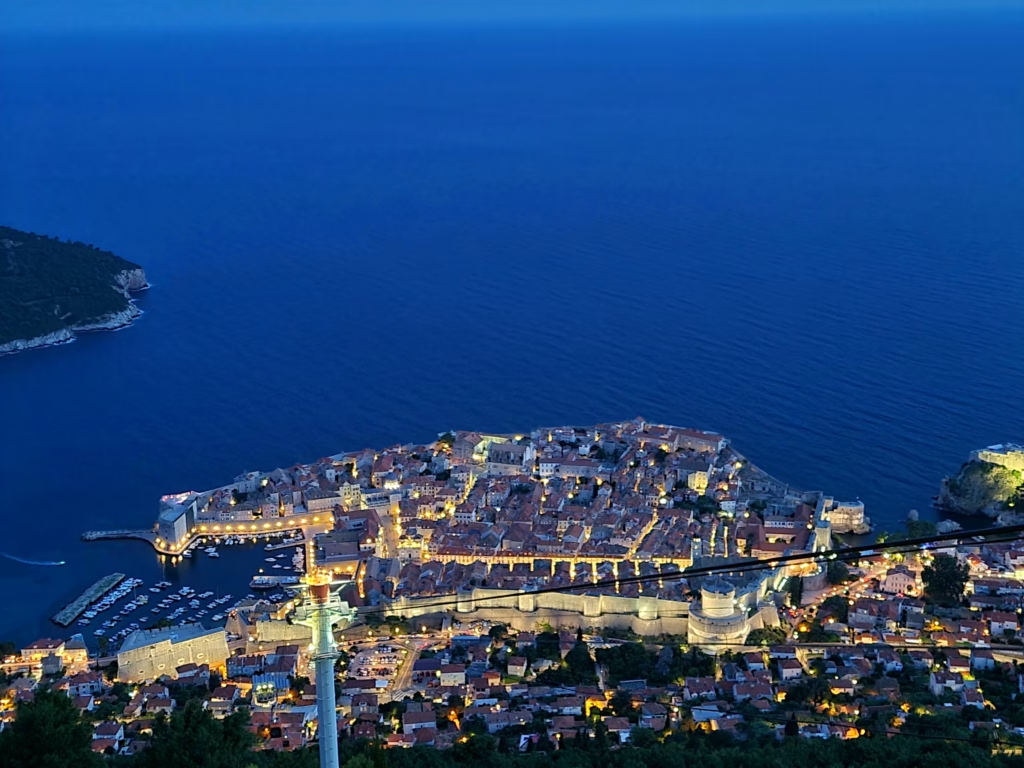
Late afternoon: Stroll the Stradun (main street) and get lost in the alleys.
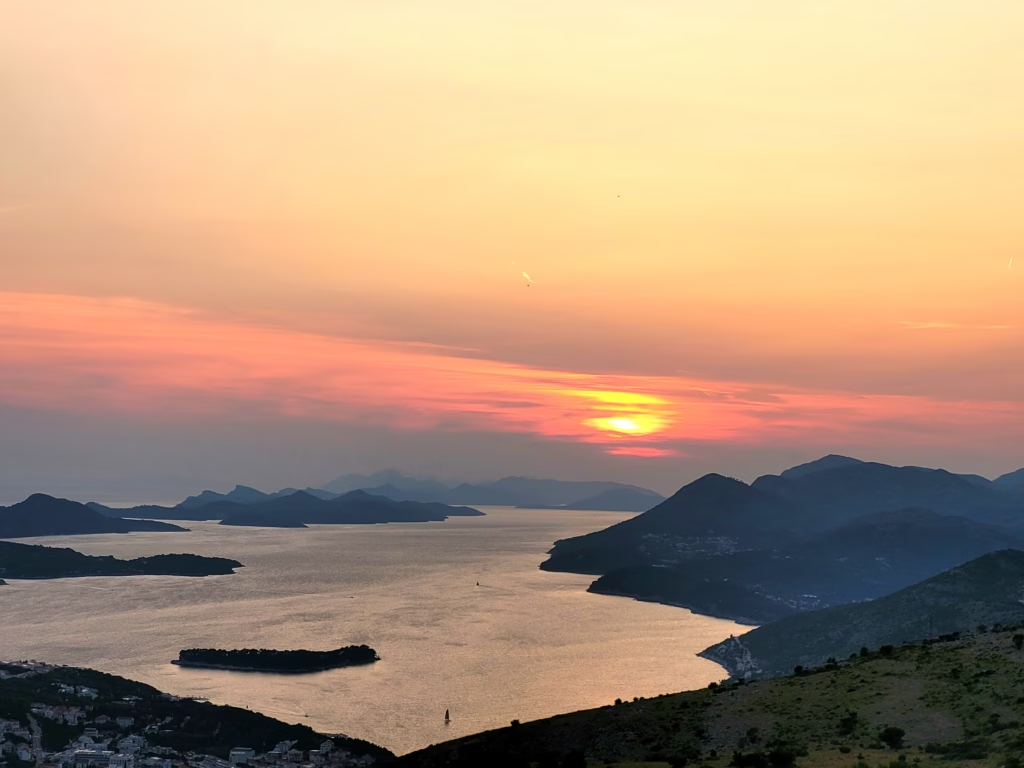
Sunset: Walk up to Fort Lovrijenac for a quiet golden-hour view of the Old Town and sea.
Dinner: Grab a table at Taj Mahal (Bosnian, not Indian). Order the klepe dumplings.
Day 2 – Old Town, Sea Views & Wine
Morning: Do the City Walls walk before 10 am for dreamy light and minimal people.
Midday: Head to Buža Bar (yes, the cliffside one) for a coffee or cold drink with sea views.
Afternoon: Take a private boat tour to the Elafiti Islands (GetYourGuide has good off-season offers). Pack snacks, wine, and your camera.
Evening: Wine tasting at D’vino Wine Bar—Croatian wine flights are a must.
Day 3 – Day Trip & Farewell Swim
Morning: Day trip to Cavtat (30 min by bus or boat). It’s quieter, charming, and perfect for a relaxed seaside breakfast.
Afternoon: Back in Dubrovnik, take a final swim at Banje Beach or the more secluded Sveti Jakov.
Evening: Farewell dinner at Barba, fresh seafood in a cozy, modern space.
🧭 What I’d Do Differently Next Time
Venture further. Places like Ston (famous for oysters) are easy in off-season and way less crowded.
Takeaway
Dubrovnik during shoulder season is for travelers who want romance without rush. The kind of trip where you feel the city exhale after summer or not yet quite awoken from winter and you get to breathe with it. If you’ve been hoarding your PTO like a dragon on gold, this is the trip worth spending it on.
Feeling burnt out from endless meetings and Zoom calls? September is the perfect time for a mental reset trip in Europe. The summer crowds have thinned, prices drop, and a cozy autumn vibe takes over the continent. In fact, more travelers are embracing September travel than ever. 22% of Europeans are eyeing trips this month, drawn by better weather, lower costs, and fewer crowds. As a 30–45 year-old corporate professional, you deserve a soul-soothing break.
So pack your scarf, your favorite leather-bound notebook, and maybe a spare memory card , we’re going on a “Europe mental reset trip” through some of the continent’s most moody, intellectual cities! ✈️
In this guide, we’ll explore 7 dark academia-inspired European cities perfect for a September escape. Think ivy-draped libraries, winding cobblestone alleys, candlelit cafés, and autumn leaves swirling around Gothic spires. Each destination comes with mid-budget friendly hotel picks (from charming boutiques to familiar chains like Marriott, IHG, and Hyatt at ~€100–€250/night), solo travel tips (safety, transit, walkability), offbeat attractions to avoid the crowds, and even pointers on using your Amex, Chase, or Bonvoy points to save money. We’ll keep it friendly, funny, and warm, like an old friend dishing out travel advice over coffee (or perhaps a pint of Guinness 😉). Ready to recharge Dark-Academia-style? Let’s go! 🎒✨
This post contains affiliate links. By clicking on the link I may earn a commission to no extra cost to you. Links are marked „*“.
For a mix of intellectual charm and hearty fun, you can’t beat Dublin in the fall. This city blends moody academia with the warm soul of Ireland. At Trinity College, the 18th-century Long Room library will take your breath away, two levels of ancient books under a vaulted wooden ceiling, complete with the scent of aged parchment and dust motes dancing in sunbeams. It’s basically a dark academia pilgrimage site (don’t miss seeing the Book of Kells exhibit too for some illuminated-manuscript magic).
Outside, Dublin’s autumn brings misty mornings and the occasional soft rain (“a good excuse to duck into a pub” as the locals say!). Literature is everywhere, from James Joyce quotes on plaques to the heritage bookstores along the River Liffey.
Offbeat Charm: After the must-do’s (Trinity, St. Patrick’s Cathedral, maybe the Guinness Storehouse for some craic), discover Dublin’s quieter corners. Tuck into Marsh’s Library near St. Patrick’s. It’s one of Europe’s oldest public libraries (1707) and often overlooked. Creaky oak bookcases, chained books, and zero crowds , you might feel like an 18th-century scholar here. Wander the Georgian streets of Merrion Square where Oscar Wilde’s childhood home stands (a statue of Wilde lounges in the park, as witty and carefree as his writing). In the evening, skip the over-touristy Temple Bar pub hub and head to Davy Byrne’s or The Stag’s Head . Historic pubs where Joyce and other writers drank.
Pro tip: Grab a seat by the fire, order an Irish stew or a pint of Guinness, and you might hear live traditional music or at least some colorful local storytelling.
Solo Travel Tips:
Dublin is very welcoming to solo travelers. The Irish will chat your ear off if you’re up for conversation. English-speaking, of course, so no language barriers. The city center is walkable; you can stroll from Trinity to Dublin Castle to Grafton Street easily. Public transport includes buses and the LUAS tram; they’re safe and convenient if needed (like getting out to the Kilmainham Gaol or Phoenix Park).
Safety: Dublin is generally safe, with the usual city caution. Watch for pickpockets in crowded areas and mind your belongings after a couple pints. Late at night, stick to well-lit central areas, the Temple Bar district can get rowdy (and pricey) after dark, so consider enjoying the pub culture in slightly quieter neighborhoods like Rathmines or Smithfield if you prefer a mellower vibe.
Stay:
Dublin has a range of mid-budget accommodations. For boutique lovers, The Dean Dublin* is a trendy option: modern design, a cool rooftop bar, and a fun music theme (there’s a record player in your room with some vinyls!). It’s around €200/night and gives a local, creative flavor.
For chain comfort, check out Hyatt Centric The Liberties* Dublin, a new 4-star in the heart of the Liberties area. Rooms are often ~€180, and you can use Hyatt points (~15,000 points/night, a solid deal). It’s walking distance to St. Patrick’s and has a great breakfast to start your day.
Marriott loyalists might try the Moxy Dublin City* in downtown, a playful, boutique-style Marriott property. It’s Ireland’s first Moxy, with a 24/7 bar and stylish lobby, usually well under €200.
Fun fact: The Moxy is near Trinity and Temple Bar, and Moxy even notes that Dublin’s literary heritage surrounds you, with writers, artists and intellectuals having flocked to these streets for centuries. So you’ll be in good company (past or present)!
I, personally love the Motel One* Hotels in every city. They are a design hotel chain, that focuses on local history and culture. I loved our room in Dublin and I would have packed that hotel bar into my luggage if it had fit.
Points & Perks:
Leverage those credit card rewards here. Chase Ultimate Rewards transfer to Avios can book you a flight directly into Dublin (Aer Lingus is an Avios partner, often with low surcharges). Once on the ground, your Amex Platinum card’s Global Entry benefit will speed you through US pre-clearance on the way home (Dublin does US customs pre-clearance, a huge time-saver).
For hotels, Hyatt’s partnership with Chase UR means you could stay at the Hyatt Centric for free if you have some points banked. And if you hold a Marriott Bonvoy free night certificate, the funky Aloft Dublin City (Marriott) is another option around 30k points that could be fully covered. Use those savings to treat yourself to a nice meal at a literary pub or to buy that signed first-edition novel you spotted!
Ghent, Belgium – Medieval Mystery by Candlelight 🕯️📜
Ghent’s enchanting riverside at twilight, fewer tourists than Bruges, but equally fairytale-like with a moody twist.
Why Go:
Picture a medieval city with canals, gothic spires, and virtually no tourists clogging the streets, that’s Ghent in a nutshell.
Often overshadowed by its pretty neighbor Bruges, Ghent is a hidden gem beloved by those in the know (and apparently 55% of Europeans now prefer such lesser-known spots to avoid overtourism). The city is less crowded than Bruges but just as enchanting, with old stone buildings, flickering lantern-lit lanes, and grand university halls imbued with centuries of scholarship. In autumn, Ghent’s tree-lined canals blaze with color, and a slight fog might roll in over the Lys River at dawn, adding to the mystery.
If you crave dark academia vibes, Ghent delivers with a touch of Flemish coziness.
Offbeat Charm: Start at the Boekentoren (“Book Tower”), Ghent University’s modernist tower library. It holds rare manuscripts and has a panoramic view of the city, a pilgrimage for architecture and book nerds alike. Next, visit St. Bavo’s Cathedral not just for the famous Van Eyck painting, but also for the eerie crypt below, wonderfully chilling and quiet. Meander through the Patershol district, a medieval quarter of narrow alleys now filled with quirky cafes and galleries; at night, lanterns cast golden light on the cobbles. Ghent even has a castle in the city center – Gravensteen Castle – complete with a torture museum (talk about getting dark!). Go in the evening for atmospheric vibes and maybe a ghost story or two.
And if you’re a fan of academia history: the Ghent University Aula is an impressive neoclassical hall often open for events. Poke your head in to imagine attending a 19th-century lecture there.
Solo Travel Tips:
Ghent is compact and extremely walkable (or bikeable – Flanders loves cyclists!). As a solo traveler, you’ll find it safe and easy to get around. The city center is pedestrian-friendly, and you can rent a bike if you want to live like a local student. Many locals speak excellent English, but throwing in a “dank u” (thank you) in Flamish will earn you a smile. Public transit includes trams and buses that connect the train station and outskirts, but within the historic center you likely won’t need them.
Safety: Ghent is very safe; standard awareness is all that’s needed. Perhaps the biggest “danger” is getting lost in picturesque lanes – but hey, that’s half the fun. If you’re out late, the area around Korenmarkt (main square) stays lively with students, and you can always pop into a “brown café” (cozy pub) if you need a break or some company.
Stay:
To fully soak in the atmosphere, consider 1898 The Post,* a boutique hotel set in Ghent’s former main post office building (a gorgeous Neo-Gothic gem). With only 38 rooms, it’s intimate and styled with vintage decor. You’ll feel like you’re staying in a Victorian writer’s private club. It also houses The Cobbler cocktail bar, one of the best in Belgium (don’t miss a nightcap there under the twinkling chandeliers). Rates hover around €200, but the experience is worth every penny.
For a chain option, the Ghent Marriott Hotel sits right on the canal at Korenlei and blends a modern hotel into a row of historic facades. You get the reliability of Marriott with a setting that’s anything but cookie-cutter, the lobby has a giant glass atrium and exposed brick from the 15th-century house it’s built into. Rooms (from ~€160) often have river views. And yes, Marriott Bonvoy points are welcome – about 25,000–30,000 points per night. Bonvoy elites even get free breakfast in the riverfront restaurant, fueling you for long walks.
Points & Perks:
Getting to Ghent can be part of the fun: fly into Brussels (which is easily done on points via United or American Airlines miles) and then take a 30-minute train to Ghent. No flights needed within Belgium, trains and trams do the trick. If you have a Eurail pass or just a ticket, Ghent is on the main line between Brussels and Bruges.
For hotels, consider using a Marriott Free Night Award from your Bonvoy credit card. The Ghent Marriott is a great way to redeem it without high-category prices. Also, if you’re a Chase Sapphire Reserve holder, you could book your hotel through the Chase travel portal using points (at 1.5 cents value), sometimes a good way to use those UR points if you’re short on Bonvoy.
Finally, treat yourself to a Belgian waffle or three, not a points tip, just life advice. You’re in Belgium, after all!
Cambridge, England – Scholars, Punts & Autumn Light 📚🍂
Why Go:
If Oxford is the brooding novel hero, Cambridge is the poetic dreamer. Home to one of the world’s most prestigious universities, this city hums with intellectual energy and history dating back to 1209. In September, the student term is about to begin, so the cobbled lanes and collegiate courtyards buzz with quiet anticipation. Add in the soft golden light over the River Cam, and it’s like stepping straight into a watercolor painting.
You’ll wander past Gothic chapels, lush lawns, and secret gardens and possibly overhear a debate about astrophysics over coffee.
Offbeat Charm:Skip the packed King’s College tour and opt for a punting trip on the Cam, preferably with a guide who peppers the journey with local lore. Visit The Wren Library at Trinity College (free at set times), which houses Newton’s own annotated copy of Principia Mathematica. For something quirkier, explore the Cambridge Museum of Zoology — yes, there’s a whale skeleton hanging from the ceiling. And if you want a cozy, candlelit drink, slip into The Eagle, the pub where Crick and Watson announced their DNA discovery.
Solo Travel Tips:
Cambridge is compact and walkable; you can explore most of it on foot. Buses connect the train station with the center, but strolling in via Mill Road is a treat in itself. Safety-wise, it’s very solo-traveler friendly, especially in the historic core. Avoid wandering too far along the river after dark, simply because it gets very quiet.
Stay:
For boutique charm, The Varsity Hotel & Spa* offers modern rooms, a rooftop bar with city views, and spa access, perfect for post-walk relaxation (around €200/night). Chain lovers can check into Hilton Cambridge City Centre, smack in the heart of town and often available for 50,000 Hilton Honors points/night. It’s business-class comfort but right next to the action.
Points & Perks:
If you’ve got British Airways Avios, you can fly into London Stansted or Heathrow and take a quick train. Hilton Gold status (via Amex Platinum) may score you free breakfast at the Hilton Cambridge, a very welcome perk before a day of exploring colleges.
Kraków, Poland – Gothic Romance & Cozy Cafés 🏰☕
Why Go:
Kraków is where medieval Gothic meets café culture. The Old Town is a UNESCO site, wrapped around the largest medieval market square in Europe.
Come September, the summer crowds thin and a soft chill creeps into the evenings, perfect for slipping into a warm café with a slice of szarlotka (apple cake) and a notebook. Between the spires of St. Mary’s Basilica and the looming silhouette of Wawel Castle, you’ll feel that perfect dark academia balance of beauty and mystery.
Offbeat Charm: Beyond the postcard views, explore Kazimierz, the historic Jewish quarter, now filled with vintage shops, indie bars, and art galleries (you nay recogniseit as a set from „Schindler’s list“). Pop into Massolit Books & Café, a bookshop-café hybrid where you could lose hours. For something atmospheric, visit the Collegium Maius, Jagiellonian University’s oldest building (Copernicus studied here), with its arcaded courtyard and scholarly artifacts. And for an autumn walk, the Planty Park, a green belt around the Old Town, is peaceful and leaf-strewn in September.
If you’ve got the stomach for it, a day-trip to Auschwitz concentration camp will introduce you to the horrors of the Holocaust and bring into reality what you learned in history lessons. It’s been years since I’ve been there and I still remember all the emotions I experienced in that place.
Solo Travel Tips:
Kraków is very safe for solo travelers, with plenty of pedestrian zones and a friendly, youthful vibe thanks to its student population. Walking is the best way to explore the Old Town and Kazimierz. Public trams are easy to use if you venture further.
Stay:
For boutique atmosphere, try Hotel Copernicus*, a 5-star housed in a Renaissance building, with exposed beams and an indoor pool under a vaulted brick ceiling (around €200/night off-season). If you’re looking for a chain, Sheraton Grand Kraków offers modern comfort on the Vistula River, often under €180/night or 40,000 Marriott Bonvoy points.
Points & Perks:
LOT Polish Airlines flights can often be booked with Star Alliance miles (transfer from Amex/Chase to United or Air Canada Aeroplan).
Marriott elites get lounge access and late checkout at the Sheraton, great for squeezing in one more morning castle stroll.
Leiden, Netherlands – Dutch Canals & Quiet Academia 🚲📖
Why Go:
Leiden is Amsterdam’s calmer, scholarly cousin, home to the Netherlands’ oldest university, cobblestone alleys, and canals that look especially magical under September’s golden light. With fewer tourists, you can wander in peace past historic almshouses, 17th-century facades, and ivy-covered walls.
Offbeat Charm: Check out the Bibliotheca Thysiana, a perfectly preserved 17th-century library built by a scholar’s will. Visit the Hortus Botanicus, where the university has cultivated plants since 1590 (and where tulip mania began!). For a quirky side trip, explore De Burcht, a circular medieval fortress offering panoramic city views. Evenings are best spent along the canals with a glass of wine, watching bikes whizz by.
Solo Travel Tips:
Leiden is small and extremely walkable/bikeable. It’s a safe, student-filled city, so you’ll blend right in wandering alone. The train station connects directly to Amsterdam Schiphol Airport in under 20 minutes, making it an easy entry or exit point.
Stay:
For boutique coziness, Boutique Hotel d’Oude Morsch* offers stylish rooms in a restored 19th-century military building (around €150/night).
Gor a chain, the Hilton Garden Inn Leiden is reliable and points-friendly, often available for 30,000 Hilton points.
Points & Perks:
Hilton points are the obvious play here. If flying into Schiphol, book award flights using Delta SkyMiles, KLM Flying Blue, or Virgin points, all partners with Amex/Chase and you’ll be sipping coffee by the canal in no time.
Salzburg, Austria – Baroque Beauty & Alpine Backdrops 🎼🍷
Why Go:
Salzburg is like stepping into a period drama, with pastel Baroque buildings, church domes, and the fortress of Hohensalzburg perched above. The birthplace of Mozart and backdrop to The Sound of Music, it’s steeped in both artistic and scholarly heritage.
September brings crisp air and fewer tour buses, letting you enjoy the Old Town at its most atmospheric.
Offbeat Charm: Wander up to the Nonnberg Abbey, the world’s oldest continuously run convent, with views over the city. Visit the St. Peter’s Cemetery and its catacombs carved into the Mönchsberg rock , eerie, beautiful, and blissfully uncrowded. For a cozy evening, duck into Café Bazar, a century-old haunt of writers and artists. If you’re feeling active, take the funicular to the fortress, then hike along the Mönchsberg ridge for sweeping autumn views.
Solo Travel Tips:
Salzburg is compact and easy to explore on foot. Safe, clean, and friendly, it’s perfect for solo wandering. Public buses connect the airport, train station, and outer sights, but you’ll rarely need them in the center.
Stay:
For boutique charm, Hotel Elefant * offers historic elegance in a 13th-century building steps from Mozart’s birthplace (~€160/night).
For chain reliability, the Sheraton Grand Salzburg delivers modern comfort across from Mirabell Gardens, usually around €200/night or 40,000 Marriott points.
Points & Perks:
Flying into Munich and taking a train (about 90 minutes) is often cheaper and bookable with airline miles.
Marriott Bonvoy elites get perks like upgrades and breakfast at the Sheraton, ideal before a day of Alpine exploration.
Travel Q&A:
Plan Your Perfect September Reset Trip 🌍❓
Q: Is September a good time to travel to Europe for a trip like this?
A: Absolutely! September is often considered part of Europe’s shoulder season, meaning you enjoy decent weather and fewer crowds. Kids are back in school, peak tourist numbers drop, and you’ll find that sweet spot of pleasant temperatures (think light jacket or cozy sweater weather) without the sweltering heat. In many of these cities early fall brings beautiful foliage and seasonal events (harvest festivals, cultural events, etc.). Plus, as travel trends show, more people are choosing shoulder season for better value and less stress. So you’re making a savvy move.
Just note: days do get shorter as autumn progresses (especially in northern Europe), so plan your sightseeing accordingly, but a little evening darkness only adds to the dark-academia charm, right?
Q: I have a bunch of credit card points (Amex Membership Rewards, Chase Ultimate Rewards, etc.). How can I use them for this trip?
A: There are so many ways to leverage points and miles here, good on you for saving them up!
For flights, check your Amex or Chase travel portals and transfer partners. For example, Amex MR points can transfer to Avios (British Airways/Aer Lingus), which are great for flights into hubs like London, Dublin, or even for shorter intra-Europe hops (e.g., London to Dublin). Chase UR points transfer to United MileagePlus (fly into Brussels for Ghent, or Munich for Salzburg) and to Flying Blue (Air France/KLM), which can get you to pretty much any major European city via Paris or Amsterdam.
Don’t overlook using points for hotels: Marriott Bonvoy is an Amex and Chase partner, so you could transfer some points to Marriott and cover stays at hotels like the Ghent Marriott with points rather than cash. Hyatt is a Chase partner.
Also, remember the “5th Night Free” perk on Marriott point redemptions: if you book 4 award nights, you get the 5th night free, which can stretch your points further if you decide to linger longer in one spot. Lastly, if you have a travel credit card with broad travel eraser credits (like Capital One Venture or Bank of America Travel Rewards), you can charge things like train tickets, museum passes, or boutique hotels to the card, then wipe those charges with your points.
Bottom line: use points for the big expenses (flights & hotels) and save your cash for the fun stuff (meals, experiences, a vintage book from that cute shop in Dublin…). Your future self, and your wallet, will thank you.
Q: I’ll be traveling solo. How can I stay safe, especially at night?
A: Solo travel in Europe is generally very safe, and all the cities we’ve picked are known for being traveler-friendly and relatively low-crime. Still, it’s wise to follow standard precautions.
Here are some tips: Stay aware of your surroundings: In popular tourist areas, keep an eye on your belongings – pickpockets love distracted sightseers. A crossbody bag or money belt can give you peace of mind. At night: Stick to well-lit, populated areas. Each of these cities has parts that stay lively in the evenings. If somewhere looks deserted or sketchy, trust your gut and maybe grab a taxi or rideshare (Uber operates in many European cities; where it doesn’t, there are local apps or good old licensed taxis). In some larger European cities, the area around the main station may be something of a criminal hotspot. Police are often around in larger numbers, but stay safe especially at night. Some cities have „Nottaxis“ (emergency taxis) that’ll take you home save if you’re stranden somewhere. Look into that if you want to explore at night.
Local customs: Be mindful of local norms, e.g., in Italy, dinner runs late, so walking back to your hotel at 10 or 11 pm is normal and the city will still have people out. In smaller cities like Ghent, things might close earlier, so the streets could be quieter after 9 pm. Nothing unsafe per se, just quieter. If you’re uncomfortable, plan to finish your evening activities by then or join a nightlife tour or hostel event to have some company.
Transport safety: Public transport is usually safe and efficient. Still, late at night, you might opt for a taxi if you’re not near your accommodation. For example, some metro stops around midnight, so if you’re out late, use a taxi or Uber.
Let someone know: As a solo traveler, it’s a good idea to keep a friend or family member in the loop about your general itinerary. Also, consider registering your trip with your country’s embassy or using safety apps like GeoSure for city safety scores in real time. If traveling outside of the EU, I usually register with Elefand, the German foreign office emergency services.
Most importantly, confidence and blending in go a long way. Walk with purpose (even if you’re occasionally consulting Google Maps), and don’t flash valuables. The goal is to look like you know what you’re doing – even if you’re delightfully lost in a medieval alley, no one else needs to know that! 😉
Q: What should I pack for a fall trip to Europe?
A: Great question! Fall weather can vary across Europe, so packing smart will keep you comfy. Here’s a handy checklist: Layers, layers, layers.
Mornings and evenings can be chilly, while afternoons might be mild. Pack a mix of t-shirts or light long-sleeves, a couple of sweaters, and a medium-weight jacket. A stylish trench or a packable down jacket can be a lifesaver on cooler days and elevates the dark academia look. 🎩
Comfortable walking shoes: You’ll be logging steps on cobblestones and uneven streets. Bring at least one pair of broken-in shoes (ankle boots or sneakers) with good support. Maybe also a nicer pair of boots or oxfords for evenings out (still comfy, though your feet will thank you).
Travel umbrella or rain jacket: A compact umbrella is gold. September can surprise you with a rain shower, especially in the UK, Belgium, or Ireland. Many European cities have sudden drizzles. Alternatively, a lightweight waterproof jacket with a hood works too.
Scarf and accessories: Not only can a scarf keep you warm on a brisk morning, but it also adds a dash of European flair to your outfit. In true dark academia spirit, perhaps a plaid or neutral-tone scarf. Throw in some gloves and a beanie if your itinerary skews late fall or you’re headed to northern areas.
Day bag: A secure backpack or crossbody bag to carry your daily essentials (camera, guidebook, water bottle, snacks acquired from that cute market). Go for something that closes securely (zippers) to deter pickpockets. Keep valuables close to your body and mind your phone.
Power adapter: Europe’s plugs differ (mostly Type C “Europlug” on the continent, Type G in the UK). Bring a universal adapter and remember voltage is higher (220-240V), so check your electronics or bring a converter if needed (most phone/laptop chargers are dual voltage, though).
Travel journal or Kindle: You’ll have inspiring moments, maybe jot them in a notebook while sitting in a Parisian-esque cafe in Ghent, or load up some classics on a Kindle for train rides.
Medications & small first aid: Include any personal meds, plus some basics like ibuprofen, band-aids (for any blister from walking), and perhaps motion sickness pills if you plan boat rides.
Copies of documents: Keep digital/paper copies of your passport, credit card info, and itinerary separately, just in case.
And a reminder: ensure your passport is valid for at least 6 months beyond your trip. Pack versatile pieces that you can re-wear, many European hotels have laundry service (pricey) but also look for self-service laundromats if needed (like Washeteria in Dublin). Ultimately, pack what makes you feel comfortable and confident, you’ll likely pick up a souvenir sweater or two along the way, so leave a little room in your suitcase!
Q: Should I plan to visit all 5–7 cities on one trip, or is it better to pick just a few?
A: While the overachiever in all of us might be tempted to “collect ’em all,” I’d recommend quality over quantity for a mental reset trip. Each of these cities has its own allure and deserves a few days to soak in. If you have a whole month (lucky you!), you could feasibly string together 5–7 cities at a comfortable pace, perhaps spending 3-4 nights in each and using Europe’s excellent train network or short flights to hop between countries. However, most people with limited vacation time might aim for, say, ~2 weeks. In that case, choose 3 or 4 cities that excite you most and are logistically sensible together.
For example: UK & Ireland focus: Camebridge → Dublin (a nice northward progression, flights or train/ferry combos connect them).
Central Europe focus: Ghent → Leiden→ Salzburg (with maybe a Paris or Brussels stop in between for transit).
Mix & match: Dublin→ Camebridge→ Ghent (start cool up north, explore the Euroexpress).
Consider travel times: you don’t want to spend half your trip in transit. Group cities by proximity to minimize long hauls. Also factor in your travel style, do you enjoy rapid pace or slow travel? A mental reset might mean not rushing. It can be incredibly rewarding to linger longer in one spot, become a temporary regular at a café, and really absorb the atmosphere. Maybe you fall in love with Ghent and decide to day-trip to Bruges and Antwerp from there instead of packing up again – go for it!
And for us corporate workers, a long weekend in one city might be the way to go.
Flexibility is the solo traveler’s superpower. A sample 2-week itinerary might be: Krakow(4 nights) – train to Salzburg(3 nights) – fly to Dublin (4 nights) – quick hop to Camebridge/London (3 nights).
Ultimately, plan around what sparks joy for you, and leave a little wiggle room for serendipity. Remember, you can always return for the cities you skip, Europe’s not going anywhere, and having a reason to come back is the best souvenir. 😉
Conclusion – Embrace Your Fall Adventure & Find Your Inspiration 🍂✈️
September in Europe offers the perfect canvas for your mental reset. As you wander through Camebridge ’s quads or Ghent’s lantern-lit lanes, don’t be surprised if you feel a lightness you haven’t in a while. It’s amazing how a change of scenery, especially one with old bookstores and cozy coffee shops , can remind you of the simple joys beyond the 9-to-5 grind.
Each city on this list isn’t just a destination, but a gentle invitation to slow down and savor life: whether that’s journaling under a Gothic archway, people-watching from a café with a frothy cappuccino, or striking up a conversation with a friendly stranger at a pub. You’ll return home with your mind refreshed, creativity rekindled, and maybe a few new anecdotes to spice up those Monday morning meetings (just wait till they hear about the time you got lost in a medieval library at night!).
Feeling motivated and excited yet? The fall winds are changing, and your European adventure is calling. Go ahead, take that “Europe mental reset trip”, invest in yourself, and step into the pages of the story you’ve been dreaming to tell. We’re here cheering you on every step of the way! 🙌
If you found this guide helpful, subscribe to my newsletter for more travel inspiration, insider tips, and itineraries that feed your wanderlust. 📧✨
Got questions or want to share your own travel plans? Drop a comment below or reach out. I love hearing from fellow adventurers. Here’s to making this September your most transformative travel experience yet. Sláinte, Prost, Cheers! 🥂 Safe travels and happy reset!
This website uses cookies to improve your experience. We'll assume you're ok with this, but you can opt-out if you wish.
Read More
Cookies sind kleine Textdateien, die von Websites verwendet werden können, um die Benutzererfahrung effizienter zu gestalten. Das Gesetz besagt, dass wir Cookies auf Ihrem Gerät speichern können, wenn sie für den Betrieb dieser Website unbedingt erforderlich sind. Für alle anderen Arten von Cookies benötigen wir Ihre Erlaubnis. Diese Website verwendet verschiedene Arten von Cookies. Einige Cookies werden von Drittanbieterdiensten platziert, die auf unseren Seiten erscheinen.
Necessary cookies help make a website usable by enabling basic functions like page navigation and access to secure areas of the website. The website cannot function properly without these cookies.
Marketing cookies are used to track visitors across websites. The intention is to display ads that are relevant and engaging for the individual user and thereby more valuable for publishers and third party advertisers.
Preference cookies enable a website to remember information that changes the way the website behaves or looks, like your preferred language or the region that you are in.
Unclassified cookies are cookies that we are in the process of classifying, together with the providers of individual cookies.
Do you really wish to opt-out?
Cookie-Einstellungen
Cookies sind kleine Textdateien, die von Websites verwendet werden können, um die Benutzererfahrung effizienter zu gestalten. Das Gesetz besagt, dass wir Cookies auf Ihrem Gerät speichern können, wenn sie für den Betrieb dieser Website unbedingt erforderlich sind. Für alle anderen Arten von Cookies benötigen wir Ihre Erlaubnis. Diese Website verwendet verschiedene Arten von Cookies. Einige Cookies werden von Drittanbieterdiensten platziert, die auf unseren Seiten erscheinen.
Necessary cookies help make a website usable by enabling basic functions like page navigation and access to secure areas of the website. The website cannot function properly without these cookies.
Marketing cookies are used to track visitors across websites. The intention is to display ads that are relevant and engaging for the individual user and thereby more valuable for publishers and third party advertisers.
Preference cookies enable a website to remember information that changes the way the website behaves or looks, like your preferred language or the region that you are in.